



3,915 products added recently
Page 27 - ELA Lesson Plans
Elevate your ELA instruction with lesson plans that cover reading, writing, speaking, and listening skills. These resources provide diverse texts and engaging activities to improve literacy. Integrate these plans to enrich your language arts curriculum and support student achievement.

 Show filters


Kites Curriculum Pack
Creative Arts, Art, ELA, Writing, Handwriting, Science, Earth and Environmental Sciences, Environmental Science, Kindergarten, Lesson Plans, Teacher Tools
If your students are studying nature or are about to begin a science unit, I have just the resource to provide you with everything you need and more! This is aKites Curriculum Packcomplete with an abundance of printable resources and engaging activities for students to complete. This curriculum was designed for your preschool students. The curriculum goal is to introduce students to the concept of things moving by the wind in a fun, hands on way. The vocabulary that students will focus on iswind, windy, air, sky, kite, fly, and breeze. This curriculum will come with shapes of the week(diamond and triangle)and a letter of the week(K). This curriculum pack includes: --Sensory Table Ideas --Art Activities --Cooking Experience --Community Time --Math Activities --Home/School Connection Ideas --Science Table Enrichments --Science Concepts/Activities --Prop Box Ideas/Dramatic Play Enrichments --Movement and Motor --Playground/Walk Activities --Transition/Waiting Ideas --Block Area Enrichments --Flannel Board --Teacher Made Enrichment Ideas --Field Trip Ideas --Supplemental Learning Ideas/Activities At the start of this pack, you will receive a list of supplies needed for activities and projects. The worksheets, activities, and tasks included in this pack are intended to be completed in a variety of formats – whole group, small group, and independent work. I hope you enjoy! Here are other similar resources for you to enjoy: Bubble Fun Curriculum Pack Down on the Farm Curriculum Pack Curriculum Helpers Curriculum Pack Friendship Curriculum Pack Penguin Pals Curriculum Pack Chinese New Year Curriculum Pack You can find more resources at my storefront here: https://teachsimple.com/contributor/learning-foundations
Author Learning Foundations
Tags Kites, Curriculum, Handwriting, Nature, Letter Of The Week, Shape Of The Week, Geometry, Sensory Table Ideas, Literacy, Counting

Charles: Full Lesson Plan w/ PowerPoints & Graphic Organizers
ELA, Reading, Grade 5, 6, 7, 8, 9, 10, Lesson Plans, Teacher Tools
Charles: Full Lesson Plan w/ PowerPoints & Graphic Organizers This all-inclusive resource, designed specifically for educators teaching middle and high school level Language Arts, provides comprehensive lesson plans , worksheets, answer keys and more! What it Includes: Comprehensive lesson plans in both PDFs and Word documents. Worksheets complete with answer keys. A variety of graphic organizers to assist students in analysis skills. Covers themes like author's purpose, characterization charting, figurative language identification and historical analysis. Eight detailed PowerPoint presentations to engage visual leaners. Covers topics such as imagery voice & persona; irony & ambiguity; narrator & voice; plot structure; symbolism & allegory as well as theme interpretation techniques. Potential Uses: This resource allows for a great deal of creative flexibility. Potential uses include: Lively classroom debates Homework assignments Self-study material for fast-trackers aiming ahead at new content Ideal For: Catered towards Grades 5 through 10 students studying Reading under Language Arts scope learning objectives has never been so efficiently organized! It's an valuable aid for any educator looking to expand upon their existing materials without committing extra time creating supplemental stuff from scratch!
Author Quality Teaching Products
Tags Lesson Plans, Graphic Organizers, Shirley Jackson, Language Arts, PowerPoint Presentations

For the Love of Books & Stories
ELA, Reading, Grade 3, 4, 5, 6, Teacher Tools, Lesson Plans
For the Love of Books & Stories Unlock the world of enchanting tales and narratives with 'For the Love of Books & Stories’. This meticulously designed teaching resource focuses on fostering a love for books in your students while advancing their literacy skills across grades 3 to 6. The core essence of this collection lies in its wide array of versatile activities, revolving around Language Arts and more specifically, Reading. Each activity draws upon a student's unique reading experiences, regardless of proficiency level. This approach enables learners to deeply relate to their regular reading habits and couple them with academic insights to enhance understanding. Versatile Settings & Homework Adaptability Designed expertly for both small and large group settings, the activities can be effortlessly adapted across various classroom situations. These activities make splendid additions to homework assignments as well - encouraging learners to groom their readership independently at home as well. Featuring full background information for each activity enlisted in this tool-kit helps teachers tread confidently while introducing or explaining tasks to students. In this manner, educators are also groomed into becoming each student's most effective literacy mentor - preparing themselves first before guiding young learners towards a love-filled journey into books. A Resource That Complements Lesson Plans Too! 'For The Love Of Books & Stories' is an incredible resource that complements Lesson Plans too. Incorporated within are lessons that aim at enhancing both reading capabilities and written expressions; thus covering overall Literacy learning objectives with precision. This product file comes as a PDF document ensuring easy downloadability and convenience when it comes making copies for appropriate use across diverse teaching scenarios encompassing classrooms or homeschooling setups alike. In summary, whether you're an educator looking for fresh resources or a homeschooler seeking out innovative ways by which you can instill love for stories in your child— For The Love Of Books & Stories serves as trusted companion bridging dreams with knowledge through books.
Author Classroom Complete Press
Tags PDF
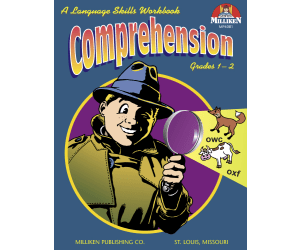
Comprehension Grades 1-2
ELA, Reading, Reading Comprehension, Grade 1, 2, Teacher Tools, Lesson Plans
Comprehension Grades 1-2: A Distinctive Teaching Resource Comprehension Grades 1-2 is a remarkable teaching resource skilfully created to boost the comprehension skills of learners in grade 1 and grade 2. Designed especially for Language Arts, this workbook acts as a skillful guide for teachers striving to instill a deep understanding of written text in their students. Making Sense of Reading Educators understand that reading surpasses mere word recognition. Thus, Comprehension Grades 1-2 delves into making sense of what is read - a critical step towards academic success. This invaluable tool emphasises on cultivating important comprehension skills like: Follwoing directions, Categorising, Sequencing, Main idea identification, Apllication in context, and Finding information. Tailored Learning Journey Per Student & Setting The workbook is crafted with several activities meticulously arranged within its enriching content that guarantees each student's learning journey is exclusively tailored according to their pace and style . The activities are designed for unsupervised individual practice either at home or within classroom settings. The flexible format lets teachers incorporate it effortlessly into varied instructional settings like group or small team sessions. Beyond Classroom Learning & an Efficient Layout In addition to being used within classrooms, each activity can integrate seamlessly into home-learning reinforcement exercises thereby fostering parent-child engagement - equally beneficial for homeschoolers seeking organized practices for developing comprehension skills. The Comprehension Grades 1-2 workbook contains a set of professionally compiled lesson plans spread across 51 ready-to-print pages housed within one handy PDF file. Plus, answer keys are included for convenience and ease of reference during evaluations or review sessions. Conclusion In conclusion, Comprehension Grades 1-2 supplies teachers with easy-to-use content that simplifies teaching comprehensive Language Arts concepts while actively engaging students in their learning journey. The goal is to equip children not just to decode words but truly read by deeply understanding them.
Author Classroom Complete Press
Tags Comprehension, Categorizing, Main Idea, Context Clues, Sequencing
How to Write a Book Report: What Is a Book Report? - FLASH-MAC
ELA, Writing, Common Core, Grade 5, 6, 7, 8, Teacher Tools, Lesson Plans
How to Write a Book Report: What Is a Book Report? - FLASH-MAC Resource This insightful educational resource is dedicated primarily for educators instructing students from grades 5 through 8. It casts special focus on Book Report Composition. Top Features This tool skillfully blends curriculum -based content, Bloom's Taxonomy principles, and alignment with the Common Core State Standards to deliver wholesome educational instruction. Included are reading passages designed to instigate before-and-after reading questions encouraging an interactive learning environment. A collection of printable items and vocabulary flashcards become valuable assets in the hands of learners. These enhance their writing journey by acting as tactile aids to stimulate tangible learning experiences. The tool also features a variety of graphic organizers purposed for project planning and thought organization making it beneficial in both classroom scenarios and homework exercises. Last but crucially — This product is fully compatible with MAC operating systems ensuring seamless integration across all your MAC computers & laptops! In conclusion,: 'How to Write a Book Report: What Is a Book Report?' rapidly morphs from being just software to an indispensable kit that every educator keen on shaping well-rounded writers would treasure. Interactive activities enrich these resources by adding dynamic elements that can capture student engagement at rewarding levels as they undertake their learning adventure of book report composition.
Author Classroom Complete Press
Tags Software (Mac)

Learn to Read and Spell Sight Words | Lesson 8 | Micro-Learning Deck
ELA, Language Development, Spelling, Preschool, Grade 1, 2, Teacher Tools, Lesson Plans
This download is Lesson 8 for Learn to Read and Spell Sight Words. This is a digital lesson with 30 slides to help teach sight words! The sight words for this lesson are: -get -go -had -has -have There are 6 different activities to teach the sight words for this lesson. Activities: -Write words -Letter tiles -Type words -Match the words -Close reading -Sentences
Author Teach Me This
Tags Learn To Read, Learn To Spell, Sight Words, Spelling Lesson, Letter Tiles
I WONDER - What Is A Preposition | Animated Video Lesson
Creative Writing, Writing, ELA, Formal Writing, Grade 4, 5, 6, 7, 8, 9, 10, Lesson Plans, Teacher Tools
Video Introduction An amazing video designed for the students to learn more about languages. I WONDER - What Is A Preposition | Animated Video Lesson Do you enjoy learning English? Which topic do you like the most Grammar, writing, reading, spelling, comprehension, vocabulary or phonics? Have you ever tried to learn any other language? If yes, tell us more about it? How many languages are spoken in the world? What do you think the most interesting one? Can you say Hello in Spanish, French or even Japanese? You can give it a try! Can you name the countries that speaks Portuguese? How many countries speaks Dutch? What is the less spoken language in the whole world? Would you like to learn a new language someday? If yes, which language will you choose? I WONDER - What Is A Preposition | Animated Video Lesson The video is perfect for encouraging the researching skills for the students, while learning more about world languages. I WONDER - What Is A Preposition | Animated Video Lesson This friendly designed video is suitable for students at school, homeschooling, and as a group activity. Format Available in MP4 format.
Author Educational Voice
Rating
Tags What Is A Preposition, What Is A Preposition Video, Preposition, Preposition Video, Preposition Facts, Preposition Video For Kids, Preposition Facts For Kids, Prepositions, Prepositions Facts
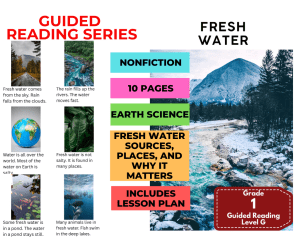
Fresh Water: Guided Reading Level G with Lesson Plan
ELA, Resources for Teachers, Reading Comprehension, Reading, Science, Language Development, Life Sciences, Geography, Social Studies, Earth and Environmental Sciences, Kindergarten, Grade 1, 2, Worksheets & Printables, Worksheets, Teacher Tools, Centers, Activities, Literacy Readers, Quizzes, Quizzes and Tests, Assessments, Lesson Plans
This Fresh Water (level g) guided reading book with lesson plan includes: Guided Reading Color Label (front cover x1) This is a quick way to match the book’s demands to what students can generally handle.. The overall goal is to use the level/color to pick books for several smaller groups. To qualify for a certain level, a student is expected to read a book from that level with about 90–94% accuracy. If a student is consistently accurate and understands, move up a level. If the student is struggling at that level, drop down and add more support. Each student will improve at completely different rates, but it is generally one of the best ways to check progress across the class. DOWNLOAD THE CATALOG TO VIEW ALL GUIDED READING BOOKS AVAILABLE (SORTED LEVELS A-Z) Pre-Reading Question (x1) Teacher asks the prompt aloud, can be while showing the cover or first page. Students share what they already know, or make educated guesses from the cover. Prompt them to use the target vocabulary. Write some of their responses on the board to look back at during the reading. Vocabulary Words (x5) Introduce the five words, best doing it one at a time. Start by saying it, while students repeat and then see if anyone knows what it means before reading further. Read through the meaning and try to briefly connect each word to a picture or gesture so it’s meaningful. Ask students to flip through the book pages and point to where they see each of the vocabulary words. While reading the book pause upon coming across one of the vocab words or read the sentence twice to make sure students understand the word has appeared. Optional: Ask students to raise hands whenever they see/hear one of the new words. Guided Reading Pages (x10) Check the book snapshot (below) for: primary topic - do you need to prep extra reading or intro materials on this? what is taught best - decide on 1-2 bullets to focus on, use the prompt or words provided here for best results. learning goals - what you are checking for students to be able to do after the session, elicit answers using prompts or words provided. key vocabulary (see section above). questions overview - so you know what is coming up and if you need to prep extra materials to assist understanding. Run the lesson You may have already looked at a few of the pages together, but you can show them some of the pictures again first to set meaning. Depending on how much time you have and how familiar your students are with guided reading class, you may want to read the book aloud first with the group first. Students whisper or partner read, while you listen in. If time, do it as a group, one student reading a page each. Use the guided page’s prompts to coach: “Check the picture / does it make sense?” “Point under the words / try the first sound” “Reread the sentence smoothly”. Try to focus more on one student per session (rotating every time), so you can work out if they are ready to move up or need to move down a level. Comprehension Questions (back cover x3) This is your way to check that students didn’t just say the words, but actually understood the text. First, let students answer by pointing to the page/picture and saying a short sentence. After any answer, follow with: “Show me where you found that in the text.” In bigger groups, have partners answer first (10–20 seconds), then call on 2–3 students to share. Differentiation tips: Emerging speakers/struggling readers: oral + pointing On-level: oral in a full sentence Higher: one written sentence or draw + label Book Snapshot Title: Fresh Water Genre: Nonfiction Subject: Life Science (Earth science—water) Primary Topic: Fresh water sources, places, and why it matters Estimated Guided Reading Level (A–Z): G What This Book Teaches Best How fresh water differs from salty water (fresh water is not salty). Where fresh water comes from (rain from clouds; snow melting on mountains). Places fresh water is found (rivers, a stream, a pond, deep lakes). How water can move fast or stay still depending on where it is (rivers vs. pond). Why fresh water is important for living things , including plants taking in water through roots. Learning Goals Students can explain that most water on Earth is salty and fresh water is not salty. Students can describe two ways fresh water forms (rain from clouds; snow melting on mountains). Students can name places the book shows fresh water (rivers, stream, pond, lakes). Students can compare how water moves in different places (rivers move fast; pond water stays still). Students can tell why fresh water matters to living things, including plants and trees. Key Vocabulary From the Text salty — tasting like salt. rivers — long, moving water that flows across land. stream — a small river. pond — water that stays in one place. roots — parts under the ground that take in water. Discussion Prompts Pre-reading question: Where do you think fresh water comes from, and where might we find it? Comprehension questions: What does the book say fresh water is not ? Comprehension questions: What are two places the book shows fresh water can be found? Comprehension questions: Why is fresh water important for living things in the book? Printing Tips 1. Best Printing Method (Recommended) “Booklet” Printing (Best if Available) If your printer or PDF viewer supports Booklet Printing , use this. Settings to use: Print mode: Booklet Paper size: Letter or A4 (either works) Orientation: Landscape Print on both sides: Yes Flip on: Short edge Scaling: Fit to printable area Booklet subset: First test: Front sides only Then: Back sides only This will automatically: Pair pages correctly Put the cover on the outside Align everything for folding After printing, fold in half and staple along the spine . 2. If “Booklet” Printing Is NOT Available You can still print this correctly with manual duplex printing . Step-by-step: Open the PDF. Choose Print . Set: Orientation: Landscape Pages per sheet: 1 Print on both sides: Yes Flip on: Short edge Print all pages . Because each PDF page already contains two facing book pages, the result will still fold cleanly into a book. Thousands of Cored Education products are included with your TeachSimple membership. Download links and encyclopedia index available here.
Author Cored Education
Rating
Tags Reading Comprehension, Reading Passages, Reading, Guided Reading, Guided Reading Lesson Plan, Guided Reading Activity, Pre-reading, Science Lesson Plans, Life Science, Geography

How to Write a Paragraph: Proofreading Your Paragraph
ELA, Writing, Common Core, Grade 5, 6, 7, 8, Teacher Tools, Lesson Plans
How to Write a Paragraph: Proofreading Your Paragraph A premium educational resource for teachers and home-school parents catering to grades 5 through 8. This tool primarily focuses on Language Arts, particularly writing. Purpose: The goal of this lesson plan is not just honing sentence construction capacity, but also helping students transform thoughts into cohesive, structured paragraphs. It simplifies the writing process making it both intelligible and direct for enhanced learning. Benefits: Offers tangible exposure to students about the pre-writing process with helpful graphic organizers. Hones practical proficiency in paragraph composition by introducing four pivotal paragraph forms. Implementation: This resource adheres to Bloom’s Taxonomy’s crucial teaching principles, making it substantially beneficial as an addition to existing reading programs or used independently for student projects. Inclusions: A comprehensive implementation guide assisting user-friendly application of the resource. An assessment measure including rubrics and comprehension quizzes to track student improvement over time. Fosters enrichment of language arts skills with engaging interactive content like word puzzles included in the mix. Complementary learning aids: Six colorful graphic organizers provide step-by-step guidance assisting learners in successful writing techniques. This tutorial tool aligns well with modern education models worldwide due to being : - Driven meticulously by Common Core State Standards (CCSS) - Closely attuned with Bloom's Taxonomy guiding principles. Accessible conveniently in PDF format; this teaching resource serves as a valuable aid across different educational platforms.
Author Classroom Complete Press
Tags PDF

Summary Writing for Short Stories
ELA, Writing, Grade 7, 8, 9, Teacher Tools, Lesson Plans
“Summary Writing for Short Stories,” is Part 4 in my unit, Creating Independent Readers in your Middle School Classroom . This 19-page lesson, as well as the entire unit, is designed for 6th, 7th, and 8th-grade students. Summary Writing for Short Stories has two parts to it, each with a lesson plan. In the first part, students learn how to summarize. In the second part, they practice summarizing as a group using the picture books of Chris Van Allsburg.It is not necessary to do the second part if you don't have time. By the end of this lesson, students will have written several summaries and will understand how to write a summary. This lesson focuses on fiction summary writing. Summaries are important to teach because writing them helps improve reading comprehension and writing skills. However, many students find fiction and nonfiction summary writing a challenge to write because they have a hard time narrowing down the key points.It is really good practice to have students write summaries regularly. It will improve both their organization and their skill in writing. The lesson plans include objectives and learning targets that are aligned with the Common Core Standards, a Noticings and Wonderings or Evidence and Interpretation Chart , Criteria for Writing a Summary, Different Ways to Begin a Summary, a 5 W and H Chart for Writing a Summary, Sample Charts for “Thank You Ma’am” and “Charles” and Summaries for Each, a Narrative Summary Writing Rubric, a Chris Van Allsburg Summary Writing Group Activity Lesson Plan, and a Collaboration Chart (Looks Like, Sounds Like, Feels Like). In my 95-page complete unit, Creating Independent Readers in your Middle School Classroom , I offer a comprehensive plan for how to establish a successful independent reading program in your classroom. The unit includes the following Part 1: What We Do When We Read: Part 2: Reading Requirements Part 3: Reading Logs, Setting Goals, and Reflection Part 4: Summary Writing for Short Stories Part 5: Metacognitive Logs: Reading Response Part 6: How to Set Up An Amazing Classroom Library Parts 1, 4, and 5 are available as individual lessons. Check out my store at A Great Good Place for Teachers If you have any questions, please email me at gruenwaldy1@gmail.com
Author Intentional Teaching and Learning
Tags Summary Writing, Short Stories, Independent Readers, Reading Unit, Reading Comprehension, Summarization Lesson Plans Middle School, How To Teach Summary

Deserts Reading Comprehension Passage - Cored Ed Encyclopedia
ELA, Language Development, Reading Comprehension, Reading, Life Sciences, Science, Earth and Environmental Sciences, Technology, Geography, Social Studies, Grade 2, 3, 4, 5, Worksheets & Printables, Worksheets, Teacher Tools, Centers, Activities, Writing Prompts, Assessments, Quizzes and Tests, Quizzes, Lesson Plans
This deserts reading comprehension with lesson plan includes: Visualization (on the front cover) Start your lesson by taking a minute to think and share something about the topic. Read the script aloud (slowly), perhaps prepare some music or sound effects. Student close their eyes and let their imaginations wander. Students open their eyes, read the question aloud and give them a few minutes to complete. Ask a few students to share or keep answers until the end to compare with what they learn in the passage. COMPANION VIDEO NOW AVAILABLE (EMBEDDED AFTER PREVIEW PICTURES IN PRODUCT DESCRIPTION) Quick pause—thousands of Cored Education products are included with your TeachSimple membership. Download links and encyclopedia index available here. Pre-Reading Trivia Students will write down one thing they already know about the subject and then read five more facts and discuss. These facts are fun, and the students will enjoy learning about the subject before reading more. Give 1 minute for students to write what they already know (no pressure—best guess is fine). Read the five facts together. After each fact, do ask a student for their opinion, was it surprising? Set a purpose by asking students to highlight/underline one fact they want to learn more about during the reading. Reading Passage The text is a high-interest reading passage with set paragraphs, roughly three to four paragraphs long. It contains a variety of themes about the topic, anywhere from history to technology. The passage is between 250 and 350 words in length. First, ask students to look at the headings and see what they’ll learn about today. What do they know about the topic/heading? First read options: Teacher read-aloud (best for support). Partner reading (paragraph by paragraph). While reading, students underline important details, and vocabulary words they think may come up in the questions section. Mixed Questions The first question page contains four multiple-choice questions, each with a choice of four answers, and three written response questions that require a sentence or two from the student. Students complete the mcqs first independently, then review quickly as a class. For the 3 written responses, try to get students giving the answer with some form of evidence: “I think ___ because the text says ___.” If students get stuck, send them back to check the passage. Vocabulary Questions Practice seven key words from the text in this section across two activities. First section is scrambled words where students will unscramble three words given a clue for each. The second section is a word to meaning matching activity. Before starting, have some students read out words they underlined in the passage. Ask students to say the word and read aloud the sentence(s) around each word. Ask students to do scrambled words and the matching exercise in pairs then go through answers as a class. For the scrambled spelling task, get four pairs to come up to the board and write the words for extra practice with the other student reading out the clue. For the matching task, prompt students to give full sentences: “I matched ___ with ___ because ___.” Creative Writing In this question, the student will be required to write a five to eight sentence paragraph on a question related to the topic. Before starting, ask students write down 3 key ideas they are going to include in their piece. Ask students for ideas to share around the class to help those struggling. Pro writing expectations: 5–8 sentences At least 2 facts or details from the passage At least 2 vocabulary words from the previous page Students read their paragraphs while classmates listen for facts and vocabulary words. Extension Activities This page is optional for fast finishers or to take home. There are several activities, each one requiring a different skill. Do some, do none, do all, completely optional - but you will feel reassured knowing every possibility is planned for. Includes summary writting question and additional facts. Answer Key There are answers for the multiple-choice questions, written response questions have sample answers, vocabulary answers and if there is a summary question then a sample summary will be provided as well. Lesson Plan Included Customized lesson plan for this lesson is included. Lesson Snapshot Title: Deserts Genre: Nonfiction (informational text with headings) Subject: Earth Science / Life Science / Reading (Informational Text) Primary Topic: Deserts are defined by dryness and survival tricks Estimated Guided Reading Level (A–Z): P What This Lesson Teaches Best Clarifies the key definition: a desert is defined by dryness , not by sand. Explains desert rainfall patterns (often under about 10 inches/25 centimeters per year, sometimes arriving in a quick burst). Builds understanding that deserts can be hot or cold, including Antarctica as the biggest desert on Earth in the passage. Highlights plant and animal adaptations (cacti storing water; plants keeping/curling leaves; rodents getting moisture from seeds; animals hiding in burrows by day and moving at night). Introduces how scientists study deserts today (weather stations, soil samples, satellite pictures) and explains “rain shadow.” Learning Goals Students will explain how the passage defines a desert. Students will describe what the passage says about how much rain many deserts get in a year. Students will identify at least two survival tricks of desert plants from the text. Students will identify at least two survival tricks of desert animals from the text. Students will explain what a “rain shadow” is, using the passage’s description. Students will describe ways deserts are studied today, based on the text. Key Vocabulary From the Text dryness — having very little water or rain. sparse — not many; spread out. burrows — holes in the ground where animals hide. satellite — something in space that takes pictures from above. dunes — hills of sand shaped by wind. FULL CATALOG OF DOWNLOAD LINKS AND ENCYCLOPEDIA INDEX HERE
Author Cored Education
Rating
Tags Vocabulary, Reading Comprehension, Reading Passages, Lesson Plans, Ela Lesson Plans, Reading Comprehension Lesson Plans, Pre-reading, Science Lesson Plans, Earth Science, Geography
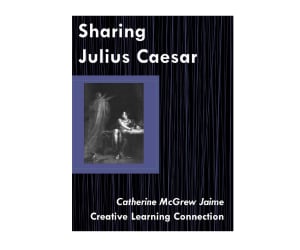
Shakespeare Unit Study: Julius Caesar - eBook
ELA, Literature, Grade 9, 10, 11, 12, Lesson Plans, Teacher Tools
Within this 21-page download, students will take a closer look at Shakespeare and his written work Julius Caeser. Students will examine a timeline, characters, notes and quotes from the play. At the end of this unit of study, students will be able to complete worksheets, a crossword puzzle and a word search. Students will also get to enjoy 2 coloring pages.
Author Creative Learning Connection
Tags Shakespeare, Literature, Ebook, Unit Study, Julius Caesar
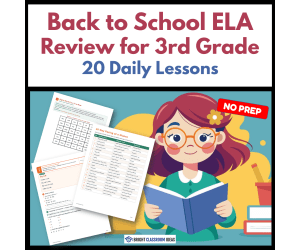
Back to School ELA Review for 3rd Grade | 20 Daily Lessons
ELA, Grade 3, Assessments, Teacher Tools, Lesson Plans, Worksheets & Printables
Make the first month of school smoother with this 3rd grade back to school ELA review designed to revisit essential Grade 2 reading, grammar, vocabulary, word study, and writing skills. With 20 structured daily lessons plus 16 print-and-play literacy games, this resource helps third graders rebuild confidence, establish routines, and prepare for Grade 3 learning. Each lesson follows a predictable four-part rhythm— Read & Think, Language & Grammar, Word Work, and Write About It —so students can review multiple ELA strands in manageable daily practice. The Teacher Guide recommends approximately 15–25 minutes per full lesson, with skills spiraling from lighter review into combined practice. What’s Included This 3rd grade ELA review includes a complete beginning-of-year literacy package: ✅ 20 daily ELA review lessons ✅ 40 pages of daily student lessons ✅ Short fiction, nonfiction, and fable passages ✅ Reading comprehension questions ✅ Text evidence practice ✅ Grammar and language review ✅ Phonics and word study ✅ Vocabulary practice ✅ Daily writing prompts ✅ 16 print-and-play literacy games and activities ✅ Partner and small-group games ✅ Literacy center activities ✅ Complete answer key for all 20 days ✅ Teacher guide ✅ 20-day pacing overview ✅ Four-week planning guide ✅ Differentiation ideas ✅ Game preparation directions ✅ Game-to-skill quick-reference map ✅ Class progress record sheet ✅ Family letter for home-school connection ✅ Student reflection ✅ Reading Star Award The Student Workbook contains 20 daily lessons plus 16 print-and-play games , covering reading, grammar, word work, vocabulary, and writing across 62 pages. The complete Answer Key provides answers for all 20 days, organized by section for efficient checking, with reasonable student wording accepted for open writing and reflection tasks. How It Works in the Classroom Use this 3rd grade back to school ELA review as a first-month literacy routine, morning work option, whole-group warm-up, independent review, intervention support, homework practice, or beginning-of-year skills check. Each day follows the same student-friendly structure: 📖 Read & Think — Students read a short fiction, nonfiction, or fable passage and answer comprehension questions, including text-based thinking ✏️ Language & Grammar — Students review a focused Grade 2 language skill 🔤 Word Work — Students practice phonics, vocabulary, morphology, and word relationships 📝 Write About It — Students complete a short writing task connected to the day’s reading or skill focus A full lesson is designed to take about 15–25 minutes . The predictable routine supports independence, while the spiraled sequence gradually combines reading, language, vocabulary, and writing skills. Use the resource for: ⭐ Back-to-school ELA review ⭐ Third grade morning work ⭐ Grade 2 skills review ⭐ Beginning-of-year literacy practice ⭐ Reading comprehension review ⭐ Grammar warm-ups ⭐ Vocabulary practice ⭐ Word study ⭐ Literacy centers ⭐ Partner practice ⭐ Small groups ⭐ Early finishers ⭐ Intervention and reteaching ⭐ Formative assessment ⭐ Homework or home practice The 20-Day Pacing at a Glance chart on page 6 of the Teacher Guide visually maps each day’s reading, language, and word-work focus. Students move from main idea and details, character traits, setting, sequence, and theme into inference, cause and effect, compare and contrast, author’s purpose, point of view, text features, fact and opinion, text evidence, context clues, summarizing, making connections, editing, and mixed review. For a four-week routine, the Teacher Guide suggests using daily workbook practice Monday through Thursday and reserving Friday for a game, center rotation, or catch-up. Standards & Learning Goals This third grade literacy review revisits essential Grade 2 learning across five major ELA strands: 📚 Reading Comprehension — main idea and details, character traits, setting, sequence and plot, theme or central message, inference, cause and effect, compare and contrast, author’s purpose, point of view, text features, fact and opinion, text evidence, context clues, making connections, and summarizing ✏️ Grammar & Language — complete sentences and fragments, subject and predicate, common and proper nouns, verb tense, adjectives and adverbs, pronouns, subject-verb agreement, possessive nouns, capitalization, commas in a series and dates, quotation marks, conjunctions, compound sentences, contractions, irregular plural nouns, irregular past-tense verbs, combining sentences, and editing 🔤 Phonics & Word Study — r-controlled vowels, diphthongs, prefixes, suffixes, root words, long vowel teams, compound words, and syllables 💬 Vocabulary — synonyms, antonyms, context clues, multiple-meaning words, homophones, shades of meaning, word relationships, comparatives, similes, and academic vocabulary 📝 Writing — sentence and paragraph writing, opinion writing with reasons, informative writing, sequencing, comparison writing, text-based responses, summarizing, personal connections, dialogue, descriptive writing, and reflection The workbook provides targeted daily practice that moves from foundational review into more complex application. For example, students practice character traits with subject and predicate on Day 2, sequence and plot with verb tense on Day 4, compare and contrast with possessive nouns on Day 8, point of view with commas on Day 10, text evidence with contractions on Day 14, and summarizing with editing on Day 17. Why Teachers Love It ✨ One predictable routine every day. The consistent four-part structure helps students know what to expect while building independence. ✨ Review multiple ELA skills without overwhelming students. Reading, grammar, word work, vocabulary, and writing are divided into manageable daily practice. ✨ Get 20 days of ready-to-use review. The pacing is already mapped for a smooth first month of third grade. ✨ Build deeper reading comprehension. Students practice main idea, character traits, setting, theme, inference, cause and effect, compare and contrast, author’s purpose, point of view, text features, fact and opinion, text evidence, context clues, and summarizing. ✨ Strengthen grammar and sentence skills. Practice includes sentences and fragments, subjects and predicates, verb tense, adjectives and adverbs, pronouns, possessives, capitalization, commas, quotation marks, conjunctions, compound sentences, contractions, irregular plurals, irregular past-tense verbs, and editing. ✨ Expand vocabulary and word knowledge. Students work with synonyms, antonyms, prefixes, suffixes, context clues, compound words, multiple-meaning words, homophones, root words, shades of meaning, word relationships, similes, and academic vocabulary. ✨ Add hands-on practice with 16 literacy games. Activities include: Parts of Speech Sort Contraction Match Synonym Match Roll-an-R-Controlled Word Tricky Word BINGO Tricky Word Roll & Read Vowel Team Sort Same & Opposite Match Reading Road Race Main Idea Baskets Fact or Opinion Sort Sentence Building Tiles Fix-It Cards Sequence Cards Homophone Match Syllable Sort The Game → Skill Quick Map on page 9 of the Teacher Guide clearly pairs each game with its target skill, including parts of speech, contractions, synonyms, r-controlled vowels, Grade 3 high-frequency words, word fluency, long vowel teams, antonyms, mixed reading and language, main idea and details, fact versus opinion, compound and expanded sentences, editing, sequencing, homophones, and syllables. ✨ Prep once and reuse the games. Print game pages on cardstock, laminate boards and cards, cut reusable pieces apart, and store activities in labeled bags for repeated center use. ✨ Differentiate for varied learning needs. The Teacher Guide includes practical adjustments for below-level readers, on-level learners, above-level students, and multilingual learners. ✨ Support stronger written responses. Daily writing tasks include opinion with reasons, sensory description, sequencing, comparing, dialogue, text-based responses, summaries, personal connections, similes, and reflection. ✨ Monitor progress without adding another formal assessment. The short daily pages can serve as low-stakes formative checks. The Class Record Sheet shown on page 10 of the Teacher Guide provides columns for Weeks 1–4 plus notes, making it easy to track students who are on target and identify skills to revisit. ✨ Save time checking work. The included answer key provides organized responses for all 20 daily lessons. ✨ Support home-school connection. A ready-to-send family letter explains the daily ELA review routine and suggests simple ways caregivers can support literacy at home. Give your students a confident, structured start to third grade with this 3rd grade back to school ELA review . Download it to review second grade skills, establish a predictable literacy routine, strengthen reading and writing confidence, and keep students engaged with 20 daily lessons plus 16 print-and-play games. Perfect for teachers searching for third grade morning work , second grade skills review, beginning of year ELA activities, 3rd grade literacy centers, reading comprehension practice, grammar review, vocabulary activities, word study, first month of school activities, formative assessment, or a complete back-to-school literacy review.
Author Bright Classroom Ideas Marketplace
Rating
Tags Daily, Assessment, Lesson, Ela, Reading, Writing, Grammar, Back To School

How to Write a Paragraph: Revising Your Paragraph - FLASH-PC
ELA, Writing, Common Core, Grade 5, 6, 7, 8, Teacher Tools, Lesson Plans
How to Write a Paragraph: Revising Your Paragraph - FLASH-PC This educational resource is designed for educators teaching paragraph writing and revision for Grade 5 through Grade 8, specifically in Language Arts. It provides insightful tips and activities centered around effective writing and revising paragraphs. Enhanced Comprehension: The material introduces curriculum -based content via engaging reading passages. 'Before you read' and 'after you read' questions help to reinforce learning outcomes. Interactivity: This software includes interactive activities that promote active student participation, creating an enjoyable learning environment. Vocabulary Enhancement: The included printable vocabulary flashcards aim at expanding students' lexicon. Educational Tools:The graphic organizers offer clarity of tasks, ensure effective grasp of concepts, and promote structured thinking among learners. These can be used effectively in group work or individual assignments. This product aligns with Common Core State Standards thus ensuring a high quality of education delivered to pupils across all grade levels it is catered towards. Bloom's Taxonomy: The product complies perfectly with Bloom's Taxonomy - fortifying the academic rigor enclosed within this package. Diverse Instruction Settings In addition to being used in full class instruction setting,this resource can also be leveraged well for small group instructions. It lends itself suitable as homework assignments too allowing reinforcement of classroom learnings through repeated engagement at home. A comprehensive solution indeed! 'How to Write a Paragraph: Revising Your Paragraph - FLASH-PC,' is an invaluable tool for educators aiming to nurture proficient writers who are not only good creators but also careful revisers.
Author Classroom Complete Press
Tags Software (PC)
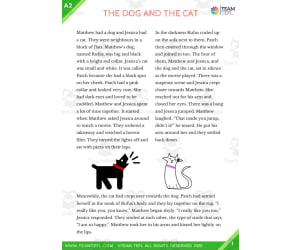
The Dog and the Cat Short Story | Pre-Intermediate Lesson Plan
ELA, Reading, Grade 10, 11, 12, Teacher Tools, Lesson Plans
The Dog and the Cat Short Story Lesson Plan for Language Arts Students This informative and concise lesson plan helps students improve their reading comprehension and grammar skills. The engaging short story, The Dog and the Cat, captures students' interest while they learn. Educators can implement this versatile resource in various settings like whole group instruction, small reading groups, or as a homework assignment. After reading the lively short story, students complete reading comprehension questions to demonstrate their understanding. Additional exercises allow students to practice grammar skills like prepositions and pronouns. Answer keys are provided for educators to easily assess student work. This reading lesson plan helps pre-intermediate Grade 4 and Grade 5 language arts students advance their skills, making it a useful resource for public school teachers and homeschool educators alike. Provided as a printable PDF file, the material can also be accessed digitally through Google Apps for flexible classroom integration. Includes an answer key Makes it easier than ever for educators to evaluate student responses accurately Eases manual workload on teachers when assessing responses delivered using traditional or conventional methods. The package consists of three PDFs with four ready-to-print pages along with one digital access file. With its emphasis on relationships, it injects a dose of fun into everyday schooling while imparting valuable educational content. In terms of implementation, there's room for flexibility depending on class size or individual learner preferences: whole group setting inclusion, where all learners navigate through collectively; small-sized subsection utilization, allowing more intimate discussion amongst peers; traditional homework assignments that encourage independence in learning.
Author TEAM TEFL
Tags Dogs, Cats, Short Story, Comprehension, Vocabulary Words, The Cat Short Story

Ignorance is Bliss | Figurative Language Activity | Micro-Learning Deck
ELA, Reading, Reading Comprehension, Grade 2, 3, 4, 5, Teacher Tools, Lesson Plans
This resource allows students to explore figurative learning in a fun way. The figurative language term for this learning deck is "Ignorance is Bliss." Through close reading and a reading passage with audio, your students will better comprehend figurative language! Included: -Video lesson on language concept -Reading passage w/ audio Comprehension -Quick write
Author Teach Me This
Tags Figurative, Language, Learning Deck, Ignorance Is Bliss, Comprehension

All About B - Letter of the Week Unit
ELA, Language Development, Pre-Reading, Kindergarten, Teacher Tools, Lesson Plans
All About B - Letter of the Week Unit This preschool letter B bundle allows you to create engaging and memorable letter recognition lessons. With dozens of worksheets, crafts , games, and activities, you can easily build fun letter B lessons for the whole class, small groups, or individual students. Children will practice letter formation, letter sounds, and using the letter in words through tracing, matching, dot painting, puppet plays, bingo, and more. Consistent, play-based letter instruction throughout the year boosts pre-reading skills. Access similar resources for every letter, plus numbers and colors, to sustain your approach. This thoughtfully designed letter B collection saves you time while optimizing student participation and retaining letter concepts.
Author Simply Schoolgirl
Tags Alphabet Memory Game, Letter Of The Week, Letter Songs, Tracing Letters, Letter Identification, Preschool, Formation, Phonics, Sounds, Kindergarten

Grammar Grades 1-2
ELA, Grammar, Grade 1, 2, Teacher Tools, Lesson Plans
Grammar Grades 1-2: An Exceptional Teaching Resource Grammar Grades 1-2 is a finely crafted aid that supports educators in nurturing fundamental grammar abilities within students. This tool encompasses a diverse range of activities specifically designed to instill crucial grammar skills, opening doors for impeccable communication. Focusing on Fundamental Aspects of Grammar The product aims to allow children the space to identify different parts of speech such as nouns, verbs, and adjectives. A thorough comprehension of these components and their relationships helps students gain a strong foundation in the field of grammar. Distinguishing Features: Emphasis on Capitalization Basics and Sentence Formation This teaching resource review capitalization basics comprehensively to eliminate common errors young learners make during writing sessions. The tool also offers several opportunities for practice aimed at improving sentence formation. Versatility for Both Classroom and Home Environments Suitable for both classroom as well as home study scenarios - this resource stands out due its compatibility with different modes of instruction. It allows students to work on their own, needing only minimal supervision thus making it an excellent choice for large group instruction, small group learning or even homework assignments. Digital Ready Content Prepared Specifically For Grades 1 & 2 Pupils Grammar Grades 1-2 has been curated primarily with Grade 1 and Grade 2 pupils in mind who are studying Language Arts under the subject category Grammar. The content comes ready in easily accessible PDF files which include comprehensive lesson plans plus answer keys facilitating self-correction possibilities thereby enhancing learning experiences all around. Adaptable Across Diverse Educational Settings The material is functional within various educational settings making it a robust teaching aid that promises no compromise on quality of education whether the setting is a traditional public school or homeschooling scenario alike.
Author Classroom Complete Press
Tags PDF

Defining Words Supplementary Materials Grade 5-6 (PDF)
ELA, Language Development, ESL, Common Core, Resources for Teachers, Vocabulary, Grade 5, 6, 7, Worksheets & Printables, Worksheets, Quizzes and Tests, Teacher Tools, Tests, Assessments, Lesson Plans
Defining Words Supplementary Materials Note: This download DOES NOT include the tests themselves. You can still make use of these materials without them but they are recommended. Download in a format of your choice in the "Links" section below. In the Supplementary Pack Interactive Ice Breakers: Engaging warm-up activities that introduce students to key ELA concepts, such as quick capitalization corrections and punctuation challenges. Guided Practice: Structured teacher-led exercises that reinforce grammar and punctuation rules, helping students identify and apply them correctly in sentences. Group and Partner Tasks: Collaborative activities where students work together to edit sentences, correct capitalization, and improve punctuation through peer discussion and teamwork. Independent Worksheets: Carefully designed worksheets that provide focused practice, allowing students to apply learned concepts and refine their skills independently. Exit Tasks: Quick assessments at the end of each lesson, prompting students to reflect on what they’ve learned and apply their knowledge in writing and editing tasks. Links Matching Words to Definition Matching Definition to Words Accurately Defining Meanings More Defining Word Practice Google Docs Google Forms Google Slides PDF PPT Word FULL CATALOG OF DOWNLOAD LINKS HERE Grade 5/6 Links: Capitalization & Punctuation Google Docs Google Forms Google Slides PDF PPT Word Free Supplementary Materials Pack Adjectives Google Docs Google Forms Google Slides PDF PPT Word Free Supplementary Materials Pack Nouns Google Docs Google Forms Google Slides PDF PPT Word Free Supplementary Materials Pack Pronouns Google Docs Google Forms Google Slides PDF PPT Word Free Supplementary Materials Pack Verbs Google Docs Google Forms Google Slides PDF PPT Word Free Supplementary Materials Pack Prefixes & Suffixes Google Docs Google Forms Google Slides PDF PPT Word Free Supplementary Materials Pack Sentence Structure Google Docs Google Forms Google Slides PDF PPT Word Free Supplementary Materials Pack Subject Verb Agreement Google Docs Google Forms Google Slides PDF PPT Word Free Supplementary Materials Pack Tenses Google Docs Google Forms Google Slides PDF PPT Word Free Supplementary Materials Pack Context Clues Google Docs Google Forms Google Slides PDF PPT Word Free Supplementary Materials Pack Defining Words Google Docs Google Forms Google Slides PDF PPT Word Free Supplementary Materials Pack Fill in the Blanks Google Docs Google Forms Google Slides PDF PPT Word Free Supplementary Materials Pack Homophones Google Docs Google Forms Google Slides PDF PPT Word Free Supplementary Materials Pack Synonyms Google Docs Google Forms Google Slides PDF PPT Word Free Supplementary Materials Pack ELA Review Questions Overview Questions have three answer choices. There are a handful of pictures on each test for aesthetic purposes, as well as a review sheet covering most of the topics covered in the product. Introduction or Example Sheet Each topic will include an introduction or example sheet to go through first with your students. Full Answer Keys Full answer keys and sample responses are provided so no matter how busy you are, you know you're covered! For More Like This For similar downloads and other frees, do check out Cored Group on TeachSimple.
Author Cored Education
Tags Elementary, Answers, Ccss, Common Core, Tests, Test Prep, Assessment, Grade 5, Grade 6, Vocabulary

All About L - Letter of the Week Unit
ELA, Language Development, Pre-Reading, Kindergarten, Teacher Tools, Lesson Plans
All About L - Letter of the Week Unit This preschool letter L curriculum bundle helps teach students all about the letter L through dozens of engaging options. Students will practice letter recognition, letter formation, letter sounds, and sound recognition in memorable ways. The bundle includes letter L worksheets, handwriting practice, crafts , activities, games, and more. Printables like word cards and classroom posters are also included. Options are available in both color and black and white. This letter L resource makes planning preschool letter lessons easy and exciting. Consistent, high-quality letter curriculum is available for every letter of the alphabet in the seller's store to support a full year of letter of the week lessons. Use this unit to design fun letter L activities whether teaching one child or a full preschool class.
Author Simply Schoolgirl
Tags Letter Of The Week, Preschool, Kindergarten, Phonics, Mazes, Letter Games, Dot To Dot, Letter Sounds, Letter Identification, Letter Formation

Nonfiction Text Features: Photographs and Illusions Lesson
ELA, Reading, Grade 1, 2, 3, 4, Teacher Tools, Lesson Plans
This resource is a Nonfiction Text Features: photographs and illustrations Lesson. A short and sweet lesson to introduce or recap the nonfiction text features; photographs and illustrations. This lesson aims to keep students engaged and interacting through class discussions and activities. Students will apply reading, creative thinking, problem-solving, and more as they work through these interactive slides. The objective of these lessons is to provide an introduction or recap of the nonfiction text features; photographs and illustrations. These lessons are aimed and creating a concrete understanding of the concepts through various activities as well as class discussions. Students will learn all about captions and labels, and how to identify and apply them on their own. Class discussions and practice activities are included for students to apply their knowledge. There are lesson slides and student slides; the lesson slides can be presented to students as an introduction or recap lesson of the concepts. The lesson slides are animated as well as have speaker notes. Student slides can be given to students to complete during the lesson or as homework after the lesson. There are 2 different presentations - 1 for the lesson and 1 answer slide presentation. These slides are made through Google Slides an animations may work better through Google Slides . If you like this lesson be sure to have in our other Nonfiction lessons: Nonfiction lessons: Nonfiction captions and labels Nonfiction Glossary Nonfiction table of contents Nonfiction title Nonfiction title page Nonfiction index
Author Ezee 101
Tags Nonfiction, Text Features, Photographs, Illusions, Interactive Reading, Activities, Lesson Plans, Intractive, Student Engagment

Vocabulary Packet -Journey's 5th grade - Unit 3 Lesson 15
ELA, Language Development, Vocabulary, Grade 5, Lesson Plans, Teacher Tools
This vocabulary resource was created to be used with 5th grade Journey's reading program. Vocabulary is listed as a glossary, included with pronunciation. Plenty of activities ready to go for students to master the vocabulary included!
Author Jessica Richmond
Tags Vocabulary Packet, Journey's Grade 5, Grade 5, Vocabulary, Glossary, We Were There Too, Lesson 15 Vocabulary Words, Journeys Textbook 5th Grade, 5th Grade Vocabulary Lesson
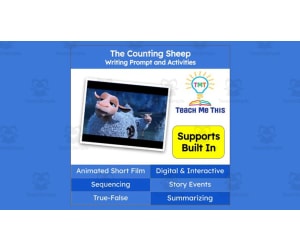
The Counting Sheep Animated Writing Activity | Short Film
ELA, Writing, Grade 1, 2, 3, 4, Teacher Tools, Lesson Plans
The Counting Sheep Animated Writing Activity | Short Film An innovative teaching resource, suitable for Grade 1 through Grade 4. This tool works just like teachers. It connects the excitement of animation with writing basics. Held at its core is a captivating animated short film, The Counting Sheep, which inspires students to creatively explore storytelling. Activity Components: Sequencing: Encourages children to logically organize events. true false: Tests student's understanding of plot points. Main Idea & Details: Clarifies central concepts and peripheral details. Summarizing: Priming students for expressing complex narratives succinctly. This resource isn't just about watching an animated story but interacting with it in meaningful ways, while internalizing key language arts concepts and sparking engaging class discussions or group work activities. Convenience is also offered as it can easily be included in routine homework assignments due to its versatile design. Digital Integration Versatility This activity module resides within Microsoft PowerPoint and can be smoothly integrated into traditional lesson plans— no matter the teaching environment —be that digital or physical classrooms. With 13 ready-to-display slides, each module offers a comprehensive overview within reach. Do remember though – although packed with enriching tasks – all will work best when guided by an educator keen on generating illustrative interpretations from budding perspectives! In conclusion,"The Counting Sheep Animated Writing Activity | Short Film".
Author Teach Me This
Tags Animated Film, Writing Activity, Storytelling, Comprehension Skills, Language Arts
How to Write An Essay: Proofreading Your Essay - FLASH-MAC
ELA, Writing, Common Core, Grade 5, 6, 7, 8, Teacher Tools, Lesson Plans
How to Write An Essay: Proofreading Your Essay - FLASH-MAC: This powerful teaching resource enhances students writing abilities. It is specially designed for teachers of Grade 5-8, focusing on Language Arts and in particular, the art of writing. Educational Content- The program presents curriculum-based content through various interesting mediums and includes reading passages that explore proofreading techniques in essay writing. Pre-reading and post-reading questions are integrated to ensure comprehension and reflection, promoting understanding. Educational Printables- With educational printables included in the lesson, students can physically interact with their lessons, aiding memorization and understanding. Vocabulary flashcards further supplement language acquisition within this field—promoting comprehensive knowledge of essay-proofreading. The Graphic Organizers- To aid comprehension of complex ideas related to proofreading an essay, graphic organizers provide a visual representation of information due to their simplistic data organization. The interactive elements included engage students while ensuring maximum retention as these activities align directly with the subject being taught. These engaging learning methods effectively integrate fun into education. This program strictly adheres to Common Core State Standards, guaranteeing that all contents meet mandatory educational requirements. And inclusion according to Blooms Taxonomy, confirms a maximum depth of knowledge for users. The integration flexibility allows this program's use as: A whole-class activity via projectors or interactive whiteboards, In smaller groups during classroom time fostering collaboration, Solo usage as homework assignments facilitating consistent practice at home or self-study environment related applications. No physical logistics are required because it is software based (Mac) thereby removing geographic limitations. This means it's easily accessible anytime, anywhere. In summary, the How to Write An Essay: Proofreading Your Essay - FLASH-MAC is a rich and engaging teaching aid that provides significant content incorporated with dynamic learning methods. It is instrumental in equipping students for their essay-proofreading tasks.
Author Classroom Complete Press
Tags Software (Mac)