



Page 28 - ELA Lesson Plans
Elevate your ELA instruction with lesson plans that cover reading, writing, speaking, and listening skills. These resources provide diverse texts and engaging activities to improve literacy. Integrate these plans to enrich your language arts curriculum and support student achievement.

 Show filters


Shopping | Pre-Intermediate Lesson Plan
ELA, Language Development, ESL, Grade 8, 9, 10, 11, 12, Teacher Tools, Lesson Plans
Shopping Pre Intermediate ESL ELA and ELL Lesson Plan worksheet. This pre-intermediate EnglishTEFL resource helps students improve their shopping vocabulary and grammar. Students listen to an audio dialogue about shopping to build listening skills. Then they complete reading, writing, and speaking exercises to expand their shopping vocabulary and practice grammar concepts. This versatile resource works for whole-class instruction, small groups, partner work, or independent practice. The complete lesson plan promotes active English language learning with a variety of exercises to assess comprehension and implement English language skills. This paper-based resource also has a Google Apps version and answer key. Flash cards, a writing exercise and extra study are now also included as part of this resource. Components of this lesson plan include: Flash cards A warm-up activity Vocabulary Reading activity Illustrative examples Two closed exercises One open exercise Listening exercise Revision exercise Writing exercises Chatterbox, a recurring feature in our course books encouraging conversation Activity, such as a game, quiz, puzzle, etc., to conclude the class The lesson plan is available in PDF with 24 ready to print pages and one digital access file. One MP3 file included. A part of it is on Google Apps. The answer key is also included for reference.
Author TEAM TEFL
Tags Shopping, ESL Lesson, Reading Passage, Vocabulary Words, Language Arts
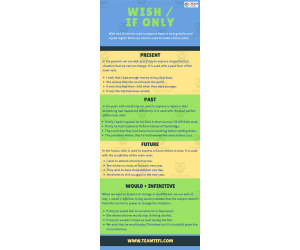
Wish/If Only Advanced ESL Lesson Plan
ELA, Language Development, ESL, Grammar, Not Grade Specific, Adult Education, High School, Teacher Tools, Lesson Plans, Worksheets & Printables
Wish/If Only | Advanced Lesson Plan This advanced English lesson plan helps students learn about wish clauses and conditional sentences using "if only." Educators can implement the informative instructional materials in various ways, such as whole group instruction, small group activities, or independent assignments. After an explanation of wish clauses, students complete practical exercises assessing their comprehension and practicing grammar skills. Answer keys are included for educators. This useful resource works well for English language learners at advanced levels. Adults and children from 12+ and homeschooling parents will appreciate the clear presentation of wish clauses and "if only" conditional sentences. The engaging materials can be conveniently accessed digitally through Google Apps. This lesson allows flexibility to best suit different learning environments while efficiently enhancing students' grammar abilities. The ESL lesson plan includes flashcards, a warmer, grammar rules, exercises, role-play, conversation, writing drill, activity, answers and an extra study that would be good to set as homework. There are 30+ pages and there are teachers notes to guide the teacher.
Author TEAM TEFL
Tags Verbs, Grammar Lesson, Past Simple Tense, Complete The Sentence, ESL

How the Media Can Impact a Business Lesson Plan | Business English Level 3
ELA, Language Development, ESL, Grade 10, 11, 12, Teacher Tools, Lesson Plans
Business English ESL EFL ELL TEFL lesson plan about the Media Impact on Business . It is ideal for older students and adult education. Students will explore the role of the media and its impact on business . They will learn vital vocabulary and gain confidence on their English speaking journey. This business English lesson plan includes: A warmer Closed exercises Open exercise Group activity Revision Role-play Conversation topics This lesson can also be accessed through Google Apps. There are exercises for students to complete in this lesson. Answer key included. This resource is a part of our level 3 series for intermediate and advanced ESL students. All of the TEAM TEFL Business English lessons are available on Teach Simple. You can see the table of contents for all three levels below: Business English Level 1 contents TELEPHONE SKILLS LETTERS & EMAILS CUSTOMER SERVICE SOCIAL MEDIA BRANDING SETTING TARGETS WORK ENVIRONMENT SALES PRESENTATIONS MEETINGS Business English Level 2 contents LETTERS & EMAILS CUSTOMER SERVICE ADVERTISING NEGOTIATIONS SOCIAL MEDIA SETTING TARGETS MARKETING LEADERSHIP MARKET RESEARCH WORK ENVIRONMENT HOW TO WRITE A C.V ENVIRONMENTAL ISSUES BUSINESS IDIOMS Business English Level 3 contents ADVERTISING SALES MEETINGS COMPUTERS & TECHNOLOGY CULTURAL DIFFERENCES INTERVIEWS MONEY & FINANCE PRESENTATIONS MEDIA IMPACT BUSINESS IDIOMS NEGOTIATIONS LEADERSHIP INVESTMENTS
Author TEAM TEFL
Tags Language Arts, ESL, Business, Lesson Plan, Media

Aztecs Reading Comprehension Passage - Cored Ed Encyclopedia
ELA, Language Development, Reading Comprehension, Reading, Social Studies, Writing, Vocabulary, Geography, History, History: Ancient, Grade 2, 3, 4, 5, Worksheets & Printables, Worksheets, Teacher Tools, Centers, Activities, Writing Prompts, Assessments, Quizzes and Tests, Quizzes, Lesson Plans
This Aztecs reading comprehension with lesson plan includes: Visualization (on the front cover) Start your lesson by taking a minute to think and share something about the topic. Read the script aloud (slowly), perhaps prepare some music or sound effects. Student close their eyes and let their imaginations wander. Students open their eyes, read the question aloud and give them a few minutes to complete. Ask a few students to share or keep answers until the end to compare with what they learn in the passage. Quick pause—thousands of Cored Education products are included with your TeachSimple membership. Download links and encyclopedia index available here. Pre-Reading Trivia Students will write down one thing they already know about the subject and then read five more facts and discuss. These facts are fun, and the students will enjoy learning about the subject before reading more. Give 1 minute for students to write what they already know (no pressure—best guess is fine). Read the five facts together. After each fact, do ask a student for their opinion, was it surprising? Set a purpose by asking students to highlight/underline one fact they want to learn more about during the reading. Reading Passage The text is a high-interest reading passage with set paragraphs, roughly three to four paragraphs long. It contains a variety of themes about the topic, anywhere from history to technology. The passage is between 250 and 350 words in length. First, ask students to look at the headings and see what they’ll learn about today. What do they know about the topic/heading? First read options: Teacher read-aloud (best for support). Partner reading (paragraph by paragraph). While reading, students underline important details, and vocabulary words they think may come up in the questions section. Mixed Questions The first question page contains four multiple-choice questions, each with a choice of four answers, and three written response questions that require a sentence or two from the student. Students complete the mcqs first independently, then review quickly as a class. For the 3 written responses, try to get students giving the answer with some form of evidence: “I think ___ because the text says ___.” If students get stuck, send them back to check the passage. Vocabulary Questions Practice seven key words from the text in this section across two activities. First section is scrambled words where students will unscramble three words given a clue for each. The second section is a word to meaning matching activity. Before starting, have some students read out words they underlined in the passage. Ask students to say the word and read aloud the sentence(s) around each word. Ask students to do scrambled words and the matching exercise in pairs then go through answers as a class. For the scrambled spelling task, get four pairs to come up to the board and write the words for extra practice with the other student reading out the clue. For the matching task, prompt students to give full sentences: “I matched ___ with ___ because ___.” Creative Writing In this question, the student will be required to write a five to eight sentence paragraph on a question related to the topic. Before starting, ask students write down 3 key ideas they are going to include in their piece. Ask students for ideas to share around the class to help those struggling. Pro writing expectations: 5–8 sentences At least 2 facts or details from the passage At least 2 vocabulary words from the previous page Students read their paragraphs while classmates listen for facts and vocabulary words. Extension Activities This page is optional for fast finishers or to take home. There are several activities, each one requiring a different skill. Do some, do none, do all, completely optional - but you will feel reassured knowing every possibility is planned for. Includes summary writting question and additional facts. Answer Key There are answers for the multiple-choice questions, written response questions have sample answers, vocabulary answers and if there is a summary question then a sample summary will be provided as well. Lesson Plan Included Customized lesson plan for this lesson is included. Lesson Snapshot Title: Aztecs Genre: Nonfiction (informational passage) Subject: Social Studies (Ancient Civilizations) / Reading (Informational Text) Primary Topic: Building lake-city life and what happened later Estimated Guided Reading Level (A–Z): S What This Lesson Teaches Best How a wandering Nahua group (the Mexica) chose a home based on a sign and began building a city on a lake. How people adapted to living on water using chinampas , canals, and causeways to grow food and move around. How Triple Alliance (between Tenochtitlan , Texcoco , and Tlacopan ) helped the capital grow powerful through victories and tribute. Using headings to track a sequence: founding and growth, alliance and power, then conflict and destruction, and what remains today. Connecting past to present by noting how the eagle-and-cactus story lives on and how archaeologists still uncover remains beneath modern streets. Learning Goals Identify the sign the Mexica saw that helped them choose their home. Describe how builders expanded the island and how chinampas helped crops grow near home. Explain how canals and causeways helped the city get fresh water and connect to the shore. Describe how tribute (examples named in the text) helped the capital grow powerful. Describe what the passage says happened after Spanish explorers arrived, including the year the city fell. Explain what the passage says exists today where the city once stood. Key Vocabulary From the Text chinampas — raised garden beds packed with mud. causeways — broad raised roads that connect land and water. tribute — goods sent to rulers as payment. levees — walls or banks that help stop floods. archaeologists — people who uncover and study the past. FULL CATALOG OF DOWNLOAD LINKS AND ENCYCLOPEDIA INDEX HERE
Author Cored Education
Rating
Tags Vocabulary, Reading Comprehension, Reading Passages, Lesson Plans, Ela Lesson Plans, Reading Comprehension Lesson Plans, Pre-reading, History, History Lesson Plans, Geography

Viking Ships at Sunrise (Magic Tree House #15 Lesson Plan, Videos, Activities)
ELA, Social Studies, Reading, Reading Comprehension, Grammar, Literature, Language Development, Spelling, Vocabulary, Writing, History, History: Europe, Grade 1, 2, 3, Lesson Plans, Teacher Tools
Magic Tree House #15: Viking Ships at Sunrise Lesson Plans and Activities This comprehensive 5-day novel study for Viking Ships at Sunrise guides students through reading comprehension, writing, grammar, vocabulary, art, and more. Through engaging activities like comprehension questions, read-alouds, crafts , and videos, students will strengthen literacy skills while learning about Viking history and culture. Teachers can easily customize or scaffold lessons for different ages, reading levels, and learning styles. This versatile resource can be used for whole group instruction, small groups, independent work, or homework. With cross-curricular connections to social studies, geography, spelling, and language arts, these lesson plans turn independent reading into meaningful learning experiences.
Author Heather Huhman
Tags Viking Ships At Sunrise, Magic Tree House, Book Companion, Novel Study, Vikings
"Ghosts" Creating Character + Mentor Author Mini Unit
ELA, Writing, Grade 4, 5, 6, 7, 8, Lesson Plans, Teacher Tools
This is a "Ghosts" Creating Character + Mentor Author Mini Unit. A look behind the scenes of Raina Telgemeier’s Ghosts kicks off this mini-unit on character-building. This resource features: ● Graphic novel excerpts, discussion prompts & graphic organizers , including “Part Charts” ● 3 Keys to Strong Writing Infographic ● Word Banks ● Rule of the Story Slideshow ● Like Life: Writing Inspired by Real Events - A set of scaffolds to guide the development of the draft students create in this mini-unit ● If Kids Ruled the World: Writing & Discussion Sparks ● Links to student writing samples that model approaches to applying the mentor author techniques under consideration. ● Editable formatting. Change any element here to fit your own needs. Skip or modify steps and scaffolds to customize and differentiate.
Author Room2Ruminations
Tags Literature, Ghosts, Mentor Author, Graphic Organizer, Writing, Discussion, Abstract Nouns, Fictional Character, Mentor Sentences, Sensory Map, Ghosts By Raina Telgemeier Characters
Vocabulary Grades 1-2
ELA, Language Development, Vocabulary, Grade 1, 2, Teacher Tools, Lesson Plans
Vocabulary Grades 1-2 Overview Vocabulary Grades 1-2 is a comprehensive educational resource designed to enrich and strengthen the vocabulary skills of children in grades 1 and 2. This exhaustive teaching guide encapsulates a wide range of activities focusing on words frequently used across subjects like math, science, social studies among others. Engaging formats such as crossword puzzles, word scrambles, picture identification tasks, matching exercises and word searches ensure learning is both varied and challenging. Key Learning Outcomes The primary aim of this product is to enhance students' reading competencies. Understanding that a well-developed vocabulary forms the foundation of successful reading, whether for information gathering or pleasure seeking - each activity is designed around unique themes that stir curiosity amongst young learners thereby maximizing knowledge retention. Diverse Usage Applications These activities can be used for whole group discussions promoting dialogue on new words They can be transformed into small group tasks working towards thorough comprehension across different contexts If you want asynchronous lessons or require additional practice time at home outside school hours, these exercises also double up as meaningful homework assignments Fostering Independent Learning Vocabulary Grades 1-2 is designed with little-to-no adult supervision required making it ideal for most educational settings - from lively classrooms to quiet homeschooling spaces. Inclusion Of Answer Keys And Compatibility With Common Digital Devices This tool not only facilitates streamlined assessment processes thanks to included answer keys but also empowers students to self-correct their work thereby taking charge over their progress. The resource comes as an easy-to-use PDF file commonly supported by most digital devices used today within educational spaces. Summary Vocabulary Grades 1-2 is more than just a language arts teaching tool. It extends the development of language skills into other areas of academic study thereby fostering overall scholastic success amongst young learners.
Author Classroom Complete Press
Tags PDF
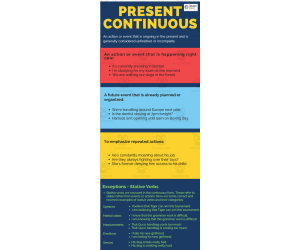
Present Continuous | Beginner Lesson Plan
ELA, Grammar, Grade 2, 3, 4, 5, 7, 8, 9, 10, 11, 12, Teacher Tools, Lesson Plans
Present Continuous Beginner Lesson Plan The Present Continuous Beginner Lesson Plan teaches early English language learners how to describe ongoing actions in the present period. Created specifically for A1 students, it provides a variety of materials to strengthen the basics of grammar needed for everyday conversation and writing. Through real-life examples, closed exercises, open exercises, writing drills and more, learners gain knowledge and confidence in using the present continuous tense accurately. Implementation ideas show educators different ways to utilize the resource for whole group, small group, or homework needs. With 27 ready-to-print pages plus a digital access file and answer key, this teaching pack establishes a solid foundation in core language concepts.
Author TEAM TEFL
Tags Affirmative Verbs, Negative Verbs, Expressions, English Rules, Grammar Worksheet

Mentor Text Mini-Unit • Family History "Goodbye Vietnam" & "Inside Out & Back Again"
ELA, Writing, Grade 4, 5, 6, 7, 8, Lesson Plans, Teacher Tools
Mentor Text Mini-Unit • Family History Goodbye Vietnam & Inside Out & Back Again Step into the realm of family history through the engaging Mentor Text Mini-Unit that features the influential works "Goodbye Vietnam" and "Inside Out & Back Again". This comprehensive educational resource focuses on memory mapping, narrating family stories with a unique touch guided by mentor authors Gloria Whelan and Thanhha Lai. Primarily designed for students in grades 4 to 8, this unit utilizes an array of Narrative Writing skills with a particular emphasis on storytelling and interview techniques. Videos Videos showcasing Thanhha Lai detailing her inspiration behind Inside Out & Back Again. A series of videos feature children interviewing their parents, providing insights into their lives prior to immigrating to America for an authentic learning experience. Student Writing Samples Drawing from student writing samples, learners can observe various ways these mentor author techniques can be applied effectively. Questions for Discussion & Reflection Carefully composed questions kindle discussion and reflection among learners, nurturing their critical thinking faculties whilst enhancing subject knowledge. Tech Tips & Interactive Learning Platforms We understand technology's crucial role in education today. The explainer guides are related explicitly to how record interviews should be conducted using current technologies. We actively use interactive learning platforms such as Quizizz and Kahoot games ; this compelling module develops key interviewing skills amid learners within a fun-filled environment. Interview Prompts A comprehensive list of interview prompts guide students about conducting effective interviews while also developing invaluable communication skills under supervision at different places such as classrooms or at home during homeschooling. A dynamic hyperdoc comes equipped with scaffolds that help shape development and revision procedures systematically ensuring seamless learning transitions. Exciting Features In addition to these features is one often sought after - flexibility! Provided in a 1-page PDF format containing links to editable Google docs, brings adaptability right at your fingertips align perfectly with individual teaching styles or specific class requirements underlying its appeal universally across educators globally! With the integration of Immersive Literature into Language Arts studies via Google Classroom, comprehensive and engaging learning is ensured. Delve into the intricacies of writing and family histories through this exciting Mentor Text Mini-Unit that brings “Goodbye Vietnam” & Inside Out & Back Again alive to learners.
Author Room2Ruminations
Tags Family History, Mentor Text, Narrative Writing, Memory Mapping, Storytelling

Reading Comprehension: Sequencing - FLASH-PC
ELA, Reading, Reading Comprehension, Grade 5, 6, 7, 8, Teacher Tools, Lesson Plans
Reading Comprehension: Sequencing - FLASH-PC The Reading Comprehension: Sequencing - FLASH-PC is an educational tool delicately constructed to boost the comprehension skills of students in Grades 5 through 8 focusing on language arts. Rooted in its core functionality, it enhances the ability of learners to arrange facts accurately within reading contexts. While maintaining its compactness, this resource robustly centers on delivering curriculum-related content through inclusive elements such as: Reading passages Strategically positioned comprehension queries conducted both 'before' and 'after' reading sessions that inspire prediction strategies and checks reflection understanding respectively. These techniques uniquely engage student involvement. Diversified Learning Experience & Classroom Interaction To further diversify the learning experience, printable materials intended for direct inclusion into lesson plans or as additional homework assignments are available. This setup offers teachers a simple way to guide without needing to create worksheets. In addition, vocabulary flashcards incorporated aim at solidifying key terminology studied in context. Also present are graphic organizers that visually arrange data for students who absorb better through such methods ensuring learners of all styles can benefit from this resource. A layer of digital interactivity has been woven into this educational tool via PC software integrated activities encouraging dynamic responses boosting learner's interest in allocated tasks be it within classrooms or remote learning scenarios. Fulfills Varied Teaching Techniques & Caters Individual Needs This resource exhibits significant flexibility catering to different teaching techniques be it for comprehensive classes or smaller group breakout sessions while simultaneously delivering tailored material suiting individual scholar needs. A Beneficial Educational Tool at Your Disposal In conclusion, Reading Comprehension: Sequencing - FLASH-PC stands as a vital asset effectively driving results when teaching fact sequencing under comprehension lessons while aiding in the progressive academic journey of every learner.
Author Classroom Complete Press
Tags Software (PC)
Apple of One's Eye | Figurative Language Activity | Micro-Learning Deck
ELA, Reading, Reading Comprehension, Grade 2, 3, 4, 5, Teacher Tools, Lesson Plans
This resource allows students to explore figurative learning in a fun way. The figurative language term for this learning deck is "Apple of One's Eye." Through close reading and a reading passage with audio, your students will better comprehend figurative language! Included: -Video lesson on language concept -Reading passage w/ audio Comprehension -Quick write
Author Teach Me This
Tags Figurative Language, Comprehension, Read Aloud, Video Lesson, Quick Write

Introduction to AI Agents – Simple Task Automation Worksheets
Science, Technology, Computer Science, Engineering, STEM, Resources for Teachers, Classroom Management, Community Building, Research, ELA, Homeschool Curriculum, Homeschool Templates, Grade 6, 7, 8, 9, 10, Worksheets & Printables, Writing Prompts, Worksheets, Word Searches, Dot To Dots, Workbooks, Teacher Tools, Lesson Plans, Quizzes and Tests, Tests
"AI Agents: An Introduction to Simple Automated Task Worksheets for Middle-Grade Students" consists of a total of 34 pages in one downloadable PDF file. In this workbook, students will learn about digital agents and task automation, and will gain insight into the basics of A.I. This workbook is ideally suited for STEM, computer science and technology education classes with no coding required. The agent-oriented design framework will be introduced to students as they learn how to break complex tasks down into components (sensors, logic processors, actuators). In doing so, students will also gain a greater understanding of how to decompose tasks, create algorithms, utilize loops, use branching paths and interact in multi-agent environments by completing ten exciting student worksheets that have a variety of scenarios (e.g., digital backpack organizer, community garden irrigation aid, library return kiosk, drone delivery, wildlife rescue, etc.). In addition to the ten worksheets, teachers will be able to use various templates, conceptual diagrams (automation cycle, feasibility filter, logic trees), comprehensive answer keys, and visual organization charts/projects for presentation and/or printing purposes. No prior coding skills will be required to participate in this activity; therefore, it is an excellent means to develop critical thinking, problem-solving, and technology literacy in this A.I. age. Reasons Schools & Families are Crazed for It : •Incredible hands-on activities and experiences with real-world examples create connections to complex ideas about AI. •No-preparation necessary for educators- All materials ready to go in a few minutes. •Future readiness through foundational skills e.g. computational thinking, logical reasoning & AI literacy. •Support for all students and challenging activities for advanced learners through differentiated formats. •Unbeatable value for 1 PDF filled with meaningful STEM experiences, the extent of which can provide anywhere from weeks to years of STEM aligned content and reflect the 21st century standards. Audience : Target Audience Grade Level This resource is formatted for grades of 5 to 8 specifically and is written/designed with middle school student ages using appropriate language, characteristics, and structure as developed by the cognitive scaffolding framework for middle school students. It is designed to be effective for: Grade 5 and 6 (introduction of automation concepts) Grade 7 and 8 (additional logic/concepts/logical branches/multitudes of agents) classrooms of various levels of ability, students identified as gifted,; students homeschooled; students participating in after school or summer STEM oriented programs. Copyright/Terms of Use: This Book represents a copyright owned by Syed Hammad Rizvi and is provided to you for personal use and for use only in one classroom. You are NOT PERMITTED to modify, redistribute, or sell any part of this resource (i.e. you are NOT PERMITTED to post it onto the internet where it will be publicly available to be found and downloaded). If you would like to share this resource with other educators, please purchase an additional license from Teachsimple. Thank you! This product is happily provided by Syed Hammad Rizvi
Author Creative Book Store
Rating
Tags AIAgents, TaskAutomation, DigitalAgents, AIForKids, IntroductionToAI, AIWorksheets, Ages10to14, 10to14YearsOld, MiddleSchoolAges, Grades5to8

Grade 5 Yearlong Reading Comprehension Curriculum | 180 Worksheets
ELA, Grade 5, Lesson Plans, Teacher Tools, Worksheets & Printables
Grade 5 Yearlong Reading Comprehension Curriculum | 180 No-Prep Worksheets Strengthen reading comprehension, vocabulary, text evidence, and written response skills all year long with this Grade 5 Reading Comprehension Curriculum! This comprehensive year-long resource includes 180 daily reading passages, comprehension questions, vocabulary activities, writing prompts, answer keys, and teacher support materials designed to help students become stronger, more analytical readers through consistent daily practice. What's Included ✅ 180 daily reading comprehension passages ✅ 36 weeks of literacy instruction ✅ 5 passages per week ✅ Fiction and nonfiction reading selections ✅ Vocabulary matching activity for every passage ✅ 3 comprehension questions per passage ✅ Writing prompt with every reading assignment ✅ Student Worksheet Book ✅ Comprehensive Teacher Guide ✅ Complete Answer Key ✅ Year-long pacing guide ✅ Differentiation and intervention suggestions ✅ Assessment rubric and progress-monitoring support ✅ Print-and-go format ✅ Daily literacy routine for the entire school year How It Works in the Classroom This Grade 5 Reading Comprehension Curriculum is designed to provide meaningful daily reading practice while helping students build higher-level comprehension and writing skills. Students follow a simple daily routine: Read and analyze the passage Complete vocabulary practice Answer comprehension questions using text evidence Respond to a writing prompt Perfect for: • Whole-group reading instruction • Small-group lessons • Literacy centers • Independent work • Morning work • Homework • Reading intervention • Test-prep support • Homeschool instruction • Sub plans The structured format promotes independence while encouraging students to analyze text, support ideas with evidence, and communicate their thinking through writing. Standards & Learning Goals Students will practice: ⭐ Key Details ⭐ Story Characters ⭐ Setting ⭐ Retelling & Sequencing ⭐ Main Topic ⭐ Main Idea ⭐ Cause & Effect ⭐ Compare & Contrast ⭐ Drawing Conclusions ⭐ Making Predictions ⭐ Author's Purpose ⭐ Ask & Answer Questions ⭐ Connecting Texts ⭐ Fact & Opinion ⭐ Problem & Solution ⭐ Story Elements ⭐ Vocabulary Development ⭐ Text Evidence ⭐ Reading Response Writing ⭐ Fiction and Nonfiction Comprehension ⭐ Critical Thinking Skills ⭐ Close Reading Strategies Skills are spiraled throughout the year to provide repeated practice, review, and mastery opportunities while preparing students for increasingly complex reading tasks. Why Teachers Love It ❤️ Provides a complete year of reading comprehension instruction ❤️ No-prep, print-and-go format ❤️ Includes student workbook, teacher guide, and answer key ❤️ Balanced mix of fiction and nonfiction texts ❤️ Encourages students to quote and cite evidence from the text ❤️ Combines reading, vocabulary, comprehension, and writing in one resource ❤️ Includes differentiation support for diverse learners ❤️ Makes assessment simple with included answer keys and rubric ❤️ Builds student independence through a consistent daily routine ❤️ Saves valuable planning time throughout the school year ❤️ Perfect for classroom instruction, intervention, tutoring, and homeschool use Students encounter approximately 540 vocabulary words across the school year while working through engaging themed units and a balanced mix of fiction and nonfiction texts. The curriculum is designed to strengthen comprehension skills while helping students become more confident readers and writers. If you're looking for a Grade 5 Reading Comprehension Curriculum that provides daily reading practice, vocabulary development, text evidence instruction, writing opportunities, and spiraled skill review, this year-long resource is ready to support your literacy block from the first week of school through the last day!
Author Bright Classroom Ideas Marketplace
Rating
Tags Reading, Comprehension, Ela, Writing, Worksheet, Curriculum, Yearlong, Full Year
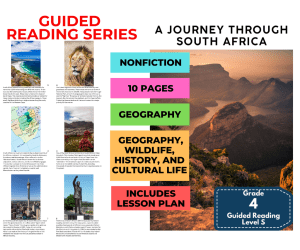
Journey Through South Africa: Guided Reading Level S with Lesson Plan
ELA, Resources for Teachers, Reading Comprehension, Reading, Science, Geography, Social Studies, History, Life Sciences, Government, Grade 3, 4, 5, Worksheets & Printables, Worksheets, Teacher Tools, Centers, Activities, Literacy Readers, Quizzes, Quizzes and Tests, Assessments, Lesson Plans
This A Journey Through South Africa (level s) guided reading book with lesson plan includes: Guided Reading Color Label (front cover x1) This is a quick way to match the book’s demands to what students can generally handle.. The overall goal is to use the level/color to pick books for several smaller groups. To qualify for a certain level, a student is expected to read a book from that level with about 90–94% accuracy. If a student is consistently accurate and understands, move up a level. If the student is struggling at that level, drop down and add more support. Each student will improve at completely different rates, but it is generally one of the best ways to check progress across the class. DOWNLOAD THE CATALOG TO VIEW ALL GUIDED READING BOOKS AVAILABLE (SORTED LEVELS A-Z) Pre-Reading Question (x1) Teacher asks the prompt aloud, can be while showing the cover or first page. Students share what they already know, or make educated guesses from the cover. Prompt them to use the target vocabulary. Write some of their responses on the board to look back at during the reading. Vocabulary Words (x5) Introduce the five words, best doing it one at a time. Start by saying it, while students repeat and then see if anyone knows what it means before reading further. Read through the meaning and try to briefly connect each word to a picture or gesture so it’s meaningful. Ask students to flip through the book pages and point to where they see each of the vocabulary words. While reading the book pause upon coming across one of the vocab words or read the sentence twice to make sure students understand the word has appeared. Optional: Ask students to raise hands whenever they see/hear one of the new words. Guided Reading Pages (x10) Check the book snapshot (below) for: primary topic - do you need to prep extra reading or intro materials on this? what is taught best - decide on 1-2 bullets to focus on, use the prompt or words provided here for best results. learning goals - what you are checking for students to be able to do after the session, elicit answers using prompts or words provided. key vocabulary (see section above). questions overview - so you know what is coming up and if you need to prep extra materials to assist understanding. Run the lesson You may have already looked at a few of the pages together, but you can show them some of the pictures again first to set meaning. Depending on how much time you have and how familiar your students are with guided reading class, you may want to read the book aloud first with the group first. Students whisper or partner read, while you listen in. If time, do it as a group, one student reading a page each. Use the guided page’s prompts to coach: “Check the picture / does it make sense?” “Point under the words / try the first sound” “Reread the sentence smoothly”. Try to focus more on one student per session (rotating every time), so you can work out if they are ready to move up or need to move down a level. Comprehension Questions (back cover x3) This is your way to check that students didn’t just say the words, but actually understood the text. First, let students answer by pointing to the page/picture and saying a short sentence. After any answer, follow with: “Show me where you found that in the text.” In bigger groups, have partners answer first (10–20 seconds), then call on 2–3 students to share. Differentiation tips: Emerging speakers/struggling readers: oral + pointing On-level: oral in a full sentence Higher: one written sentence or draw + label Book Snapshot Title: A Journey Through South Africa Genre: Nonfiction Subject: Social Studies (Geography/Culture/History) Primary Topic: South Africa’s geography, wildlife, history, and cultural life Estimated Guided Reading Level (A–Z): S What This Book Teaches Best Country overview and civics detail: South Africa’s location at Africa’s southernmost tip and its unusual system of three capital cities (Pretoria, Cape Town, Bloemfontein). Landforms and unique plant life: Table Mountain as a major landmark and part of a national park with many plant species found nowhere else. Habitats, wildlife, and conservation: Coastal habitats (including African penguins) and inland grasslands/savannas connected to the “Big Five” and protection of animals and environments. Modern cities and historical change: Johannesburg’s growth after gold discovery and South Africa’s journey from apartheid toward equality and democracy through Nelson Mandela’s leadership. Culture and identity through arts and community life: Traditions, music, and dance (Zulu and Xhosa) plus artistic expression like Ndebele painting and beadwork with special meanings. Learning Goals Students will identify South Africa’s three capital cities and explain each city’s role as described in the text. Students will describe two natural features or habitats in South Africa (for example, Table Mountain or the coastline) using details from the text. Students will explain how the text describes South Africa’s coastline and name the oceans it includes. Students will describe the inland grasslands and savannas and identify animals included in the text’s “Big Five.” Students will explain what apartheid was and describe how the text says South Africa moved toward equality and democracy. Students will describe at least two examples of South African culture or identity from the text (music/dance, art/beadwork, sports, or national symbols). Key Vocabulary From the Text southernmost — farthest to the south. administrative — related to running a government or system. savannas — wide grassy areas with some trees. apartheid — unfair system that separated people by race. resilience — strength to recover and keep going. Discussion Prompts Pre-reading question: What do you think you will learn about South Africa’s people, places, and animals? Comprehension questions: What are the three capital cities of South Africa named in the text? Comprehension questions: Which two oceans does the text say border South Africa’s coastline? Comprehension questions: What is the name of the system that separated people by race in South Africa? Printing Tips 1. Best Printing Method (Recommended) “Booklet” Printing (Best if Available) If your printer or PDF viewer supports Booklet Printing , use this. Settings to use: Print mode: Booklet Paper size: Letter or A4 (either works) Orientation: Landscape Print on both sides: Yes Flip on: Short edge Scaling: Fit to printable area Booklet subset: First test: Front sides only Then: Back sides only This will automatically: Pair pages correctly Put the cover on the outside Align everything for folding After printing, fold in half and staple along the spine . 2. If “Booklet” Printing Is NOT Available You can still print this correctly with manual duplex printing . Step-by-step: Open the PDF. Choose Print . Set: Orientation: Landscape Pages per sheet: 1 Print on both sides: Yes Flip on: Short edge Print all pages . Because each PDF page already contains two facing book pages, the result will still fold cleanly into a book. Thousands of Cored Education products are included with your TeachSimple membership. Download links and encyclopedia index available here.
Author Cored Education
Rating
Tags Reading Comprehension, Reading Passages, Reading, Guided Reading, Guided Reading Lesson Plan, Guided Reading Activity, Pre-reading, Social Studies, Geography, History
Inca Empire Reading Comprehension Passage - Cored Ed Encyclopedia
ELA, Reading Comprehension, Reading, History, Social Studies, Science, Geography, Technology, Pre-Reading, Language Development, Grade 2, 3, 4, 5, Worksheets & Printables, Worksheets, Teacher Tools, Centers, Activities, Writing Prompts, Assessments, Quizzes and Tests, Quizzes, Lesson Plans
This Inca Empire reading comprehension with lesson plan includes: Visualization (on the front cover) Start your lesson by taking a minute to think and share something about the topic. Read the script aloud (slowly), perhaps prepare some music or sound effects. Student close their eyes and let their imaginations wander. Students open their eyes, read the question aloud and give them a few minutes to complete. Ask a few students to share or keep answers until the end to compare with what they learn in the passage. Quick pause—thousands of Cored Education products are included with your TeachSimple membership. Download links and encyclopedia index available here. Pre-Reading Trivia Students will write down one thing they already know about the subject and then read five more facts and discuss. These facts are fun, and the students will enjoy learning about the subject before reading more. Give 1 minute for students to write what they already know (no pressure—best guess is fine). Read the five facts together. After each fact, do ask a student for their opinion, was it surprising? Set a purpose by asking students to highlight/underline one fact they want to learn more about during the reading. Reading Passage The text is a high-interest reading passage with set paragraphs, roughly three to four paragraphs long. It contains a variety of themes about the topic, anywhere from history to technology. The passage is between 250 and 350 words in length. First, ask students to look at the headings and see what they’ll learn about today. What do they know about the topic/heading? First read options: Teacher read-aloud (best for support). Partner reading (paragraph by paragraph). While reading, students underline important details, and vocabulary words they think may come up in the questions section. Mixed Questions The first question page contains four multiple-choice questions, each with a choice of four answers, and three written response questions that require a sentence or two from the student. Students complete the mcqs first independently, then review quickly as a class. For the 3 written responses, try to get students giving the answer with some form of evidence: “I think ___ because the text says ___.” If students get stuck, send them back to check the passage. Vocabulary Questions Practice seven key words from the text in this section across two activities. First section is scrambled words where students will unscramble three words given a clue for each. The second section is a word to meaning matching activity. Before starting, have some students read out words they underlined in the passage. Ask students to say the word and read aloud the sentence(s) around each word. Ask students to do scrambled words and the matching exercise in pairs then go through answers as a class. For the scrambled spelling task, get four pairs to come up to the board and write the words for extra practice with the other student reading out the clue. For the matching task, prompt students to give full sentences: “I matched ___ with ___ because ___.” Creative Writing In this question, the student will be required to write a five to eight sentence paragraph on a question related to the topic. Before starting, ask students write down 3 key ideas they are going to include in their piece. Ask students for ideas to share around the class to help those struggling. Pro writing expectations: 5–8 sentences At least 2 facts or details from the passage At least 2 vocabulary words from the previous page Students read their paragraphs while classmates listen for facts and vocabulary words. Extension Activities This page is optional for fast finishers or to take home. There are several activities, each one requiring a different skill. Do some, do none, do all, completely optional - but you will feel reassured knowing every possibility is planned for. Includes summary writting question and additional facts. Answer Key There are answers for the multiple-choice questions, written response questions have sample answers, vocabulary answers and if there is a summary question then a sample summary will be provided as well. Lesson Plan Included Customized lesson plan for this lesson is included. Lesson Snapshot Title: Inca Empire Genre: Nonfiction (informational passage) Subject: Social Studies (History) / Reading (Informational Text) Primary Topic: Cusco, roads, quipu records, terraces, legacy Estimated Guided Reading Level (A–Z): S What This Lesson Teaches Best How Cusco grew from a small kingdom into a larger Inca state in the 1400s under a leader named Pachacuti, and how the state was called Tawantinsuyu (the Realm of the Four Parts). How Inca engineers built a wide road system with stairs cut into rock and bridges, plus storehouses and resting places that helped the empire spread across western South America. How the Inca kept records without an English-like alphabet by using a quipu (cords with knots and colors for counts and notes). How terraces were used on hillsides to hold soil and water for crops like potatoes and corn, and how work was organized by the state as a kind of tax. How the empire ended after conflict and Spanish conquest, while people and culture continued (Quechua still spoken; terraces and stone places remain). Learning Goals Describe how Cusco changed in the 1400s and name the Inca state described in the passage. Explain how roads, bridges, and storehouses helped the Inca move messages, supplies, and armies. Explain what a quipu is and what it could record, based on the text. Describe what terraces are used for and how they helped farming on hillsides. Identify what happened in the 1500s that led to the end of the empire and one way Inca life continued afterward. Key Vocabulary From the Text Tawantinsuyu — the Inca state called the Realm of the Four Parts. chasquis — runners who carried messages from stop to stop. quipu — cords with knots and colors for records. terraces — flat steps that hold soil and water. storehouses — places along routes that kept needed supplies. FULL CATALOG OF DOWNLOAD LINKS AND ENCYCLOPEDIA INDEX HERE
Author Cored Education
Rating
Tags Vocabulary, Reading Comprehension, Reading Passages, Lesson Plans, Ela Lesson Plans, Reading Comprehension Lesson Plans, Pre-reading, History, Social Studies Lesson Plans, Geography

The Sweet that Grows on Trees: Emergency Lesson Plan
ELA, Reading, Grade 1, 2, Teacher Tools, Lesson Plans
The Sweet that Grows on Trees: Emergency Lesson Plan Even the most thorough teaching plan can be disrupted by unexpected events. Whether you're feeling unwell or find yourself with a bit of extra time before an assembly, maintaining your students' learning momentum is crucial. Enter this emergency lesson plan, aptly named 'The Sweet That Grows on Trees.' This resource is designed to keep students fully engaged even in these unpredictable moments. Perfect for grade 1 and grade 2 educators, this lesson plan centers around a nonfiction text about chocolate that student's interest and curiosity are naturally drawn towards. Not only are they learning some fascinating facts about their favorite sweet treat, but they're also developing their reading skills and enhancing their language arts capabilities. This emergency lesson plan offers eight ready-to-print pages—perfect if you need a quick solution with minimal prep time on your part. All lessons are delivered in PDF format for easy printing or online delivery to fit different instructional formats. Your learners will be put through various cross-curricular activities: An answering questions related to the text Solving fun chocolate-themed story problems; thus promoting critical thinking among learners while consolidating understanding of the topic at hand. This resource offers flexibility in how it can be used: it works well as a whole group assignment during class hours, as individual work during duty free times or even as homework assignments when necessary - allowing you to adapt based on specific classroom needs. In essence, 'The Sweet That Grows on Trees' serves not just as an Emergency Lesson Plan but also functions seamlessly within your standard teaching routine too. The lure of chocolate intertwined with engaging lessons will certainly make learning more enjoyable for young scholars – making this resource truly sweet!
Author Classroom Complete Press
Tags Winter Activities, Chocolate, Write A Story, Reading Passage, Word Problems

5th Grade Morning Work | 180 Days Review | Math & ELA | 4th Quarter
ELA, Math, Grade 5, Centers, Activities, Lesson Plans, Teacher Tools, Worksheets & Printables
Grade 5 Morning Work | 4th Quarter Student Pages + Full-Year Teacher Resources Finish the year strong with 45 days of Grade 5 morning work for Quarter 4 . This resource includes ALL teacher resources for the complete 180-day program , while the student practice pages in this pack are specifically for 4th Quarter: Days 136–180 . What’s Included ⭐ FULL-YEAR TEACHER RESOURCES You receive the complete teacher toolkit for planning, organizing, differentiating, and assessing the entire 180-day Grade 5 morning work program : Teacher Guide Full 36-week Pacing Guide Skills Checklist for tracking student progress Fully Editable Morning Work Schedule Year-at-a-Glance Planner Differentiation strategies Complete Answer Key for Days 1–180 Printing and classroom organization guidance 📚 STUDENT PAGES INCLUDED: 4TH QUARTER The student portion of this product includes Days 136–180 , providing 45 days of ready-to-use Grade 5 morning work . Each day includes 24 consistent sections across Language Arts and Math & Think. 📖 LANGUAGE ARTS Students practice: Grammar Vocabulary Reading comprehension Reading skills Writing Vocabulary Word of the Day Writing prompts Reading challenges SEL check-ins Jokes Brain teasers Growth mindset Would You Rather questions 🔢 MATH & THINK Students practice: Number sense Mental math and fact fluency Multi-digit multiplication Full long division Order of operations Fractions Decimals Measurement Geometry Data and graphs Multi-step word problems Math challenges Daily enrichment Fun facts Important: The student practice pages included in this product are Days 136–180 only . The teacher resources and complete Answer Key cover all 180 days . How It Works in the Classroom Use this Grade 5 morning work as a daily bell ringer, morning routine, independent practice, homework, or spiral review. Each daily set follows the same predictable 24-section format , making it easy for students to work independently while you circulate, confer, pull small groups, or prepare for the day. The editable schedule provides a simple routine: Page A: Language Arts Page B: Math & Think Enrichment of the Day: Brain teaser, logic puzzle, STEM challenge, vocabulary challenge, or trivia Quick review: Spot-check with the Answer Key Use the pages for: Morning work Bell ringers Homework Early finishers Sub plans Small-group warm-ups Math intervention Spiral review Test preparation Independent practice Print two-sided, flipping on the long edge , for one sheet per student per day. You can print a week at a time or staple the quarter into a student packet. Standards & Learning Goals This Grade 5 morning work resource provides daily spiral review across essential fifth grade ELA and math skills. Quarter 4 is the final step in the built-in difficulty ramp. Students work with full long division, order of operations, the full decimal range, theme, text structure, and evidence . 📖 ELA Skills Students practice: Grammar and language conventions Academic vocabulary Greek and Latin roots Context clues Figurative language Reading comprehension Theme Text structure Evidence Inference Main idea Author's purpose Writing and revising Constructed responses Opinion writing Narrative writing Informative writing Quarter 4 moves students toward more advanced reading analysis, with increased emphasis on theme, text structure, and using evidence . Students continue working with reading passages and targeted reading-skill questions while strengthening their ability to explain and support their thinking. 🔢 Math Skills Students practice: Number sense Mental math and fact fluency Full long division Order of operations Multi-digit multiplication Fractions Decimals across the full range Measurement Geometry Data interpretation Multi-step word problems Mathematical reasoning Quarter 4 brings students to full long division and order of operations , while number sense expands across the full decimal range . The consistent math routine gives students repeated opportunities to show their work and explain their thinking. Why Teachers Love It ✨ You get ALL the teacher resources for the entire year. The teacher materials support the complete 180-day program , not just Quarter 4. ✨ Students get exactly what they need for Quarter 4. Days 136–180 provide a complete 45-day student set. ✨ Finish the year with a familiar routine. Students already know the format, making independent work easier during those busy final months. ✨ Save valuable planning time. The daily routine is already organized across ELA, math, enrichment, and engaging thinking activities. ✨ True spiral review. Skills return throughout the 180-day program while the difficulty increases. The same 24 sections appear daily, making progress easy to monitor. ✨ A built-in end-of-year difficulty ramp. Quarter 4 brings students into full long division, order of operations, full decimal work, theme, text structure, and evidence . ✨ Build independent problem-solving skills. Operations, word problems, and challenge boxes provide dedicated space for students to show their thinking. ✨ Differentiate with ease. Assign only the sections students have been taught. Highlight fewer boxes for students needing a shorter task. ✨ Support English learners. Pre-teach the Vocabulary Word of the Day and use Greek and Latin roots to strengthen word-attack strategies. ✨ Support small groups. Use Page B as a ready-made warm-up for your math intervention group. ✨ Keep mornings engaging. Brain teasers, logic puzzles, STEM challenges, vocabulary challenges, trivia, jokes, growth mindset prompts, and Would You Rather questions add variety. ✨ Track student growth without extra grading. The Skills Checklist helps you mark skills as Introduced, Practiced, or Mastered . A quick scan of the daily sections can reveal shaky standards. ✨ Have answers for the entire year. The complete Answer Key supports Days 1–180 , so your teacher resources remain useful across every quarter. Looking for Grade 5 morning work for Quarter 4 that saves planning time and keeps students practicing essential skills through the end of the year? This pack includes 45 days of student practice (Days 136–180) PLUS ALL teacher resources for the full 180-day program . Give your fifth graders a purposeful, engaging morning routine that strengthens ELA and math skills while preparing them for the transition to middle school! Print it, prep it, and finish the year strong! 💛
Author Bright Classroom Ideas Marketplace
Rating
Tags Math, Ela, Morning Work, Back To School
Reading Comprehension: Sequencing
ELA, Reading, Reading Comprehension, Common Core, Grade 5, 6, 7, 8, Teacher Tools, Lesson Plans
Reading Comprehension: Sequencing This educational resource is a specialized extract from the comprehensive lesson plan Reading Comprehension. Primarily designed for grades 5 through 8 in Language Arts programs, its main goal is to successfully develop a child's reading comprehension and fluency. Reading is undeniably one of the most critical communication skills in our society. Hence, this guide emphasizes several fundamental aspects of reading. It addresses crucial elements such as context clues utilization, ascertainment of passages or stories' main idea correctly and development of inference skills. The user-friendly layout of this teaching aid allows ease in understanding and seamlessly absorbing shared tips. It teaches students about these core components by defining key terms and providing numerous practice opportunities. Key Concepts in Reading The importance of utilizing context clues Ascertaining the correct primary subject matter from passages or stories Cultivating inference abilities for better understanding A noteworthy feature that sets Reading Comprehension: Sequencing apart from other resources is its alignment with two recognized guidelines - Common Core State Standards and Blooms Taxonomy, ensuring aptness for instructional techniques. This impeccably structured resource would prove highly beneficial for educators executing group sessions or overseeing individual study times at school or home - helping improve your students’ comprehension skills significantly. Possible Implementation Methods: Group work discussions focusing on sequencing elements within texts during class periods Distributing pages as homework assignments Finally, it’s worth mentioning that this guide comes as a PDF file making it conveniently accessible across various devices – integrating seamlessly into any teaching plan with broad objectives ranging from enhancing overall reading comprehension to understanding sequence in the larger context of language arts.
Author Classroom Complete Press
Tags PDF

Non-Fiction Early Reader: Pine Trees Unit
ELA, Reading, Grade 1, 2, 3, 4, Lesson Plans, Teacher Tools
Non-Fiction Early Reader: Pine Trees Unit Engaging children in learning and enhancing their reading proficiency, the Non-Fiction Early Reader: Pine Trees Unit is an ideal teaching tool for educators who seek to build their students' competence in non-fiction text. Authentic photographs employed within the text lend realism and stir curiosity among new readers. The units are designed for young learners from grades 1 through 4, with a specific focus on language arts and reading skills. Educational Design & Supplementary Materials Designed thoughtfully by experienced educators, this product includes teacher guides loaded with themed words, comprehension queries, and vital reading tips. The package also brings additional support materials such as: Worksheets Posters Tracking sheets to assist in the learning process. Versatility & Resource Integration The Non-Fiction Early Reader: Pine Trees Unit takes into consideration different guided Reading Levels (J through S), Lexile Levels (450L-699L & 875L-925L), and DRA Levels (16-18 & 40-50). This extends its feasibility across various student aptitude levels ensuring no child is left behind! Pedagogical Applications & Parental Involvement This comprehensive resource pack allows for diverse ways of integration into your teaching plan - it can be used in whole class settings where everyone reads together or small groups that facilitate more specific guidance. Teachers may also consider using it as daily home assignments associated with a relevant section from the booklet. The ABC’s of Helping Your Child Read Non-Fiction,a parent handout included allows parents to contribute to their child's reading adventures! Learner Engagement & Progress Tracking To foster student engagement, the pack comprises of separate word strips with pictures and definitions for easy incorporation in classroom word walls. The inclusion of a reading chart motivating young readers, tracks the progress of students effectively. Expansion Beyond Classroom The Non-Fiction Early Reader: Pine Trees Unit, an ensemble resource aimed at fostering a love for learning and nurturing proficient readers right from their early education, is comprehensive yet manageable. With 85 pages full of instructive content in PDF format, , it creates an explorative space to decode non-fiction texts focused around Pine Trees - inviting children into a unique world of winter wonders!
Author Simply Schoolgirl
Tags Early Reader, Non-fiction, Pine Trees, Reading Proficiency, Teaching Resource
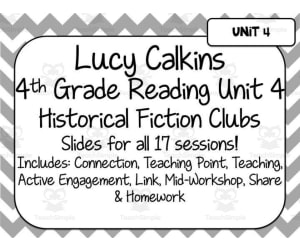
Lucy Calkins Reading for 4th Grade | Unit 4: Historical Fiction Clubs
ELA, Reading, Grade 4, Lesson Plans, Teacher Tools
Lucy Calkins Reading for 4th Grade | Unit 4: Historical Fiction Clubs Lucy Calkins Reading for 4th Grade | Unit 4: Historical Fiction Clubs is a comprehensive teaching resource designed specifically to meet the needs of language arts educators teaching the fourth grade. This product enables teachers to guide students on an exciting journey into the realm of historical fiction. The focus of this download is 'Unit 4: Historical Fiction Clubs', an inclusive set that provides enriching reading lessons. Including all required elements to cover given sessions, this educational resource proposes versatile strategies perfect both for classroom setting as well as home use. Connection Teaching Point Active Engagement Share Mid-Workshop Homework . Including these components contributes towards balanced learning, driving active student engagement and strengthening their understanding and love for historical fiction. Digital Curriculum Inclusions: This digital curriculum boasts a vast PowerPoint file featuring over 280 slides!. The contents of these are organized systematically, corresponding each lesson component in Unit 4. The PPTs serve not only as daily teaching schematic but also act as guide helpful in effective preparation/participation at personal level while allowing room addition based on specific classroom requirements. This product offers multiple deployment options - useable in whole group scenarios or smaller collaborative learning groups depending on class dynamics or defined educational objectives; even useful as homework assignments fostering independent exploration by students outside school atmosphere. Thus - 'Lucy Calkins Reading for Grade 4 | Unit 4: Historical Fiction Clubs' proves a must-have for every educator aiming to enhance their fourth-graders' reading skills through an enriching literary journey.
Author Brook Creaser
Tags Lucy Calkins, Historical Fiction Clubs, Reading Resources, Lesson Materials, Engaging Curriculum, Historical Fiction For Fourth Graders, 4th Grade Historical Fiction

Two Kinds: Full Lesson Plan w/ PowerPoints & Graphic Organizers
ELA, Literature, Grade 7, 8, 9, 10, Lesson Plans, Teacher Tools
Two Kinds: Full Lesson Plan w/ PowerPoints & Graphic Organizers This is a comprehensive resource crafted for the text "Two Kinds" by Amy Tan. It includes well-structured lesson plans, answer keys, worksheets, and graphic organizers in easily printable PDF and Word formats. This step-by-step guide covers all major literary elements found within the text. Suitable For Varied Educational Settings This adaptable bundle serves both public school teachers as well as those in a homeschooling environment. Students from grade 7 through 10 focusing on language arts and literature can immensely benefit from this package. Literary Topics Covered: Theme Interpretation, Symbolism and Allegory, Narrator Voice and Tone, Pot Structure etc. Aids Several Skills: The accompanying selection of graphic organizers help refine different skills such as: 'Character Analysis': using characterization charts . 'Author's Stylistic Choices': through style charts . 'Understanding Figurative Language' :v ia figurative language chart. .\( \n (fetch git-config user.email) \n \n .\n e \n "\commandline">\n \fetch . .nitiate font-lock mode. . et . . e\'re dist} \n \n 'Symbol Charts ': to determine symbolism. Flexibility & Adaption: The resource can accommodate varied teaching methods: Whole class instructions with PowerPoints catering audience engagement. Small study groups facilitated with peer evaluation documents nurturing collaboration among learners. Worksheets designated for independent work or homework to enact understanding outside the classroom setting. Bonus Material: Crowns it all off, the concluding section contains additional materials to further enhance your lesson planning endeavors beyond merely meeting fundamentals. This ensures that educators and students traverse through complexities involved in extensive literature comprehension while enriching their learning experience thoroughly.
Author Quality Teaching Products
Tags Lesson Plans, Literature Analysis, Graphic Organizers, Teaching Resource, Amy Tan, Lesson Plans Graphic Organizers
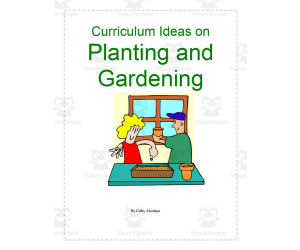
Planting Curriculum Pack
Creative Arts, Art, Social Studies, ELA, Math, Addition and Subtraction, Addition, Reading, Writing, Handwriting, Language Development, Vocabulary, Science, Life Sciences, Nature & Plants, Kindergarten, Lesson Plans, Teacher Tools
If your students are studying nature or are about to begin a planting unit, I have just the resource to provide you with everything you need and more! This is a Planting Curriculum Pack complete with an abundance of printable resources and engaging activities for students to complete. This curriculum was designed for your preschool students. The curriculum goal is to introduce an awareness of the life cycle of plants and build upon the children’s current knowledgebase related to gardening through a variety of hands-on experiences. The vocabulary that students will focus on is spring, row, buds, planting, petals, root, annuals, sprout, seeds, bulbs, greenhouse, garden, soil, stem, perennials, and weed. This curriculum will come with a letter of the week (G) and color of the week (green). This curriculum pack includes: --Sensory Table Ideas --Art Activities --Cooking Experience --Community Time --Math Activities --Home/School Connection Ideas --Science Table Enrichments --Science Concepts/Activities --Prop Box Ideas/Dramatic Play Enrichments --Movement and Motor --Playground/Walk Activities --Transition/Waiting Ideas --Block Area Enrichments --Flannel Board --Teacher Made Enrichment Ideas --Field Trip Ideas --Supplemental Learning Ideas/Activities At the start of this pack, you will receive a list of supplies needed for activities and projects. The worksheets, activities, and tasks included in this pack are intended to be completed in a variety of formats – whole group, small group, and independent work. I hope you enjoy! You can find more resources at my storefront here: https://teachsimple.com/contributor/learning-foundations Here are other similar resources for you to enjoy: https://teachsimple.com/product/gingerbread-man-curriculum-pack https://teachsimple.com/product/jungle-love-curriculum-pack https://teachsimple.com/product/friendship-curriculum-pack https://teachsimple.com/product/kings-queens-and-dragons-curriculum-pack https://teachsimple.com/product/fire-safety-curriculum-pack
Author Learning Foundations
Tags Planting, Gardening, Botany, Science Vocabulary, Plant Life Cycle, Color Of The Week, Letter Of The Week, Seasons, Art Activities
Literary Devices: Plot - FLASH-MAC
ELA, Literature, Grade 5, 6, 7, 8, Teacher Tools, Lesson Plans
Literary Devices: Plot - FLASH-MAC An innovative resource tool designed specifically for teaching students in Grades 5 through 8, with a keen emphasis on the Language Arts spectrum. Best implemented in public school settings, homeschooling environments and extra learning activities. Curriculum-based content: Teaches the plot aspects in literary devices through comprehensive reading passages. Instructional Strategies: Features like 'Before You Read' and 'After You Read' questions that bolster comprehension skills while encouraging deeper engagement with textual narratives. Diverse Learning Styles Support Includes printables for whole group instruction or personalized student centers coming with embedded graphic organizers to encourage critical thinking and literacy skill development among students as they navigate texts. Vocabulary flashcards strategically woven into lessons for language acquisition at a comfortable pace while also scaffolding complex literary concepts. Interactive Activities & Focus On Technology Integration: Venturing beyond traditional teaching resources, it offers interactive activities ensuring dynamic engagement amongst learners of different paces or styles. This product is exclusively engineered as software meant for Mac systems, melding versatility and comprehensiveness into one package ensuring sustained student involvement and consistent academic growth. Can be conveniently molded into homework assignments or study guides adding another dimension to its functionality. With a saliently focus on Literature under Language Arts domain it makes FLASH-MAC an apt assistant for educators seeking specific strategic tools amongst numerous teaching aids. A sought-after companion backed by reliability and seamless functionality - Literary Devices: Plot - FLASH-MAC .
Author Classroom Complete Press
Tags Software (Mac)
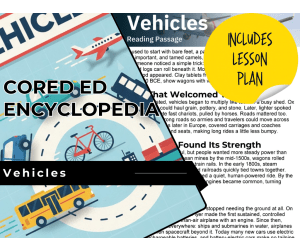
Vehicles Reading Comprehension Passage - Cored Ed Encyclopedia
ELA, Language Development, Reading Comprehension, Reading, Pre-Reading, Science, Technology, Engineering, History, Social Studies, Grade 2, 3, 4, 5, Worksheets & Printables, Worksheets, Teacher Tools, Centers, Activities, Writing Prompts, Assessments, Quizzes and Tests, Quizzes, Lesson Plans
This vehicles reading comprehension with lesson plan includes: Visualization (on the front cover) Start your lesson by taking a minute to think and share something about the topic. Read the script aloud (slowly), perhaps prepare some music or sound effects. Student close their eyes and let their imaginations wander. Students open their eyes, read the question aloud and give them a few minutes to complete. Ask a few students to share or keep answers until the end to compare with what they learn in the passage. Quick pause—thousands of Cored Education products are included with your TeachSimple membership. Download links and encyclopedia index available here. Pre-Reading Trivia Students will write down one thing they already know about the subject and then read five more facts and discuss. These facts are fun, and the students will enjoy learning about the subject before reading more. Give 1 minute for students to write what they already know (no pressure—best guess is fine). Read the five facts together. After each fact, do ask a student for their opinion, was it surprising? Set a purpose by asking students to highlight/underline one fact they want to learn more about during the reading. Reading Passage The text is a high-interest reading passage with set paragraphs, roughly three to four paragraphs long. It contains a variety of themes about the topic, anywhere from history to technology. The passage is between 250 and 350 words in length. First, ask students to look at the headings and see what they’ll learn about today. What do they know about the topic/heading? First read options: Teacher read-aloud (best for support). Partner reading (paragraph by paragraph). While reading, students underline important details, and vocabulary words they think may come up in the questions section. Mixed Questions The first question page contains four multiple-choice questions, each with a choice of four answers, and three written response questions that require a sentence or two from the student. Students complete the mcqs first independently, then review quickly as a class. For the 3 written responses, try to get students giving the answer with some form of evidence: “I think ___ because the text says ___.” If students get stuck, send them back to check the passage. Vocabulary Questions Practice seven key words from the text in this section across two activities. First section is scrambled words where students will unscramble three words given a clue for each. The second section is a word to meaning matching activity. Before starting, have some students read out words they underlined in the passage. Ask students to say the word and read aloud the sentence(s) around each word. Ask students to do scrambled words and the matching exercise in pairs then go through answers as a class. For the scrambled spelling task, get four pairs to come up to the board and write the words for extra practice with the other student reading out the clue. For the matching task, prompt students to give full sentences: “I matched ___ with ___ because ___.” Creative Writing In this question, the student will be required to write a five to eight sentence paragraph on a question related to the topic. Before starting, ask students write down 3 key ideas they are going to include in their piece. Ask students for ideas to share around the class to help those struggling. Pro writing expectations: 5–8 sentences At least 2 facts or details from the passage At least 2 vocabulary words from the previous page Students read their paragraphs while classmates listen for facts and vocabulary words. Extension Activities This page is optional for fast finishers or to take home. There are several activities, each one requiring a different skill. Do some, do none, do all, completely optional - but you will feel reassured knowing every possibility is planned for. Includes summary writting question. Answer Key There are answers for the multiple-choice questions, written response questions have sample answers, vocabulary answers and if there is a summary question then a sample summary will be provided as well. Lesson Plan Included Customized lesson plan for this lesson is included. Lesson Snapshot Title: Vehicles Genre: Nonfiction (Informational text) Subject: Social Studies / Science & Technology Primary Topic: How transportation changed from wheels to flight Estimated Guided Reading Level (A–Z): P Support pages: Pre-reading trivia, mixed questions, vocabulary practice, creative writing, extension activities, and an answer key. Support-page QA check: Some vocab items don’t match the exact word forms in the passage (e.g., chariot vs chariots , battery vs batteries , submarine vs submarines , locomotive vs locomotives ). What This Lesson Teaches Best Sequence of transportation changes over time: Moves from walking/animals, to logs/sledges, to wooden wheels and wagons, to roads and coaches, to steam locomotives, motor vehicles, and airplanes. How inventions improved travel and hauling: Explains how wheels, roads, tracks/railroads, and engines made travel smoother, faster, and able to carry heavier loads. Using headings to organize information: Section headings (“Roads…,” “When Steam…,” “A Lift Into the Air”) help readers track time periods and big shifts. Key historical details in an informational text: Includes dates and examples such as Uruk clay tablets (3700–3500 BCE) and the Wright Flyer flight (December 17, 1903). Modern tech and environmental impact: Notes electric motors, rechargeable batteries, and “no tailpipe exhaust,” ending with a question about helping the planet. Learning Goals Students will describe how people traveled and carried loads before wheels, using details from the passage. Students will identify how wheels changed what vehicles could do (hauling goods and moving more easily). Students will explain how roads and railroads affected travel and connected places, based on the text. Students will summarize the “biggest leap” in travel described in the passage and name the example given. Students will use headings and key details to retell the passage’s main changes in transportation in order. Key Vocabulary From the Text sledge — a sled that helps heavy things slide. Mesopotamia — an ancient region where Uruk was located. spoked — having thin supports connecting wheel center to rim. locomotives — train engines that pull cars on tracks. rechargeable — can be filled with power again. FULL CATALOG OF DOWNLOAD LINKS AND ENCYCLOPEDIA INDEX HERE
Author Cored Education
Rating
Tags Vocabulary, Reading Comprehension, Reading Passages, Lesson Plans, Ela Lesson Plans, Reading Comprehension Lesson Plans, Pre-reading, Science Lesson Plans, Technology, History Lesson Plans