



3,912 products added recently
Page 29 - ELA Lesson Plans
Elevate your ELA instruction with lesson plans that cover reading, writing, speaking, and listening skills. These resources provide diverse texts and engaging activities to improve literacy. Integrate these plans to enrich your language arts curriculum and support student achievement.

 Show filters

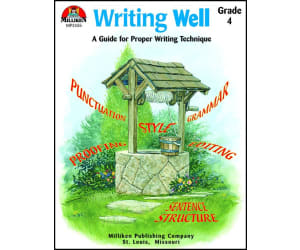
Writing Well Grade 4: A Guide for Proper Writing Technique
ELA, Writing, Grade 4, Teacher Tools, Lesson Plans
Writing Well Grade 4: A Guide for Proper Writing Technique is an essential tool designed to aid educators in the development of proficient writing skills in fourth-grade students. This teaching resource is compatible with most of English language texts curated for the same age group. The book provides comprehensive exercises on punctuation, sentence and paragraph formation, and creative story writing, giving students opportunities to enhance their learning though practice. The feature that sets this book apart from others is the structured layout. Each page introduces a new definition or rule at its header which promotes systematic learning leading to better understanding and easier retention. This book emphasizes elements such as: Different word forms (nouns, verbs) Their grammatical relationships in sentence structure An exposure to these foundational aspects aids students in honing their language use skills impeccably. The simplicity of the resources makes it a versatile choice for teachers whether working individually or with groups. The answer key further enhances practicality by making marking effortless for teachers while also allowing self-assessment by the students themselves. This empowers learners by boosting not only accountability but also independence. "Writing Well Grade 4: A Guide For Proper Writing Technique" comes in a simplified digital PDF format that guarantees convenient access across multiple devices including smartphones, laptops or desktops; facilitating integration into modern classrooms or home-schooling scenarios without any additional software prerequisites. This ideal companion during Language Arts lessons only requires basic HTML tags,. Thus minimizing lesson planning time investment significantly while ensuring comprehensive education delivery according to fourth-grade curriculum standards. In conclusion, despite strengthening literacy foundations it compliments broader learning objectives seamlessly enabling exponential academic progress amongst fourth graders. This book thus aims to nurture linguistic creativity alongside technical writing mastery in students through purposeful practice."Write Well, Achieve Excellence exponentially!!!".
Author Classroom Complete Press
Tags PDF
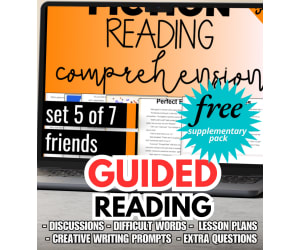
Guided Reading Activities with Lesson Plans: Fiction Set 5 - Friends
ELA, Reading, Reading Comprehension, Common Core, Resources for Teachers, ESL, Language Development, Pre-Reading, Vocabulary, Grade 2, 3, Worksheets & Printables, Worksheets, Lesson Plans, Teacher Tools
Guided Reading Activities with Lesson Plans Fiction Set 5 Note: This download DOES NOT include the passages themselves. If you have not already done so, download in a format of your choice in the "reading links" section below. Overview The perfect companion materials for Cored Education reading comprehension downloads. Includes pre-reading questions, during reading questions, vocabulary questions, writing and more. Also includes lesson plans to help you with timing and extra ideas. Includes Guided Reading Materials For: 1.Friends in Different Places 2.Perfect Birthday 3.Fun With Leaves 4.Backyard Camp 5.Best at Being a Friend 6.Grant the Superhero Reading Links: This is the guided reading materials version and DOES NOT include the passages themselves. The passages related to this download are available here in GOOGLE Docs, GOOGLE Forms, GOOGLE Slides. PDF, PPT, WORD. Google Docs Google Forms Google Slides PDF PPT Word Details Pre-reading Discussions Each lesson begins with pre-reading questions that help activate prior knowledge and engage students in the theme of the lesson. This allows students to make personal connections with the content before diving into the reading material. Vocabulary Development Every lesson includes vocabulary exploration that introduces key terms students will encounter in the reading. These words are essential for understanding the passage, and activities encourage students to apply the new vocabulary in context. Comprehension Check After the reading, the lessons provide comprehension questions (typically multiple-choice) that assess students’ understanding of the story. These questions help students reflect on key events, characters, and concepts within the text, reinforcing their comprehension. Creative Writing Prompts To foster creativity, the lessons include writing activities that challenge students to apply what they've learned in imaginative ways. These prompts allow students to practice creative expression while reinforcing the lesson’s theme. Discussion Topics Each lesson ends with wrap-up discussion questions that encourage students to think critically and engage in group conversations. These discussions can enhance social learning and deepen understanding by connecting the lesson's content to broader real-world applications. Theme-Based Learning The themes (e.g., winter, nature walks, photography, flowers) are universally appealing and offer opportunities for cross-curricular connections with science, art, and environmental studies. This makes the lessons versatile for a wide range of teaching contexts. Student-Centered Approach The activities are designed to be interactive and student-driven, allowing them to explore the content through discussions, hands-on vocabulary practice, and personal reflections. This promotes active learning and keeps students engaged. FULL CATALOG OF DOWNLOAD LINKS HERE Grade 2/3 Links Fiction Set 1 - Nature Google Docs Google Forms Google Slides PDF PPT Word Guided Reading Materials Fiction Set 2 - Animals Google Docs Google Forms Google Slides PDF PPT Word Guided Reading Materials Fiction Set 3 - Food Google Docs Google Forms Google Slides PDF PPT Word Guided Reading Materials Fiction Set 4 - School Google Docs Google Forms Google Slides PDF PPT Word Guided Reading Materials Fiction Set 5 - Friends Google Docs Google Forms Google Slides PDF PPT Word Guided Reading Materials Fiction Set 6 - Family Google Docs Google Forms Google Slides PDF PPT Word Guided Reading Materials Fiction Set 7 - Sports Google Docs Google Forms Google Slides PDF PPT Word Guided Reading Materials Nonfiction Set 1 - Technology Google Docs Google Forms Google Slides PDF PPT Word Guided Reading Materials Nonfiction Set 2 - Nutrition Google Docs Google Forms Google Slides PDF PPT Word Guided Reading Materials Nonfiction Set 3 - Animals Google Docs Google Forms Google Slides PDF PPT Word Guided Reading Materials Reading Passages Overview Each passage is especially written for Grade 2-3 students, including key vocabulary required for this age group. Topics are varied and are accompanied by colorful graphics. Topics are meant to educate, yet entertain the modern student. These passages are perfect for the modern classroom. Whereas textbooks can become outdated in no time, any changes to technology or the world will result in updates to this product. Mixed Questions The mixed questions section of each lesson includes a variation of fivecomprehension, vocabulary and math questions. In addition, key reading strategies are frequently covered including cause & effect, summarizing, compare & contrast and making conclusions. Three of the questions will be MCQs and two will require a written response of some kind. Full answers and example responses appear at the end of the lesson. Spelling & Vocab Each reading passage contains a variety of words and phrases designed for Grade 2-3 students. Spelling and vocab activities provide the opportunity to build fluency with these words. As it can become quite mundane doing the same activities over and over, each lesson in a set will contain a different spelling and vocab activity . Writing Prompts Writing prompts are designed to continue the theme or lessons learned in the story. Students are persuaded to write in a variety of ways and each prompt includes several cues to help. As with the spelling/vocab section, writing prompts will vary. This includes research pieces, reading responses, poetry and creative writing prompts. Full Answer Keys Full answer keys and sample responses are provided so no matter how busy you are, you know you're covered! Mixed question answers provide evidence from the text, math questions contain the relevant workings. Answers are designed for use by the teacher, but also suitable as a handout to the student. Additional File One lesson will have an additional file. This is something fun to extend the lesson with. For similar downloads and other frees, do check out Cored Group on TeachSimple.
Author Cored Education
Tags Elementary, Reading, Comprehension, Vocabulary, Answers, Ccss, Common Core, Guided Reading, Guided Reading Activity, Guided Reading Lesson Plans
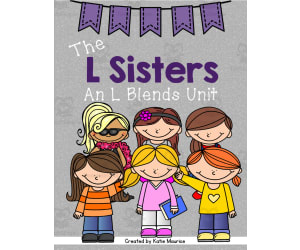
The L Sisters Blends Unit
ELA, Language Development, Phonics, Preschool, Grade 1, 2, Lesson Plans, Teacher Tools
The L Sisters Blends Unit is packed with all the fun things you need to introduce, teach and review this spelling pattern to students! All you have to do is print and go. There is cut and paste worksheets, mini readers, coloring pages and so much more.
Author Katie Maurice
Tags The L Sisters, Blends, Phonics, Digraphs, Consonants, Spelling, Mini Book, Bundles, Literacy, Small Groups

Alaska State Unit Study (Capital, Bird, Flower, Flag, Animal)
ELA, Social Studies, Reading, Reading Comprehension, Language Development, Spelling, Writing, History, History: USA, Geography, Research, Grade 2, 3, 4, Lesson Plans, Teacher Tools
Alaska State Unit Study (Capital, Bird, Flower ,Flag ,Animal) An interactive teaching tool designed for educators who wish to enlighten their students about the State of Alaska. This low-prep 5-day unit study covers five significant emblems—capital city, bird species, indigenous flower type, official flag design and native fauna. It ensures easy facilitation with a comprehensively planned lesson plan format. This resource is adaptable for homework assignments, large group or small group sessions across multiple grade levels such as Grade 2-4. Broadly subtended subjects include Language Arts and Social Studies. Daily Activities and Learning Tools Curated videos that enhance visual learning Literature passages for reading enthusiasts A combination of research tasks with interactive notebook activities that make learning immersive Kinesthetic-friendly resources to encourage experiential learning among students by facilitating a practice-led approach If you are exploring topics on USA History or Geography then don't miss out on this tool as it provides in-depth knowledge of iconic Alaska symbols which will add value to your lessons. Additive Benefits: Serves great during writing lessons or social studies period due its compelling mix-and-match research report pages catering student's interest. Inclusion of teacher instructions along with student discussions guide makes teaching less complicated offering seamless experience. So go ahead confidently use this one-stop solution that caters not only informative content but doubles-up as exciting hands-on projects posing indispensable values throughout learner's journey into the state of Alaska's rich history and geography. its resources promises to keep learners engaged, foster academic growth and kindle an enduring love for learning! File Format: The Alaska State Unit Study resource comes in a PDF format, promising excellent functionality. The content lays emphasis on providing a color-filled educational experience through enjoyable coloring pages and other engaging activities.
Author Heather Huhman
Tags Alaska, State Unit Study, Capital City, Bird Species, Flower Type

Nothing to Write Home About | Figurative Language Activity | Micro-Learning Deck
ELA, Reading, Reading Comprehension, Grade 2, 3, 4, 5, Teacher Tools, Lesson Plans
This resource allows students to explore figurative learning in a fun way. The figurative language term for this learning deck is "Nothing to Write Home About." Through close reading and a reading passage with audio, your students will better comprehend figurative language! Included: -Video lesson on language concept -Reading passage w/ audio Comprehension -Quick write
Author Teach Me This
Tags Figurative, Language, Activity, Learning Deck, Digital Reading Lesson

Put Something on Hold | Figurative Language Activity | Micro-Learning Deck
ELA, Reading, Reading Comprehension, Grade 4, 5, 6, 7, Teacher Tools, Lesson Plans
Micro-Learning Deck for Figurative Language: “Put Something On Hold” This teaching resource explores the figurative language term “put something on hold” in a fun, engaging way for students. Through close reading of a passage with accompanying audio, students will strengthen comprehension of figurative language. The deck includes a short video lesson explaining the language concept that can be shown to the whole class or small groups. Next, students read or listen to a passage containing examples of “put something on hold.” Finally, a quick write activity lets students reflect on their learning. This activity allows flexible implementation for individual, small group or whole class learning. The passage audio and quick writes provide differentiation for multiple learning styles. Overall, this resource builds familiarity with non-literal language in an easy micro-lesson format for 4th-7th grade ELA .
Author Teach Me This
Tags Figurative, Language, Comprehension Lesson, Reading Activity, Digital Learning
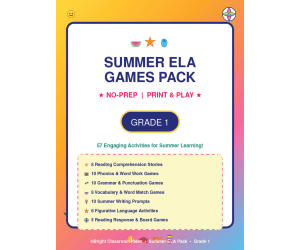
1st Grade Summer ELA Games Pack | No-Prep Printables
ELA, Grade 1, Games, Activities, Lesson Plans, Teacher Tools, Worksheets & Printables
1st Grade Summer ELA Games Pack | No-Prep Printables Keep young learners engaged and prevent the summer slide with this Summer ELA Games Pack for Grade 1 ! Packed with 57 no-prep literacy activities, this resource helps students practice reading comprehension, phonics, grammar, vocabulary, writing, and more through fun summer-themed learning. Perfect for summer school, end-of-year review, literacy centers, morning work, homeschool learning, and take-home packets. What's Included 57 engaging summer ELA activities 8 Reading Comprehension Stories 10 Phonics & Word Work Activities 10 Grammar & Punctuation Activities 8 Vocabulary & Word Games 10 Summer Writing Prompts 6 Figurative Language & Context Clues Activities 5 Reading Response & Board Games Complete Answer Key Teacher Guide with standards alignment, differentiation tips, and pacing suggestions Print-and-go format with no prep required How It Works in the Classroom This versatile summer literacy resource can be used for: Literacy centers and station rotations Summer school programs Morning work and bell ringers Early finisher activities Independent practice Homework packets Tutoring sessions Homeschool learning End-of-year review Take-home summer learning packs Simply print the pages you need and students are ready to begin. Most activities take approximately 10–20 minutes and fit easily into classroom schedules. Standards & Learning Goals Students will practice: Reading comprehension and answering questions about text Story elements, sequencing, and reading response skills Short vowels, long vowels, CVC words, blends, and digraphs Grammar concepts including nouns, verbs, adjectives, pronouns, and punctuation Vocabulary development, synonyms, antonyms, and context clues Opinion, narrative, and creative writing Figurative language including similes and onomatopoeia Critical thinking and literacy fluency skills Aligned to Grade 1 Common Core ELA standards, including RL.1.1, RL.1.3, RF.1.2, RF.1.3, L.1.1, L.1.2, L.1.4, L.1.5, L.1.6, W.1.1, and W.1.3. Why Teachers Love It ✅ No prep required—just print and teach ✅ Bright summer theme keeps students motivated ✅ Covers multiple literacy skills in one resource ✅ Perfect for preventing summer learning loss ✅ Includes answer key for quick grading ✅ Supports differentiation for diverse learners ✅ Great for independent work and small groups ✅ Flexible enough for classrooms, tutoring, homeschool, and summer programs ✅ Provides 8–12 hours of meaningful literacy practice Whether you're planning for summer school, the last weeks of school, literacy centers, or take-home review packets, this Summer ELA Games Pack gives students meaningful reading and writing practice while keeping learning fun. Ready to Make Summer Learning Fun? Download this Grade 1 Summer ELA Games Pack today and give students engaging, standards-based literacy practice all summer long. Be sure to check out my other seasonal ELA resources for year-round learning support!
Author Bright Classroom Ideas Marketplace
Rating
Tags Ela, Summer, Game, Worksheet, End Of Year

Afternoon on the Amazon (Magic Tree House #6 Lesson Plan, Videos, Activities)
ELA, Reading, Grade 1, 2, 3, Lesson Plans, Teacher Tools
A 5-day NO PREP novel study of Afternoon on the Amazon (Magic Tree House #6). This comprehensive book companion includes a lesson plan, chapter comprehension questions, vocabulary practice, and many other activities. Perfect for first grade, second grade, and third grade classrooms, homeschool families, and cooperatives. You can easily customize lessons based on student age, reading and comprehension level, interests, and learning style! Additionally, all worksheets can be completed in an interactive notebook or simply discussed aloud if you desire to reduce the number of pages you print. THIS RESOURCE COVERS: Art (drawing, coloring, arts & crafts) Comprehension English language arts Geography Grammar History Reading Research Social studies Spelling Writing
Author Heather Huhman
Tags Afternoon On The Amazon, Magic Tree House, Amazon River, Book Companion, Novel Study, Tree House Amazon

An Occurrence at Owl Creek Bridge:Full Lesson Plan w/ PowerPoints & Graphic Organizers
ELA, Reading, Grade 9, 10, 11, 12, Lesson Plans, Teacher Tools
This resource will give you everything you need to complete a full, comprehensive reading lesson plan for An Occurrence at Owl Creek Bridge text by Ambrose Bierce. Files are offered as PDFs and Word documents. Included: -An Occurrence at Owl Creek Bridge Lesson Plan -An Occurrence at Owl Creek Bridge Worksheet -An Occurrence at Owl Creek Bridge Answer Key Graphic Organizers: Author’s Purpose Characterization Chart Figurative Language Chart Historical Analysis Chart Imagery Chart Peer Evaluation Sheet Plot Diagram Read for Detail Setting Style Chart Symbol Chart Symbolism Chart Theme Diagram Tone and Mood Diagram Universal Plot Diagram Venn Diagram PowerPoints: Characterization Imagery, Voice, and Persona Irony and Ambiguity Narrator and Voice Plot Structure Symbolism and Allegory Theme - How to Interpret Theme Thank You Bonus Stuff!
Author Quality Teaching Products
Tags Reading Lesson Plan, Reading Powerpoint, Owl Creek Bridge, Graphic Organizer, Reading Worksheet, An Occurrence At Owl Creek Bridge Symbolism, An Occurrence At Owl Creek Bridge Lesson Plans
Winnie the Pooh Lesson Plan, Worksheets & PowerPoint | Grades 1 - 2
ELA, Social Emotional Learning (SEL), Special Resources, Grade 1, 2, Lesson Plans, Teacher Tools, Worksheets & Printables
Winnie the Pooh Lesson Plan, Worksheets & PowerPoint | Grades 1 - 2 Teach kindness, friendship, and early math skills with this engaging, no-prep lesson inspired by Winnie the Pooh (2011)! Students journey to the Hundred Acre Wood as they explore what makes a good friend, practice helping and sharing, and build foundational math skills through tally charts, bar graphs, and simple addition activities. Perfect for social-emotional learning, character education, friendship units, substitute plans, and cross-curricular instruction, this ready-to-use resource helps young learners develop positive relationship skills while strengthening literacy and math concepts. ⭐ What's Included: ✔ Detailed Teacher Lesson Plan & Guide ✔ Student Worksheet Packet ✔ Complete Answer Key ✔ Friendship Vocabulary Activities ✔ Character Matching Exercise ✔ Tally Chart & Bar Graph Practice ✔ Simple Addition Activities ✔ Kindness Reflection Questions ✔ Create-a-Kindness Card Activity 📚 Skills Covered: • Friendship and relationship-building • Kindness, helping, and sharing • Social-emotional learning (SEL) • Reading and interpreting tally charts • Creating and analyzing bar graphs • Addition within 10 • Early literacy and vocabulary development • Reflection and personal connections 🎯 Learning Objectives: Students will: • Identify ways to be a good friend. • Understand the importance of helping and sharing. • Match characters to key story traits. • Read and interpret tally chart data. • Create a bar graph using collected information. • Solve simple addition problems. • Reflect on ways they can show kindness to others. 🏫 Perfect For: • Grades 1–2 • Social-Emotional Learning (SEL) • Friendship & Kindness Units • Character Education Lessons • Early Math Practice • Literacy Centers • Substitute Teacher Plans • Homeschool Learning ✨ Why Teachers Love It: • No-prep and easy to implement • Combines SEL, literacy, and math in one lesson • Reinforces positive classroom community skills • Engages young learners with familiar characters • Includes answer keys for quick grading • Encourages meaningful discussion and reflection • Supports multiple learning standards Students will learn that friendship, kindness, and teamwork can solve problems while building confidence with graphing, counting, and addition skills. This heartwarming lesson helps create a caring classroom community while making learning fun and meaningful.
Author Bright Classroom Ideas Marketplace
Rating
Tags Winnie, Movie, Film, Sel, Ela, End Of Year, Worksheet

Death Be Not Proud: Exploring Literature Teaching Unit
ELA, Literature, Grade 7, 8, 9, 10, 11, 12, Teacher Tools, Lesson Plans
Death Be Not Proud: Exploring Literature Teaching Unit A vital resource for educators delivering comprehensive study of the literary masterpiece "Death Be Not Proud". Fits within the educational scope of Language Arts, targeting grades 7 to 12. A Comprehensive Teaching Resource The unit offers an exceptional tool complemented by successful classroom activities and instructional strategies that stimulate student's interests and explicate crucial literary elements in "Death Be Not Proud". Ready-to-Print Resources Comes with 50 Pages of ready-to-print PDF files. Easy access and preparation on smart devices or at home. No need for cumbersome editing software; just print what you need when you need it. Versatility in Use: Whole Group or Small Instruction, and Homework Projects Whole group instruction: Encourages maximum peer interactions. Small group instruction: Enables focus on students needing more assistance. Homework projects :: Offers students a deep-dive into text analysis while engaging parents in their children's school work. In conclusion,, Death Be Not Proud: Exploring Literature Teaching Unit simplifies teachers' workload while boosting students' ability to analyze complex literature - a key skill for the generations to come.
Author Classroom Complete Press
Tags Literature, Study Guide, Vocabulary, Death Be Not Proud, Writing Project

Goober Peas: Peanuts: Emergency Lesson Plan
ELA, Reading, Grade 5, 6, Teacher Tools, Lesson Plans
Goober Peas: Peanuts: Emergency Lesson Plan This dynamic and ready-to-use resource is designed for Grade 5 and Grade 6 educators with a focus on engaging students in cross-curricular learning within the Language Arts domain. It stimulates young minds through vibrant Reading modules. Resource Overview: Nonfiction Article: A compelling article exploring the rich history and uses of peanuts across different cultures. Worksheets: Customized worksheets, perfectly aligning with the article content, aiding in understanding and reinforcement of key knowledge. Extension Activities: Group discussions or individual assignments for extended learning. Emerges as brainstorming sessions or homework based on classroom discourse themes related to peanuts. The power of this resource lies in its quick application during challenging situations when regular teaching becomes problematic due to unexpected circumstances such as inclement weather conditions or sudden time gaps before school events. It comes off as a handy tool with seamless deployment amidst crisis moments with its easily navigable PDF format containing eight print-ready pages. In sum, Goober Peas: Peanuts: Emergency Lesson Plan optimally blends academic instruction with real-world exposure, capturing the historical-cultural essence of peanuts via an intriguing lens. Its grit shines through its readiness to serve instantly amidst overwhelming teaching instances without sacrificing meaningful learning opportunities tailored for grade 5 & grade 6 learners.
Author Classroom Complete Press
Tags History Worksheet, Reading Passage, Language Arts Activity, Vocabulary Lesson, Peanuts, Goober Peas Peanuts
How to Write a Book Report: What Is a Book Report? - FLASH-PC
ELA, Writing, Common Core, Grade 5, 6, 7, 8, Teacher Tools, Lesson Plans
What Is a Book Report? - FLASH-PC FLASH-PC is an educational resource designed to equip educators with the necessary tools and frameworks to teach students how to write a book report. This comprehensive teaching resource targets Grade 5 through Grade 8 students, focusing primarily on language arts in the area of writing. Covering Content Understandings and Practical Applications The lesson plan breaks information down into easily digestible segments, or 'chapters mini'. Each segment contains curriculum -based content along with carefully crafted reading passages. Crucial learner involvement is demanded before these reading journeys embark through 'before you read' questions that engage prior knowledge or foster anticipatory discussions. The Teaching Process Doesn’t Stop Here To ensure learners retain what they've read, after-reading questions are introduced as a follow-up. These effective comprehension checks or recalling exercises help learners get maximum value from their learning experience. Inclusion of Printables and Vocabulary Flashcards Inclusion of printables: Using physical resources for understanding complex constructs like book reports has immense value in education. Vocabulary flashcards: These aid in reinforcing linguistic competencies and helping students navigate complex texts during practice sessions. Graphic Organizers for Interactive Learning We offer graphic organizers that provide visual prompts for interactive learning enabling better recall abilities among students. Interactive activities form part of this unique package—students can collaborate enthusiastically where 'what constitutes a book report' concepts become easier to grasp.' Notebooks: An Excellent Tool for Kids... This product strictly adheres to Common Core State Standards demonstrating our commitment towards quality education by meeting regulatory standards set by authorities. The presented content aims at graduating responses according to Bloom's Taxonomy, ensuring holistic development in students' cognitive abilities. This is an excellent tool when optimally employed by dedicated educators willing to go the extra mile for their pupils’ achievements - regardless of whether they are from public school environments or homeschool setups. This PC-based software resource can be used in various classroom settings—whole group discussions, small group discussions, or even as homework assignments. It is an ideal solution for teachers who seek to guide their students towards mastering the challenging but rewarding skill of writing book reports.
Author Classroom Complete Press
Tags Software (PC)
Grade 3 Yearlong Reading Comprehension Curriculum | 72 Worksheets
ELA, Grade 3, Lesson Plans, Teacher Tools, Worksheets & Printables
Grade 3 Yearlong Reading Comprehension Curriculum | 72 No-Prep Worksheets Help your students become stronger, more confident readers with this comprehensive Grade 3 Reading Comprehension Curriculum ! This year-long reading program includes 72 original fiction and nonfiction passages , targeted comprehension practice, vocabulary development, and writing activities designed to build critical reading skills throughout the entire school year. With a consistent structure and spiraled skill progression, teachers can easily provide meaningful reading instruction week after week. What's Included ✅ 36 weeks of reading comprehension lessons ✅ 72 original reading passages (2 passages per week) ✅ Balanced fiction and nonfiction texts ✅ Vocabulary matching activity with every passage ✅ Four comprehension questions per passage ✅ Writing prompt for every lesson ✅ Student Worksheet Book ✅ Teacher's Guide with pacing support and differentiation strategies ✅ Complete Answer Key with sample responses and writing expectations ✅ Spiraled reading comprehension skill progression throughout the year How It Works in the Classroom This Grade 3 reading comprehension resource is designed for flexible use and works well for: Whole-group reading instruction Small-group guided reading Literacy centers Independent practice Reading intervention Homework assignments Morning work Sub plans Homeschool instruction Each lesson follows a simple and predictable routine: Read and discuss the passage Complete vocabulary practice Answer comprehension questions using text evidence Respond to a writing prompt The consistent structure helps students build independence while strengthening close reading and written response skills. Standards & Learning Goals Students will practice and strengthen: Key Details Story Characters Setting Retelling & Sequence Main Topic Main Idea Cause & Effect Compare & Contrast Sequence of Events Making Predictions Drawing Conclusions Author's Purpose Ask & Answer Questions Connecting Texts Fact & Opinion Problem & Solution Story Elements Reading comprehension strategies Vocabulary development Evidence-based written responses Skills are introduced, revisited, and expanded throughout the year to promote mastery and long-term retention. Why Teachers Love It ⭐ Easy-to-follow year-long curriculum ⭐ Minimal prep required ⭐ Consistent lesson format for student success ⭐ Balanced fiction and nonfiction reading practice ⭐ Vocabulary, comprehension, and writing integrated into every lesson ⭐ Supports differentiation and intervention ⭐ Encourages close reading and text evidence ⭐ Builds reading stamina and critical thinking skills ⭐ Includes teacher support materials and answer keys Students explore engaging themes including family, animals, seasons, community helpers, plants, healthy habits, transportation, Earth science, and imaginative stories while developing essential reading comprehension skills. Perfect For ✔ Third Grade Classrooms ✔ Literacy Centers ✔ Reading Intervention ✔ Homeschool Programs ✔ Independent Practice ✔ Small Group Instruction ✔ Supplemental Reading Curriculum ✔ Year-Long Reading Programs Download Today If you're looking for a complete Grade 3 Reading Comprehension Curriculum that combines engaging reading passages, vocabulary activities, comprehension practice, writing prompts, teacher guidance, and answer keys into one easy-to-use resource, this year-long program is ready to support your readers all year long.
Author Bright Classroom Ideas Marketplace
Rating
Tags Back-to-school, Ela, Reading, Writing, Yearlong, Full Year, Curriculum, Comprehension

How to Write an Essay - Digital Lesson Plan Gr. 5-8 - FLASH-PC
ELA, Writing, Grade 3, 4, 5, 6, 7, 8, Teacher Tools, Lesson Plans
How to Write an Essay - Digital Lesson Plan Gr. 5-8 - FLASH-PC With the How to Write an Essay - Digital Lesson Plan, educators now have a comprehensive, engaging teaching resource at their disposal. This enriching tool is specifically designed for grades 5 through 8 and focuses on the crucial task of essay writing. The user-friendly software facilitates easy integration into existing Language Arts curriculum or any other subject where writing essays is mandatory. Digital Lesson Plan Features: The digital lesson plan includes a highly interactive set of lessons depicted across 80 screen-pages which instruct students on every fundamental aspect of essay creation. Aims to alleviate fears that commonly surround essay writing by equipping students with methods and techniques necessary for confident expression. Focused coverage of the four primary types of essays: Descriptive, Narrative, Informative,,andPersuasive. Instructive review sessions about key language elements such as verbs, adjectives and pronouns. Add-Ons: Incorporates graphic organizers that guide students through each stage of drafting essays while organizing their thoughts logically. Ongoing resource support including reading passages for comprehension enhancement along with interactive before-and-after-you-read activities. Evaluation & Activities: To assess progress made by students after going through each section/module test prep materials are included within this package. These provide teachers with effective tools to assess learner's understanding in addition to making classes more participatory through memory match games, crossword puzzles & word searches. Note: This software facilitates technologically-enabled learning environment optimal when executed on compatible PC-based devices. Suitable for modern equipped classrooms and homeschool setups.
Author Classroom Complete Press
Tags Software (PC), Essay Writing Lesson Plans, Writing An Essay Lesson Plan, Essay Writing Lesson Plan

Do vs. Make | Pre-Intermediate Lesson Plan
ELA, Grammar, Grade 3, 4, 5, Teacher Tools, Lesson Plans
This is a pre-intermediate lesson plan worksheet set for Do vs. Make. Students will learn more about these and then complete the exercises to follow, which will assess their comprehension and implement grammar skills. An Enriching Language Arts Resource Beyond being a regular lesson plan, this resource takes kids on a rewarding interactive journey in Language Arts. The worksheets serve as practical arenas where students can test out their learning about 'do' and 'make', while evaluating their own understanding or working collaboratively. Suitable for educators conducting group activities or individual sessions or homeschooling parents wanting reliable resources for at-home lessons – it has been designed to fluently adapt to varied learning environments. Inculcating the competency of correctly using ‘do’ vs ‘make’. Fostering enhanced overall grammar skills which uplift their competency in Language Arts. Digital Compatibility & Reflective Feedback A noteworthy feature is its integration with Google Apps that injects digital vibrance into traditional classroom practices. Additionally, keeping the importance of feedback in mind during learning progressions - an answer key provision allows immediate reflection. A solution crafted by teachers themselves - The do vs make Lesson Plan correlates seamlessly within any curriculum focusing on developing strong foundational knowledge in Language Art amongst learners.
Author TEAM TEFL
Tags Action Verbs, Grammar Lesson, Grammar Worksheet, Sentence Writing, Language Arts
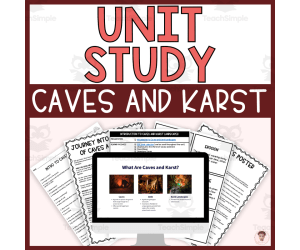
Caves and Karst Unit Study
Creative Arts, Art, Social Studies, ELA, Reading, Reading Comprehension, Grammar, Language Development, Vocabulary, Spelling, Writing, Grade 3, 4, 5, Activities, Crafts, Teacher Tools, Lesson Plans, Presentations, Graphic Organizers, Projects, Assessments, Worksheets & Printables, Worksheets
The Caves and Karst Unit Study This is an engaging, comprehensive, and low preparation teaching resource that explores the fascinating world of caves and karst. It is a valuable resource for educators focusing on grades 3 to 5, as well as homeschooling guardians. Main Topics Covered Introductory concepts about caves and karst formations Detailed insight into speleothems and cave forms Landscape found in karsts Particularly captivating information about cave ecosystems habitat adaptations. The unit study wraps up with an exploration of cave conservation efforts highlighting their importance. Tailored Approach to Learning Styles Each lesson includes: Visual-auditory online presentations , alongside curated videos. Reading passages: To cater for those who learn best through perusing textual information. Upon consideration for student handwriting skills levels, options are made available within note-taking pages with either primary lines, regular lines or no lines. Note-taking pages & Graphic organizers: To keep track of acquired knowledge across every topic covered. Hands-on activities are incorporated into every lesson plan providing kinesthetic opportunities. Purposeful Assessment through Quizzes A tool that teachers or homeschoolers can use flexibly over days or weeks depending on pacing preference - quizzes filled with 15 multiple-choice questions per lesson – ideal in testing understanding at each stage. Cross-Curricular Subjects Integration The unit study covers: Art (emphasis on drawing, coloring & crafts) English Language Arts Geography and Geology Grammar, History, Reading, Science and Social Studies research work , Spelling . The Caves and Karst Unit Study: An interactive unit study that inspires young geologists' minds while encouraging the application of learned concepts through hands-on activities. The resource spans over 150 pages premium content in a downloadable file in PDF format. A truly comprehensive guide for both educators and homeschoolers.
Author Heather Huhman
Tags Caves, Karst Formations, Speleothems, Cave Ecosystems, Conservation Efforts

Reading Comprehension: Main Idea - FLASH-MAC
ELA, Reading, Reading Comprehension, Grade 5, 6, 7, 8, Teacher Tools, Lesson Plans
Reading Comprehension: Main Idea - FLASH-MAC FLASH-MAC is an invaluable resource designed to enhance an educator's toolkit, aimed specifically at grades 5 through 8. It particularly addresses Language Arts Comprehension. This interactive software contains curriculum -based content focusing on students' comprehension of the main idea within reading tasks, using various approaches for engagement and yielding powerful results. Main Components: A chapter mini that sets course material into manageable sections complete with before and after reading questions, and diverse reading passages. Complimentary printables perfect for assignments or pop quizzes shareable across different classroom setups; whole group, small group or homework. Vocabulary flashcards promoting memorization while enhancing understanding required in comprehending main ideas across multiple contexts. Useful graphic organizers aiding visual learners in breaking down complex ideas into simple visually represented concepts. Interactive activities further reinforcing learned skills or introducing new ones. The unique selling proposition of FLASH-MAC lies in its crafting by educators who comprehend both teaching requirements and students' needs making abstract reasoning tangible for grade-level students leading to significant capacity growth over time. For homeschoolers or public school educators seeking high-grade resources to take their language arts comprehension lessons a notch higher, investing in 'Reading Comprehension: Main Idea- FLASH MAC', might prove significantly advantageous!
Author Classroom Complete Press
Tags Software (Mac)

Identifying Writing Conventions Goals- Choose Goals, Steps, & Reflect
ELA, Grammar, Grade 6, 7, 8, Teacher Tools, Lesson Plans
We want our students to be engaged and invested in their writing, and one way to do that is to have them choose goals for their writing. Our job is to help them set appropriate goals. The 19-page, editable resource, Identifying Writing Conventions Goals- Choose Your Goals and Steps and Then Reflect gives teachers an easy-prep lesson plan that guides you and your students through the process of identifying writing goals and action steps, followed by a prewriting and post-writing reflection. The lesson plan offers opportunities for class discussion to explore the Essential Question: Why are writing conventions essential for clear communication? Differentiation is built into this lesson. Students choose either one Foundational Goal (goals needed to achieve proficiency) or one Extended Goal (goals for more advanced writers) from each of 4 criteria- grammar, spelling, punctuation, and sentence structure. After choosing their goals and action steps, they then narrow them down to two or three manageable goals which will guarantee them greater success in their writing. As a result, your ELL, RSP, GATE, and gen-ed students will feel both challenged and confident in their writing. The lesson includes the following: A hyperlinked Table of Contents About this Resource-- a one-stop guide to everything you need to know for this lesson A standards-aligned, comprehensive lesson plan The essential question: Why are writing conventions essential for clear communication? Four guiding questions: How can setting and tracking specific writing conventions goals improve my writing skills? What are my current strengths and weaknesses in writing conventions? What specific steps can I take to improve my writing conventions? What strategies can I use to achieve my writing goals? Objectives, and learning targets The following student worksheets: Writing Conventions- Choose Your Goals Writing Conventions- What Steps Will You Take to Achieve Your Goal? Writing Conventions- Goals and Steps- Putting Them Togehter Writing Conventions- Goals and Writing Reflection This lesson is part of a unit on Identifying Writing Goals- Choose Your Goals and Steps, and Then Reflect. Identifying Argumentative Essay Goals: Choose Your Goals and Steps and Then Reflect Identifying Expository Essay Goals- Choose Your Goals and Steps and Then Reflect Identifying Literary Analysis Essay Goals- Choose Your Goals and Steps and Then Reflect Identifying Narrative Writing Goals- Choose Your Goals and Steps and Then Reflect Identifying Writing Conventions Goals- Choose Your Goals and Steps and Then Reflect
Author Intentional Teaching and Learning
Tags Goal-setting, Writing Goals, Differentiation, Middle School, Writers, Writing Conventions, Grammar, 6th-8th Grades
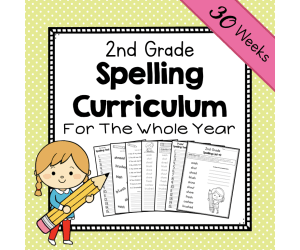
2nd Grade Spelling Unit |Spelling Curriculum | Spelling Lists
ELA, Language Development, Spelling, Grade 2, Lesson Plans, Teacher Tools
Set your 2nd graders on the path to spelling success with this meticulously designed year-long curriculum spanning 30 weeks of engaging content. Developed for elementary classrooms and homeschool settings, it takes a patterns and rules approach to systematically build skills. Each week presents 10 carefully chosen words plus space to plug in 5 personalized vocabulary picks tied to current themes or priority trouble spots. This blend of structured scope and tailored customization enables targeted, immersive learning. Strategically organized around spelling conventions like digraphs, blends, silent letters, and more, this 250+ page program nurtures understanding in tandem with memorization. Students actively study the reasoning behind spelling rules while shoring up foundational language arts abilities. Vivid accompanying materials allow educators to invest energy into instruction rather than planning. Each weekly installment includes a colorful poster modeling that week’s spelling list and corresponding linguistic pattern, test sentence call-out sheets, pretest/test templates, and diverse worksheets suited for varied learning preferences. From tracing activities to original sentence writing to correctly spelling terms in context, the spectrum of activities drives well-rounded engagement. Supplementary resources expand customizability and instructional options with an overall 2nd grade spelling word bank, multiple test templates, personalized practice sheets and beyond. This robust curriculum aims to make both teaching and learning this fundamental skill more dynamic via an explicit skills-building approach. Equip your 2nd graders for spelling prowess with a content-rich program designed to illuminate the logic behind spelling conventions. Spelling Rules and Patterns Included By Week: Week 1- Digraph "ch" Week 2- Digraph "th" Week 3- Digraph "sh" Week 4- Digraph "wh" Week 5- Commonly misspelled words Week 6- Digraph "ph" Week 7- Digraph "ck" Week 8- Letter blend "st" Week 9- Letter blend "cl" Week 10- Letter blend "sw" Week 11- Letter blend "nt" Week 12- Trigraph "tch" Week 13- Trigraph "dge" Week 14- Trigraph "nch" Week 15- Commonly misspelled words Week 16- Trigraph "str" Week 17- Trigraph "spr" Week 19- Closed compound words Week 20- Closed compound words Week 21- Open compound words Week 22- Words that start with "q" followed by a "u" Week 23- Vowel teams that make the long /a/ sound Week 24- Vowel teams that make the long /e/ sound Week 25- Commonly misspelled words Week 26- Vowel teams that make the long /o/ sound Week 27- Vowel teams that make the long /i/ sound Week 28- Contractions Week 29- Soft "g" sound Week 30- Soft "c" sound Need Other Levels of Spelling? Check these out: - Kindergarten Spelling Year-Long Curriculum - 1st Grade Spelling Year-Long Curriculum - 2nd Grade Spelling Year-Long Curriculum - 3rd Grade Spelling Year-Long Curriculum - 4th Grade Spelling Year-Long Curriculum - 5th Grade Spelling Year-Long Curriculum - 6th Grade Spelling Year-Long Curriculum - 7th Grade Spelling Year-Long Curriculum - 8th Grade Spelling Year-Long Curriculum Check out other resources from my store: Simply Schoolgirl! I can be contacted for questions and concerns at simplyschoolgirl1@gmail.com
Author Simply Schoolgirl
Tags Spelling Curriculum, Spelling Activities, Year-long Spelling, Spelling Quiz, Spelling Test, Spelling Worksheets, Printable Spelling, No Prep Spelling, Easy Spelling, Spelling Rules
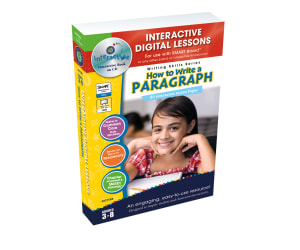
How to Write a Paragraph - Digital Lesson Plan Gr. 5-8 - FLASH-PC
ELA, Writing, Grade 3, 4, 5, 6, 7, 8, Teacher Tools, Lesson Plans
How to Write a Paragraph - Digital Lesson Plan Gr. 5-8 (FLASH-PC) This digital lesson plan is ideal for students in grades 5 through 8 and is geared towards refining their paragraph writing abilities. The interactive, laid out over an expansive 80 screen-pages, simplifies the learning process while delivering all the essential elements necessary for effectively constructing well-articulated paragraphs. Key Features: An engaging and user-friendly digital interface. Focused emphasis on vital parts of a paragraph: topic sentence, supporting sentences, and summary sentence – all woven together seamlessly. Graphic organizers that add value in organizing thoughts visually leading to better information digestion. A range of interactive activities like memory match games or crossword puzzles designed & implemented to reinforce acquired skills without being excessively direct or monotonous. This digital lesson plan can easily slip into regular teaching practices regardless of whether you conduct specialized groups or a full classroom structure. Its versatile format accommodates varying teaching methods from conventional school education systems to homeschooling approaches. Add-Ons: Inclusion of audio-visual aids as supporting facets with textual matter - adding diversity while aligning with State Standards curriculum requirements Bloom's Taxonomy observance in its content creation standards setting clear guidelines for educators across different grade levels Incorporate 'How to Write a Paragraph - Digital Lesson Plan Gr. 5-8' into your curriculum today and let your students uncover the joy embedded within their learning adventures while brushing up their paragraph writing expertise along the way!
Author Classroom Complete Press
Tags Software (PC)

Quick Snacks Reading Comprehension Passage - Cored Ed Encyclopedia
ELA, Language Development, Reading Comprehension, Reading, Pre-Reading, Writing, Strategies, Vocabulary, Health, P.E. & Health, Grade 2, 3, 4, 5, Worksheets & Printables, Worksheets, Teacher Tools, Centers, Activities, Writing Prompts, Assessments, Quizzes and Tests, Quizzes, Lesson Plans
This quick snacks reading comprehension includes: Visualization (on the front cover) Start your lesson by taking a minute to think and share something about the topic. Read the script aloud (slowly), perhaps prepare some music or sound effects. Student close their eyes and let their imaginations wander. Students open their eyes, read the question aloud and give them a few minutes to complete. Ask a few students to share or keep answers until the end to compare with what they learn in the passage. Quick pause—thousands of Cored Education products are included with your TeachSimple membership. Download links and encyclopedia index available here. Pre-Reading Trivia Students will write down one thing they already know about the subject and then read five more facts and discuss. These facts are fun, and the students will enjoy learning about the subject before reading more. Give 1 minute for students to write what they already know (no pressure—best guess is fine). Read the five facts together. After each fact, do ask a student for their opinion, was it surprising? Set a purpose by asking students to highlight/underline one fact they want to learn more about during the reading. Reading Passage The text is a high-interest reading passage with set paragraphs, roughly three to four paragraphs long. It contains a variety of themes about the topic, anywhere from history to technology. The passage is between 250 and 350 words in length. First, ask students to look at the headings and see what they’ll learn about today. What do they know about the topic/heading? First read options: Teacher read-aloud (best for support). Partner reading (paragraph by paragraph). While reading, students underline important details, and vocabulary words they think may come up in the questions section. Mixed Questions The first question page contains four multiple-choice questions, each with a choice of four answers, and three written response questions that require a sentence or two from the student. Students complete the mcqs first independently, then review quickly as a class. For the 3 written responses, try to get students giving the answer with some form of evidence: “I think ___ because the text says ___.” If students get stuck, send them back to check the passage. Vocabulary Questions Practice seven key words from the text in this section across two activities. First section is scrambled words where students will unscramble three words given a clue for each. The second section is a word to meaning matching activity. Before starting, have some students read out words they underlined in the passage. Ask students to say the word and read aloud the sentence(s) around each word. Ask students to do scrambled words and the matching exercise in pairs then go through answers as a class. For the scrambled spelling task, get four pairs to come up to the board and write the words for extra practice with the other student reading out the clue. For the matching task, prompt students to give full sentences: “I matched ___ with ___ because ___.” Creative Writing In this question, the student will be required to write a five to eight sentence paragraph on a question related to the topic. Before starting, ask students write down 3 key ideas they are going to include in their piece. Ask students for ideas to share around the class to help those struggling. Pro writing expectations: 5–8 sentences At least 2 facts or details from the passage At least 2 vocabulary words from the previous page Students read their paragraphs while classmates listen for facts and vocabulary words. Extension Activities This page is optional for fast finishers or to take home. There are several activities, each one requiring a different skill. Do some, do none, do all, completely optional - but you will feel reassured knowing every possibility is planned for. Includes summary writting question. Answer Key There are answers for the multiple-choice questions, written response questions have sample answers, vocabulary answers and if there is a summary question then a sample summary will be provided as well. Lesson Plan Included Customized lesson plan for this lesson is included. Lesson Snapshot Title: Quick Snacks Genre: Nonfiction (informational passage) Subject: Health Science (Nutrition) / Reading (Informational Text) Primary Topic: Snacks between meals and steady energy Estimated Guided Reading Level (A–Z): R What This Lesson Teaches Best The purpose of a quick snack: a small, simple food that steadies you between bigger meals (not a meal replacement). How “convenience” packaged snacks are designed (ready to eat, travel well, last longer on a shelf) and what they may include (sweeteners, preservatives, bold flavors). Basic food science for kids: foods carry nutrients, including carbohydrates, protein, and fats, and protein helps tissues grow and repair. How to think about “steadier energy” snack choices (examples in the passage include fruit with yogurt and whole grains with beans). Built-in skill practice with aligned support pages (pre-reading facts, questions, vocabulary, writing, and extension activities based on the passage). Learning Goals Students can explain how the passage defines a quick snack and how it differs from a meal. Students can describe how quick snacks changed from home foods to packaged convenience foods, using text details. Students can identify the three nutrient groups named and describe what protein does in the body. Students can explain what the passage means by “steadier energy” and name a snack example it gives. Students can use section headings to locate information and state the main idea of each section. Key Vocabulary From the Text preservatives — ingredients that help food last longer. nutrients — helpful parts of food your body uses. carbohydrates — a nutrient group that gives the body energy. protein — helps body tissues grow and repair. packaged — put in a package to be ready and easy. FULL CATALOG OF DOWNLOAD LINKS AND ENCYCLOPEDIA INDEX HERE
Author Cored Education
Rating
Tags Vocabulary, Reading Comprehension, Reading Passages, Reading, Creative Writing, Reading Strategies, Writing Prompts, Lesson Plans, Quick Snacks, Health
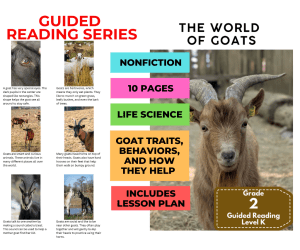
Guided Reading Level K - The World of Goats (with Lesson Plan)
ELA, Resources for Teachers, Reading Comprehension, Reading, Science, Language Development, Life Sciences, Animals, Pre-Reading, Vocabulary, Grade 2, 3, 4, Worksheets & Printables, Worksheets, Teacher Tools, Centers, Activities, Literacy Readers, Quizzes, Quizzes and Tests, Assessments, Lesson Plans
This Guided Reading Book - The World of Goats (Level K) with lesson plan includes: Guided Reading Color Label (front cover x1) This is a quick way to match the book’s demands to what students can generally handle.. The overall goal is to use the level/color to pick books for several smaller groups. To qualify for a certain level, a student is expected to read a book from that level with about 90–94% accuracy. If a student is consistently accurate and understands, move up a level. If the student is struggling at that level, drop down and add more support. Each student will improve at completely different rates, but it is generally one of the best ways to check progress across the class. DOWNLOAD THE CATALOG TO VIEW ALL GUIDED READING BOOKS AVAILABLE (SORTED LEVELS A-Z) Pre-Reading Question (x1) Teacher asks the prompt aloud, can be while showing the cover or first page. Students share what they already know, or make educated guesses from the cover. Prompt them to use the target vocabulary. Write some of their responses on the board to look back at during the reading. Vocabulary Words (x5) Introduce the five words, best doing it one at a time. Start by saying it, while students repeat and then see if anyone knows what it means before reading further. Read through the meaning and try to briefly connect each word to a picture or gesture so it’s meaningful. Ask students to flip through the book pages and point to where they see each of the vocabulary words. While reading the book pause upon coming across one of the vocab words or read the sentence twice to make sure students understand the word has appeared. Optional: Ask students to raise hands whenever they see/hear one of the new words. Guided Reading Pages (x10) Check the book snapshot (below) for: primary topic - do you need to prep extra reading or intro materials on this? what is taught best - decide on 1-2 bullets to focus on, use the prompt or words provided here for best results. learning goals - what you are checking for students to be able to do after the session, elicit answers using prompts or words provided. key vocabulary (see section above). questions overview - so you know what is coming up and if you need to prep extra materials to assist understanding. Run the lesson You may have already looked at a few of the pages together, but you can show them some of the pictures again first to set meaning. Depending on how much time you have and how familiar your students are with guided reading class, you may want to read the book aloud first with the group first. Students whisper or partner read, while you listen in. If time, do it as a group, one student reading a page each. Use the guided page’s prompts to coach: “Check the picture / does it make sense?” “Point under the words / try the first sound” “Reread the sentence smoothly”. Try to focus more on one student per session (rotating every time), so you can work out if they are ready to move up or need to move down a level. Comprehension Questions (back cover x3) This is your way to check that students didn’t just say the words, but actually understood the text. First, let students answer by pointing to the page/picture and saying a short sentence. After any answer, follow with: “Show me where you found that in the text.” In bigger groups, have partners answer first (10–20 seconds), then call on 2–3 students to share. Differentiation tips: Emerging speakers/struggling readers: oral + pointing On-level: oral in a full sentence Higher: one written sentence or draw + label Book Snapshot Title: The World of Goats Genre: Nonfiction (informational text) Subject: Life Science + Reading (Informational Text) Primary Topic: Goat traits, behaviors, and how they help Estimated Guided Reading Level (A–Z): K What This Book Teaches Best Describes goats as “smart and curious” animals that live in many places around the world. Explains body parts that help goats move and stay safe (horns, hooves, and special eyes that help them “see all around”). Teaches what goats eat by defining them as “herbivores” and naming plants they munch on (grass, leafy bushes, bark). Highlights goat abilities and behaviors (climbing steep, rocky cliffs; kids running and jumping; goats playing and gently bumping heads). Connects goats to farm life by stating they provide milk and wool. Learning Goals Students will identify key goat traits and behaviors described in the text. Students will explain how horns and hooves help goats, using details from the text. Students will describe how a goat’s special eyes help it stay safe. Students will explain what herbivores eat and list plants goats munch on from the text. Students will describe how goats communicate and what a “bleat” can help a mother goat do. Students will describe how goats can be helpful to people on a farm, according to the text. Key Vocabulary From the Text curious — wanting to learn more by exploring. hooves — hard feet that help goats walk. rectangles — shapes with four sides and four corners. herbivores — animals that eat only plants. bleat — the sound a goat makes. Discussion Prompts Pre-reading question: What features might help goats live in different places? Comprehension questions: How do a goat’s special eyes help it stay safe? Comprehension questions: What kinds of plants does the book say goats like to munch on? Comprehension questions: Why do goats gently bump their heads when they play together? Printing Tips 1. Best Printing Method (Recommended) “Booklet” Printing (Best if Available) If your printer or PDF viewer supports Booklet Printing , use this. Settings to use: Print mode: Booklet Paper size: Letter or A4 (either works) Orientation: Landscape Print on both sides: Yes Flip on: Short edge Scaling: Fit to printable area Booklet subset: First test: Front sides only Then: Back sides only This will automatically: Pair pages correctly Put the cover on the outside Align everything for folding After printing, fold in half and staple along the spine . 2. If “Booklet” Printing Is NOT Available You can still print this correctly with manual duplex printing . Step-by-step: Open the PDF. Choose Print . Set: Orientation: Landscape Pages per sheet: 1 Print on both sides: Yes Flip on: Short edge Print all pages . Because each PDF page already contains two facing book pages, the result will still fold cleanly into a book. Thousands of Cored Education products are included with your TeachSimple membership. Download links and encyclopedia index available here.
Author Cored Education
Rating
Tags Reading Comprehension, Reading Passages, Reading, Guided Reading, Guided Reading Lesson Plan, Guided Reading Activity, Pre-reading, Science Lesson Plans, Life Science, Animals

Skateboarding Reading Comprehension Passage - Cored Ed Encyclopedia
ELA, Language Development, Reading Comprehension, Reading, Pre-Reading, Writing, Sports, P.E. & Health, Technology, Science, Grade 2, 3, 4, 5, Worksheets & Printables, Worksheets, Teacher Tools, Centers, Activities, Writing Prompts, Assessments, Quizzes and Tests, Quizzes, Lesson Plans
This skateboarding reading comprehension includes: Visualization (on the front cover) Start your lesson by taking a minute to think and share something about the topic. Read the script aloud (slowly), perhaps prepare some music or sound effects. Student close their eyes and let their imaginations wander. Students open their eyes, read the question aloud and give them a few minutes to complete. Ask a few students to share or keep answers until the end to compare with what they learn in the passage. Quick pause—thousands of Cored Education products are included with your TeachSimple membership. Download links and encyclopedia index available here. Pre-Reading Trivia Students will write down one thing they already know about the subject and then read five more facts and discuss. These facts are fun, and the students will enjoy learning about the subject before reading more. Give 1 minute for students to write what they already know (no pressure—best guess is fine). Read the five facts together. After each fact, do ask a student for their opinion, was it surprising? Set a purpose by asking students to highlight/underline one fact they want to learn more about during the reading. Reading Passage The text is a high-interest reading passage with set paragraphs, roughly three to four paragraphs long. It contains a variety of themes about the topic, anywhere from history to technology. The passage is between 250 and 350 words in length. First, ask students to look at the headings and see what they’ll learn about today. What do they know about the topic/heading? First read options: Teacher read-aloud (best for support). Partner reading (paragraph by paragraph). While reading, students underline important details, and vocabulary words they think may come up in the questions section. Mixed Questions The first question page contains four multiple-choice questions, each with a choice of four answers, and three written response questions that require a sentence or two from the student. Students complete the mcqs first independently, then review quickly as a class. For the 3 written responses, try to get students giving the answer with some form of evidence: “I think ___ because the text says ___.” If students get stuck, send them back to check the passage. Vocabulary Questions Practice seven key words from the text in this section across two activities. First section is scrambled words where students will unscramble three words given a clue for each. The second section is a word to meaning matching activity. Before starting, have some students read out words they underlined in the passage. Ask students to say the word and read aloud the sentence(s) around each word. Ask students to do scrambled words and the matching exercise in pairs then go through answers as a class. For the scrambled spelling task, get four pairs to come up to the board and write the words for extra practice with the other student reading out the clue. For the matching task, prompt students to give full sentences: “I matched ___ with ___ because ___.” Creative Writing In this question, the student will be required to write a five to eight sentence paragraph on a question related to the topic. Before starting, ask students write down 3 key ideas they are going to include in their piece. Ask students for ideas to share around the class to help those struggling. Pro writing expectations: 5–8 sentences At least 2 facts or details from the passage At least 2 vocabulary words from the previous page Students read their paragraphs while classmates listen for facts and vocabulary words. Extension Activities This page is optional for fast finishers or to take home. There are several activities, each one requiring a different skill. Do some, do none, do all, completely optional - but you will feel reassured knowing every possibility is planned for. Includes summary writting question. Answer Key There are answers for the multiple-choice questions, written response questions have sample answers, vocabulary answers and if there is a summary question then a sample summary will be provided as well. Lesson Plan Included Customized lesson plan for this lesson is included. Lesson Snapshot Title: Skateboarding Genre: Nonfiction (informational text) Subject: Social Studies (history/culture) / Physical Education (sports) Primary Topic: How skateboarding began and evolved Estimated Guided Reading Level (A–Z): R What This Lesson Teaches Best How skateboarding started in California when surfers tried “sidewalk surfing” using boards and roller-skate wheels. How a problem (hard wheels and injury worries) led to a decline around 1966, and how a new solution helped the sport return. How new technology (polyurethane wheels that gripped and rolled smoothly) changed what riders could do and how safe it felt. How places to ride shaped new styles, from parks with banks/curves to pools, then street spots like curbs, stairs, and rails. How a timeline of key decades/years (1940s–50s, 1960s, 1970s, 1980s, 1995, Tokyo 2020/2021) shows the sport’s growth into major events. Learning Goals Describe why skateboarding began and what early riders used to make boards roll. Explain why skateboarding “nearly disappeared” around 1966 using details from the text. Identify how polyurethane wheels changed riding and why turns felt more controllable. Describe how skate parks and empty swimming pools helped create vertical skating and half-pipes. Explain how street-style skateboarding grew and name major events mentioned in the passage. Key Vocabulary From the Text polyurethane — a wheel material that grips and rolls smoothly. contests — competitions where people try to win. controllable — easy to control and not scary. vertical — going up steeply, like riding up walls. debut — first time something appears in an event. FULL CATALOG OF DOWNLOAD LINKS AND ENCYCLOPEDIA INDEX HERE
Author Cored Education
Rating
Tags Vocabulary, Reading Comprehension, Reading Passages, Reading, Creative Writing, Reading Strategies, Writing Prompts, Lesson Plans, Sports, Skateboarding