



3,912 products added recently
Page 30 - ELA Lesson Plans
Elevate your ELA instruction with lesson plans that cover reading, writing, speaking, and listening skills. These resources provide diverse texts and engaging activities to improve literacy. Integrate these plans to enrich your language arts curriculum and support student achievement.

 Show filters


Skateboarding Reading Comprehension Passage - Cored Ed Encyclopedia
ELA, Language Development, Reading Comprehension, Reading, Pre-Reading, Writing, Sports, P.E. & Health, Technology, Science, Grade 2, 3, 4, 5, Worksheets & Printables, Worksheets, Teacher Tools, Centers, Activities, Writing Prompts, Assessments, Quizzes and Tests, Quizzes, Lesson Plans
This skateboarding reading comprehension includes: Visualization (on the front cover) Start your lesson by taking a minute to think and share something about the topic. Read the script aloud (slowly), perhaps prepare some music or sound effects. Student close their eyes and let their imaginations wander. Students open their eyes, read the question aloud and give them a few minutes to complete. Ask a few students to share or keep answers until the end to compare with what they learn in the passage. Quick pause—thousands of Cored Education products are included with your TeachSimple membership. Download links and encyclopedia index available here. Pre-Reading Trivia Students will write down one thing they already know about the subject and then read five more facts and discuss. These facts are fun, and the students will enjoy learning about the subject before reading more. Give 1 minute for students to write what they already know (no pressure—best guess is fine). Read the five facts together. After each fact, do ask a student for their opinion, was it surprising? Set a purpose by asking students to highlight/underline one fact they want to learn more about during the reading. Reading Passage The text is a high-interest reading passage with set paragraphs, roughly three to four paragraphs long. It contains a variety of themes about the topic, anywhere from history to technology. The passage is between 250 and 350 words in length. First, ask students to look at the headings and see what they’ll learn about today. What do they know about the topic/heading? First read options: Teacher read-aloud (best for support). Partner reading (paragraph by paragraph). While reading, students underline important details, and vocabulary words they think may come up in the questions section. Mixed Questions The first question page contains four multiple-choice questions, each with a choice of four answers, and three written response questions that require a sentence or two from the student. Students complete the mcqs first independently, then review quickly as a class. For the 3 written responses, try to get students giving the answer with some form of evidence: “I think ___ because the text says ___.” If students get stuck, send them back to check the passage. Vocabulary Questions Practice seven key words from the text in this section across two activities. First section is scrambled words where students will unscramble three words given a clue for each. The second section is a word to meaning matching activity. Before starting, have some students read out words they underlined in the passage. Ask students to say the word and read aloud the sentence(s) around each word. Ask students to do scrambled words and the matching exercise in pairs then go through answers as a class. For the scrambled spelling task, get four pairs to come up to the board and write the words for extra practice with the other student reading out the clue. For the matching task, prompt students to give full sentences: “I matched ___ with ___ because ___.” Creative Writing In this question, the student will be required to write a five to eight sentence paragraph on a question related to the topic. Before starting, ask students write down 3 key ideas they are going to include in their piece. Ask students for ideas to share around the class to help those struggling. Pro writing expectations: 5–8 sentences At least 2 facts or details from the passage At least 2 vocabulary words from the previous page Students read their paragraphs while classmates listen for facts and vocabulary words. Extension Activities This page is optional for fast finishers or to take home. There are several activities, each one requiring a different skill. Do some, do none, do all, completely optional - but you will feel reassured knowing every possibility is planned for. Includes summary writting question. Answer Key There are answers for the multiple-choice questions, written response questions have sample answers, vocabulary answers and if there is a summary question then a sample summary will be provided as well. Lesson Plan Included Customized lesson plan for this lesson is included. Lesson Snapshot Title: Skateboarding Genre: Nonfiction (informational text) Subject: Social Studies (history/culture) / Physical Education (sports) Primary Topic: How skateboarding began and evolved Estimated Guided Reading Level (A–Z): R What This Lesson Teaches Best How skateboarding started in California when surfers tried “sidewalk surfing” using boards and roller-skate wheels. How a problem (hard wheels and injury worries) led to a decline around 1966, and how a new solution helped the sport return. How new technology (polyurethane wheels that gripped and rolled smoothly) changed what riders could do and how safe it felt. How places to ride shaped new styles, from parks with banks/curves to pools, then street spots like curbs, stairs, and rails. How a timeline of key decades/years (1940s–50s, 1960s, 1970s, 1980s, 1995, Tokyo 2020/2021) shows the sport’s growth into major events. Learning Goals Describe why skateboarding began and what early riders used to make boards roll. Explain why skateboarding “nearly disappeared” around 1966 using details from the text. Identify how polyurethane wheels changed riding and why turns felt more controllable. Describe how skate parks and empty swimming pools helped create vertical skating and half-pipes. Explain how street-style skateboarding grew and name major events mentioned in the passage. Key Vocabulary From the Text polyurethane — a wheel material that grips and rolls smoothly. contests — competitions where people try to win. controllable — easy to control and not scary. vertical — going up steeply, like riding up walls. debut — first time something appears in an event. FULL CATALOG OF DOWNLOAD LINKS AND ENCYCLOPEDIA INDEX HERE
Author Cored Education
Rating
Tags Vocabulary, Reading Comprehension, Reading Passages, Reading, Creative Writing, Reading Strategies, Writing Prompts, Lesson Plans, Sports, Skateboarding

Cranes: Full Lesson Plan w/ PowerPoints & Graphic Organizers
ELA, Reading, Grade 7, 8, 9, 10, Lesson Plans, Teacher Tools
Cranes: A Full Reading Lesson Plan for Hwang Sunwon's Short Story This comprehensive reading lesson plan for the short story "Cranes" by Hwang Sunwon provides everything educators need to teach this poignant tale. The bundle includes a complete lesson plan outlining learning objectives, discussion questions, and extension activities to deepen students' understanding of the story's themes and literary devices. It also contains graphic organizers , worksheets, answer keys, and 8 PowerPoint presentations analyzing topics like plot structure, narrator, irony, ambiguity, imagery, symbolism, theme interpretation, and more. With multiple file types offered, this resource can be easily adapted for whole-class instruction, small groups, or independent work. Suitable for grades 7-10 language arts classes, this lesson plan will engage learners in thoughtful literary analysis of Hwang Sunwon’s acclaimed short story.
Author Quality Teaching Products
Tags Reading Lesson, Reading Powerpoint, Cranes Text, Graphic Organizer, Symbolism Chart, Symbol Graphic Organizer
High Frequency Sight Words: Boxed Words - FLASH-PC
ELA, Language Development, Vocabulary, Grade 1, 2, Teacher Tools, Lesson Plans
High Frequency Sight Words: Boxed Words - FLASH-PC The High Frequency Sight Words: Boxed Words - FLASH-PC is a learning resource designed to equip educators with the necessary tools for teaching Dolch Sight Words. It aims at providing engaging and rewarding activities for students in Grades 1 and 2. This resource deeply integrates curriculum-based concepts; featuring an array of teaching aids aimed at mastering high-frequency sight words. The core feature being the Boxed Words. These activities promote active student involvement, simplifying the task of rooting language arts basics into young learners. To ensure better understanding, versatile printables are also provided for reinforcement through repetitive practice. The learning needs of visual learners are catered to with Dolch sight word flash cards—perfect for quick review sessions or fun learning snapshots throughout the day. Packed as well within this rich resource trove are graphic organizers—excellent tools promoting systematic exploration of vocabulary growth while honing logical thinking skills. An interactive feature includes ready-made digital exercises designed to invoke curiosity and maintain student engagement—a perfect consideration for center rotations or small group assignments. With its software (PC) format, it is an efficient take-home material allowing seamless integration into independent learning exercises! In a nutshell, the High Frequency Sight Words: Boxed Words-FLASH PC serves as not just another lesson plan but an experiential toolkit packed with diverse approaches celebrating multiple learning styles amongst Grade 1 & 2 pupils—with a keen focus on enhancing their Language Arts proficiency particularly around Vocabulary subarea. Note: Homeschoolers would find this comprehensive resource extremely beneficial too, as it's adaptable enough to allow personalization according to each learner's unique needs—guaranteeing daily individualized learning experiences for every child.
Author Classroom Complete Press
Tags Software (PC)

Nonfiction Text Features: Heading and Subheading Lesson
ELA, Reading, Grade 1, 2, 3, 4, Teacher Tools, Lesson Plans
This resource is a Nonfiction Text Features: headings and subheadings Lesson. A short and sweet lesson to introduce or recap the nonfiction text features; headings and subheadings. This lesson aims to keep students engaged and interacting through class discussions and activities. Students will apply reading, creative thinking, problem-solving, and more as they work through these interactive slides. The objective of these lessons is to provide an introduction or recap of the nonfiction text features; headings and subheadings. These lessons are aimed and creating a concrete understanding of the concepts through various activities as well as class discussions. Students will learn all about headings and subheadings, how to identify them and how to apply them on their own. Class discussions and practice activities are included for students to apply their knowledge. There are lesson slides and student slides; the lesson slides can be presented to students as an introduction or recap lesson of the concepts. The lesson slides are animated as well as have speaker notes. Student slides can be given to students to complete during the lesson or as homework after the lesson. There are 2 different presentations - 1 for the lesson and 1 answer slide presentation. These slides are made through Google Slides an animations may work better through Google Slides . If you like this lesson be sure to have in our other Nonfiction lessons: Nonfiction lessons: Nonfiction captions and labels Nonfiction Glossary Nonfiction table of contents Nonfiction title Nonfiction title page Nonfiction index
Author Ezee 101
Tags Nonfiction, Text Features, Headings, Subheadings, Interactive Reading, Student Engagment, Interactive, Text Features Lesson Plan, Text Feature Lesson Plans

Romeo & Juliet Plainspoken
ELA, Literature, Common Core, Grade 7, 8, 9, 10, 11, 12, Teacher Tools, Lesson Plans
Romeo & Juliet Plainspoken: A Teaching Resource Romeo & Juliet Plainspoken is a practical and innovative teaching resource designed for educators. This unique tool presents a significant blueprint to teach students Language Arts, while developing their understanding of literature. Formulated specifically for grade 7 through 12, the content can be tailored to various learning settings. Facing the challenge of old language vs modern usage Shakespeare's timeless classic "Romeo & Juliet" holds substantial value in literature-based curriculums. Yet, interpreting centuries-old text into modern language usage can pose challenges for teachers and students alike. Dual-text feature to the rescue! The magic of Romeo & Juliet Plainspoken lies in its unique bifocal structure - presenting both the traditional script and a relatable contemporary adaptation side by side. This acts as an inviting bridge connecting students' prior knowledge with literary classics. Cultivating insightful discussions The resource not only mitigates reluctance when studying Shakespeare but also ignites class discussions about themes told through everyday language use. The included discussion questions are perfect aids for fostering: Vibrant classroom debates Group activities that engage active participation An efficient guide reducing workload! This well-planned guide eliminates additional workload by providing teachers with precise structure, making study sessions result-oriented yet enjoyable. The packaged PDF file further provides convenient access anytime needed. In conclusion... Romeo & Juliet Plainspoken has revolutionized teaching legendary works such as Romeo&Juliet.The efficiency and student engagement it offers is something every educator desires.
Author Classroom Complete Press
Tags PDF, Plainspoken, Romeo And Juliet Common Core, Romeo And Juliet Lesson Plans Common Core

News ESL TEFL Upper Intermediate Lesson Plan Worksheet
ELA, Language Development, ESL, Vocabulary, Reading, Writing, Not Grade Specific, Adult Education, High School, Homeschool Resources, Middle School, Teacher Tools, Lesson Plans, Worksheets & Printables
News Upper Intermediate ESL TEFL Lesson Plan engages high school and adult ESL students through real-world topics. Learners study news-related vocabulary and grammar before completing comprehension exercises. The role-play activity encourages the students' to show off their conversation skills whilst working in pairs. The varied activities allow implementation in whole or small groups, for homework, or individual practice. This customizable resource features reading passages and audio about current events. The answer key supports self-guided learning. Simple formatting enables access via Google Apps when using Chromebooks or tablets. Teachers appreciate the flexibility this lesson plan offers to strengthen students' English proficiency, critical thinking, and discussion skills. The ESL lesson plan includes flashcards, a warmer, grammar rules, exercises, role-play, conversation, writing drill, activity , answers and an extra study that would be good to set as homework. There are 30+ pages and there are teachers notes to guide the teacher through the lesson.
Author TEAM TEFL
Tags Reading, Comprehension, ESL, News, Synonyms

Past vs. Passed ESL Lesson Plan
ELA, Language Development, ESL, Grammar, Not Grade Specific, Adult Education, High School, Homeschool Resources, Middle School, Teacher Tools, Lesson Plans, Worksheets & Printables
Passed v Past Intermediate Lesson Plan. This intermediate English grammar lesson plan helps students learn the difference between "passed" and "past" and when to use each word appropriately. The informative packet begins by clearly explaining the definitions and uses of these commonly confused words. Students then apply their understanding by completing targeted exercises assessing their comprehension and grammar skills. This versatile resource can be used for whole-group grammar instruction, small group remediation, or as a homework assignment for individual practice. Implement digitally or print the engaging worksheet. An answer key is included, making this lesson plan a teacher-friendly resource for promoting student grammar growth. This lesson will show us how to use passed to show that you succeeded and past to emphasise something that has already happened. 3 PDFs with 3 ready to print pages. Students will learn more about these topics and then complete the exercises to follow, which will assess their comprehension and implement grammar skills. This resource can also be accessed through Google Apps. Answer key included.
Author TEAM TEFL
Tags Grammar Worksheet, Nouns, Verbs, Adjectives, Prepositions, Past V.passed
High School 2026 July-September ELA Bell Ringers (Quarter)
Reading, ELA, Writing, Research, Resources for Teachers, High School, Homeschool Resources, Teacher Tools, Rubrics, Quizzes and Tests, Lesson Plans, Worksheets & Printables, Writing Prompts
As a fellow homeschooling mom, I know exactly how crucial those first few minutes of the day are for setting the right tone. I designed this High School 2026 July-September ELA Bell Ringers (quarter) comprehensive resource to streamline your planning while providing your high schooler with intellectually stimulating daily exercises. By combining these three months into one cohesive bundle, you eliminate the daily scramble of finding high-quality prompts. Furthermore, this High School 2026 July-September ELA Bell Ringers (quarter) collection transforms transition periods into powerful opportunities for critical thinking and creative expression. You will find that these activities effortlessly bridge the gap between casual study and academic rigor. Best of all, this resource empowers you to cultivate consistent, high-level engagement throughout the entire quarter. INCLUDED IN THIS RESOURCE: Three months of daily ELA bell ringers. Diverse prompts spanning literature and language. Focused exercises for critical skill development. Ready-to-use content for daily academic routines. TOPICS COVERED: Rhetorical analysis and logical fallacies. Advanced syntax and sophisticated grammar. Literary theory and critical perspectives. Creative writing and thematic synthesis. Ultimately, this High School 2026 July-September ELA Bell Ringers (quarter) bundle is more than just a set of prompts; it is a gateway to meaningful daily discourse. You are investing in a resource that respects your time while challenging your student/homeschoolers to push beyond surface-level understanding. Regardless of your specific approach, these bell ringers provide the necessary structure to keep learning focused and productive. By implementing these exercises, you create a calm, intellectually rich environment that prepares your student/homeschooler for the complexities of higher-level work. I truly hope this collection brings as much clarity and joy to your homeschool days as it has brought to mine. Let’s make this upcoming quarter your most effective one yet! If you and your students/homeschoolers enjoyed this resource, please leave a review. Thank you for your support! Tina - Big Easy Homeschooling Mom
Author Homeschool with Big Easy Homeschooling Mom
Rating
Tags ELA Lesson Plans, English Curriculum, Daily ELA Tasks, Homeschool English, Writing Prompts For Teens, Homeschooling High School, High School Resources, Bell Ringers, Writing Warm Ups, Homeschool Resources

The Scholarship Jacket: Full Lesson Plan w/ PowerPoints & Graphic Organizers
ELA, Literature, Grade 7, 8, 9, 10, Lesson Plans, Teacher Tools
The Scholarship Jacket Full Lesson Bundle Transport students into the poignant coming-of-age story The Scholarship Jacket with this comprehensive bundle. Educators receive a complete reading guide analyzing themes, characters, plot and more to lead robust class discussions. Multiple graphic organizers allow individuals, partners or groups to diagram key details. Eight PowerPoint slide decks deepen understanding of literary techniques. Implementation ideas include whole class analysis, small group work, independent reading responses and essay planning. Assessment materials provided too. With a rich variety of printables catering to visual, auditory and kinesthetic learners, this resource offers flexibility for diverse secondary ELA classrooms. Standards-aligned for grades 7-10.
Author Quality Teaching Products
Tags Literature, Short Story, Fiction Text, The Scholarship Jacket Text, Reading Lesson Plan, The Scholarship Jacket Analysis, The Scholarship Jacket Lesson Plans, Scholarship Jacket Theme, Scholarship Jacket, Summary Of The Scholarship Jacket, Theme Of The Scholarship Jacket, Scholarship Jacket Summary, The Scholarship Jacket Summary
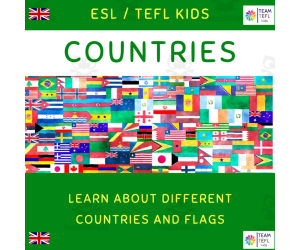
Countries ESL Lesson Plan For Kids and Early Learners
ELA, Language Development, ESL, Not Grade Specific, Teacher Tools, Lesson Plans
Countries ESL Lesson Plan For Kids and Early Learners The Countries ESL Lesson Plan For Kids and Early Learners is a proactive teaching resource tailored towards novice and emerging level ESL learners aged between 3-14 years old. Main Features: Comprehensive teacher's notes Marked quizzes & signaling dictations Interactive exercises such as vibrant flashcards , engaging games Thought-provoking conversation prompts. This unit actively engages students' curiosity about different countries from around the globe. The estimated study time allocated for this lesson plan is approximately 45 minutes, making it highly effective for regular or remedial sessions. The Countries ESL Lesson Plan For Kids and Early Learners contains constructive worksheets allowing lesson time to be on quality teaching. It is available as a PDF in two parts: one containing extensive teacher's notes – including solutions; another specifically student-oriented through interactive worksheets which only require pupils' relative copies. Versatility: The resource can be used for whole group lessons in classrooms or small group settings like tutorial sessions or study groups. It can also be assigned individually as homework assignments to reinforce learned material or during remedial courses helping slow learners catch up with regular classes. Tailored for dynamic education formats: This resource integrates seamlessly into the set of TEAM TEFL First 25 ESL Lesson Plans For Kids at number 25, extending our knowledge beyond geographical boundaries while refining English language competencies targeted towards early non-native speakers whether you’re conducting lessons inside traditional classroom settings or applying modern homeschooling methods. So stimulate students' minds today using The Countries ESL Lesson Plan For Kids And Early Learners!
Author TEAM TEFL
Tags Countries, ESL Learners, Language Arts, Flags, Geography
The Great Outdoors Curriculum Pack
Creative Arts, Art, ELA, Math, Early Math, Language Development, Vocabulary, Science, Earth and Environmental Sciences, Environmental Science, Kindergarten, Lesson Plans, Teacher Tools
If your students are learning about nature or about to begin an environment unit, I have just the resource to provide you with everything you need and more! This is aThe Great Outdoors Curriculum Packcomplete with an abundance of printable resources and engaging activities for students to complete. This curriculum was designed for your preschool students. The curriculum goal is to instill in children an appreciation and understanding of nature and the world around them, while fostering respect and a sense of wonder and fun in the outdoors. The vocabulary that students will focus on isnature, camping, hiking, trail, outdoors, environment, woods, forest, recreation, and tent. This curriculum will come with a color of the week (green). This curriculum pack includes: --Sensory Table Ideas --Art Activities --Cooking Experience --Community Time --Math Activities --Home/School Connection Ideas --Science Table Enrichments --Science Concepts/Activities --Prop Box Ideas/Dramatic Play Enrichments --Movement and Motor --Playground/Walk Activities --Transition/Waiting Ideas --Block Area Enrichments --Flannel Board --Teacher Made Enrichment Ideas --Field Trip Ideas --Supplemental Learning Ideas/Activities At the start of this pack, you will receive a list of supplies needed for activities and projects. The worksheets, activities, and tasks included in this pack are intended to be completed in a variety of formats – whole group, small group, and independent work. I hope you enjoy! Here are other similar resources for you to enjoy: Good Manners Curriculum Pack Earth Day Curriculum Pack Planting Curriculum Pack Holidays Around the World Curriculum Pack Jungle Love Curriculum Pack Discovering Dinosaurs Curriculum Pack You can find more resources at my storefront here: https://teachsimple.com/contributor/learning-foundations
Author Learning Foundations
Tags Preschool Curriculum, The Great Outdoors, Nature, Environment, Seasonal Activity, Science Experiment, Math Activity, Playground Activity

The Third Wish: Full Lesson Plan w/ PowerPoints & Graphic Organizers
ELA, Literature, Grade 7, 8, 9, 10, Lesson Plans, Teacher Tools
This resource will give you everything you need to complete a full, comprehensive reading lesson plan for The Third Wish text by Joan Aiken. Files are offered as PDFs and Word documents. Included: -The Third Wish Lesson Plan -The Third Wish Worksheet -The Third Wish Answer Key Graphic Organizers: Author’s Purpose Characterization Chart Figurative Language Chart Historical Analysis Chart Imagery Chart Peer Evaluation Sheet Plot Diagram Read for Detail Setting Style Chart Symbol Chart Symbolism Chart Theme Diagram Tone and Mood Diagram Universal Plot Diagram Venn Diagram PowerPoints: Characterization Imagery, Voice, and Persona Irony and Ambiguity Narrator and Voice Plot Structure Symbolism and Allegory Theme - How to Interpret Theme Thank You Bonus Stuff!
Author Quality Teaching Products
Tags Literature, Short Story, The Third Wish Text, Reading Lesson Plan, Imagery, The Third Wish Story, The Third Wish

Ocean Animal Research Writing Project on WHALES for K-2nd Grade
Life Studies, ELA, Writing, Creative Writing, Reading, Science, Life Sciences, Animals, Research, Kindergarten, Grade 1, 2, Teacher Tools, Worksheets & Printables, Lesson Plans, Worksheets, Writing Prompts, Coloring Pages
Whales Animal Research Writing Project for K-2nd Grade. This 19-page informational writing unit on whales is perfect for kindergarten, 1st grade, and 2nd grade students. It includes differentiated reading passages, data collection organizers, and writing pages about whales so all students can successfully complete the project. Students will read illustrated information about whale appearances, habitats, eating habits, and more. Then they will organize the facts using color-coding and graphic organizers. Finally, students will draw, color, and write their own informative paragraphs about these amazing ocean mammals. The whale unit can be used for whole-class, small-group, or individual assignments. It promotes reading comprehension, creative writing, and drawing skills. Display the finished whale books in your classroom or compile them into a classroom book for all to view. For more animal research projects, see our units on dolphins, seals, sea turtles, and other ocean creatures. Visit my store: -K-5 Treasures to discover more engaging resources for K-2 students. Here are even more informational resources on report writing for OCEAN ANIMALS. Click on the links below: Animal Research Writing Project on WHALES for K-2nd Grade Animal Research Writing Project on the OCTOPUS for K-2nd Grade Animal Research Writing Project on SEA TURTLES for K-2nd Grade Animal Research Writing Project on ORCAS for K-2nd Grade Animal Research Writing Project on the SHELLFISH for K-2nd Grade Animal Research Writing Project on DOLPHINS for K-2nd Grade Animal Research Writing Project on SEALS for K-2nd Grade Want to teach your students all about Zoo Animals? Check out all these interesting facts about these favorite zoo animals. With the same great photos, facts, habitat drawings, and more. It is a great way to help students to get interested in writing. For Zoo Animal reports, click on the following links below: Animal Research Writing Project on TIGERS for K-2nd Grade Animal Research Writing Project on MONKEYS for K-2nd Grade Animal Research Writing Project on PANDAS for K-2nd Grade Animal Research Writing Project on HIPPOS for K-2nd Grade Animal Research Writing Project on ELEPHANTS for K-2nd Grade Animal Research Writing Project on GIRAFFES for K-2nd Grade
Author K-5 Treasures
Tags Informational Writing, Writing Report, 1st Grade Writing, 2nd Grade Writing, Ocean Animals, Ocean Animal Research, Whales, Report On Whales, Learn About Whales, Ocean Animal Report
Characterization: What It Is and How To Develop It | Google Slideshow
ELA, Writing, Creative Writing, Grade 6, 7, 8, 9, Teacher Tools, Lesson Plans
Characterization: What It Is and How To Develop It | Google Slideshow This captivating digital slideshow, intended for students in grades 6 through 9, comprehensively introduces the concept of characterization covering a plethora of significant topics such as: Definition of characterization Physical traits versus personality traits Direct and indirect characterization techniques Distinguishing between round & flat characters, along with dynamic and static characters. This resource is versatile in its application. Teachers can use it in whole group instruction, small groups or even assign it as homework allowing individual paced learning. Besides merely defining the concept for readers and writers alike, this slideshow presents multiple opportunities to apply newfound skills practically. Tasks are framed around creating character attributes or understanding intricate details through examples provided within the slides. Prompts for Character Analysis or Creation: The slideshow is inter-spaced with images that capture human expressions across different age brackets which can promt character descriptions or analysis invovling literary work's characters spread across five choice slides. A Resource Aligned with Common Core Standards: The objectives are consistently aligned with Common Core Standards to ensure teaching effectiveness and clear assessments. A detailed lesson plan accompanies this resource to facilitate better administration of lessons aiding teachers / educators regardless of teaching context. The progress made on various learning targets such as explaining what characterization means, identifying both direct/indirect characterization tactics etc., can be easily tracked using ready-to-display information across 22 PowerPoint slides. The Takeaway: If you're an educator seeking to bolster creative writing skills specifically around character development among your pupils - Look no further! This digital slideshow will be a highly valuable tool at your disposal, enhancing both the teaching and learning experience!
Author Intentional Teaching and Learning
Tags Characterization, Development, Traits, Direct Characterization, Indirect Characterization, How To Teach Characterization

Future Perfect Continuous ESL TEFL Upper Intermediate Lesson Plan Work
ELA, Language Development, ESL, Grammar, Vocabulary, Reading, Writing, Grade 6, 7, 8, Teacher Tools, Lesson Plans, Worksheets & Printables
Future Perfect Continuous | Upper Intermediate ESL Lesson Plan This upper intermediate English lesson plan helps students learn and practice using the future perfect continuous verb tense. Educators can use this resource to teach a 50-minute class or assign it as homework. The informative worksheet set explains how to form the future perfect continuous and provides examples of real-world usage. Students then apply what they have learned through targeted exercises assessing their comprehension and grammar skills. This versatile resource works for whole-class instruction, small groups, or independent practice. The engaging materials aim to boost students' confidence utilizing the future perfect continuous in speech and writing. Teachers appreciate the answer key included to easily review or grade student work. The ESL lesson plan includes flashcards , a warmer, grammar rules, exercises, role-play, conversation, writing drill, activity, answers and an extra study that would be good to set as homework. There are 30+ pages and there are teachers notes to guide the teacher.
Author TEAM TEFL
Tags Verbs, Grammar Worksheet, ESL, Perfect Tense, Asking Questions
First Week of School Grade 12 | No-Prep Worksheets
ELA, Math, Grade 12, Lesson Plans, Teacher Tools, Worksheets & Printables
First Week of School Grade 12 | No-Prep Worksheets Celebrate the final year of high school with this First Week of School Activities for 12th Grade resource! This engaging, no-prep back-to-school packet helps seniors build classroom community while reviewing essential Precalculus concepts, strengthening literacy skills, and setting meaningful goals for life after graduation. Through five structured days of academic review, collaboration, and reflection, students begin senior year focused, motivated, and prepared for future success. What’s Included ✅ 30-page student workbook ✅ 5 ready-to-teach themed learning days ✅ Comprehensive Teacher Guide ✅ Complete Answer Key ✅ Student introduction activities ✅ Summer narrative writing ✅ SMART goal-setting activities ✅ After-graduation planning reflections ✅ Function composition activities ✅ Function inverses practice ✅ Logarithms and trigonometric review ✅ Classroom community-building activities ✅ Polynomial and rational function analysis ✅ Transformations and graphing activities ✅ Argument writing prompts ✅ Student interviews ✅ Collaboration and conflict-resolution activities ✅ Unit circle review ✅ Trigonometric identities and equations ✅ Exponential and logarithmic models ✅ Graphing sine functions ✅ Sequences, series, and limits activities ✅ Syntax and precision writing activities ✅ Sophisticated vocabulary practice ✅ Argument synthesis and analysis ✅ End-of-week certificate ✅ No-prep print-and-go format How It Works in the Classroom This 12th Grade First Week of School Packet is organized into five engaging instructional days designed to help seniors reconnect with academic skills while preparing for graduation and future goals. Day 1: Welcome & Goals Student introductions Summer narrative writing SMART goal setting After-graduation planning Function composition Logarithms and trigonometric review Day 2: Classroom & Community Classroom expectations and values Function composition and inverses Polynomial functions Rational functions Graphing transformed functions Day 3: Collaboration Argument writing Student interviews Team-building activities Conflict resolution Communication and leadership skills Day 4: Precalculus Essentials Unit circle review Trigonometric identities Solving trig equations Exponential and logarithmic models Graphing sine functions Sequences, series, and limits Day 5: Language & Literacy Syntax and precision writing Sophisticated vocabulary Analogies and word relationships Connotation and nuance Argument synthesis Critical reading and analysis Perfect for: Back-to-school lessons Senior advisory activities Precalculus review Independent practice Whole-group instruction Small-group learning Skill review Informal assessments Early finisher activities The included teacher guide provides lesson plans, pacing suggestions, discussion prompts, differentiation strategies, and implementation support for every day of instruction. Standards & Learning Goals Students will practice: ⭐ Narrative writing ⭐ Argument writing ⭐ SMART goal setting ⭐ College and career readiness reflection ⭐ Function composition and evaluation ⭐ Function inverses ⭐ Polynomial and rational function analysis ⭐ Graph transformations ⭐ Collaboration and leadership skills ⭐ Conflict resolution ⭐ Unit circle applications ⭐ Trigonometric identities ⭐ Solving trigonometric equations ⭐ Exponential and logarithmic reasoning ⭐ Graphing trigonometric functions ⭐ Infinite geometric series ⭐ Limits and mathematical reasoning ⭐ Sophisticated vocabulary development ⭐ Argument synthesis and evaluation ⭐ Critical thinking and analytical skills This resource reviews essential Precalculus concepts while strengthening literacy, communication, and college-readiness skills that support students during their final year of high school and beyond. Why Teachers Love It ❤️ No prep required ❤️ Designed specifically for senior-level students ❤️ Covers the entire first week of school ❤️ Integrates Precalculus, literacy, writing, and SEL ❤️ Encourages reflection on future goals and graduation plans ❤️ Builds classroom culture and positive relationships ❤️ Includes teacher guide and answer key ❤️ Reviews prerequisite Precalculus skills ❤️ Provides opportunities for informal assessment ❤️ Supports classroom routines and expectations ❤️ Includes built-in differentiation strategies ❤️ Promotes college, career, and life-readiness skills Created specifically for twelfth-grade students, this resource balances academic review with relationship-building and future-planning activities to help teachers establish a positive classroom environment while preparing students for success beyond high school. Start senior year with purpose and confidence using this First Week of School Activities for 12th Grade packet! Build classroom community, reinforce essential Precalculus and literacy skills, and help students set meaningful goals as they prepare for graduation and the exciting opportunities ahead.
Author Bright Classroom Ideas Marketplace
Rating
Tags Back To School, First Week, Ela, Math, Lesson, Plan, Worksheet

Identify Argumentative Essay Goals- Choose Goals, Steps. & Reflect
ELA, Writing, Grade 6, 7, 8, Teacher Tools, Lesson Plans
Argumentative Essay Writing can be challenging for our middle school students, but there is a solution to make it more accessible. The 17-page, easy-prep, editable lesson plan, Identifying Argumentative Essay Goals- Choose Your Goals and Steps and Then Reflect, personalizes the writing experience for students by giving them the opportunity to choose the goals they want to work on, follow clear action steps, and then reflect on their challenges and successes both before and after writing their essay. The lesson includes opportunities for class and partner discussion. Differentiation is embedded in this lesson. Our ELL, RSP, GATE, and Gen-ed students can choose the goals they want to achieve within six key categories- Claim, Evidence, Reasoning, Counterclaims, Organization, and Conclusion. Each category offers two types of goals and two Foundational Goals (goals to help students achieve proficiency) and Extended Goals (goals for students who are proficient or advanced writers) and two types of action steps. Students choose one goal from each category and then select one action step for that goal. Finally, they put it all together on one chart from which they select two to three goals to work on for their essay. Before writing, students complete a pre-writing reflection, and after their essay is done, they compete a post-writing reflection. The lesson plan includes the following: a hyperlinked Table of Contents About the Resource- a handy guide to everything you need for the lesson at the beginning of the resource An Essential Question: How can setting and reflecting on specific writing goals improve my argumentative essay writing skills? Six Guiding Questions: Why is it important to set specific goals for my writing? How can I identify my strengths and areas for improvement in argumentative essay writing? What strategies can I use to achieve my writing goals? How does reflecting on my progress help me become a better writer? How can feedback from peers and teachers help me refine my writing goals and strategies? How can setting writing goals make my argumentative essay more engaging and effective? A Standards-based, detailed lesson plan Objectives and Learning Targets The following students handouts: Argumentative Essay- Choose Your Goals Argumentative Essay- What Steps Will You Take to Achieve Your Goals? Argumentative Essay- Goals and Steps- Putting Them Together Argumentative Essay Goals and Writing Reflection
Author Intentional Teaching and Learning
Tags Argumentative Writing Goals, Goal Setting, Action Steps, Reflection, Grade 6-8, MIddle School, Analysis, Critical Thinking, Differentiation
HEAT WAVES AND WATER SPRAYS Gr. 3-4
ELA, Reading, Grade 3, 4, Teacher Tools, Lesson Plans
HEAT WAVES AND WATER SPRAYS Gr. 3-4 is a comprehensive teaching resource for Grade 3 - Grade 4 students. This summer-themed pack comes with a wide array of activities that focus on building various skills. The resource includes numerous activities such as: Brainstorming tasks Creative writing exercises Word study lessons Handwriting practice sheets Arts-based language activities and, Research undertakings. Educators have the flexibility to use these in different ways, suitable for whole group instruction, small group learning sessions or independent home assignments. The program is designed to either begin or conclude an academic term, making it perfect usage post-summer holidays to help children process their experiences through guided conversation and detailed written exercises or pre summer break acting as interesting leads into potential adventures they could be pursuing shortly. Bonus Feature: A compact PDF file resource consists of 59 readily printable pages . Visual aids like suggested bulletin boards are included within the pack that adds visual interest towards Language Arts studies. Educators can further enrich students' fascination with summertime by setting up: Interest Centres featuring items such as: 'Travel folders', 'Maps', Overall: HEAT WAVES AND WATER SPRAYS is an all-inclusive resource, offering multidimensional lesson modules that foster reading abilities among grade 3 and grade 4 learners while encouraging love for creative expression.
Author Classroom Complete Press
Tags Word Study, Root Words, Suffixes, Word Scramble, Scavenger Hunt
'Big Hero 6' Lesson Plan & Worksheets | Grades 3 - 9
ELA, Special Resources, Grade 3, 4, 5, 6, 7, 8, 9, Lesson Plans, Teacher Tools, Worksheets & Printables
'Big Hero 6' Lesson Plan & Worksheets | Grades 3 - 9 Looking for an engaging Big Hero 6 movie study that blends literacy, STEM, social-emotional learning, and math? This comprehensive Big Hero 6 worksheet pack includes 30 ready-to-use activities designed to keep students actively learning while connecting powerful movie themes to real-world skills. Students explore character development, technology ethics, engineering, teamwork, empathy, and problem-solving through meaningful and interactive tasks. What's Included 30 student activities organized into 5 learning sections Printable student workbook Teacher guide with pacing suggestions Complete answer key STEM-focused activities Social-emotional learning (SEL) reflections Grammar and vocabulary practice Creative writing activities Math and data analysis tasks Engineering design process activities Scientific method activities Technology ethics discussions Character analysis and theme exploration Reflection and extension activities The resource covers: Acronyms, collective nouns, comparatives, and adverbs Justice vs. revenge discussions Engineering and scientific thinking Powers of two and exponential growth Coordinate graphing Symmetry and angles Haiku and creative writing Empathy and emotional wellness Helpful inventions and app design projects Growth mindset reflections How It Works in the Classroom This Big Hero 6 movie guide is flexible enough for multiple classroom settings: Whole-class movie study Independent work packets Early finisher activities STEM enrichment lessons Sub plans Cross-curricular units Homeschool learning Small-group discussions Character education lessons Use it after viewing the film, alongside selected movie clips, or as part of a larger STEM and SEL unit. The included teacher guide provides pacing recommendations for both single lessons and extended units. Standards & Learning Goals Students will: Strengthen grammar and language skills Analyze character traits and themes Explore the scientific method Learn the engineering design process Evaluate ethical uses of technology Practice critical thinking and problem-solving Develop empathy and emotional awareness Interpret charts and data Apply coordinate graphing skills Investigate symmetry and geometry concepts Build creativity through writing and design challenges This resource supports learning across: English Language Arts STEM Education Science & Engineering Mathematics Social-Emotional Learning (SEL) Character Education Why Teachers Love It ✅ No-prep and easy to implement ✅ Combines multiple subject areas in one resource ✅ Encourages meaningful discussions about technology and ethics ✅ Supports social-emotional learning through empathy and reflection ✅ Includes a complete answer key for quick grading ✅ Works with a wide grade range (Grades 3–9) ✅ Promotes higher-order thinking and creativity ✅ Perfect for STEM, ELA, and movie-based learning units ✅ Flexible enough for classroom, homeschool, and enrichment settings Teachers appreciate how this resource transforms a popular movie into an engaging educational experience while reinforcing important academic and life skills. Add this Big Hero 6 Movie Study to your lesson plans and give students an engaging way to connect literacy, STEM, social-emotional learning, and critical thinking through one of Disney's most inspiring films. Download today and make movie day meaningful!
Author Bright Classroom Ideas Marketplace
Rating
Tags Big Hero 6, Movie, Film, Guide, Lesson, Plan, Worksheet

By Any Other Name: Full Lesson Plan w/ PowerPoints & Graphic Organizers
ELA, Reading, Grade 6, 7, 8, 9, Lesson Plans, Teacher Tools
Mastering Literary Analysis: A Full Lesson Plan for "By Any Other Name" This comprehensive reading lesson plan for the short story "By Any Other Name" by Santha Rama Rau includes everything educators need to guide students through close reading and analysis. With detailed lesson plans , graphic organizers , worksheets, answer keys, and PowerPoint slide decks on topics like plot structure, theme, characterization, and more, this resource supports whole-class instruction, small group discussion, and independent practice. Written for middle and high school students, these materials help teachers model literary analysis skills that students can apply to any fiction text. By engaging with this diverse story through multiple modalities, students will build interpretation, critical thinking, and writing abilities that meet 7th-8th grade reading standards.
Author Quality Teaching Products
Tags Reading Powerpoint, Reading Lesson, Short Story, Graphic Organizer, Imagery, Theme Of By Any Other Name, By Any Other Name By Santha Rama Rau, By Any Other Name Santha Rama Rau Questions And Answers, By Any Other Name Short Story, By Any Other Name Santha Rama Rau, By Any Other Name Story, Lesson Plan Graphic Organizer, Santha Rama Rau By Any Other Name

Cells Reading Comprehension Passage - Cored Ed Encyclopedia
ELA, Language Development, Reading Comprehension, Reading, Pre-Reading, Life Sciences, Science, Technology, History, Social Studies, Grade 2, 3, 4, 5, Worksheets & Printables, Worksheets, Teacher Tools, Centers, Activities, Writing Prompts, Assessments, Quizzes and Tests, Quizzes, Lesson Plans
This cells reading comprehension with lesson plan includes: Visualization (on the front cover) Start your lesson by taking a minute to think and share something about the topic. Read the script aloud (slowly), perhaps prepare some music or sound effects. Student close their eyes and let their imaginations wander. Students open their eyes, read the question aloud and give them a few minutes to complete. Ask a few students to share or keep answers until the end to compare with what they learn in the passage. Quick pause—thousands of Cored Education products are included with your TeachSimple membership. Download links and encyclopedia index available here. Pre-Reading Trivia Students will write down one thing they already know about the subject and then read five more facts and discuss. These facts are fun, and the students will enjoy learning about the subject before reading more. Give 1 minute for students to write what they already know (no pressure—best guess is fine). Read the five facts together. After each fact, do ask a student for their opinion, was it surprising? Set a purpose by asking students to highlight/underline one fact they want to learn more about during the reading. Reading Passage The text is a high-interest reading passage with set paragraphs, roughly three to four paragraphs long. It contains a variety of themes about the topic, anywhere from history to technology. The passage is between 250 and 350 words in length. First, ask students to look at the headings and see what they’ll learn about today. What do they know about the topic/heading? First read options: Teacher read-aloud (best for support). Partner reading (paragraph by paragraph). While reading, students underline important details, and vocabulary words they think may come up in the questions section. Mixed Questions The first question page contains four multiple-choice questions, each with a choice of four answers, and three written response questions that require a sentence or two from the student. Students complete the mcqs first independently, then review quickly as a class. For the 3 written responses, try to get students giving the answer with some form of evidence: “I think ___ because the text says ___.” If students get stuck, send them back to check the passage. Vocabulary Questions Practice seven key words from the text in this section across two activities. First section is scrambled words where students will unscramble three words given a clue for each. The second section is a word to meaning matching activity. Before starting, have some students read out words they underlined in the passage. Ask students to say the word and read aloud the sentence(s) around each word. Ask students to do scrambled words and the matching exercise in pairs then go through answers as a class. For the scrambled spelling task, get four pairs to come up to the board and write the words for extra practice with the other student reading out the clue. For the matching task, prompt students to give full sentences: “I matched ___ with ___ because ___.” Creative Writing In this question, the student will be required to write a five to eight sentence paragraph on a question related to the topic. Before starting, ask students write down 3 key ideas they are going to include in their piece. Ask students for ideas to share around the class to help those struggling. Pro writing expectations: 5–8 sentences At least 2 facts or details from the passage At least 2 vocabulary words from the previous page Students read their paragraphs while classmates listen for facts and vocabulary words. Extension Activities This page is optional for fast finishers or to take home. There are several activities, each one requiring a different skill. Do some, do none, do all, completely optional - but you will feel reassured knowing every possibility is planned for. Includes summary writting question and additional facts. Answer Key There are answers for the multiple-choice questions, written response questions have sample answers, vocabulary answers and if there is a summary question then a sample summary will be provided as well. Lesson Plan Included Customized lesson plan for this lesson is included. Lesson Snapshot Title: Cells Genre: Nonfiction (informational science text with headings) Subject: Life Science / Reading (Informational Text) Primary Topic: Cell discovery, parts, and how cells work Estimated Guided Reading Level (A–Z): Q What This Lesson Teaches Best Explains how scientists first described “cells” by observing cork under a microscope (Robert Hooke, 1665). Shows how improved lenses led to new discoveries, including seeing living tiny organisms and developing the idea that living things are built from cells. Teaches core cell-part functions using a clear analogy (a cell as a “busy little city”), including membrane, nucleus/DNA, and organelles. Highlights differences and similarities across living things (one-celled organisms vs. animals with trillions of cells working in teams). Introduces the idea of cell division and specialization as a way living things grow and heal. Learning Goals Students will explain why Robert Hooke used the word “cells” for what he saw in cork. Students will describe how better microscopes changed what scientists could observe. Students will identify key cell parts named in the text and describe what each does. Students will compare one-celled organisms with animals made of many cells, using details from the passage. Students will describe what the passage says about how new cells form. Key Vocabulary From the Text membrane — thin “skin” that separates inside from outside. nucleus — cell center part that holds DNA. organelles — tiny cell parts with special jobs. mitochondria — parts that help release energy from food. chloroplasts — green parts that capture sunlight. FULL CATALOG OF DOWNLOAD LINKS AND ENCYCLOPEDIA INDEX HERE
Author Cored Education
Rating
Tags Vocabulary, Reading Comprehension, Reading Passages, Lesson Plans, Ela Lesson Plans, Reading Comprehension Lesson Plans, Pre-reading, Science Lesson Plans, Life Science, History
Wild, Wild West Curriculum Pack
Creative Arts, Art, ELA, Reading, Science, Earth and Environmental Sciences, Environmental Science, Kindergarten, Lesson Plans, Teacher Tools
If your students are studying different environments or are about to begin a western unit, I have just the resource to provide you with everything you need and more! This is aWild Wild West Curriculum Packcomplete with an abundance of printable resources and engaging activities for students to complete. This curriculum was designed for your preschool students. The curriculum goal is to introduce and explore different experiences, encouraging imagination and creativity, while skill-building within the thematic framework. The vocabulary that students will focus on iswestern, cowboy, cowgirl, ranch, branding, herd, bandana, gallop, cactus, tumbleweed, armadillo, rodeo, roundup, coyote, lasso, and cowpoke. This curriculum will come with a color of the week(brown)and a letter of the week(C). This curriculum pack includes: --Sensory Table Ideas --Art Activities --Cooking Experience --Community Time --Math Activities --Home/School Connection Ideas --Science Table Enrichments --Science Concepts/Activities --Prop Box Ideas/Dramatic Play Enrichments --Movement and Motor --Playground/Walk Activities --Transition/Waiting Ideas --Block Area Enrichments --Flannel Board --Teacher Made Enrichment Ideas --Field Trip Ideas --Supplemental Learning Ideas/Activities At the start of this pack, you will receive a list of supplies needed for activities and projects. The worksheets, activities, and tasks included in this pack are intended to be completed in a variety of formats – whole group, small group, and independent work. I hope you enjoy! Here are links to similar resources in my store: Planting and Gardening Curriculum Pack Ice Cream Curriculum Pack Clouds Curriculum Pack Popcorn Fun Curriculum Pack Space Camp Curriculum Pack Earth Day Curriculum Pack Check Out More Resources from My Store: Learning Foundations
Author Learning Foundations
Tags Preschool Curriculum, Transition Ideas, Environment, Wild West, Deserts, Cowboys, Horses, Math Activity, Cross Curricular

Word Puzzlers - Grades 2-3
ELA, Language Development, Vocabulary, Grade 2, 3, Teacher Tools, Lesson Plans
Word Puzzlers - Grades 2-3 is an outstanding resource that is aimed to boost vocabulary for second and third graders. This PDF educational material consists of word puzzles that bring fun and challenge while reinforcing key skills, such as reasoning, spelling, and language comprehension. The diverse types of puzzle formats such as codes, mazes , riddles, rhymes, rebus games and crossword puzzles cater to different learning styles ensuring all students can stay engaged. Its broad range of subject areas increases its adaptability making language arts lessons fun and effective. An important feature which rocket Word puzzlers ahead of the pack is its design that promotes self-learning needing minimal supervision from teachers or parents - a key aspect in developing confident learners who are capable problem solvers. Main Features: A set-up with thirty-five printer-ready pages easing preparation time for educators while aligning each component with the curricula standards for grades 2-3. Educational tool suitable for different teaching scenarios – from whole class collective exploration to small group discussions. Potential homework assignments giving children extra practice material they will enjoy working on after school hours. The Value Proposition: Word Puzzlers - Grades 2-3, goes beyond just enhancing students' vocabularies. It offers exciting ways to link words with their world offering educators streamlined resources for implementing Language Arts lessons effectively within grade-specific parameters. Note: The product's main focus lies in fulfilling the mastery of vocabulary subskills underpinned by Grade 2 Grade 3 language arts curriculum proficiency.
Author Classroom Complete Press
Tags Crossword Puzzles, Homonyms, Synonyms, Antonyms, Riddles

Present Perfect Continuous | Intermediate Lesson Plan
ELA, Grammar, Grade 5, 6, 7, 8, 9, 10, 11, 12, Teacher Tools, Lesson Plans
Present Perfect Continuous | Intermediate Lesson Plan This intermediate grammar lesson plan helps students better understand the present perfect continuous tense. Educators can use this resource to teach the intricacies of this verb tense through informative instruction and targeted exercises. Students will learn the proper conjugation and usage before applying their knowledge by completing the included assessments . This practice solidifies their comprehension and grammar abilities. This lesson plan now includes new flash cards and exercises as well as a warmer, conversation questions, main use, construction, rules, examples, open questions, closed questions, activity, writing drill and extra study. The TEFL resource is available in PDF with 30 ready to print pages and one digital access file. A part of it is on Google Apps. The answer key is also included for reference. The material suits whole-class instruction, small group work, or even independent practice. This well-designed lesson plan is adaptable for language arts or grammar lessons. Educators can implement the content in their classrooms or assign it digitally.
Author TEAM TEFL
Tags Verb Tenses, Vocabulary Words, Grammar Lesson, ESL Lesson, Interviews