



3,911 products added recently
Page 41 - ELA Lesson Plans
Elevate your ELA instruction with lesson plans that cover reading, writing, speaking, and listening skills. These resources provide diverse texts and engaging activities to improve literacy. Integrate these plans to enrich your language arts curriculum and support student achievement.

 Show filters

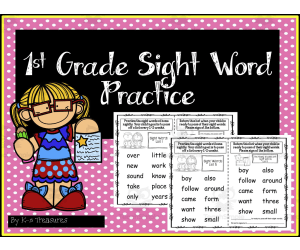
First Grade Sight Words - 100 Words to Practice and Learn
ELA, Language Development, Pre-Reading, Reading, Spelling, Vocabulary, Grade 1, 2, Worksheets & Printables, Worksheets, Lesson Plans, Teacher Tools
This list includes 10 take home sight word sheets for a total of 100 First Grade words. 100 FIRST GRADE FRY Sight Words! 10 PAGES INCLUDED! For children to learn how to read, sight words are important for kids to master. Practicing and reading sight words account for seventy five percent of words that children read. The Fry Sight words are words that are most often used and begins with the first one hundred words for Kindergarten.Using these words often to practice reading is essential to their skills and to improve in their reading comprehension. These words are often not easy to sound out like most CVC words, so recognizing them and memorizing these words is the most helpful to enhance a child's reading skills. You can find the first 100 words here which include some of the following words as an example: over knew take only little me work back give most very after things our man good think help where great say This list includes the second one hundred words for First Grade. There are different sight words for each grade level and the words build on each other. Students will recognize the previous words and continue to add more words to their memory as they practice them over and over. This list is mainly used for first and second grade students. It is intended to be used not only in the classroom, but to be used at home for practice with an adult. Then, it can be signed by a parent or guardian of the child and passed off at school. A total of 13 pages for students to practice and pass off once the students have mastered each word. Have parents sign the page once students are ready to pass them off with their teacher.
Author K-5 Treasures
Tags Sight Words, List Of Words, Reading, 1st Grade Reading, First Grade Sight Words, First Grade Reading, 1st Grade Sight Words, FRY Sight Words, 2nd Grade Sight Words, Second Grade Sight Words
Ancient Rome Reading Comprehension Passage - Cored Ed Encyclopedia
ELA, Language Development, Reading Comprehension, Reading, Social Studies, History, History: Ancient, Writing, Pre-Reading, Vocabulary, Grade 2, 3, 4, 5, Worksheets & Printables, Worksheets, Teacher Tools, Centers, Activities, Writing Prompts, Assessments, Quizzes and Tests, Quizzes, Lesson Plans
This ancient Rome reading comprehension with lesson plan includes: Visualization (on the front cover) Start your lesson by taking a minute to think and share something about the topic. Read the script aloud (slowly), perhaps prepare some music or sound effects. Student close their eyes and let their imaginations wander. Students open their eyes, read the question aloud and give them a few minutes to complete. Ask a few students to share or keep answers until the end to compare with what they learn in the passage. Quick pause—thousands of Cored Education products are included with your TeachSimple membership. Download links and encyclopedia index available here. Pre-Reading Trivia Students will write down one thing they already know about the subject and then read five more facts and discuss. These facts are fun, and the students will enjoy learning about the subject before reading more. Give 1 minute for students to write what they already know (no pressure—best guess is fine). Read the five facts together. After each fact, do ask a student for their opinion, was it surprising? Set a purpose by asking students to highlight/underline one fact they want to learn more about during the reading. Reading Passage The text is a high-interest reading passage with set paragraphs, roughly three to four paragraphs long. It contains a variety of themes about the topic, anywhere from history to technology. The passage is between 250 and 350 words in length. First, ask students to look at the headings and see what they’ll learn about today. What do they know about the topic/heading? First read options: Teacher read-aloud (best for support). Partner reading (paragraph by paragraph). While reading, students underline important details, and vocabulary words they think may come up in the questions section. Mixed Questions The first question page contains four multiple-choice questions, each with a choice of four answers, and three written response questions that require a sentence or two from the student. Students complete the mcqs first independently, then review quickly as a class. For the 3 written responses, try to get students giving the answer with some form of evidence: “I think ___ because the text says ___.” If students get stuck, send them back to check the passage. Vocabulary Questions Practice seven key words from the text in this section across two activities. First section is scrambled words where students will unscramble three words given a clue for each. The second section is a word to meaning matching activity. Before starting, have some students read out words they underlined in the passage. Ask students to say the word and read aloud the sentence(s) around each word. Ask students to do scrambled words and the matching exercise in pairs then go through answers as a class. For the scrambled spelling task, get four pairs to come up to the board and write the words for extra practice with the other student reading out the clue. For the matching task, prompt students to give full sentences: “I matched ___ with ___ because ___.” Creative Writing In this question, the student will be required to write a five to eight sentence paragraph on a question related to the topic. Before starting, ask students write down 3 key ideas they are going to include in their piece. Ask students for ideas to share around the class to help those struggling. Pro writing expectations: 5–8 sentences At least 2 facts or details from the passage At least 2 vocabulary words from the previous page Students read their paragraphs while classmates listen for facts and vocabulary words. Extension Activities This page is optional for fast finishers or to take home. There are several activities, each one requiring a different skill. Do some, do none, do all, completely optional - but you will feel reassured knowing every possibility is planned for. Includes summary writting question and additional facts. Answer Key There are answers for the multiple-choice questions, written response questions have sample answers, vocabulary answers and if there is a summary question then a sample summary will be provided as well. Lesson Plan Included Customized lesson plan for this lesson is included. Lesson Snapshot Title: Ancient Rome Genre: Nonfiction (informational reading passage) Subject: Social Studies (Ancient Civilizations) / Reading (Informational Text) Primary Topic: From early settlement to empire and lasting influence Estimated Guided Reading Level (A–Z): S Support pages noted in the PDF: visualization prompt, pre-reading trivia, mixed questions, vocabulary activities, creative writing prompt, extension activities + “final facts,” and an answer key (some “final facts” add details not stated in the passage). What This Lesson Teaches Best How early life near the Tiber River and a busy meeting space (a forum) helped a town form and grow. How Rome changed its government from kings to a republic, including the role of the Roman Senate and citizen voting in assemblies. How roads, alliances, and shared rules/traditions helped Rome spread across Italy and beyond. How Rome became an empire connected around the Mediterranean Sea , including aqueducts for fresh water and public gathering places like the Colosseum . How Rome’s ideas continued even after the western empire fell, with laws and building styles reused and ruins like the Roman Forum reminding people of the past. Learning Goals Students will describe how the passage explains the early growth of Rome from river paths into a forum. Students will identify what happened in 509 BC and name the new form of government described. Students will explain how the passage connects roads, alliances, and shared rules/traditions to Rome’s expansion. Students will describe what changed in 27 BC when Augustus took control, using details from the text. Students will explain, using the passage, what aqueducts carried and why crowds gathered in major public places. Students will describe what happened to the western empire in the 400s AD and how Roman ideas continued afterward. Key Vocabulary From the Text republic — a government citizens vote in. Senate — a group that debates important choices. empire — many lands under one ruler. aqueducts — long channels that carry fresh water. provinces — faraway areas ruled as part of an empire. FULL CATALOG OF DOWNLOAD LINKS AND ENCYCLOPEDIA INDEX HERE
Author Cored Education
Rating
Tags Vocabulary, Reading Comprehension, Reading Passages, Lesson Plans, Ela Lesson Plans, Reading Comprehension Lesson Plans, Pre-reading, History, Ancient History Lesson Plans, History Lesson Plans

Phonic Worksheets for Early Years/Intervention - Growing Bundle
Special Resources, ELA, Special Education Needs (SEN), Language Development, Pre-Reading, Phonics, Reading, Spelling, Kindergarten, Preschool, Grade 1, 2, Teacher Tools, Lesson Plans, Worksheets & Printables, Worksheets, Activities, Games
This is a pack of Bumper Pack of 14 (to date) books of phonic worksheets for the digraphs: L blends, CK, SH, CH, TH, OO, EE, OR, AR, A-E, I-E, O-E, U-E, AI and EA especially designed for those with special needs, including those with dyslexia or who may be suspected of being dyslexic but will work equally well with young learners in Kindergarten/EYFS/Y1. These sheets are LETRS and UK GOV requirements aligned. These worksheets also align with the most popular phonic programmes, including RWI and Letters and Sounds. What is included? PDF's of worksheets each covering the sounds: L Blends. CK, SH, CH, TH, OO, EE, OR, AR, A-E, I-E, O-E, U-E, AI and EA, all following my special method devised as I privately tutor children of all ages with profound special needs. Over 180+ Worksheets: Your phonics lessons covered! Tracking, fluency triangles, spelling, reading, games, comprehension exercises....and more! Some sounds contain print-and-go games to make learning fun. AR and A-E each contain a board game. Who are these worksheets for? I have written them for pupils who struggle with processing information - especially sounds. This includes children who are DYSLEXIC or have ANY other kind of processing disorder. Such children may have failed with other methods of teaching phonics. Such pupils need activities that: ·are highly structured - one tiny step at a time building on the one before using only a limited number of words to start with and only using words that the child has already learnt to sound out, with no nasty surprises. ·Have only a little on each pageas these pupils tire easily. What makes these worksheets special? I have a powerful three-step process which I use with my special needs pupils, which is worked out over the course of the 12 worksheets: 1. See it!where we focus on becoming aware of the new sound in words. This involves first hearing the new sound in words and then seeing it in words (tracking). 2. Sound-it-out!Having learnt to see the new sound in words, we learn to sound out these words to read and write them. We begin by usingsound-it-out boxesfor reading and spelling which help the child to segment the word prior to blending the sounds together. Once the child can read and write individual words, we work on fluency by building familiarity with the common words in the new sound family. Once the child can sound the words out to read and spell confidently, we move on to recognising them/using them in longer reading and dictation passages, as soon as the child is able. I provide 2 reading passages with comprehension exercises and one dictation passage, with a page in the workbook dedicated to it, with room for a picture, which again cements understanding. 3. Write it! Incorporated into the above two steps, we constantly write the new sound. This adds a multi-sensory dimension to our work - we see with our eyes, we sound it with our mouth parts and voice, and then we move by writing. All three steps work together to help the child feel in control of his/her learning and to become a successful, confident learner. We finish each sound (except the Consonant L-Blends) with a dictation which culminates our work before we move on to the next sound. I try to give this a week after we finish the book, to act as revision. The dictation: Read this passage to your pupil, who should write it. Have the child read his/her work and check for errors. Make sure the writing is completely accurate before saying the child has finished, including full stops and capital letters correctly used. Flashcards are included in most books. Phonic Games are also included for AR and A-E to make learning more fun! What is included? 10 PDFs totalling 150 + worksheets each covering the sounds: CK, SH, CH, TH, OO, EE, OR, AR, A-E, I-E, O-E, U-E, AI and EA, 2 PDF games for AR and A-E in full colour and black and white
Author Lilibette's Resources
Tags Phonic Worksheets, Phonic Games, Speical Needs, Special Needs, Ee Phonics, Or Phonics, Ar Phonics, A-e Phonics, Split Digraph Phonics

Critical Thinking: Keys to Anticipating Consequences - FLASH-PC
ELA, Strategies, Grade 5, 6, 7, 8, Teacher Tools, Lesson Plans
Critical Thinking: Keys to Anticipating Consequences - FLASH-PC This program is a comprehensive teaching resource particularly tailored for educators working with students in grades 5 through 8. Mainly focusing on the importance of critical thinking strategies in Language Arts, it provides curriculum -aligned content. The mix of reading passages, interactive activities, printables, and vocabulary flash cards aims to widen the learners' knowledge base and enrich comprehension skills. One distinguishing feature is its emphasis on anticipation of consequences– a cornerstone for developing reasoning skills. 'Before Read' and 'After Read' questions are instrumental components; they insightfully probe student's understanding before beginning new topics as well as consolidate their learning post-reading. This encourages greater engagement with material at a more profound level. Inclusion of graphic organizers facilitates information processing by providing structure when addressing complex subjects or tasks. All resources packed into one straightforward zip file compatible with PCs; this accessible format supports teachers conveniently whether they teach in school or manage remote learning scenarios. This program suits well as a whole-group educational tool but also customizable to cater smaller clusters or individual exercises if required, Teachers can supplement classroom instructions exercises/assignments reinforcing concepts even beyond school hours using chosen parts from these resources. At last, stepping away from conventional teaching approaches has been made simple with Critical Thinking: Keys to Anticipating Consequences - FLASH-PC—it fulfills multiple dimensions within the scope of Language Arts learning throughput!
Author Classroom Complete Press
Tags Language Arts, Reading, Comprehension, Reading Strategies, Flash Cards

Fiction Elements: Characters Lesson
ELA, Reading, Preschool, Grade 1, 2, 3, Teacher Tools, Lesson Plans
Fiction Elements: Characters Lesson Plan for Elementary Students This interactive PowerPoint resource teaches young students about character development in fiction stories. Students will build reading comprehension and critical thinking skills as they learn how authors create and utilize characters. The presentation examines different aspects of fictional characters, including their traits, roles in the plot, and relationships with other characters. Fun class discussions and practice activities allow students to apply their new knowledge. Three versions of the PowerPoint are included: one for teachers, one for students, and one with answer keys. Educators can facilitate this engaging 60-minute lesson with the entire class or small groups across grades K-3. Whether used in the classroom or homeschool setting, this literacy resource helps elementary students master fiction elements.
Author Ezee 101
Tags Class Discussion, Fiction Elements, Reading Lesson, Characters
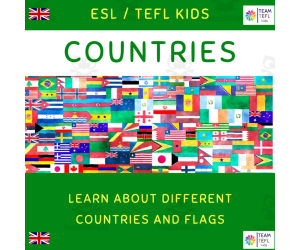
Countries ESL Lesson Plan For Kids and Early Learners
ELA, Language Development, ESL, Not Grade Specific, Teacher Tools, Lesson Plans
Countries ESL Lesson Plan For Kids and Early Learners The Countries ESL Lesson Plan For Kids and Early Learners is a proactive teaching resource tailored towards novice and emerging level ESL learners aged between 3-14 years old. Main Features: Comprehensive teacher's notes Marked quizzes & signaling dictations Interactive exercises such as vibrant flashcards , engaging games Thought-provoking conversation prompts. This unit actively engages students' curiosity about different countries from around the globe. The estimated study time allocated for this lesson plan is approximately 45 minutes, making it highly effective for regular or remedial sessions. The Countries ESL Lesson Plan For Kids and Early Learners contains constructive worksheets allowing lesson time to be on quality teaching. It is available as a PDF in two parts: one containing extensive teacher's notes – including solutions; another specifically student-oriented through interactive worksheets which only require pupils' relative copies. Versatility: The resource can be used for whole group lessons in classrooms or small group settings like tutorial sessions or study groups. It can also be assigned individually as homework assignments to reinforce learned material or during remedial courses helping slow learners catch up with regular classes. Tailored for dynamic education formats: This resource integrates seamlessly into the set of TEAM TEFL First 25 ESL Lesson Plans For Kids at number 25, extending our knowledge beyond geographical boundaries while refining English language competencies targeted towards early non-native speakers whether you’re conducting lessons inside traditional classroom settings or applying modern homeschooling methods. So stimulate students' minds today using The Countries ESL Lesson Plan For Kids And Early Learners!
Author TEAM TEFL
Tags Countries, ESL Learners, Language Arts, Flags, Geography

Growing Minds in Language Arts #2: Lessons for Stimulating Thinking
ELA, Grade 4, 5, 6, 7, 8, Teacher Tools, Lesson Plans
The Growing Minds in Language Arts #2: Lessons for Stimulating Thinking Specifically developed with middle school students from Grade 4 to Grade 8 in mind, this comprehensive teaching resource combines language arts and critical thinking skills effectively. Key Features: Stimulating Activities: The packet includes a variety of activities that encourage students to express their understanding of language arts while sharpening their critical thinking prowess. Tasks such as composing an essay on profound topics or exploring the diverse use of common words play a chief role. Inclusive Learning Space: Catering to different student capabilities is achieved through the multi-level structure of the lessons. This allows for rewarding engagement in various contexts - from whole-group instruction to smaller groups. Comprehensive Teacher Guides:The guides included provide explicit directions necessary for seamless lesson preparation and delivery, promoting academic objectives effectively without impeding creative self-expression among students. This exceptional product comes as a ready-to-print PDF file, spanning 12 pages filled with dynamic learning opportunities designed around stimulating curiosity amongst middle school learners. Diverse Application: Suitable amidst homeroom classes aiming at additional engagement towards language arts instruction, A practical resource for homeschoolers with varying learning needs, An adaptable tool within night study sessions focused on topic explorations, or A versatile component within larger project-based tasks aiming at enhancing critical pedagogy within classrooms. In summary, 'The Growing Minds in Language Arts #2', is an enriching educational tool which embodies an innovative blend between learning and thinking. It serves as an educational investment that reaps continual intellectual returns as your students master the intricacies of language arts and critical thinking.
Author Classroom Complete Press
Tags Growing Minds, Language Arts, Critical Thinking, Thinking Skills, Thinking Strategies
Ice Cream Curriculum Pack
Creative Arts, Art, Social Studies, ELA, Language Development, Vocabulary, Math, Early Math, Science, Basic Science, Kindergarten, Lesson Plans, Teacher Tools
If your students are learning about seasonal activities or are about to begin a ice cream unit, I have just the resource to provide you with everything you need and more! This is an Ice Cream Curriculum Pack complete with an abundance of printable resources and engaging activities for students to complete. This curriculum was designed for your preschool students. The curriculum goal is to impart new and expanded knowledge and experiences on a subject that children are familiar with and have a frame of reference on – while building skills in a fun way. The vocabulary that students will focus on is ice cream, frozen, dairy, flavors, parlor, sherbet, freezing, vanilla, chocolate, strawberry, sundae, scoop, banana split, and udders. There is a letter of the week (I) and colors of the week (white, brown, and pink). This curriculum pack includes: --Sensory Table Ideas --Art Activities --Cooking Experience --Community Time --Math Activities --Home/School Connection Ideas --Science Table Enrichments --Science Concepts/Activities --Prop Box Ideas/Dramatic Play Enrichments --Movement and Motor --Playground/Walk Activities --Transition/Waiting Ideas --Block Area Enrichments --Flannel Board --Teacher Made Enrichment Ideas --Field Trip Ideas --Supplemental Learning Ideas/Activities At the start of this pack, you will receive a list of supplies needed for activities and projects. The worksheets, activities, and tasks included in this pack are intended to be completed in a variety of formats – whole group, small group, and independent work. I hope you enjoy!
Author Learning Foundations
Tags Ice Cream Curriculum, Learning Foundations, Sensory Table Ideas, Prop Box Ideas, Summer Activity, Nature Walk, Preschool, Cross-curricular
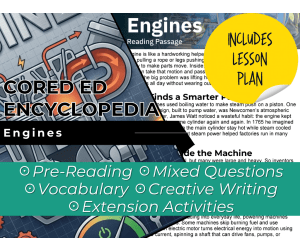
Engines Reading Comprehension Passage - Cored Ed Encyclopedia
ELA, Reading Comprehension, Reading, Science, Technology, Pre-Reading, Language Development, Physics, History, Social Studies, Grade 2, 3, 4, 5, Worksheets & Printables, Worksheets, Teacher Tools, Centers, Activities, Writing Prompts, Assessments, Quizzes and Tests, Quizzes, Lesson Plans
This engines reading comprehension with lesson plan includes: Visualization (on the front cover) Start your lesson by taking a minute to think and share something about the topic. Read the script aloud (slowly), perhaps prepare some music or sound effects. Student close their eyes and let their imaginations wander. Students open their eyes, read the question aloud and give them a few minutes to complete. Ask a few students to share or keep answers until the end to compare with what they learn in the passage. Quick pause—thousands of Cored Education products are included with your TeachSimple membership. Download links and encyclopedia index available here. Pre-Reading Trivia Students will write down one thing they already know about the subject and then read five more facts and discuss. These facts are fun, and the students will enjoy learning about the subject before reading more. Give 1 minute for students to write what they already know (no pressure—best guess is fine). Read the five facts together. After each fact, do ask a student for their opinion, was it surprising? Set a purpose by asking students to highlight/underline one fact they want to learn more about during the reading. Reading Passage The text is a high-interest reading passage with set paragraphs, roughly three to four paragraphs long. It contains a variety of themes about the topic, anywhere from history to technology. The passage is between 250 and 350 words in length. First, ask students to look at the headings and see what they’ll learn about today. What do they know about the topic/heading? First read options: Teacher read-aloud (best for support). Partner reading (paragraph by paragraph). While reading, students underline important details, and vocabulary words they think may come up in the questions section. Mixed Questions The first question page contains four multiple-choice questions, each with a choice of four answers, and three written response questions that require a sentence or two from the student. Students complete the mcqs first independently, then review quickly as a class. For the 3 written responses, try to get students giving the answer with some form of evidence: “I think ___ because the text says ___.” If students get stuck, send them back to check the passage. Vocabulary Questions Practice seven key words from the text in this section across two activities. First section is scrambled words where students will unscramble three words given a clue for each. The second section is a word to meaning matching activity. Before starting, have some students read out words they underlined in the passage. Ask students to say the word and read aloud the sentence(s) around each word. Ask students to do scrambled words and the matching exercise in pairs then go through answers as a class. For the scrambled spelling task, get four pairs to come up to the board and write the words for extra practice with the other student reading out the clue. For the matching task, prompt students to give full sentences: “I matched ___ with ___ because ___.” Creative Writing In this question, the student will be required to write a five to eight sentence paragraph on a question related to the topic. Before starting, ask students write down 3 key ideas they are going to include in their piece. Ask students for ideas to share around the class to help those struggling. Pro writing expectations: 5–8 sentences At least 2 facts or details from the passage At least 2 vocabulary words from the previous page Students read their paragraphs while classmates listen for facts and vocabulary words. Extension Activities This page is optional for fast finishers or to take home. There are several activities, each one requiring a different skill. Do some, do none, do all, completely optional - but you will feel reassured knowing every possibility is planned for. Includes summary writting question and additional facts. Answer Key There are answers for the multiple-choice questions, written response questions have sample answers, vocabulary answers and if there is a summary question then a sample summary will be provided as well. Lesson Plan Included Customized lesson plan for this lesson is included. Lesson Snapshot Title: Engines Genre: Nonfiction (Informational Text) Subject: Science (Physical Science/Technology) / Reading (Informational Text) Primary Topic: How engines turn energy into motion Estimated Guided Reading Level (A–Z): P What This Lesson Teaches Best Explains the core idea that an engine turns energy into motion , using heat, fuel, or electricity to make parts move. Builds understanding of how steam engines work (boiling water makes steam push a piston) and how designs became more efficient (Watt’s separate condenser idea). Describes internal combustion engines and the four-step cycle (take in, squeeze, burn/push, exhaust) that repeats. Connects parts and motion: pistons moving back-and-forth can turn a crankshaft to keep rotation going. Introduces electric motors as another way to change energy into motion using magnetism and current to spin a shaft. Learning Goals Students will explain how an engine changes energy into motion using heat, fuel, or electricity. Students will describe how steam can push a piston in an early steam engine. Students will explain why a separate condenser made a steam engine design more efficient. Students will identify how an internal combustion engine makes motion by burning fuel inside a chamber. Students will list the four repeated steps of a four-stroke engine as stated in the passage. Students will describe how an electric motor uses magnetism and current to spin a shaft. Key Vocabulary From the Text piston — a part pushed by steam or hot gases. condenser — a part that cools steam somewhere else. combustion — burning fuel to make hot gases. crankshaft — a part that keeps turning as pistons move. magnetism — a force used with current to make a shaft spin. FULL CATALOG OF DOWNLOAD LINKS AND ENCYCLOPEDIA INDEX HERE
Author Cored Education
Rating
Tags Vocabulary, Reading Comprehension, Reading Passages, Lesson Plans, Ela Lesson Plans, Reading Comprehension Lesson Plans, Pre-reading, Science Lesson Plans, Technology, Physics
Morning Time | English Conversations Video Lesson
ELA, Language Development, ESL, Not Grade Specific, Lesson Plans, Teacher Tools
Morning Time | English Conversations Video Lesson Product Description This educational resource is an interactive solution designed to address the challenges faced in teaching ESL (English as a Second Language). It features an animated video lesson focusing on everyday morning time routines. Product Details Type: MP4 video file Duration: Over 6 minutes Audience: Not grade-specific, suitable for all learners studying ESL Note: The objective of this video lesson is to familiarize learners with conversational terms and phrases used during morning routines. Learning Settings Aid The included animation accommodates: Whole group instruction - To stimulate collective learning and student engagement. Schoolwork for independent learning - Easily complements existing curriculum and supports reinforcement or further discussion during classroom recaps. Crafted with creativity, simplicity, and innovation at its core, this digital tool serves a dual purpose—imparting knowledge about common phrases while simultaneously fostering cultural exposure atop linguistic fluency. A valuable addition in helping both educators grappling with new methods for teaching ESL effectively and students striving towards second language proficiency.
Author Educational Voice
Tags Interactive Learning, ESL, English Conversations, Morning Routines, Animated Video Lesson

ESL Lesson Plan on Eating Insects - Food of the Future
ELA, Reading, Reading Comprehension, Language Development, ESL, Vocabulary, Grade 7, 8, 9, 10, 11, 12, Teacher Tools, Lesson Plans
ESL Lesson Plan on Eating Insects - Food of the Future This ESL (English Second Language) Teaching Resource Lesson Plan on Eating Insects - Food of the Future (14 Digital PDF Slides) is great to stimulate English as Second or Foreign Language Learners with Interesting Actuality topics (Insects consumption). This ESL Lesson Plan can be ideal for learners from 7th grade to 12th grade; it can also be more than suitable for ESL EFL TESOL Centers around the world and/or private English Second Language Tutors/Private Teachers. This ESL Lesson Plan Teaching Resource on Eating Insects - Food of the Future can be great for Intermediate Advanced English as a Second or Foreign Language Students Within this ESL Teaching Resource (lesson plan) on Eating Insects, it is included: 1 opening slide 5 introductory slides to Eating Insects (presentation of the topic + some vocabulary; tarantulas, termites, grasshoppes, locusts etc) 3 slides for Warm-Up Picture Description Activity (a guy eating insects at a food market + insects farming + insects' burger in a supermarket) 1 slide about the use of Insects consumption around the world 1 slide with Listening Comprehension Video (QR Code-linked video + hyperllink) 1 slide with 9 Comprehensio Questions (with internal link to last slide's answer keys) 1 slide for ESL writing activity prompt ("Would you like to try insects") 1 slide with answer keys This ESL, EFL, TESOL PDF Digital Teaching Resource Lesson Plan on Eating Insects (13 slides + answer keys in the last slide) can be suitable for Intermediate Advanced English as a second or foreign language learners (ESL EFL). Its aim is to make students exercise and improve their vocabulary (Warm-up Picture Description), Listening comprehesion and Writing English as a second language Skills. Learning with Alan is a Brand New Teaching Resources Store whose aim is to help English as a Second or foreign Language Teachers, Educators and Tutors (be it online or offline) to achieve their teaching objectives while creating a fun and stimulating environment. Never Forget! Learning is fun, So should English! Always If you want to browse more of my ESL, EFL, TESOL Teaching Resources, click here Learning with Alan!
Author Learning with Alan
Tags ESL, English Second Language, English, Insects, Future, Food, Lesson Plan, Listening, Writing, Comprehension
Lions at Lunchtime (Magic Tree House #11 Lesson Plan, Videos, Activities)
ELA, Social Studies, Literature, Reading, Science, Life Sciences, Animals, Geography, Grade 1, 2, 3, Lesson Plans, Teacher Tools
Lions at Lunchtime (Magic Tree House #11 Lesson Plan, Videos, Activities) The package is a comprehensive teaching resource which is perfect for first to third-grade classrooms as well as homeschooling and teaching cooperatives. It saves valuable preparation time by providing ready-to-use and engaging materials. Five days of immersive learning are assured with this kit. The notable features of this package includes: No teacher or parent preparation required: The story breakdown into easy chapters comes with comprehension questions to analyse student's understanding. Vocabulary development: Each chapter introduces new words and terminologies which students can practice for better language skills. Three-tier worksheet approach: Educators can choose from pre-reading, during reading and post-reading worksheets designed according to different age groups and reading levels. Cross-curricular learning opportunities: The package extends its reach beyond literature into geography, social studies etc. It also accommodates creative writing which helps in reinforcing spelling and grammar knowledge among students. Differentiation amongst your learners would be a breeze too; notebook piece alternatives provided will not only support effective note-taking but aid in brainstorming ideas too. Going the extra mile, book review reports presented in six formats prompts the development of critical thinking abilities amongst your pupils.A project-based activity involving art components intensifies cognitive development whilst maintaining room for artistic talents. In terms of convenience all these facilities are available in pdf format making it flexible choice for teachers or parents alike either wanting use it as part of whole group discussions or small group activities alternatively even serving as a dependable resource for homework assignments ensuring learning continuity wherever your learner may be.. </ul
Author Heather Huhman
Tags Lions, Lunchtime, Magic Tree House, Lesson Plan, Activities

How to Write a Book Report: Nonfiction Book Reports - FLASH-PC
ELA, Writing, Common Core, Grade 5, 6, 7, 8, Teacher Tools, Lesson Plans
FLASH-PC: Enhancing Comprehension Skills for Middle School Students How to Write a Book Report: Nonfiction Book Reports - FLASH-PC is an effective and versatile resource designed to enhance the comprehension skills of students in grades 5 through 8. The toolkit serves as a complement to traditional Language Arts curriculum , instructing students on nonfiction book report writing. Main Features: An engaging chapter-style format, incorporating reading passages that boost both student engagement and conceptual understanding. The inclusion of before and after reading questions, fostering improved analytical thinking among students. A seamless alignment with the Common Core State Standards, assuring lessons maintain recognized methodologies. The provision of a range of resources including not only theory-based materials such as printables and vocabulary flashcards but also thoughtfully crafted interactive activities that make learning dynamic while reinforcing learned concepts. An additional feature educators would find beneficial is the use of graphic organizers . These tools are useful in visually representing information which aids overall comprehension amongst visual learners. This multifaceted approach ensures that How to Write a Book Report: Nonfiction Book Reports - FLASH-PC can be successfully applied across different settings – whether in whole-group classroom sessions, small group training, or individual homework assignments. The product file has been structured for convenient access further enhancing usability parameters. To Summarize: How to Write a Book Report: Nonfiction Book Reports - FLASH-PC, serves as an immersive writing lesson plan-bundle for teachers seeking unique ways to introduce their Grade 5-8 pupils into nuanced non-fiction book report writing realms. Imbibe this excellent resource into your teaching routines and witness how seamlessly students will be able to tackle non-fiction book reports hereafter!
Author Classroom Complete Press
Tags Software (PC)

The Big Game Short Story | Beginner Lesson Plan
ELA, Reading, Grade 2, 3, 4, Lesson Plans, Teacher Tools
Discover "The Big Game ," a captivating short story beginner lesson plan designed to enhance your students' reading comprehension and grammar skills. This carefully crafted worksheet set takes your learners on a gripping adventure through the 2-page passage while reinforcing vital language concepts. Follow Felix's journey as he plays a game of football with his family looking on. Can he score the winning goal for his team? Our versatile product offers dual-access options - available via Google Apps or in downloadable ready-to-print PDFs, with three files included. To save time and simplify lesson delivery, an Answer Key is provided for quick reference! Featuring five pages of diverse activities, this resource delves into various dimensions of learning. It encourages readers to deeply analyze the text by engaging them in thought-provoking exercises tailored to different learning styles. Conversation questions are included to enable a class discussion about the story and your students' own sporting success. As you incorporate "The Big Game " beginner lesson plan into your teaching toolkit, see how it transforms young minds into critical thinkers! Explore this valuable digital resource and enhance both student engagement and educator satisfaction in your classroom today! Follow TEAM TEFL for more great resources like this one.
Author TEAM TEFL
Tags Short Story, Reading Passage, ESL Lesson, Vocabulary Practice, Research

How to Write a Paragraph: Drafting Practice
ELA, Writing, Common Core, Grade 5, 6, 7, 8, Teacher Tools, Lesson Plans
Product Overview: How to Write a Paragraph: Drafting Practice is a top-tier teaching resource designed exclusively for educators in varying contexts such as public schools or homeschools. It is tailored towards students of Grade 5, 6, 7 and Grade 8 studying Language Arts with a keen focus on Writing. The overarching aim of the product is to aid young learners in honing the core artistry of expressing concepts fluently through meticulously composed sentences and paragraphs. This educational tool makes it feasible for students to comprehend the process while providing them ample opportunities to exercise prewriting techniques. A diverse set of graphic organizers have been incorporated within this resource functioning as guiding lights throughout their writing journey. Key Features: The drafting practice tool provides systematic introductions to four primary forms paragraphs. Blends learning objectives based on Bloom's Taxonomy promoting higher-order thinking skills along with traditional learning approaches. A comprehensive PDF file accommodating supplementary enriching material for teachers aiming to boost their existing reading program or employ as individual assignments for students. A thorough implementation guide accompanies the product ensuring seamless lesson plan integration due its step-by-step instructions layout. Evaluation & Extra Material: To enable fair evaluation post-utilization, an assessment rubric has been bundled in the package. Additional elements like word puzzles and comprehension quizzes are included further enhancing critical thinking skills while keeping lessons engaging & interactive. The final touch comes in form of six vibrant graphic organizers contributed towards delineating skill focus topics leading your young learners towards successful writing explorations during organized independent work sessions. Educational Standards & Assurance: This teaching resource fulfills Common Core State Standards and incorporates components mirroring Bloom's Taxonomy validating its commitment adhering universally accepted educational best practices.
Author Classroom Complete Press
Tags PDF

Zero Conditional
ELA, Language Development, ESL, Not Grade Specific, Teacher Tools, Lesson Plans
This lesson serves as an introduction to or review of the usage of the Zero Conditional in English. The presentation consists of 43 visually appealing slides that are carefully designed with color-coded sentences, captivating images, and engaging activities to enhance retention. These visual aids will greatly assist the teacher in conducting drills and facilitating interactive activities. To conduct a well-rounded lesson, the teacher should demonstrate enthusiasm and create a positive learning environment. The teacher should guide students through the slides, encouraging active participation, providing timely feedback, and fostering interactive speaking practice. With the estimated duration of approximately 1 hour and 30 minutes, the teacher should manage time effectively, allowing for sufficient practice and review. Introduction: Begin the lesson with an attention-grabbing slide that features an engaging image related to the Zero Conditional. Use this slide to generate curiosity and set the stage for the topic. Vocabulary Presentation: Utilize color-coded sentences and concise explanations on slides to introduce and explain key vocabulary associated with the Zero Conditional. Include relevant images to aid understanding and captivate students' attention. Structure Breakdown: Break down the structure of the Zero Conditional into easily understandable parts. Use slides with color-coded examples and concise explanations to demonstrate the formation of conditional sentences, emphasizing the use of present tense verbs in both the condition and the result. Real-Life Examples: Illustrate the application of the Zero Conditional with relatable and practical examples on slides. Incorporate images that depict everyday scenarios to make the examples more memorable and relatable for students. Interactive Drills and Practice: Engage students actively through interactive drills and practice activities. Use slides that prompt students to complete conditional sentences, identify correct or incorrect usage, or create their own examples. Encourage class participation and provide immediate feedback to reinforce learning. Speaking Practice: Allocate sufficient time for interactive speaking practice. Use slides that encourage students to engage in conversations using the Zero Conditional. Provide prompts, role-play scenarios, or discussion questions that require students to apply their knowledge in practical situations. Consider pair or group work to promote collaboration and maximize speaking opportunities. Recap and Summary: Include a slide that summarizes the key points covered in the lesson. Use this slide to reinforce understanding and remind students of the essential aspects of the Zero Conditional. Consider incorporating visual cues or a mnemonic device to aid memory recall. Conclusion and Review: Conclude the lesson by allowing students to reflect on what they have learned. Use final slides to review the main concepts, address any remaining questions or concerns, and provide additional resources for further practice.
Author Learning Resources Producer
Tags Zero Conditional, Imperative, Simple Present, Advice, Results, Speaking, Grammar, English, Inglês
Comprehension Grade 3
ELA, Reading, Reading Comprehension, Grade 3, Teacher Tools, Lesson Plans
Comprehension Grade 3: A Vital Resource for Third-Graders Comprehension Grade 3 is an indispensable resource focused on empowering third grade learners with the necessary comprehension skills. It eases the understanding and absorption of information for children navigating through their reading journey. Reading transcends recognizing words; it is about comprehending and interpreting the meaning behind those words. Suitable for Classroom Teachers and Homeschool Educators Alike This educational resource caters to both classroom teachers and homeschool educators. The workbook contains activities masterfully developed to strengthen vital comprehension skills. Key points in these exercises includes: Following instructions, Categorizing pieces of information, Arranging events in sequence, and Identifying the main idea in a text. Further exercises aim at enhancing usage of context clues and pinpointing specific information within a text or document. These activities allow students self-engagement with minimal supervision from educators—suitable for traditional classroom setup or home learning. Digital Format With Answer Keys Included The Comprehension Grade 3 is available as one product file in PDF format, making it convenient to download, print out or display during online classes. This workbook encompasses answer keys that serve useful tools aiding educators in checking student work accurately. A Flexible Design Adaptable To Different Learning Settings The flexible design facilitates implementation across large groups or small cooperative groups depending on class configurations set by educators. It As well serves excellent material for homework, allowing students reinforce what they've learnt during school hours at home. The utility extends beyond language acquisition catering across varied subjects due to universal application of comprehensive literacy skills. As a teaching resource that falls under the Language Arts domain and zeros in on comprehension, this tool is a valuable asset any educator aiming at sharpening their learners' grasp over language comprehension skills at the third-grade level.
Author Classroom Complete Press
Tags PDF

Guided Reading Lesson Plan & Activities for Grade 9
Reading, ELA, Grade 9, Activities, Lesson Plans, Teacher Tools
A standard curriculum for 9th grade English language arts will feature a range of literary pieces from diverse cultures globally. Ninth graders typically do book reports, which enhance their reading comprehension and writing abilities, while also building upon the writing skills they developed in earlier grades. A few of the language arts tasks for 9th graders that your student should engage in are: - Understand how to recognize the characteristics and intentions of myths, along with comparing myths from various cultures. - Discover how to understand similes, dissect figurative language, and apply previous knowledge to forecast outcomes. - Investigating and composing on legendary figures. - Investigate the various thematic connections in the texts they read, including love, beauty, family, freedom, friendship, and the essence of human nature. - Read and comprehend progressively difficult texts that enhance knowledge in history, science, and various other subjects. - Write texts that showcase various perspectives. - Carry out research and gather data from various sources to back their claims. This comprehensive lesson outline features guided reading tasks for ninth grade that take around 90 minutes. Suggested answers are also included.
Author Bright Classroom Ideas Marketplace
Tags Guided, Reading, Lesson, Plan, Activities, Grade 9, Language
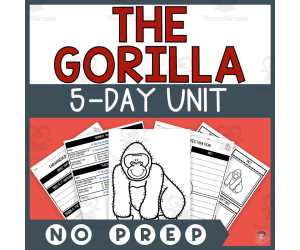
Gorilla Unit Study (Endangered Animals Lesson Plan, Videos, Activities)
ELA, Grammar, Reading, Language Development, Spelling, Writing, Science, Life Sciences, Animals, Grade 1, 2, 3, Lesson Plans, Teacher Tools
Gorilla Unit Study Lesson Plan for Grades 1-3 Transport students to the lush rainforests of Africa to learn about the magnificent yet endangered gorilla. This comprehensive 5-day unit includes a step-by-step lesson plan to guide educators through informative videos, stimulating discussions, engaging worksheets, creative writing prompts , and fun hands-on activities about gorilla behavior, habitat, anatomy, conservation, and more. Teachers can easily customize or supplement lessons for various ages, reading levels, and classroom settings like whole group instruction, small groups, or independent learning stations. This engaging cross-curricular resource seamlessly combines science, reading, writing, art, and grammar into an unforgettable adventure that educates students about these remarkable primates while building academic skills.
Author Heather Huhman
Tags Endangered Animals, Forest Animals, Gorillas, Zoology, Science, Unit Study, Africa, Grammer Gorilla, Endangered Animal Lesson Plan, Grammer Gorrilla, Grammar Gorilla, Gramar Gorilla

Julius Caesar Manual: A Facing-Pages Translation into Contemporary English
ELA, Literature, Grade 7, 8, 9, 10, 11, 12, Teacher Tools, Lesson Plans
The Julius Caesar Manual: A Facing-Pages Translation into Contemporary English This teaching resource integrates perfectly into middle and high school classrooms. Not only suitable for Language Arts teachers, but also tailored for those focused on Literature education. This manual deciphers the complex play of William Shakespeare's Julius Caesar, making it thoroughly applicable for students from grade 7 through to grade 12. It provides an array of guidance on how to effectively teach and perform this iconic play in class structure. Scene Summaries: Each scene is carefully broken down into understandable terms. Interactive Q&A: Every act has insightful questions and answers that keep students engaged. In-Context Characters: The characters come alive in modern language, enabling smooth comprehension by learners. Away from just understanding the text; this tool goes the extra mile to provide enriching information about Shakespeare himself , his renowned theatre productions and even includes a handy Shakespearean timeline for historical reference. Annotated Bibliography: guiding further research or reading tasks (perfect homework assignments). Glossary of Terms: covering central literary definitions related to 'Julius Caesar' ensuring all are speaking the same literary language. Pronunciation guidance—a common obstacle when reading literature is handled meticulously through an indigenous guide within this manual. All of these handy resources are available in an easily downloadable PDF format, ready for printout or digital use regardless of class size! A Truly Pedagogical Companion The Julius Caesar Manual does more than simply demystify Shakespeare—it sparks a profound enthusiasm towards literature education while laying firm roots for continual personal growth. </br
Author Classroom Complete Press
Tags PDF, Shakespeare Julius Caesar Translation, Julius Caesar Lesson Plans High School

ANIMAL ALPHABET (CARDS SET A-Z) Gr. 2-6
ELA, Reading, Grade 2, 3, Teacher Tools, Lesson Plans
ANIMAL ALPHABET (CARDS SET A-Z) Gr. 2-6 Embark on a fascinating journey through the alphabet with the Animal Alphabet cards, designed for grades 2 to 6. This unique teaching resource creatively blends language arts and nature study, illustrating each letter with an intriguing animal corresponding to that letter. The Animal Alphabet Cards offer a fresh approach to learning letters, sparking curiosity in young minds about both the English language and wildlife. These cards are left blank intentionally which allows teachers to customize each card by writing or printing out letters in whatever handwriting style suits their classroom needs best. Main Uses: Classification exercises: With these vibrant cards, students can identify and categorize different animals according to various traits like habitat, diet or size. They also provide an excellent basis for individual research reports on these diverse creatures while enhancing children's observation skills and data gathering abilities. Creative resources for art projects : The versatility of the Animal Alphabet Cards extends into areas like design too - they can be utilized as creative resources in art projects where learners are encouraged to colour them in accordance with real-life animal appearances. Alternatively, students may be given liberty to use their imagination as they blend colours into exotic patterns representative of imaginary creatures. The set consists of one PDF containing 30 pages ready for print at convenience. This resource is poised finely between simplicity and efficacy; thus facilitating fruitful engagement through lessons within classrooms or homeschool environments alike - be it in whole group sessions or small group activities. Suggestion: Go beyond traditional study materials when teaching literacy skills ; make both learning process more appealing –and memorable– using this comprehensive kit! By adding excitement and novelty into your teaching process you will stir students' interest effortlessly towards reading--a basic pillar within Language Arts at all levels.
Author Classroom Complete Press
Tags Animal Alphabet, Alphabet Practice, Handwriting Pages, Reading Worksheets, Coloring Pages

Connecting Words Intermediate ESL ELA TEFL Lesson Plan
ELA, Language Development, ESL, Grade 4, 5, 6, 7, 8, 9, 10, 11, 12, Teacher Tools, Lesson Plans
This is anESL ELA and TEFL intermediate lesson plan worksheet set for Connecting Words. In this TEFL resource students will learn how to add connecting words to their English vocabulary to help improve their fluency. Connecting words help us to build bigger and better sentences. Connecting words are words like additionally, however, moreover, and, again, firstly, what's more etc. They enable us to create better fluency in both written and speaking English. Students will learn more about these and then complete the various exercises to follow, which will assess their comprehension and implement grammar skills. Here is what is included in this lesson plan: flash cards warmer conversation questions main use, construction open questions closed questions activity writing drill extra study. The TEFL resource is available in PDF with 33 ready to print pages and one digital access file. A part of it is on Google Apps. The answer key is also included for reference.
Author TEAM TEFL
Tags Sequencing, ESL Lesson, Cause And Effect, Connecting Words, Comparisons

Phonics First - Grades 1-3
ELA, Language Development, Phonics, Grade 1, 2, 3, Teacher Tools, Lesson Plans
Phonics First - Grades 1-3 This invaluable teaching resource is primarily designed for students in grades 1-3. Geared towards providing an enriching source of practices focused on phonics, a fundamental section of Language Arts. Primary School Student-Friendly Activities Drill reinforcements to solidify the foundation of knowledge Independent instructional materials incorporated with enchanting imagery as motivation for learning Creative tasks including tracing, writing, coloring , cutting and pasting, matching, puzzles and others Structurally Engineered Resource Layout A well-organized layout features review pages for effective recapitulation of concepts learned. Not forgetting an 'awards page' that acknowledges student's progress thus boosting their motivation. The seemingly complex topics like unusual consonant sounds and spellings alongside uncommon vowel sounds devoid long-short bounds are also significantly simplified in this setup. Note to Educators: The intricate nature of some topics may require initial instruction before students delve into certain sections so as to create a firm base understanding. Educational Objectives & Application Diversity: Inclusive key objectives are: Deducating students about unexpected exceptions in vowel sounds Diacritical markings delineated for such complex sounds (phonics) It fits seamlessly into diverse education dynamics; a helpful supplement during: Bolded texts herewhole group discussions sharing insights collectively or divided smaller groups where personalized interactions boosting further understanding flourishes Bolded texts hereHomework tasks that offer learners freedom to learn at their own pace, relieving pressure while promoting a thorough understanding and enjoyment of the activities Inclusive & Familiar Comprehension This invaluable Phonics First - Grades 1-3 resource comes as an accessible PDF taking teachers through lessons that shine a light on key aspects within Language Arts’ Phonics sub-subjects. Suitable for educators familiar with such curricula or homeschoolers seeking top-notch teaching aids to propel their children's educational experience.
Author Classroom Complete Press
Tags PDF

How to Write a Paragraph: Revising Your Paragraph - FLASH-MAC
ELA, Writing, Common Core, Grade 5, 6, 7, 8, Teacher Tools, Lesson Plans
How to Write a Paragraph: Revising Your Paragraph - FLASH-MAC The How to Write a Paragraph: Revising Your Paragraph - FLASH-MAC teaching resource is an invaluable tool for educators. It's primarily designed for grade levels five through eight and focuses on the important skill of revising written paragraphs. This resource provides valuable information through curriculum -based content. Uniquely, this tool uses before and after reading questions to facilitate comprehension, encourage active learning, and offer practice opportunities. Educational Aids Printable materials, Vocabulary flashcards, Interactive activities for hands-on experience, Blooms Taxonomy principles. This product is thoughtfully designed to meet Common Core State Standards in education. Focused Instruction & Homework Practice The components offer flexibility adapted for varied instruction scenarios. They can be used in full group sessions or small groups, tailored based on individual needs. The provided resources also make effective homework assignments. Digital Accessibility & Graphic Organizers Advantage Inclusion of graphic organizers simplifies idea organization when writing paragraphs. An added advantage is its compatibility with any Mac software making it user-friendly where teachers can easily navigate lessons without technical fusses. In essence, "How to Write a Paragraph: Revising Your Paragraph - FLASH-MAC" specifically aids language arts teachers aiming at developing proficient writers from grades five through eight.
Author Classroom Complete Press
Tags Software (Mac)