



3,911 products added recently
Page 39 - ELA Lesson Plans
Elevate your ELA instruction with lesson plans that cover reading, writing, speaking, and listening skills. These resources provide diverse texts and engaging activities to improve literacy. Integrate these plans to enrich your language arts curriculum and support student achievement.

 Show filters

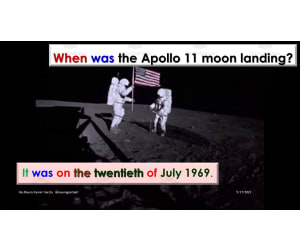
Ordinal Numbers & Dates
ELA, Not Grade Specific, Teacher Tools, Lesson Plans
Ordinal Numbers & Dates Lesson Plan The Ordinal Numbers & Dates lesson plan is a tool designed for educators to introduce or review key aspects of speaking English, specifically focusing on ordinal numbers and months of the year. This resource serves as an interactive platform where students learn through a combination of visuals and reading exercises. It accommodates the educator's unique teaching methods while maximizing engagement in language arts. The Lesson: Approximately 60 slides each adorned with visually stimulating pictures paired with color-coded sentences intended to enhance vocabulary retention. Presents information in a way that allows learners to make quick connections and recall newly learned concepts effectively. Incorporates International Phonetic Alphabet (IPA) transcripts that equip students with correct pronunciation skills—a crucial aspect when learning any language. Goes one step further—it enables students to apply these principles practically by forming pertinent questions relevant to important dates such as birthdays and holidays. Targeted at individual or group lessons, this resource lasts approximately 60 minutes ensuring ample duration for meaningful participation from all students involved—be it in classrooms or homeschooling arenas. With capabilities ranging from revisiting basic number sequences through learning how native speakers reference annually occurring events, this lesson plan challenges traditional pedagogic techniques making learning an exciting journey rather than sheer memorization. For Educators: This PowerPoint product imparts considerable flexibility allowing educators to use drills or interactive speaking activities for engaging their learners actively with the content. Educators can adapt their approach based on proficiency levels—opt not to read sentences aloud during final practice phases for beginners. Note: The file uses Microsoft PowerPoint formats which allows teachers easy access across various platforms thereby promoting continuity irrespective of unexpected technical hiccups like low bandwidth during online classes. Leveraging resources like the Ordinal Numbers & Dates lesson plan, educators facilitate practical knowledge application practices that stimulate interest about holidays, months along with conventional and ordinal numbers.
Author Learning Resources Producer
Tags Ordinal Numbers, Dates, Interactive Activities, Visual Learning, Language Arts

Descriptive and Demonstrative Adjectives | Beginner Lesson Plan
ELA, Grammar, Grade 1, 2, 3, 7, 8, 9, 10, 11, 12, Lesson Plans, Teacher Tools
Adjectives ESL and EFL lesson plan for A1 beginner English students. This TEFL resource is ready to go and comprises a range of teaching materials, such as flashcards, activities, conversation topics, and writing drills. Created to raise language proficiency for early English students, the lesson dives into the use of adjectives in a variety of situations. Describing nouns with the use of adjectives as well understanding this, that, these and those, it empowers ESL students with the knowledge and confidence to use adjectives accurately in every day conversation and writing. With the inclusion of activities, exercises, and real-life examples, this lesson plan strengthens language concepts and establishes a solid foundation in the basics of English grammar. This lesson plan includes: Cover page Flash cards A warm-up activity Main use Construction details Rules, along with any exceptions Illustrative examples Two closed exercises One open exercise Revision exercise Writing exercises Chatterbox, a recurring feature in our course books encouraging conversation Activity , such as a game, quiz, puzzle, etc., to conclude the class The lesson plan is available in PDF with 30 ready to print pages and one digital access file. A part of it is on Google Apps. The answer key is also included for reference.
Author TEAM TEFL
Tags Descriptive, Adjectives, Common Nouns, Grammar, Demonstrative
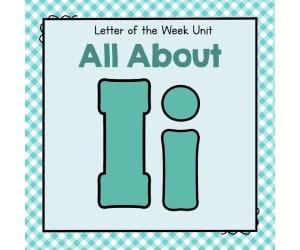
All About I - Letter of the Week Unit
ELA, Language Development, Pre-Reading, Kindergarten, Teacher Tools, Lesson Plans
All About I - Letter of the Week Unit This preschool letter recognition resource teaches students all about the letter I through engaging activities. With dozens of options to choose from, educators can create fun and memorable letter I lesson plans. This bundle includes worksheets, handwriting practice, crafts, games, activity pages, printables, and more! All materials use high-quality clipart and photos to bring the letter to life. Implement these activities in small groups, whole class, or even as homework. With consistent activities across the alphabet, this resource makes letter lesson planning easy. Educators will love having one place to grab dozens of activities to teach letter sounds, word building, identification, and more in clever ways that excite young learners. This letter I unit brings consistency and creativity to any preschool classroom.
Author Simply Schoolgirl
Tags Letter Of The Week, Handwriting Worksheets, Letter Bingo, Kindergarten, Printables, Preschool, Letter Displays, Letter Games, Letter Crafts, Classroom Decor

Vegetables Reading Comprehension Passage - Cored Ed Encyclopedia
ELA, Language Development, Reading Comprehension, Reading, Pre-Reading, Science, Life Sciences, Health, P.E. & Health, Nature & Plants, Grade 2, 3, 4, 5, Worksheets & Printables, Worksheets, Teacher Tools, Centers, Activities, Writing Prompts, Assessments, Quizzes and Tests, Quizzes, Lesson Plans
This vegetables reading comprehension with lesson plan includes: Visualization (on the front cover) Start your lesson by taking a minute to think and share something about the topic. Read the script aloud (slowly), perhaps prepare some music or sound effects. Student close their eyes and let their imaginations wander. Students open their eyes, read the question aloud and give them a few minutes to complete. Ask a few students to share or keep answers until the end to compare with what they learn in the passage. Quick pause—thousands of Cored Education products are included with your TeachSimple membership. Download links and encyclopedia index available here. COMPANION VIDEO NOW AVAILABLE (EMBEDDED AFTER PREVIEW PICTURES IN PRODUCT DESCRIPTION) Pre-Reading Trivia Students will write down one thing they already know about the subject and then read five more facts and discuss. These facts are fun, and the students will enjoy learning about the subject before reading more. Give 1 minute for students to write what they already know (no pressure—best guess is fine). Read the five facts together. After each fact, do ask a student for their opinion, was it surprising? Set a purpose by asking students to highlight/underline one fact they want to learn more about during the reading. Reading Passage The text is a high-interest reading passage with set paragraphs, roughly three to four paragraphs long. It contains a variety of themes about the topic, anywhere from history to technology. The passage is between 250 and 350 words in length. First, ask students to look at the headings and see what they’ll learn about today. What do they know about the topic/heading? First read options: Teacher read-aloud (best for support). Partner reading (paragraph by paragraph). While reading, students underline important details, and vocabulary words they think may come up in the questions section. Mixed Questions The first question page contains four multiple-choice questions, each with a choice of four answers, and three written response questions that require a sentence or two from the student. Students complete the mcqs first independently, then review quickly as a class. For the 3 written responses, try to get students giving the answer with some form of evidence: “I think ___ because the text says ___.” If students get stuck, send them back to check the passage. Vocabulary Questions Practice seven key words from the text in this section across two activities. First section is scrambled words where students will unscramble three words given a clue for each. The second section is a word to meaning matching activity. Before starting, have some students read out words they underlined in the passage. Ask students to say the word and read aloud the sentence(s) around each word. Ask students to do scrambled words and the matching exercise in pairs then go through answers as a class. For the scrambled spelling task, get four pairs to come up to the board and write the words for extra practice with the other student reading out the clue. For the matching task, prompt students to give full sentences: “I matched ___ with ___ because ___.” Creative Writing In this question, the student will be required to write a five to eight sentence paragraph on a question related to the topic. Before starting, ask students write down 3 key ideas they are going to include in their piece. Ask students for ideas to share around the class to help those struggling. Pro writing expectations: 5–8 sentences At least 2 facts or details from the passage At least 2 vocabulary words from the previous page Students read their paragraphs while classmates listen for facts and vocabulary words. Extension Activities This page is optional for fast finishers or to take home. There are several activities, each one requiring a different skill. Do some, do none, do all, completely optional - but you will feel reassured knowing every possibility is planned for. Includes summary writting question. Answer Key There are answers for the multiple-choice questions, written response questions have sample answers, vocabulary answers and if there is a summary question then a sample summary will be provided as well. Lesson Plan Included Customized lesson plan for this lesson is included. Lesson Snapshot Title: Vegetables Genre: Nonfiction (Informational text) Subject: Science (Life Science: plants, nutrition) / Reading (informational text) Primary Topic: What vegetables are and why they matter Estimated Guided Reading Level (A–Z): N What This Lesson Teaches Best What counts as a vegetable (in this text): Defines vegetables as edible parts of plants people choose to eat, including roots (carrot), leaves (spinach), and flower buds (broccoli). Plant parts and categories: Explains that many vegetables come from soft-stemmed, herbaceous plants rather than woody trees, and that vegetables come in many shapes because plants have many useful parts. Early farming and seed-saving: Describes how people once gathered edible plants from the wild, then began planting and saving seeds (about 10,000–7,000 BC), keeping and sharing plants that tasted better or grew bigger. Science vs. everyday language (tomato debate): Contrasts the botanical definition of “fruit” (seed-bearing part formed from a flower’s ovary) with how “vegetable” often means a savory plant food served with meals, noting a U.S. court decision in 1893 calling tomatoes vegetables for a tax rule. Nutrition and food preservation: States vegetables are usually low in fat and calories, filling because they bring water and fiber, and may contain vitamins/minerals (examples include vitamin A and vitamin C); also notes chilling, freezing, or canning to keep vegetables longer. Learning Goals Students will define a vegetable using examples from the text (root, leaf, bud). Students will describe where many vegetables come from (soft-stemmed, herbaceous plants) and explain what that means. Students will explain how seed-saving helped wild plants become “garden favorites,” using details from the passage. Students will compare the botanical meaning of fruit with the cooking meaning of vegetable, using the tomato example. Students will identify two reasons vegetables can be filling and healthy (water, fiber, vitamins/minerals) based on the text. Key Vocabulary From the Text edible — safe and good to eat. herbaceous — soft-stemmed; not woody. botanists — scientists who study plants. ovary — flower part that can form fruit. fiber — nutrient that helps you feel full. FULL CATALOG OF DOWNLOAD LINKS AND ENCYCLOPEDIA INDEX HERE
Author Cored Education
Rating
Tags Vocabulary, Reading Comprehension, Reading Passages, Lesson Plans, Ela Lesson Plans, Reading Comprehension Lesson Plans, Pre-reading, Science Lesson Plans, Nature And Plants, Health
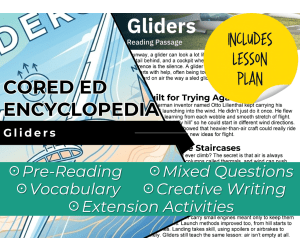
Gliders Reading Comprehension Passage - Cored Ed Encyclopedia
ELA, Reading Comprehension, Reading, Science, Technology, Pre-Reading, Language Development, Physics, History, Social Studies, Grade 2, 3, 4, 5, Worksheets & Printables, Worksheets, Teacher Tools, Centers, Activities, Writing Prompts, Assessments, Quizzes and Tests, Quizzes, Lesson Plans
This gliders reading comprehension with lesson plan includes: Visualization (on the front cover) Start your lesson by taking a minute to think and share something about the topic. Read the script aloud (slowly), perhaps prepare some music or sound effects. Student close their eyes and let their imaginations wander. Students open their eyes, read the question aloud and give them a few minutes to complete. Ask a few students to share or keep answers until the end to compare with what they learn in the passage. Quick pause—thousands of Cored Education products are included with your TeachSimple membership. Download links and encyclopedia index available here. Pre-Reading Trivia Students will write down one thing they already know about the subject and then read five more facts and discuss. These facts are fun, and the students will enjoy learning about the subject before reading more. Give 1 minute for students to write what they already know (no pressure—best guess is fine). Read the five facts together. After each fact, do ask a student for their opinion, was it surprising? Set a purpose by asking students to highlight/underline one fact they want to learn more about during the reading. Reading Passage The text is a high-interest reading passage with set paragraphs, roughly three to four paragraphs long. It contains a variety of themes about the topic, anywhere from history to technology. The passage is between 250 and 350 words in length. First, ask students to look at the headings and see what they’ll learn about today. What do they know about the topic/heading? First read options: Teacher read-aloud (best for support). Partner reading (paragraph by paragraph). While reading, students underline important details, and vocabulary words they think may come up in the questions section. Mixed Questions The first question page contains four multiple-choice questions, each with a choice of four answers, and three written response questions that require a sentence or two from the student. Students complete the mcqs first independently, then review quickly as a class. For the 3 written responses, try to get students giving the answer with some form of evidence: “I think ___ because the text says ___.” If students get stuck, send them back to check the passage. Vocabulary Questions Practice seven key words from the text in this section across two activities. First section is scrambled words where students will unscramble three words given a clue for each. The second section is a word to meaning matching activity. Before starting, have some students read out words they underlined in the passage. Ask students to say the word and read aloud the sentence(s) around each word. Ask students to do scrambled words and the matching exercise in pairs then go through answers as a class. For the scrambled spelling task, get four pairs to come up to the board and write the words for extra practice with the other student reading out the clue. For the matching task, prompt students to give full sentences: “I matched ___ with ___ because ___.” Creative Writing In this question, the student will be required to write a five to eight sentence paragraph on a question related to the topic. Before starting, ask students write down 3 key ideas they are going to include in their piece. Ask students for ideas to share around the class to help those struggling. Pro writing expectations: 5–8 sentences At least 2 facts or details from the passage At least 2 vocabulary words from the previous page Students read their paragraphs while classmates listen for facts and vocabulary words. Extension Activities This page is optional for fast finishers or to take home. There are several activities, each one requiring a different skill. Do some, do none, do all, completely optional - but you will feel reassured knowing every possibility is planned for. Includes summary writting question and additional facts. Answer Key There are answers for the multiple-choice questions, written response questions have sample answers, vocabulary answers and if there is a summary question then a sample summary will be provided as well. Lesson Plan Included Customized lesson plan for this lesson is included. Lesson Snapshot Title: Gliders Genre: Nonfiction (informational text) Subject: Science (flight/engineering) Primary Topic: How gliders fly using lift and launch methods Estimated Guided Reading Level (A–Z): Q What This Lesson Teaches Best Explains what makes a glider different from a small airplane (no motor; quiet flight; “trade height for distance”). Describes how gliders get into the sky (help at the start, including being towed; later mentions aerotows and winches). Teaches how moving air helps a glider climb—especially rising warm air (“thermals”) and wind pushed upward at a ridge or hill. Shows how design features support gliding (long, narrow wings; smooth body; low drag to lose little energy). Connects gliders to early flight experiments through Otto Lilienthal’s repeated testing and “fly hill.” Learning Goals Students will describe how a glider is similar to and different from a small airplane. Students will explain how a glider usually starts flying using details from the text. Students will identify two kinds of lift described in the passage and tell how each helps a glider climb. Students will explain why long, narrow wings and low drag help a glider glide efficiently. Students will describe how gliders and launch methods changed over time, using examples from the text. Students will explain how spoilers or airbrakes help with landing safely. Key Vocabulary From the Text cockpit — where the pilot sits and reads instruments. thermals — rising columns of warm air. drag — air resistance that slows motion. aerotows — launches where an airplane tows the glider. spoilers — panels that help a glider slow down and descend. FULL CATALOG OF DOWNLOAD LINKS AND ENCYCLOPEDIA INDEX HERE
Author Cored Education
Rating
Tags Vocabulary, Reading Comprehension, Reading Passages, Lesson Plans, Ela Lesson Plans, Reading Comprehension Lesson Plans, Pre-reading, Science Lesson Plans, Physics, History

KG Morning Work | 180 Days of Spiral Review | Math & ELA | 3rd Quarter
ELA, Math, Kindergarten, Centers, Activities, Lesson Plans, Teacher Tools, Worksheets & Printables
Kindergarten Morning Work | 3rd Quarter Student Pages + Full-Year Teacher Resources Keep your kindergarten mornings consistent, engaging, and purposeful with 45 days of Kindergarten morning work for Quarter 3 . This resource includes ALL teacher resources for the complete 180-day program , while the student practice pages in this pack are specifically for 3rd Quarter: Days 91–135 . What’s Included ⭐ FULL-YEAR TEACHER RESOURCES You receive the complete teacher toolkit for planning, organizing, differentiating, and tracking the entire 180-day Kindergarten morning work program : Teacher Guide Month-by-month Pacing Guide Skills Checklist Common Core Standards Alignment Fully Editable Morning Work Schedule Complete Answer Key for Days 1–180 Student Progress Tracker Parent letters and home-practice forms Three Certificates of Completion Bonus Morning Routine Pack 📚 STUDENT PAGES INCLUDED: 3RD QUARTER The student portion of this product includes Days 91–135 , providing 45 days of ready-to-use Kindergarten morning work . Each daily page includes five short, developmentally appropriate activities : Early Literacy — letters, sounds, phonics, rhyming, or sight words Handwriting — letters, numbers, names, and words Math — counting, number sense, addition, subtraction, or shapes Fine Motor — tracing, dot-to-dot, mazes, or drawing Thinking Skills — patterns, matching, visual discrimination, or “Which One Does Not Belong?” Important: The student practice pages included in this product are Days 91–135 only . The teacher resources and complete Answer Key cover all 180 days . How It Works in the Classroom Use this Kindergarten morning work as a daily morning routine, independent practice, early-finisher activity, or skill review. Each page is designed to take approximately 10–15 minutes . Large print, short directions, and plenty of white space make the pages accessible for young learners. The routine follows a predictable weekly rotation: Monday: Letters, counting, tracing, and shapes Tuesday: Beginning sounds, number sense, and patterns Wednesday: Sight words, adding, and fine motor practice Thursday: Rhyming, shapes, and matching Friday: Weekly review, color-by-code, puzzles, and draw-and-write Quarter 3 begins with January skills such as sight words, beginning sounds, number sequencing, CVC word building, subtraction, and AAB patterns . Use the pages for: Morning work Bell ringers Independent practice Early finishers Literacy centers Math warm-ups Fine motor practice Spiral review Sub plans At-home practice The editable schedule also lets you adjust the routine to fit your classroom schedule and small-group needs. Standards & Learning Goals This Kindergarten morning work resource provides daily practice across early literacy, handwriting, math, fine motor development, and thinking skills. 📖 Early Literacy & Writing Students practice: Letter recognition Beginning sounds Ending sounds CVC words Word families Rhyming Sight words Phonics Name writing Handwriting Word writing Early sentence development Quarter 3 continues moving students toward more independent reading and writing. Students practice sight words, CVC word building, sounds, rhyming, and increasingly complex written responses. 🔢 Math Students practice: Counting Number sequencing Number sense Comparing quantities Addition Subtraction Ten frames Patterns Shapes Measurement Color-by-code activities The resource supports Kindergarten expectations including writing numbers 0–20, understanding quantities, counting, comparing numbers and groups, representing addition and subtraction, composing teen numbers, comparing measurable attributes, and identifying shapes. ✏️ Fine Motor & Thinking Skills Students also develop: Pencil control Tracing Dot-to-dot skills Visual discrimination Pattern recognition Matching Drawing Problem solving “Which One Does Not Belong?” reasoning These activities provide important kindergarten readiness practice alongside academic skills. Why Teachers Love It ✨ You get ALL the teacher resources for the entire year. The teacher materials support the complete 180-day program , not just Quarter 3. ✨ Students get exactly what they need for Quarter 3. Days 91–135 provide a complete 45-day student set. ✨ Build independence. The familiar five-part format helps students know what to expect each morning. ✨ Save prep time. Everything is already organized and ready to print. ✨ A real developmental progression. Quarter 3 moves students into sight words, CVC word building, subtraction, number sequencing, and more advanced patterns . ✨ Practice multiple skills every day. Literacy, handwriting, math, fine motor, and thinking skills are all included. ✨ Keep students engaged. Dot-to-dots, patterns, picture activities, puzzles, tracing, drawing, and visual challenges add variety. ✨ Differentiate easily. Model directions, read prompts aloud, reduce the number of activities, or provide additional support when needed. ✨ Track student growth. The Progress Tracker lets you monitor skills from letter recognition and phonics through counting, addition, subtraction, shapes, patterns, and fine motor development. ✨ Keep your classroom organized. The editable schedule includes daily planning, weekly skill focus, small-group notes, and a complete 36-week year-at-a-glance planner. ✨ Get answers for the entire year. The complete teacher package includes an Answer Key for the full 180-day program. Looking for Kindergarten morning work for Quarter 3 that saves prep time and builds essential early learning skills? This pack includes 45 days of student practice (Days 91–135) PLUS ALL teacher resources for the full 180-day program . Give your kindergarteners a predictable, engaging morning routine that strengthens literacy, handwriting, math, fine motor skills, and independence! Print it, prep it, and make your kindergarten mornings easier! 💛
Author Bright Classroom Ideas Marketplace
Rating
Tags Ela, Math, Morning Work, Back To School
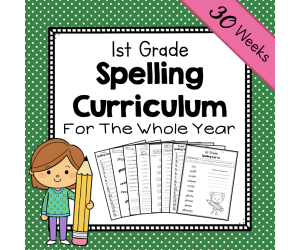
1st Grade Spelling Unit | Spelling Curriculum | Spelling Lists
ELA, Language Development, Spelling, Grade 1, Lesson Plans, Teacher Tools
Attention First Grade Teachers! These spelling units are for you! With 30 weeks of lists organized by spelling rule and pattern, you’ll find everything you need at your fingertips. Each teacher packet features a cover page with spelling words and their corresponding rules or patterns, plus a call-out page with engaging example sentences. Your weekly student packets come complete with a cover sheet, a pretest, five interactive activity pages, and a final test —ready to print and use! Dive in and make spelling fun and effective! Spelling Rules and Patterns Covered In Order: Beginning letter blends like "bl-", "gl-", and "sl-" Beginning letter blends such as "cr-" and "ph-" Beginning letter blends including "sp-" and "sk-" Beginning letter blends like "ch-" and "kn-" Common irregular words Beginning digraph "sh-" Beginning digraphs "wh-" and "wr-" Beginning digraph "th-" Ending letter blends "-nt" and "-nd" Ending letter blends "-lk" and "-lp" Ending letter blends "-ft" and "-lt" Ending letter blend "-nk" Ending letter blends "-st" and "-sp" Ending letter blends "-mp" and "-sk" Common irregular words Ending digraph "-ch" Ending digraph "-ck" Ending digraph "-ng" Ending digraphs "-sh" and "-th" Ending trigraph "-tch" Ending trigraph "-dge" Beginning trigraphs "thr-" and "str-" Beginning trigraphs "spr-", "shr-", and "spl-" "Long A" CVCE words Common irregular words "Long I" CVCE words "Long O" CVCE words "Long U" CVCE words Double vowel team "oo" Double vowel team "ee"
Author Simply Schoolgirl
Tags Spelling Unit, Spelling Curriculum, First Grade Spelling List, Spelling Rules, Printable Spelling, No Prep Spelling, Easy Spelling, First Grade, Spelling Worksheets, Spelling Practice

Virginia State Unit Study (Capital, Bird, Flower, Flag, Animal)
ELA, Social Studies, Reading, Reading Comprehension, Grammar, Language Development, Spelling, Writing, History, History: USA, Geography, Grade 2, 3, 4, Lesson Plans, Teacher Tools
Virginia State Unit Study An exciting educational resource designed to introduce students to Virginia's captivating state symbols. This comprehensive 5-day unit study incorporates cross-curricular activities and requires minimal preparation, making it a perfect fit for elementary school teachers and homeschooling parents. Capital: Richmond Bird: Northern Cardinal Flower: Dogwood The Flag: Packed with rich history and meaningful elements The Animal:American Foxhound- State Mammal This resource dives into these five key representatives through activities spanning various subjects from art to geography. It also includes curated video content designed for visual learners. Educational Focus Areas The reading passages help improve comprehension. The research report pages foster writing skills The printed activities engage hands-on learners in a creative way! You can utilize this resource for whole group instruction or smaller groups allowing peer learning. You can also assign parts of it as homework which allows children to research independently at home. If you're teaching writing or social studies class or focusing on Virginia as part of Mid-Atlantic or Southeastern region study-this resource will come highly handy. Note: If you wish to extend your horizon beyond just one US state, similar units are available catering all US states encompassing their unique features helping create enlightened citizens who appreciate diversity within unity. Detailed profile about every American State Focusing on political administrative boundaries besides fauna-flora characteristics unique to each State]} We provide flexible mix-and-match research reports making these studies relatable. Add these resources to your teaching arsenal today.
Author Heather Huhman
Tags Virginia, State Symbols, Richmond, Northern Cardinal, Dogwood Flower

Lifestyles ESL Advanced Lesson Plan
ELA, Language Development, ESL, Not Grade Specific, Adult Education, High School, Middle School, Teacher Tools, Lesson Plans, Worksheets & Printables
Lifestyles ESL Advanced Lesson Plan is an educational resource that helps students improve their English comprehension and grammar skills. Students first learn new vocabulary and information related to lifestyles through informative readings and audio exercises. Educators can then use the included assessments and worksheets to check students' understanding and have them put their new knowledge into practice. This versatile resource works well for whole-class instruction, small group work, or even independent assignments. With multiple files available, including a Google Apps version and answer keys, teachers have flexibility to use this lesson plan across various learning formats and settings - from public school classrooms to homeschools. The ESL lesson plan includes flashcards, a warmer, grammar rules, exercises, role-play, conversation, writing drill, activity, answers and an extra study that would be good to set as homework. There are 32+ pages and there are teachers notes to guide the teacher. 3 PDFs with 10 ready to print pages and one digital access file 1 MP3 file
Author TEAM TEFL
Tags Lifestyle, Language Arts, ESL, Debates, Socialism Vs Capitalism

Guided Reading Lesson Plan & Activities for Grade 9
Reading, ELA, Grade 9, Activities, Lesson Plans, Teacher Tools
A standard curriculum for 9th grade English language arts will feature a range of literary pieces from diverse cultures globally. Ninth graders typically do book reports, which enhance their reading comprehension and writing abilities, while also building upon the writing skills they developed in earlier grades. A few of the language arts tasks for 9th graders that your student should engage in are: - Understand how to recognize the characteristics and intentions of myths, along with comparing myths from various cultures. - Discover how to understand similes, dissect figurative language, and apply previous knowledge to forecast outcomes. - Investigating and composing on legendary figures. - Investigate the various thematic connections in the texts they read, including love, beauty, family, freedom, friendship, and the essence of human nature. - Read and comprehend progressively difficult texts that enhance knowledge in history, science, and various other subjects. - Write texts that showcase various perspectives. - Carry out research and gather data from various sources to back their claims. This comprehensive lesson outline features guided reading tasks for ninth grade that take around 90 minutes. Suggested answers are also included.
Author Bright Classroom Ideas Marketplace
Tags Guided, Reading, Lesson, Plan, Activities, Grade 9, Language

The Circuit: Full Lesson Plan w/ PowerPoints & Graphic Organizers
ELA, Literature, Grade 5, 6, 7, 8, Lesson Plans, Teacher Tools
Introduction The Circuit: Full Lesson Plan w/ PowerPoints & Graphic Organizers is a meticulous teaching resource, specifically designed for educators focusing on literary subjects catering to Grades 5 to 8. It presents a complete platform to facilitate immersion of students into the enriching text The Circuit by Francisco Jiménez. Main Components: Meticulous lesson plans . Worksheets accompanied with explicit answer key. Inclusive graphic organizers eliciting interactive engagement with students on the text. An insight into aspects such as author’s intention, plot structure, character insights, etc., through specific graphic organizers . Possible Implementation: This resource can be implemented in diverse ways - suitable for group discussions during class hours or alternatively incorporated into homework assignments enabling individual study time. This ensures engagement catering to various learning styles among students. Detailed Breakdown Provided Via PowerPoint Presentations: This package includes PowerPoint presentations offering dynamic perspectives on elements like characterization and also dives deeper into substantive concepts like symbolism and allegory along with exploration of narrator's voice offering structured yet engaging instructions. With zip-file comprising 8 PPTs along with 19 PDFs and additional material all readily available for print – this user-friendly teaching aid allows teachers to operate flexibly according to their comfort zone and student's exclusive needs. In summary—The Circuit: Full Lesson Plan w/ PowerPoints & Graphic Organizers is an exceptional tool spotlighting beneficial educator-learner engagement while addressing literature related pedagogy in an unpretentious manner showcased via precise content structuring.
Author Quality Teaching Products
Tags Teaching Resource, Lesson Plan, Literary Analysis, Graphic Organizers, Engagement

ESL Lesson Plan on Virtual Reality - Listening Comprejension + Writing
ELA, Language Development, ESL, Writing, Creative Writing, Reading, Reading Comprehension, Grade 7, 8, 9, 10, 11, 12, Teacher Tools, Lesson Plans
ESL Lesson Plan on Virtual Reality - Listening Comprejension + Writing Activity This Fantastic ESL EFL TESOL Virtual Reality Lesson (PDF Digital Lesson 14 slides) is Great to stimulate English Learning within Newcomers or any English Second Language Student. Ideal participants for this Activity are Foreign Languages Students at Middle School and early High School. This Product can also be Great for ESL Centers Abroad and ESL Tutors or private teachers. This ESL EFL TESOL Activity can be more than great for intermediate-advanced English as a Second or Foreign Language Students. This Stimulating ESL-EFL-TESOL Lesson Plan on Virtual Reality (13 slides + Answer Keys in the last slide) includes: a brief Introduction to Virtual Reality a Picture Description ESL EFL TESOL Activity given of 4 scenes (a doctor operating with VR, a meeting in the metaverse, a Virtual Reality Space and a giu buying a house with VR Technologies) 1 Listening comprehension Activity (with answers keys in the last slide) with QR Code-Linked YouTube Video 1 Writing Activity (describing a close future with vr technologies, by describing a typical day of yours if you had to live in such future) This ESL, EFL, TESOL, TEFL PDF Digital Teaching Resource (13 slides + answer keys in the last slide) can be great for Intermediate Advanced English as a second or foreign language learners. Its aim is to make students exercise and/or improve their Listening comprehesion and Writing English as a second language Skills. ESL with Alan is a Brand New ESL, EFL, TESOL Store whose aim is to help English as a Second or foreign Language Teachers, Educators and Tutors (be it online or offline) to achieve their teaching objectives while creating a fun and stimulating environment. Never Forget! Learning is fun, So should English! Always If you want to browse more of my PDF ESL, EFL, TESOL Teaching Resources, click here ESL with Alan!
Author Learning with Alan
Tags ESL, English Second Language, Teaching Resource, Virtual Reality, Lesson Plan, Intermediate, Advanced, English, Listening Comprehension, Writing
1st Grade Reading Street HFW Unit 2
ELA, Language Development, Spelling, Grade 1, Lesson Plans, Teacher Tools
First Grade Reading Street High Frequency Words Unit 2 This printable resource helps first grade students master the high frequency sight words introduced in Unit 2 of the Reading Street curriculum . Students will strengthen their spelling, handwriting, and color recognition skills as they roll a die to determine which color crayon to use when writing each word. This independent activity takes just 5-10 minutes, making it ideal busywork, morning work, or for early finishers. Teachers can implement this resource in multiple ways - assign it to individual students, small groups, or the whole class. Students will gain repeated exposure to essential sight words through a no-prep game, setting them up for reading fluency. With engaging dice rolls and colorful writing, this resource transforms a typically rote spelling task into playful learning.
Author Sarah Sorensen
Tags Reading Curriculum, Spelling Words, High Frequency Words, Roll And Write, Reading Street

Narrative Sub Plans Prompts (Print & Pass)
ELA, Writing, Creative Writing, Grade 6, 7, 8, 9, 10, 11, 12, Teacher Tools, Lesson Plans
Narrative Sub Plans Prompts Narrative Sub Plans Prompts provides educators with a ready-made teaching tool, perfect for specific or time-bound needs like 10 substitute-led class periods. Created to provide peace of mind to teachers, it ensures classes stay on track even when the main instructor is absent. This instructional resource is suitable for students from Grade 6 through Grade 12, focusing specifically on Language Arts and especially Creative Writing . What does this Kit Include? Detailed narrative prompt assignments: Designed to stimulate creativity in every learner, regardless of their general predisposition towards writing. Straightforward Assignment Guide: Clear instructions along with organized narrative writing tips are provided making the understanding and execution process simpler for learners. Detailed sub notes and worksheets: Each assignment comes with a properly framed sub-note and an engaging narrative prompt worksheet that includes self-and-peer-review checklist activities. The resource incorporates a Common Core standards-based grading rubric in sync with four ELA standards ensuring smooth integration into existing lesson plans or curriculum planning efforts. Rewarding Features & Uses In addition to providing pre-prepared assignments, Narrative Sub Plans Prompts also allows teachers the flexibility of creating original narrative assignments using its format via an editable PowerPoint template file. Furthermore, both blank sub-notes as well as lesson handouts can readily be printed out if required. Furthermore, this tool can be utilized across various instructional contexts - from whole group instruction to small group workshops or even individual tasks such as homework assignments. Its versatility ensures optimal use while consistently aiding students in improving their written communication skills across diverse scenarios.
Author The Language of Educational Art, LLC
Tags Narrative Prompts, Creative Writing, Substitute Plans, Language Arts, Peer Review
'Moana' Lesson Plan & Worksheets | Grades 5 - 9
ELA, Social Emotional Learning (SEL), Special Resources, Grade 5, 6, 7, 8, 9, Lesson Plans, Teacher Tools, Worksheets & Printables
'Moana' Lesson Plan & Worksheets | Grades 5 - 9 Take students on an unforgettable voyage with this engaging Moana Movie Study ! Inspired by Disney’s beloved film, this resource helps students explore the Hero’s Journey , leadership, identity, courage, perseverance, mythology, and personal growth while strengthening reading comprehension, critical thinking, writing, and discussion skills. Through 30 thoughtfully designed activities, students analyze character development, symbolism, conflict, and deeper themes while making meaningful connections to their own lives. What's Included 30 student activities Printable student workbook Comprehensive teacher guide Complete answer key Hero’s Journey analysis activities Reading comprehension questions Character analysis tasks Story sequencing activities Vocabulary development exercises Symbolism and theme exploration Figurative language activities Conflict analysis tasks Inference and critical-thinking questions Discussion and debate prompts Story mountain graphic organizer Compare-and-contrast character activity Creative writing assignments Leadership reflection activities Class survey and graphing task Students will explore: The Hero’s Journey structure Leadership and responsibility Identity and self-discovery Courage and perseverance Tradition versus change Mythology and storytelling Conflict and character growth Symbolism and deeper meaning Critical thinking and inference Personal growth and resilience How It Works in the Classroom This Moana movie guide is designed for flexible classroom use and can be used for: English Language Arts lessons Hero’s Journey units Mythology studies Leadership and character education lessons Independent work Homeschool learning Substitute plans Small-group instruction Movie day enrichment Cross-curricular learning Students complete activities before, during, and after viewing the film. Lessons include comprehension practice, Hero’s Journey mapping, character studies, symbolism analysis, discussion activities, debate prompts, creative writing, and leadership reflections. The included teacher guide provides a complete 90-minute lesson plan with differentiation strategies and assessment tools. Standards & Learning Goals Students will: Summarize key plot events and character development Analyze the Hero’s Journey story structure Examine symbolism, themes, and conflict Explore leadership and personal identity Strengthen vocabulary and figurative language skills Develop inference and critical-thinking abilities Support opinions using evidence from the film Participate in meaningful discussions and debates Compare characters and evaluate their growth Express ideas through reflective and creative writing Supports instruction in: English Language Arts Literature Analysis Mythology Studies Critical Thinking Speaking and Listening Writing Character Education Leadership Development Why Teachers Love It ✅ No-prep printable resource ✅ Includes teacher guide and complete answer key ✅ Strong focus on Hero’s Journey analysis ✅ Encourages deeper literary thinking and discussion ✅ Supports leadership and character development ✅ Integrates reading, writing, speaking, and critical-thinking skills ✅ Promotes meaningful conversations about identity and perseverance ✅ Includes engaging graphic organizers and debate activities ✅ Flexible for classroom, homeschool, and enrichment settings ✅ Perfect for literature, mythology, and film-study units Teachers love how this resource transforms a popular Disney film into a rigorous and meaningful learning experience. Students gain a deeper understanding of storytelling, leadership, identity, and resilience while developing the analytical skills needed for success across subject areas. Add this Moana Movie Study to your classroom today and help students explore courage, leadership, identity, and the Hero’s Journey through engaging activities that inspire thoughtful discussion, deeper analysis, and meaningful learning.
Author Bright Classroom Ideas Marketplace
Rating
Tags Moana, Film, Movie, Guide, Ela, Lesson, Plan, Worksheet

Dinosaurs Before Dark (Magic Tree House #1 Lesson Plan, Videos, Activities)
ELA, Reading, Grade 1, 2, 3, Lesson Plans, Teacher Tools
A 5-day NO PREP novel study of Dinosaurs Before Dark (Magic Tree House #1). This comprehensive book companion includes a lesson plan, chapter comprehension questions, vocabulary practice, and many other activities. Perfect for first grade, second grade, and third grade classrooms, homeschool families, and cooperatives. You can easily customize lessons based on student age, reading and comprehension level, interests, and learning style! Additionally, all worksheets can be completed in an interactive notebook or simply discussed aloud if you desire to reduce the number of pages you print. THIS RESOURCE COVERS: Art (drawing, coloring, arts & crafts) Comprehension English language arts Geography Grammar History Reading Research Social studies Spelling Writing
Author Heather Huhman
Tags Dinosaurs Before Dark, Magic Tree House, Book Companion, Novel Study, Dinosaurs

7th Grade Spelling Unit | Spelling Curriculum | Spelling Lists
ELA, Language Development, Spelling, Grade 7, Lesson Plans, Teacher Tools
You will love this comprehensive year-long spelling curriculum for your seventh graders! These spelling lists are organized and determined by spelling rule and pattern. Read below to find out which patterns and rules are covered. These words weren't just chosen randomly! We spent lots of time researching educational standards and recommendations as we carefully selected the patterns or rules for each week and then as we chose which words to include on each list. Each week has 10 assigned words and also provides space for 5 of your own words of your own choice. This resource includes 30 spelling lists- enough to cover your whole school year! Each Week Includes: - Teacher poster with spelling words and spelling rule/pattern (in color) - Teacher call out page with sentences to read out during the test - Weekly spelling list cover sheet - Pretest - Practice sheet to trace each word twice and write each word twice. - Practice sheet to trace each word once and write each word three times. - Practice sheet to read a sentence and circle the correctly spelled word. - Practice sheet to identify the correctly spelled words. - Spelling test Also Provided: Overall 7th Grade Spelling Word List Spelling Test 2 to a Page Spelling Test 1 to a Page Personal Spelling List Practice Printable Extra Spelling Practice Printable Year At A Glance: Week 1- Compound words Week 2- Homophones Week 3- Words that use an "en-" prefix Week 4- Words that use an "ex-" prefix Week 5- Words that use an "de-" prefix Week 6- Words that use an "dis-" prefix Week 7- Names of people and places (ex: China and Chinese) Week 8- Names of people and places (ex: Algeria and Algerian) Week 9- Names of people and places (ex: Israel and Israeli) Week 10- Commonly misspelled words Week 11- Words that use an "ac-" prefix Week 12- Words that use an "ap-" prefix Week 13- Spanish loanwords Week 14- French loanwords Week 15- German loanwords Week 16- Related words (morphological derivation ex: circles and circular) Week 17- Related words (morphological derivation ex: company and companion) Week 18- Related words (morphological derivation ex: strategy and strategic) Week 19- Words that use an "-ful" suffix Week 20- Commonly misspelled words Week 21- Words that use an "-less" suffix Week 22- Words that use an "-able" suffix Week 23- Words that use an "-ible" suffix Week 24- Words that use the Greek root "auto" Week 25- Words that use the Greek root "chron" Week 26- Words that use the Greek root "geo" Week 27- Words that use the Latin root "aqua" or Greek root "hydr" Week 28- Words that use the Latin root "bon" or "ben" Week 29- Words that use the Latin root "port" Week 30- Commonly misspelled words Need Other Levels of Spelling? Check these out: - Kindergarten Spelling Year-Long Curriculum - 1st Grade Spelling Year-Long Curriculum - 2nd Grade Spelling Year-Long Curriculum - 3rd Grade Spelling Year-Long Curriculum - 4th Grade Spelling Year-Long Curriculum - 5th Grade Spelling Year-Long Curriculum - 6th Grade Spelling Year-Long Curriculum - 7th Grade Spelling Year-Long Curriculum - 8th Grade Spelling Year-Long Curriculum Check out other resources from my store: Simply Schoolgirl! I can be contacted for questions and concerns at simplyschoolgirl1@gmail.com
Author Simply Schoolgirl
Tags Compound Words, Commonly Misspelled Words, Spelling List, Spelling Worksheets, Printable Spelling, Spelling Test Templates, Handwriting, Vocabulary, Spelling Quiz

The First 21 Days | Day 2: Looks Right, Sounds Right | Reading Instruction
ELA, Reading, Preschool, Grade 1, 2, 3, Teacher Tools, Lesson Plans
This resource is Day 2: Looks Right, Sounds Right in the First 21 Days lesson set. This presentation is full of comprehension and reading strategies, anchor charts , interactive activities and so much more.
Author First in Line
Tags Reading Instruction, Anchor Charts, Reading Chart, Interactive Notebook, Listening Strategies

Adaptive Executive Functioning Mastery: A K-Adult Scaffolding Frame
ELA, Resources for Teachers, Classroom Management, Community Building, Social Emotional Learning (SEL), Special Resources, Life Skills, Social Skills, Special Education Needs (SEN), Speech Therapy, Grade 1, 2, 3, 4, 5, 10, 11, Worksheets & Printables, Worksheets, Workbooks, Teacher Tools, Assessments, Diagrams, Lesson Plans, Presentations, Outlines, Literacy Readers
The Adaptive Executive Functioning Mastery: A K-Adult Scaffolding Framework contains everything needed for educators to implement effective executive functioning (working memory, inhibitory control, cognitive flexibility, task initiation, time blindness, metacognition, etc.) in all levels of education from kindergarten through adult. The workbook comprises: • In-depth theory chapters on cognitive load, dynamic scaffolding, and the function of the prefrontal cortex. • 10 fillable student worksheets with real life case studies. • Teacher/facilitator implementation guide with teacher supports such as fading protocols. • Printable visuals (Neuro-Developmental Continuum; Adaptive Scaffolding Matrix; Emotional Regulation Loop). • Answer Key for assessments. An essential part of this workbook is that it will help to reduce environmental friction and support the autonomous development of exobrains that fade into an internal mastery. It is suitable for use in special education, general education, homeschooling, college support programs, and/or in the coaching of adults. This digital download is immediately available via PDF format as well as in a format that may be accessed using Notion. No preparation required. Why Parents and Schools Are Fans : Evidence-based but usable immediately: Break down the latest neuroscience (prefrontal cortex, cognitive load theory, Vygotsky ZPD) into zero-prep, easy-to-use worksheets and visuals for teachers to use on Monday. Neuro-affirmative and compassionate: Replace "laziness" and "try harder" with practical scaffolding that respects how the brain is wired so that the number of meltdowns, anxiety, and learned helplessness decreases. Built-in fading and autonomy: The Bridge-and-Fade Protocol has 4 phases with clearly defined transitional points will reduce dependence on the scaffolding of adults for each student to develop independence and report the skill as internalized. Saves time in planning: Diagnostic answer keys, visual resources, and Notion/PDF hybrid options will save teachers hours of planning for busy IEPs, 504s, and RTI meetings. Versatile across the lifespan: One purchase will allow the entire school to utilize the tools (PreK-12 and adult transitions) or a family will be able to use the tools with their child from kindergarten through college and into their career. Target Audiences and Student Classifications : This Framework has been purposely created for life cycle growth from beginning of time with K-Adult. This Framework identifies all target audiences as follows: Early Childhood/Primary (ages 4-9): Pre-K-3 Special ed., and needs-based learning support. Elementary to Middle Schools (Ages 6-13): 4-8 Special Needs, RtI 2nd/3rd Tier (Academic Interventions) Classrooms, ADHD/Autism support classrooms. High Schools (Ages 14-18): 9-12 Intervention Support Classrooms, Study Skills classrooms, Transition to College programs. Adults & College Students (ages 19+) - Univesity Disability Services, Adult ADHD Coaches, Workplace Executive Skill Training, Homeschool High School/College Preparation. Cross-setting Users: Special Needs and General Education Teachers working with Neurodivergent Students, School Guidance Counselors, Occupational/Physical Therapists, Parents of Neurodivergent Students, Corporate Neurodiversity Trainers/Service Providers. Copyright / Terms of Use: Syed Hammad Rizvi holds copyrights to this book. This resource is for personal use only and may only be used in one classroom at a time. You may not modify, redistribute or sell any part of this resource. In other words, you cannot upload this resource to the Internet for others to find and download publicly. If you would like to share this resource with other educators, you must purchase additional licenses through Teachsimple. Thank you for being respectful of these terms of use. Syed Hammad Rizvi is excited to offer this product.
Author Creative Book Store
Rating
Tags ExecutiveFunctioning, ADHDResources, Neurodivergent, SpecialEducation, ExecutiveFunction, ADHDWorksheets, TeacherResources, IEPTools, 504Plan, Neurodiversity

Critical Thinking: Keys to Anticipating Consequences - FLASH-PC
ELA, Strategies, Grade 5, 6, 7, 8, Teacher Tools, Lesson Plans
Critical Thinking: Keys to Anticipating Consequences - FLASH-PC This program is a comprehensive teaching resource particularly tailored for educators working with students in grades 5 through 8. Mainly focusing on the importance of critical thinking strategies in Language Arts, it provides curriculum -aligned content. The mix of reading passages, interactive activities, printables, and vocabulary flash cards aims to widen the learners' knowledge base and enrich comprehension skills. One distinguishing feature is its emphasis on anticipation of consequences– a cornerstone for developing reasoning skills. 'Before Read' and 'After Read' questions are instrumental components; they insightfully probe student's understanding before beginning new topics as well as consolidate their learning post-reading. This encourages greater engagement with material at a more profound level. Inclusion of graphic organizers facilitates information processing by providing structure when addressing complex subjects or tasks. All resources packed into one straightforward zip file compatible with PCs; this accessible format supports teachers conveniently whether they teach in school or manage remote learning scenarios. This program suits well as a whole-group educational tool but also customizable to cater smaller clusters or individual exercises if required, Teachers can supplement classroom instructions exercises/assignments reinforcing concepts even beyond school hours using chosen parts from these resources. At last, stepping away from conventional teaching approaches has been made simple with Critical Thinking: Keys to Anticipating Consequences - FLASH-PC—it fulfills multiple dimensions within the scope of Language Arts learning throughput!
Author Classroom Complete Press
Tags Language Arts, Reading, Comprehension, Reading Strategies, Flash Cards

As The Crow Flies | Figurative Language Activity | Micro-Learning Deck
ELA, Reading, Reading Comprehension, Grade 2, 3, 4, 5, Teacher Tools, Lesson Plans
This resource allows students to explore figurative learning in a fun way. The figurative language term for this learning deck is "As The Crow Flies" Through close reading and a reading passage with audio, your students will better comprehend figurative language! Included: -Video lesson on language concept -Reading passage w/ audio Comprehension -Quick write
Author Teach Me This
Tags Digital Lesson, Learning Deck, Figurative Language, Comprehension, Activity

Books & Literature ESL Advanced Lesson Plan
ELA, Language Development, ESL, Not Grade Specific, Adult Education, High School, Middle School, Teacher Tools, Lesson Plans, Worksheets & Printables
Books & Literature | Advanced Lesson Plan This advanced lesson plan resource helps students further their understanding of books and literature. Educators can implement the materials in whole group, small group, or individual settings. Students first learn more about topics related to books and literature. Next, they complete reading comprehension and grammar exercises that assess their understanding. Answer keys are provided for educators. The materials are available via Google Apps for easy distribution and completion. An audio exercise gives students a chance to practice their listening skills. This versatile resource allows educators to reinforce language arts concepts related to books and literature. The ESL lesson plan includes flashcards , a warmer, grammar rules, exercises, role-play, conversation, writing drill, activity, answers and an extra study that would be good to set as homework. There are 30+ pages and there are teachers notes to guide the teacher. Answers are included in the zip file. 3 PDFs with 11 ready to print pages and one digital access file 1 MP3 file
Author TEAM TEFL
Tags Books, Literature, ESL Lesson, Reading, Comprehension

Podcast Interview Question Outlines
Technology, Science, Computer Science, Engineering, Special Resources, Life Skills, Social Emotional Learning (SEL), Special Education Needs (SEN), Reading, ELA, Grade 6, 7, 8, 9, 10, 11, 12, Worksheets & Printables, Workbooks, Worksheets, Word Searches, Teacher Tools, Assessments, Lesson Plans, Quizzes and Tests, Quizzes, Tests
Transform your students from passive listeners into masterful storytellers with this complete, no-prep Podcasting Interview Skills Unit! Are you looking for an engaging, real-world project that goes beyond the traditional essay or book report? This comprehensive resource is designed to teach middle school students the sophisticated art of conducting powerful podcast interviews. Students will move beyond simple Q&A and learn to become architects of inquiry, crafting open-ended questions, listening actively, and unearthing compelling narratives. This is more than just a set of worksheets; it's a full-fledged pedagogical journey into the heart of communication, critical thinking, and media literacy. Perfect for your ELA, Journalism, Public Speaking, or Media Studies class, this unit equips students with the 21st-century skills they need to succeed. What's Included in this 48-Page Resource? This unit is meticulously structured into three phases to ensure student success and make implementation a breeze for you: Part 1: The Methodology & Theory (10 Pages) Deep dive into the "Architecture of Inquiry." Clear explanations of open-ended vs. closed questions, active listening, and structuring a narrative arc. Engaging case studies and examples that illustrate core concepts like "Narrative Anchors" and "Thematic Buckets." Strategies for troubleshooting common interview problems like reluctant guests or tangents. Part 2: The Student Workbook (19 Pages) 10 scaffolded, high-interest worksheets that move students from theory to practice. Exercises on identifying and transforming weak questions, drafting powerful follow-ups, spotting "the drop," using the "5 Whys" technique, structuring a narrative, navigating emotion, and more. A final "Master Blueprint" worksheet that guides students in creating a full interview outline from start to finish. Part 3: Visuals & Teacher Resources (19 Pages) Classroom-Ready Visual Aids: Three clear, printable anchor charts/visual frameworks explaining the core concepts (Anatomy of a Question, Active Listening Funnel, Interview Flow). Comprehensive Answer Key: Detailed, exemplar answers and pedagogical notes for all 10 student worksheets to make grading easy and effective. A Complete Teacher Implementation Guide: A 5-day+ lesson plan that walks you through direct instruction, modeling, guided practice, role-playing activities, and a final audio documentary project. Assessment Rubric: A clear, 4-point rubric for grading the final student interview project, focusing on question quality, narrative structure, follow-up agility, and audio professionalism. This isn't just a project; it's an experience. Watch your students' confidence soar as they learn to listen with empathy, think on their feet, and curate truth through the power of the human voice. Why Parents/Schools Love It: Develops Core Critical Thinking Skills: This curriculum explicitly teaches students how to move beyond surface-level facts and analyze information, synthesize ideas, and construct logical inquiries—skills essential for academic and life success. Builds 21st-Century Communication Skills: In an age of digital distraction, this program cultivates the "soft skills" that are most in demand: active listening, empathetic conversation, public speaking, and clear articulation of thought. Promotes Media & Digital Literacy: Instead of just consuming media, students become thoughtful creators. They learn the process behind the podcasts they listen to, gaining a deeper understanding of narrative construction and journalistic ethics. Provides Authentic, Real-World Application: Students are highly motivated by this project because it feels relevant and real. They are not just learning for a test; they are creating a tangible product (an audio documentary) that they can be proud of. Comprehensive and Teacher-Friendly: This is a complete, "plug-and-play" unit. The detailed teacher's guide, answer keys, and rubric save educators dozens of hours of prep time, making it easy for schools to implement a high-quality, engaging curriculum. Target Student Classes : Based on the explicit text in the PDF ("sixth-grade scholar," "Target Audience: Grade 6 Educators"), the primary target is 6th Grade . However, the material is sophisticated and rigorous enough to be highly effective for a broader range. I would recommend it for: Middle School ELA (Grades 6-8): As an alternative to traditional research papers or oral presentations. It hits standards for speaking, listening, writing, and critical analysis. Middle School Journalism or Media Studies Electives (Grades 7-9): This is a perfect foundational unit for any introductory journalism course. High School (Grades 9-10): Excellent for remedial or introductory communications, public speaking, or journalism classes. Gifted and Talented Programs (Grades 5-6): Ideal for younger, advanced learners who are ready for a challenging, project-based learning experience. Copyright/Terms of Use: This Book was copyrighted by Syed Hammad Rizvi. This resource is for personal and single classroom use only. You may not alter, redistribute, or sell any part of this resource. In other words, you may not put it on the Internet where it could be publicly found and downloaded. If you want to share this resource with colleagues, please purchase additional licenses from Teachsimple. Thank you for respecting these terms of use. This product is happily brought to you by Syed Hammad Rizvi
Author Creative Book Store
Rating
Tags Podcasting, CriticalThinking, ActiveListening, ProjectBasedLearning, PBL, DigitalStorytelling, MediaLiteracy, PublicSpeaking, CommunicationSkills, 21stCenturySkills

Beach Bum | Figurative Language Activity | Micro-Learning Deck
ELA, Reading, Reading Comprehension, Grade 4, 5, 6, 7, Teacher Tools, Lesson Plans
Beach Bum | Figurative Language Activity for Educators This resource allows educators to teach students about figurative language in an engaging way. Titled "Beach Bum," the deck focuses on comprehension of figurative language terms. It can be used in whole-group, small-group, or individual settings. The Beach Bum deck includes a short video lesson explaining the concept of figurative language. Next, students read an on-level passage with accompanying audio recording to reinforce understanding. Finally, students complete a quick write activity to practice using context clues and the figurative language term introduced in the passage. Appropriate for grades 4-7 language arts or reading classes, this activity promotes close reading skills and literal vs. figurative language comprehension. Its self-paced micro-learning format allows teachers flexibility to reinforce key ELA standards.
Author Teach Me This
Tags Learning Deck, Reading Lesson, Figurative, Language, Comprehension