



3,931 products added recently
Page 51 - ELA Lesson Plans
Elevate your ELA instruction with lesson plans that cover reading, writing, speaking, and listening skills. These resources provide diverse texts and engaging activities to improve literacy. Integrate these plans to enrich your language arts curriculum and support student achievement.

 Show filters

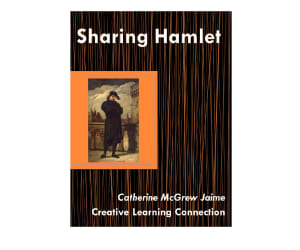
Shakespeare Unit Study: Hamlet - eBook
ELA, Literature, Grade 9, 10, 11, 12, Lesson Plans, Teacher Tools
Within this 17-page download, students will take a closer look at Shakespeare and his written work Hamlet. Students will examine a timeline, characters, notes and quotes from the play. At the end of this unit of study, students will be able to complete worksheets and a word search . Answer key for word search is included.
Author Creative Learning Connection
Tags Hamlet, Hamlet Ebook, Shakespeare Hamlet, Unit Study, Literature

Lamb to the Slaughter Case Study
ELA, Literature, Grade 8, 9, 10, 11, Teacher Tools, Lesson Plans
Bring Roald Dahl's classic, "Lamb to the Slaughter" to life for students with a case study and investigation of this cold case! Students become the detectives while close reading the text and completing literary analysis! This is a 5 day lesson that focuses on literary analysis and character development. This lesson includes: - Detailed lesson plans - Final presentation assessment - Rubric - 8 page student work packet (digital and printable) ---Vocabulary activity ---Analysis questions ---Character sketches ---Witness questions ---Crime scene summary Final assessment concept: - Students will choose 1 out of 3 questions offered and conduct a literary analysis. They will then create a digital presentation to share their findings. - Rubric included.
Author Fairways and Chalkboards
Tags Roald Dahl, Roald Dahl Activity, Short Story Case Study, Short Story Mini Unit, Lamb To The Slaughter, Lamb To The Slaughter Comprehension Questions

The Big Game Short Story | Beginner Lesson Plan
ELA, Reading, Grade 2, 3, 4, Lesson Plans, Teacher Tools
Discover "The Big Game ," a captivating short story beginner lesson plan designed to enhance your students' reading comprehension and grammar skills. This carefully crafted worksheet set takes your learners on a gripping adventure through the 2-page passage while reinforcing vital language concepts. Follow Felix's journey as he plays a game of football with his family looking on. Can he score the winning goal for his team? Our versatile product offers dual-access options - available via Google Apps or in downloadable ready-to-print PDFs, with three files included. To save time and simplify lesson delivery, an Answer Key is provided for quick reference! Featuring five pages of diverse activities, this resource delves into various dimensions of learning. It encourages readers to deeply analyze the text by engaging them in thought-provoking exercises tailored to different learning styles. Conversation questions are included to enable a class discussion about the story and your students' own sporting success. As you incorporate "The Big Game " beginner lesson plan into your teaching toolkit, see how it transforms young minds into critical thinkers! Explore this valuable digital resource and enhance both student engagement and educator satisfaction in your classroom today! Follow TEAM TEFL for more great resources like this one.
Author TEAM TEFL
Tags Short Story, Reading Passage, ESL Lesson, Vocabulary Practice, Research

Word Families: Short Vowels - Digital Lesson Plan Gr. PK-2 | PC Software
ELA, Language Development, Vocabulary, Kindergarten, Preschool, Grade 1, 2, Teacher Tools, Lesson Plans
Word Families: Short Vowels - Digital Lesson Plan Gr. PK-2 | PC Software Boosting students' command over language arts comes to life with Word Families: Short Vowels developed for Preschool, Kindergarten, Grade 1 and Grade 2. This distinct digital lesson plan is centered around harnessing vocabulary skills, escalating sight word familiarity and amplifying comprehension levels. About the Product This unique educational resource offers 80 interactive screen-pages aimed at creating an optimal learning setting as well as a fruitful teaching method. The instructional material encourages students to pronounce short vowel phonograms or word families correctly through the use of eye-catching real-life images for visual aid. Ease of Learning with Word Families: Short Vowels The design of the product helps learners form clear onset and rhyme connections found in word families. This tool aids learners in understanding that words aren't just individual letters and sounds but identifiable chunks forming comprehensible language units. The screen pages consist of working-with-words interactive activities keeping learners engaged effectively. In order to encourage revision habits and assess learning uptake, test prep sections along with memory match games are included within this product. Elevation in Learning through Ancillary Activities Further enhancing student grasp over topics taught are crosswords and word searches integrated into this software ensuring teachings transgress beyond their usual school syllabus confines. Each lesson wraps up via a comprehension quiz designed specifically to measure students’ understanding after each teaching session . Note: The content strictly adheres to State Standards guidelines ensuring uncompromised quality education corresponding to standards across different states. All lesson plans abide by Bloom's Taxonomy that is a globally accepted method for determining various levels of cognitive domains in learning. The package comes bundled in a zip file compatible with PC software, making it user-friendly and easy to use for educational purposes. Its comprehensive model incorporating technology into secular learning can be employed in whole groups or small group settings, and even as individual assignments effectively implemented for homework activities. This then becomes an invaluable asset particularly for language arts educators dealing with vocabulary lessons within the target grade levels.
Author Classroom Complete Press
Tags Digital Lesson Plan, Memory Match Game, Short Vowels, Word Families, Reading Lesson

Report Writing
ELA, Writing, Research, Grade 5, 6, 7, 8, Teacher Tools, Lesson Plans
Report Writing by Milliken: An Exceptional Educational Resource Target Audience: Report Writing by Milliken is a unique educational resource designed specifically for grade 5, 6, 7 and 8 educators. It aims to enhance the report writing skills of students. Format and Availability: This lesson plan is available as a PDF file that provides a comprehensive guide to crafting well-researched and composed reports. Diverse Applications Takes into account language arts principles across various learning environments from public schools to homeschooling settings. The structure allows for diverse teaching strategies including whole group instruction, small group exercises or assignment as homework. Goes Beyond Basic Instructions In addition to detailing the steps for constructing compelling reports, this resource also includes over 180 stimulating ideas centered around social studies and health topics. These are not random selections but curated subjects intended to spark curiosity in learners while helping them discover personal areas of interest. Nurturing Independent Thinkers Educators striving to mold independent thinkers capable of performing thorough research can find immense support from this resource. The materials are designed with clarity and take into consideration the diverse intellectual capabilities of learners within these grades. This ensures each student can easily grasp the content regardless of their pace or level. User-friendly Design The report writing resource comes in an uncomplicated design that makes navigation seamless - one single PDF file arranged systematically for easy reference during lessons or planning stages – A fantastic tool for busy educators aiming at deriving maximum benefits from every single lesson period.
Author Classroom Complete Press
Tags PDF
Vocabulary Packet -Journey's 5th grade - Unit 4 Lesson 19
ELA, Language Development, Vocabulary, Reading, Reading Comprehension, Writing, Grade 5, Lesson Plans, Teacher Tools
This vocabulary resource was created to be used with 5th grade Journey's reading program. Vocabulary is listed as a glossary, included with pronunciation. Plenty of activities ready to go for students to master the vocabulary included!
Author Jessica Richmond
Tags Vocabulary 5th Grade, Vocabulary Practice, Unit 4, Lesson 19, Journey's 5th Grade, Darnell Rock Reporting, Glossary

How to Write a Book Report Gr. 5-8
ELA, Writing, Grade 5, 6, 7, 8, Teacher Tools, Lesson Plans
How to Write a Book Report Gr. 5-8 Indispensable teaching resource focusing on blending comprehension and creativity for writing book reports. This guide provides simple, concise instructions, making the daunting task of preparing book reports educational and enjoyable for students in Grades 5 through 8. Understanding Book Reports The journey begins by answering - what is a book report?. Students are taught about the format and structure of book reports across different genres, thus building their literary analysis skills. The guide also helps in choosing suitable books for fiction-based reports and understand the distinct structure of nonfiction reporting. Prewriting Planning Tools This product offers graphic organizers to streamline thoughts and gather information efficiently, encouraging brainstorming in both group settings or individual assignments. Public Speaking Skills Development This resource coaches students on delivering compelling oral presentations with aid from meticulously curated checklists ensuring clarity, coherence, effective use of language while minimizing potential errors. Fostering Proofreading Skills The process of writing doesn't end at penning down thoughts; refinement comes with proofreading—a step many learners find challenging at times. This resource proposes practice exercises where learners can refine their proofreading skills using existing examples fostering self-sufficient learners. A Comprehensive Learning Approach: A set of reproducible writing tasks aligned with State Standards covering various themes promote mastery across subjects following Bloom's Taxonomy model—learning levels ranging from basic facts recall to higher-level thinking such as synthesis or evaluation increasing engagement over time. The package features engaging post-lesson activities like word searches & crosswords along-with comprehension quizzes inclusive of an answer key significantly enhancing learning retention hence improving performance outcomes over time. This well-rounded teaching resource is available in a convenient PDF format for easy educators access. Conclusion How to Write a Book Report Gr. 5-8 serves as an invaluable tool in the Language Arts classroom, setting up students for success in their literary endeavours particularly under the writing sub-category.
Author Classroom Complete Press
Tags PDF

Learn to Read and Spell Sight Words | Lesson 7 | Micro-Learning Deck
ELA, Language Development, Spelling, Preschool, Grade 1, 2, Teacher Tools, Lesson Plans
This download is Lesson 7 for Learn to Read and Spell Sight Words. This is a digital lesson with 30 slides to help teach sight words! The sight words for this lesson are: -each -find -first -for -from There are 6 different activities to teach the sight words for this lesson. Activities: -Write words -Letter tiles -Type words -Match the words -Close reading -Sentences
Author Teach Me This
Tags Sight Words, Reading Lesson, Spelling Lesson, Learning Deck, Digital Reading
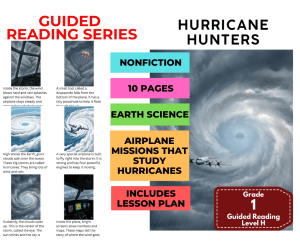
Guided Reading Level H - Hurricane Hunters (with Lesson Plan)
ELA, Resources for Teachers, Reading Comprehension, Reading, Science, Engineering, Technology, Earth and Environmental Sciences, Geography, Social Studies, Grade 1, 2, 3, Worksheets & Printables, Worksheets, Teacher Tools, Centers, Activities, Literacy Readers, Quizzes, Quizzes and Tests, Assessments, Lesson Plans
This Guided Reading Book - Hurricane Hunters (Level H) with lesson plan includes: Guided Reading Color Label (front cover x1) This is a quick way to match the book’s demands to what students can generally handle.. The overall goal is to use the level/color to pick books for several smaller groups. To qualify for a certain level, a student is expected to read a book from that level with about 90–94% accuracy. If a student is consistently accurate and understands, move up a level. If the student is struggling at that level, drop down and add more support. Each student will improve at completely different rates, but it is generally one of the best ways to check progress across the class. DOWNLOAD THE CATALOG TO VIEW ALL GUIDED READING BOOKS AVAILABLE (SORTED LEVELS A-Z) Pre-Reading Question (x1) Teacher asks the prompt aloud, can be while showing the cover or first page. Students share what they already know, or make educated guesses from the cover. Prompt them to use the target vocabulary. Write some of their responses on the board to look back at during the reading. Vocabulary Words (x5) Introduce the five words, best doing it one at a time. Start by saying it, while students repeat and then see if anyone knows what it means before reading further. Read through the meaning and try to briefly connect each word to a picture or gesture so it’s meaningful. Ask students to flip through the book pages and point to where they see each of the vocabulary words. While reading the book pause upon coming across one of the vocab words or read the sentence twice to make sure students understand the word has appeared. Optional: Ask students to raise hands whenever they see/hear one of the new words. Guided Reading Pages (x10) Check the book snapshot (below) for: primary topic - do you need to prep extra reading or intro materials on this? what is taught best - decide on 1-2 bullets to focus on, use the prompt or words provided here for best results. learning goals - what you are checking for students to be able to do after the session, elicit answers using prompts or words provided. key vocabulary (see section above). questions overview - so you know what is coming up and if you need to prep extra materials to assist understanding. Run the lesson You may have already looked at a few of the pages together, but you can show them some of the pictures again first to set meaning. Depending on how much time you have and how familiar your students are with guided reading class, you may want to read the book aloud first with the group first. Students whisper or partner read, while you listen in. If time, do it as a group, one student reading a page each. Use the guided page’s prompts to coach: “Check the picture / does it make sense?” “Point under the words / try the first sound” “Reread the sentence smoothly”. Try to focus more on one student per session (rotating every time), so you can work out if they are ready to move up or need to move down a level. Comprehension Questions (back cover x3) This is your way to check that students didn’t just say the words, but actually understood the text. First, let students answer by pointing to the page/picture and saying a short sentence. After any answer, follow with: “Show me where you found that in the text.” In bigger groups, have partners answer first (10–20 seconds), then call on 2–3 students to share. Differentiation tips: Emerging speakers/struggling readers: oral + pointing On-level: oral in a full sentence Higher: one written sentence or draw + label Book Snapshot Title: Hurricane Hunters Genre: Nonfiction (informational, sequence of events) Subject: Earth Science + Reading (Informational Text) Primary Topic: Airplane missions that study hurricanes Estimated Guided Reading Level (A–Z): H What This Book Teaches Best Defines hurricanes as big storms with lots of wind and rain. Describes how a special airplane flies into a hurricane to learn about the weather. Explains key parts of the storm, including the center called the “eye,” and what it is like. Introduces tools and information-gathering (a “dropsonde,” maps, numbers) used to understand wind and rain. Connects the airplane’s weather information to helping people stay safe on the ground. Learning Goals Students will describe what hurricanes are like using details from the text. Students will explain what the special airplane does to learn about a hurricane’s weather. Students will identify what happens when the plane reaches the center of the storm (the eye). Students will describe how a dropsonde and parachute are used during the flight. Students will explain how the information from the airplane helps people on the ground. Key Vocabulary From the Text hurricanes — very big storms with strong wind and rain. runway — long strip where a plane speeds to take off. dropsonde — small tool that falls from a plane. parachute — cloth that opens to slow something as it falls. eye — the center of the storm. Discussion Prompts Pre-reading question: What do you think a “hurricane hunter” airplane might do during a storm? Comprehension questions: What does the book say hurricanes bring with them? Comprehension questions: What is the eye of the storm like in the text? Comprehension questions: How does the airplane’s information help people on the ground? Printing Tips 1. Best Printing Method (Recommended) “Booklet” Printing (Best if Available) If your printer or PDF viewer supports Booklet Printing , use this. Settings to use: Print mode: Booklet Paper size: Letter or A4 (either works) Orientation: Landscape Print on both sides: Yes Flip on: Short edge Scaling: Fit to printable area Booklet subset: First test: Front sides only Then: Back sides only This will automatically: Pair pages correctly Put the cover on the outside Align everything for folding After printing, fold in half and staple along the spine . 2. If “Booklet” Printing Is NOT Available You can still print this correctly with manual duplex printing . Step-by-step: Open the PDF. Choose Print . Set: Orientation: Landscape Pages per sheet: 1 Print on both sides: Yes Flip on: Short edge Print all pages . Because each PDF page already contains two facing book pages, the result will still fold cleanly into a book. Thousands of Cored Education products are included with your TeachSimple membership. Download links and encyclopedia index available here.
Author Cored Education
Rating
Tags Reading Comprehension, Reading Passages, Reading, Guided Reading, Guided Reading Lesson Plan, Guided Reading Activity, Pre-reading, Science Lesson Plans, Technology, Geography
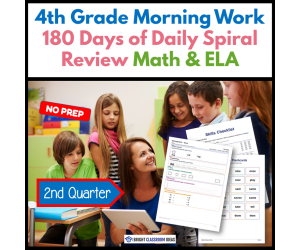
4th Grade Morning Work | 180 Days Review | Math & ELA | 2nd Quarter
ELA, Math, Grade 4, Centers, Activities, Lesson Plans, Teacher Tools, Worksheets & Printables
Grade 4 Morning Work | 2nd Quarter Student Pages + Full-Year Teacher Resources Keep your fourth grade mornings consistent, purposeful, and easy to manage with 45 days of Grade 4 morning work for Quarter 2 . This resource includes ALL teacher resources for the complete 180-day program , while the student practice pages in this pack are specifically for 2nd Quarter: Days 46–90 . What’s Included ⭐ FULL-YEAR TEACHER RESOURCES You receive the complete teacher toolkit for planning, organizing, differentiating, and assessing the entire 180-day Grade 4 morning work program : Teacher Guide Full 36-week Pacing Guide Skills Checklist for tracking student progress Fully Editable Morning Work Schedule Weekly planning support 36-week Year-at-a-Glance Planner Differentiation strategies Complete Answer Key for Days 1–180 Printing and classroom organization guidance 📚 STUDENT PAGES INCLUDED: 2ND QUARTER The student portion of this product includes Days 46–90 , providing 45 days of ready-to-use Grade 4 morning work . Each day includes a two-page set with 24 consistent sections . Page A — Language Arts Grammar Vocabulary Reading comprehension and reading skills Writing Vocabulary Word of the Day Writing Prompt Reading Challenge Morning SEL Check-In Joke of the Day Brain Teaser Growth Mindset Would You Rather Page B — Math & Think Number Sense Mental Math & Fact Fluency Multi-Digit Multiplication Long Division Fractions Decimals Measurement Geometry Data and Graphs Word Problems Math Challenges Daily Enrichment Fun Facts Important: The student practice pages included in this product are Days 46–90 only . The teacher resources and complete Answer Key cover all 180 days . How It Works in the Classroom Use this Grade 4 morning work as a daily bell ringer, morning routine, independent practice, homework, or spiral review. Each daily two-page set is designed to take approximately 10–15 minutes . Students work through Language Arts and Math & Think while you circulate, confer, pull small groups, or prepare for the day. The predictable format makes it easy for students to know what to expect each morning. Use the pages for: Morning work Bell ringers Homework Early finishers Sub plans Small-group warm-ups Math intervention Spiral review Test preparation Independent practice Print the pages two-sided, flipping on the long edge , for one sheet per student per day. You can print a week at a time or staple the Quarter 2 pages into a student packet. Standards & Learning Goals This Grade 4 morning work resource provides daily spiral review across important Grade 4 ELA and math skills. The full program covers grammar, vocabulary, reading, writing, number sense, operations, fractions, decimals, measurement, geometry, data, and problem solving. 📖 ELA Skills Students practice: Grammar and language conventions Vocabulary Prefixes, suffixes, and word meanings Reading comprehension Supporting details Cause and effect Writing and constructed responses Revising and editing Reading challenges Vocabulary development Quarter 2 specifically shifts reading practice toward supporting details and cause-and-effect relationships. Full reading passages appear twice each week. Other days target specific reading skills such as main idea, supporting details, cause and effect, inference, and text features. 🔢 Math Skills Students practice: Number sense through 999,999 Mental math Multi-digit multiplication Division with remainders Fractions Decimals Measurement Geometry Data and graphs Word problems Multi-step mathematical reasoning Quarter 2 increases the difficulty from Quarter 1, moving into larger multiplication factors and division with remainders while expanding number sense to 999,999 . Students continue applying their skills through real-world word problems, visual models, data displays, geometry, measurement, and daily math challenges. Why Teachers Love It ✨ You get ALL the teacher resources for the entire year. The Teacher Guide, pacing guide, Skills Checklist, editable schedule, differentiation support, and complete 180-day Answer Key are included. ✨ Students get exactly what they need for Quarter 2. Days 46–90 provide a complete 45-day student set for the second quarter. ✨ Save valuable planning time. The daily routine is already organized across ELA, math, enrichment, and engaging thinking activities. ✨ Build student independence. The same 24 sections appear every day, helping students quickly learn the routine and work independently. ✨ True spiral review. Skills return throughout the 180-day program while the difficulty increases. Every passage, grammar item, vocabulary item, word problem, joke, puzzle, and prompt is different across the 180 days. ✨ A built-in difficulty ramp. Quarter 2 moves students from smaller multiplication and division work into larger factors and division with remainders . Reading also progresses toward supporting details and cause and effect . ✨ Differentiate with ease. The Teacher Guide suggests highlighting fewer sections for students who need a shorter task, reading passages aloud, using multiplication charts, and adding extension challenges for advanced learners. ✨ Support small groups. Page B can double as a warm-up for math intervention groups, giving you meaningful practice without creating another activity. ✨ Track student growth. Use the Skills Checklist to mark skills as Introduced, Practiced, or Mastered and identify areas that need additional instruction. ✨ Keep mornings engaging. Jokes, brain teasers, growth mindset prompts, SEL check-ins, reading challenges, daily enrichment, and Would You Rather questions add variety to the academic routine. ✨ Have answers for the whole year. The Answer Key provides answers for the complete Days 1–180 program, so your teacher materials remain useful across every quarter. Looking for Grade 4 morning work for Quarter 2 that saves planning time and keeps students practicing essential skills every day? This pack includes 45 days of student practice (Days 46–90) PLUS ALL teacher resources for the full 180-day program . Give your fourth graders a predictable, engaging morning routine that strengthens ELA and math skills while building independence throughout the school year! Print it, prep it, and make your fourth grade mornings easier! 💛
Author Bright Classroom Ideas Marketplace
Rating
Tags Math, Ela, Morning Work, Back To School
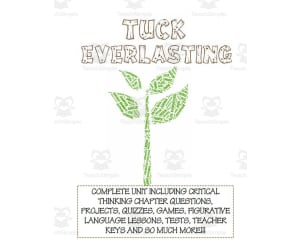
Tuck Everlasting No Prep, Figurative Language Unit
ELA, Literature, Grade 5, 6, 7, 8, Lesson Plans, Teacher Tools
NO PREP!!!! Print and teach!!! This unit includes everything you need to read "Tuck Everlasting" with your middle school students. Aligned with the common core, this unit digs deeper into the figurative meanings behind this enchanting tale. My students love this book, and this unit is FUN and we always laugh (a lot!) during these lessons!
Author Golden Ticket Teacher
Tags Tuck Everlasting, Figurative Language, No Prep, Novel Study, Read
I WONDER - Are There Any English Words That Come From Hindi
Vocabulary, Language Development, ELA, Grade 3, 4, 5, 6, 7, 8, 9, Lesson Plans, Teacher Tools
Video Introduction An amazing video designed for the students to learn more about languages. I WONDER - Are There Any English Words That Come From Hindi | Animated Video Lesson Do you enjoy learning English? Which topic do you like the most Grammar, writing, reading, spelling, comprehension, vocabulary or phonics? Have you ever tried to learn any other language? If yes, tell us more about it? How many languages are spoken in the world? What do you think the most interesting one? Can you say Hello in Spanish, French or even Japanese? You can give it a try! Can you name the countries that speaks Portuguese? How many countries speaks Dutch? What is the less spoken language in the whole world? Would you like to learn a new language someday? If yes, which language will you choose? I WONDER - Are There Any English Words That Come From Hindi | Animated Video Lesson The video is perfect for encouraging the researching skills for the students, while learning more about world languages. I WONDER - Are There Any English Words That Come From Hindi | Animated Video Lesson This friendly designed video is suitable for students at school, homeschooling, and as a group activity. Format Available in MP4 format.
Author Educational Voice
Rating
Tags Are There Any English Words That Come From Hindi, Are There Any English Words That Come From Hindi Video, English Words, English Words Video, English Words Video For Kids, Hindi, Hindi Facts

SH: 2 Decodable Reading Books + 2 Video Lessons + 32 Worksheets SOR
Special Resources, ELA, Special Education Needs (SEN), Language Development, Pre-Reading, Phonics, Spelling, Kindergarten, Preschool, Homeschool Curriculum, Grade 1, 2, Literacy Readers, Teacher Tools, Lesson Plans, Presentations
2 SH Decodable Readers, 2 Video Lessons & 32 Supporting Worksheets to Develop Reading Fluency! Complete Teaching Pack | Part of Advanced Phonics Reading Programme Master SH with 2 decodable readers, 2 optional video lessons, and 32 differentiated practice worksheets! This extensive teaching pack features farm stories that children will love, along with targeted phonics activities that reinforce learning. This is part of the Reading Made Simple programme of systematic phonics instruction that can help your struggling readers succeed. Designed and tested on real children of all abilities, from none to severe, every step of the way. These books presume that a child can already decode words with a CK ending, OO (moon/look) and EE. What's Included 2 systematic/levelled decodable readers focusing on SH words 2 carefully taught optional video lessons - no distracting music - these are serious lessons and can be used by home educators and teachers alike - to give extra support to struggling readers Word lists for pre-reading practice at the beginning of each book 32 Differentiated worksheets for phonics reinforcement: Word sorting activities Sound isolation exercises Reading comprehension exercises Sentence writing practice Phonics pattern recognition tasks 100% decodable text with carefully controlled vocabulary Science of reading-aligned instruction Beloved characters: Tom, Sam, Pam, Gran, and the farm animals Beautiful watercolour illustrations Print-and-go format for easy classroom use Why Teachers Love This Complete Pack Real stories PLUS targeted practice! These aren't just decodable readers—you get everything you need to teach SH systematically. The differentiated worksheets provide multiple opportunities for students to apply their learning, while the engaging farm stories provide ample practice of decoding, word recognition and reading comprehension. They help you to target a child's precise needs to ensure progress. The optional video lessons give even nervous parents the help they need to teach! Designed With Carefully Controlled vocabulary: The SH sound is introduced systematically across the stories, with CK words revisited throughout. Worksheets reinforce the same vocabulary, providing an opportunity for mastery. Perfect For Explicit phonics instruction following the science of reading principles All students who are ready to learn SH and have already learned CK, OO, EE Children who need a slower pace, or not Small group intervention or whole class instruction Literacy centres and independent practice Homework assignments that reinforce classroom learning Structured literacy programmes Ages 5-7 or Grade 1-2 Skills Addressed Decoding SH in isolation and context Reading fluency with controlled decodable text Phonics, pattern recognition and application Phonemic awareness through targeted activities Reading comprehension with engaging stories Writing practice using the taught phonics pattern Sight word introduction and practice How to Use This Complete Pack Introduce the sound SH comprehensively Use worksheets for guided practice and skill reinforcement Practice word lists before reading stories Have students read the decodable stories, pointing to each word Return to the worksheets for independent practice or assessment Reread the stories to build fluency This complete pack provides everything you need to teach OO effectively—no additional materials required!
Author Lilibette's Resources
Rating
Tags Learn To Read Programme, Fluency, Struggling Readers, Dyslexia, Special Needs, Phonics, Decodable Reading Books, Reading Fluency, Homeschool Curriculum, Consonant Digraphs
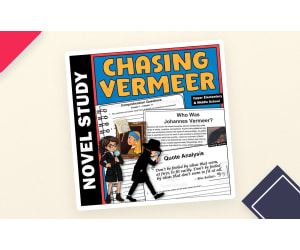
Chasing Vermeer Novel Study – Mystery Unit
ELA, Reading, Reading Comprehension, Literature, Vocabulary, Grade 3, 4, 5, 6, Teacher Tools, Lesson Plans, Worksheets & Printables, Novel Studies, Graphic Organizers, Assessments, Activities, Worksheets
This novel study is a complete supplemental resource for Chasing Vermeer by Blue Balliet. The included activities focus on the genre of mystery, reader response questions, comprehension questions, vocabulary practice, character analysis, the elements of the plot, and more! Graphic organizers are included, along with a clue tracker chart and mystery genre posters. ⭐️This Resource Includes:⭐️ Who Was Johannes Vermeer?: A short biography about Vermeer that includes reader response questions. Reader Response Journal: This reader response journal is divided into 5 sections by chapters. Each section includes 1-2 pages of vocabulary practice and 1-2 pages of short answer comprehension questions, and a 4-page final assessment that is mixed with multiple choice questions and short answer questions. Not only can this literature response packet be used for whole group discussion/instruction, but it works great in literature circles, to hold group members accountable for reading and discussing the text. It can also be used as a homework assignment, small group instruction, book clubs, etc. Mystery Genre Resources - This section includes 2 mystery genre posters (2 color options) and a Clue Tracker to record clues or evidence regarding suspicious people or events from the novel. Quote Analysis with response questions: a pre-reading activity Elements of Plot: Graphic Organizer Character Analysis: This graphic organizer can be used for any character(s) at any point during the reading of the novel that you see fit. Task Cards: 2 sets of task cards are included. The first set is made up of open-ended questions & digging deeper prompts. The second set are the same questions used in the reader response journals but in a different format. This offers an alternative to the reader response journal activity.
Author Creatively Gifted
Rating
Tags Novel Study, Vocabulary, Comprehension, Partner Discussion, Graphic Organizers, Book Companion, Chasing Vermeer, Mystery, Anchor Chart, Reader Response, Chasing Vermeer Chapter Questions
I WONDER - What Is A Quatrain Poem | Animated Video Lesson
Poetry, Literature, ELA, Grade 6, 7, 8, 9, 10, 11, 12, Lesson Plans, Teacher Tools
Video Introduction An amazing video designed for the students to learn more about famous poetry in different countries. I WONDER - What Is A Quatrain Poem | Animated Video Lesson Do you like reading poetry? If yes, what is your favorite poem? Do you have a favorite poet? If yes, tell us more about him/her. What are the types of poetry? Have you ever tried to write a poem before? If yes, tell us more about it. What is acrostic poem? Dow you know who is the first writer to write it? Can you write one? What is limerick? Dow you know who is the first writer to write it? Can you write one? What is sonnet? Dow you know who is the first writer to write it? Can you write one? What is haiku? Dow you know who is the first writer to write it? Can you write one? I WONDER - What Is A Quatrain Poem | Animated Video Lesson The video is perfect for encouraging the researching skills for the students, while learning more about this fantastic poetry. I WONDER - What Is A Quatrain Poem | Animated Video Lesson This friendly designed video is suitable for students at school, homeschooling, and as a group activity. Format Available in MP4 format.
Author Educational Voice
Rating
Tags What Is A Quatrain Poem, What Is A Quatrain Poem Video, Quatrain Poem, Quatrain Poem Facts, Quatrain Poem Video, Quatrain Poem Facts For Kids, Quatrain Poem Video For Kids, Poetry

The Robbery Short Story Intermediate Lesson Plan
ELA, Reading, Grade 5, 6, 7, 8, 9, 10, 11, 12, Teacher Tools, Lesson Plans
This is an intermediate lesson plan worksheet set for The Robbery short story. Discover "The Robbery," a captivating short story beginner lesson plan designed to enhance your students' reading comprehension and grammar skills. This carefully crafted worksheet set takes your learners on a gripping adventure through the 3-page passage while reinforcing vital language concepts. Our versatile product offers dual-access options - available via Google Apps or in downloadable ready-to-print PDFs, with three files included. To save time and simplify lesson delivery, an Answer Key is provided for quick reference! Featuring five pages of diverse activities, this resource delves into various dimensions of learning. It encourages readers to deeply analyze the text by engaging them in thought-provoking exercises tailored to different learning styles. Conversation questions are included to enable a class discussion about the story and your students' own love stories. 3 PDFs with 4 ready to print pages and one digital access file
Author TEAM TEFL
Tags Short Story, Reading Passage, Vocabulary Words, True Or False, Language Arts

Reading Made Simple Reading and Spelling Programme Level 1
Special Resources, ELA, Language Development, Phonics, Reading, Vocabulary, Spelling, Kindergarten, Preschool, Grade 1, 2, Teacher Tools, Outlines, Lesson Plans
Reading Made Simple is a programme of phonic instruction that aims to make reading easier for everyone. This programme will give you all the tools you need to help a child gain confidence as a reader and/or writer, using phonics instruction. It is popular amongst home-schooling families, but can equally be used by private tutors and is simple enough to be used supplementary to school work by parents. About Reading Made Simple The programme is Very simple to teach: One basic lesson format and no complicated phonic language to learn Flexible - no one size fits all. You can choose the path that is right for your child. Systematic: Each lesson builds on the one before, creating a seamless learning experience. Many pupils do not even realise how much they have learnt, as it seems so easy! Who is this reading and writing programme for? Children who are just starting to read and write Older children who can already read but need help with spelling and writing Children with special needs who have failed with other phonic programmes Anyone of any age and ability who needs to learn to read and/or write! What is included in the pack? The complete teaching programme for Level 1, with full instructions for teaching the lessons The Word Lists needed for practice and review Flashcards for the phonic sounds and sight words Which phonic sounds are taught? The lessons cover 41 of the most common phonic patterns: ck, oo, ee, sh, ch, nd/nt ending, nk endings, th, ng, ing, ar, or, a-e, i-e, o-e, u-e, ai, ea, oa, high, it, ay, ou, aw, oi, ur, al, er, y ending both ee and eye, ea saying/e/, ow as in cow, a saying /ar/, long vowels with no 'e', ow saying oe, ew, oy and rules concerning 'wa' words. About the lessons: Pupils study a set of around ten words per week, all with a common sound. There is an extension list of words for reading to help reading move faster than spelling. This list is optional as it contains words from Level 2, which can also be studied for reading and/ or spelling as needed by the child. The lessons are simple, following a set format and taking one week each to give sufficient practice. Weekly dictations help the child to apply new knowledge while revising previously taught sounds. Word lists Accompanying word lists are provided. These can be used in multiple ways: Pinned up to allow daily revision of the current sound being taught Put in a folder for review work To have on hand to remind a pupil of a sound family and the words within it Supporting resources: Reading books The first set of reading books for the younger child can be found here: https://teachsimple.com/dashboard/admin/my-products/644f7f2e7593a1001985bc3f The rest can be downloaded individually for FREE from the website. Worksheets Worksheets for older pupils 7+ can be found in the Level 1 spelling pack here: https://teachsimple.com/product/phonic-spelling-programme-level-1-ages-7 Worksheets for younger children/special needs can be found in the reading book packs: Reading Books can be found separately: Set 1: https://teachsimple.com/product/graded-decodable-phonic-reading-books-workbooks-for-common-digraphs Set 2: https://teachsimple.com/product/decodable-phonic-reading-books-long-vowelsilent-e-cvce Set 3: https://teachsimple.com/product/decodable-phonic-reading-books-ai-ea-oa-igh-ir-ay-ou
Author Lilibette's Resources
Rating
Tags Reading Intervention, Remedial Spelling, Phonics, Speling, Writing, Spelling Curriculum, Phonic Reading Program, Reading Curriculum, Year-long Spelling, Easy Spelling

Modal Verbs: May, Might, Will & Probably ESL Intermediate Lesson Plan
ELA, Grammar, Grade 5, 6, 7, 8, 9, 10, 11, 12, Teacher Tools, Lesson Plans
Modal Verbs: May, Might, Will & Probably | Intermediate Lesson Plan This intermediate grammar lesson plan helps students learn about modal verbs that express possibility and probability. Students will study the proper usage of the modal verbs may, might, will, and probably. The lesson explains the nuanced differences between these verbs through clear examples. Next, students will apply what they have learned by completing targeted exercises that assess their comprehension and grammar skills. This versatile resource can be used in various settings like whole class instruction, small group work, or independent practice. Answer keys are provided making it easy to implement during in-person or distance learning. This practical lesson plan equips and engages students to better understand and utilize these key modal verbs. This lesson plan includes flash cards , warmer, conversation questions, main use, construction, rules, examples, open questions, closed questions, activity, writing drill and extra study. The TEFL resource is available in PDF with 25 ready to print pages and one digital access file. A part of it is on Google Apps. The answer key is also included for reference.
Author TEAM TEFL
Tags Verbs Lesson, Verbs Worksheet, Language Arts, Modal Verbs, ESL Lesson

Moss Bag Stories Gr. K-2
ELA, Reading, Grade 1, Teacher Tools, Lesson Plans
Moss Bag Stories Gr. K-2: An Educational Resource Moss Bag Stories Gr. K-2 is a vital educational resource aimed at Grade 1 teachers, especially in the field of Language Arts and Reading. The material provides students with an overview of aboriginal cultures in Saskatchewan, focusing on the traditional practice of using Moss Bags. About Moss Bags Moss bags are essentially environmentally friendly diapers made out of moss and cattails used traditionally by Native mothers to care for their children. Incorporation into Curriculum and Family Studies This content introduces students to how native mothers gather moss and cattails every fall. The stories unravel their proactive efforts toward ensuring a supply that lasts throughout winter months. Beyond Reading Materials: Interactive Content & Math Integration The lessons aren't just reading materials but include practical activities like word search games tied to subject matter. The integration contains math equations which enhance comprehensive learning across various subjects while maintaining focus on the central topic. Versatile Implementation Approach Catered for multiple settings ranging from whole group discussions promoting dynamic peer-to-peer learning, smaller focused groups fostering tailored instruction based on individual student needs or as homework assignments reinforcing teachings outside school setup. Accessibility through PDF format This resource comes in PDF format which is universally compatible offering ease-of-use regardless of hardware or software environment thereby making it readily available anytime for immediate incorporation into teaching toolset. Note: Using Moss Bag Stories Gr.K-2 educators can expect an enriching combination of cultural heritage awareness along with language arts literacy skill development essentials grounded within real-world historical contexts for young learners.
Author Classroom Complete Press
Tags PDF

Guided Reading Lesson Plan & Activities for Grade 2
Reading, ELA, Grade 2, Activities, Lesson Plans, Teacher Tools
Second Grade Reading Second graders keep enhancing their literacy abilities as they acquire more intricate vocabulary and engage with lengthier, more challenging texts across various genres, such as fiction, non-fiction, and poetry. Learners enhance their reading comprehension abilities while discussing their readings and cultivate more sophisticated concepts related to those subjects. As in prior years, second graders consistently engage in reading as they utilize texts for other subjects during the day. To develop reading abilities, a second grader: Reads more intricate words, like two-syllable terms. Recognizes words that have common prefixes and suffixes, such as: pre-, re-, un-, -able, -ad, and -er. Reads grade-level, irregularly spelled words (ask your child's teacher for an exact list of these words). Peruses a range of writings encompassing fiction, nonfiction, fables, and poetry. This ebooks features a guided reading lesson plan and activities, designed especially for Grade 2, that can last up to 40 minutes.
Author Bright Classroom Ideas Marketplace
Tags Guided, Reading, Grade 2, Language, Lesson, Plan, Activities
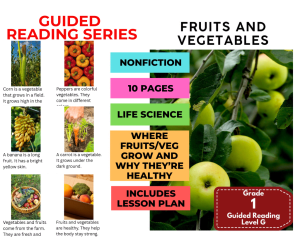
Fruits and Vegetables: Guided Reading Level G with Lesson Plan
ELA, Resources for Teachers, Reading Comprehension, Reading, Science, Language Development, Life Sciences, Health, P.E. & Health, Vocabulary, Kindergarten, Grade 1, 2, Worksheets & Printables, Worksheets, Teacher Tools, Centers, Activities, Literacy Readers, Quizzes, Quizzes and Tests, Assessments, Lesson Plans
This Fruits and Vegetables (level g) guided reading book with lesson plan includes: Guided Reading Color Label (front cover x1) This is a quick way to match the book’s demands to what students can generally handle.. The overall goal is to use the level/color to pick books for several smaller groups. To qualify for a certain level, a student is expected to read a book from that level with about 90–94% accuracy. If a student is consistently accurate and understands, move up a level. If the student is struggling at that level, drop down and add more support. Each student will improve at completely different rates, but it is generally one of the best ways to check progress across the class. DOWNLOAD THE CATALOG TO VIEW ALL GUIDED READING BOOKS AVAILABLE (SORTED LEVELS A-Z) Pre-Reading Question (x1) Teacher asks the prompt aloud, can be while showing the cover or first page. Students share what they already know, or make educated guesses from the cover. Prompt them to use the target vocabulary. Write some of their responses on the board to look back at during the reading. Vocabulary Words (x5) Introduce the five words, best doing it one at a time. Start by saying it, while students repeat and then see if anyone knows what it means before reading further. Read through the meaning and try to briefly connect each word to a picture or gesture so it’s meaningful. Ask students to flip through the book pages and point to where they see each of the vocabulary words. While reading the book pause upon coming across one of the vocab words or read the sentence twice to make sure students understand the word has appeared. Optional: Ask students to raise hands whenever they see/hear one of the new words. Guided Reading Pages (x10) Check the book snapshot (below) for: primary topic - do you need to prep extra reading or intro materials on this? what is taught best - decide on 1-2 bullets to focus on, use the prompt or words provided here for best results. learning goals - what you are checking for students to be able to do after the session, elicit answers using prompts or words provided. key vocabulary (see section above). questions overview - so you know what is coming up and if you need to prep extra materials to assist understanding. Run the lesson You may have already looked at a few of the pages together, but you can show them some of the pictures again first to set meaning. Depending on how much time you have and how familiar your students are with guided reading class, you may want to read the book aloud first with the group first. Students whisper or partner read, while you listen in. If time, do it as a group, one student reading a page each. Use the guided page’s prompts to coach: “Check the picture / does it make sense?” “Point under the words / try the first sound” “Reread the sentence smoothly”. Try to focus more on one student per session (rotating every time), so you can work out if they are ready to move up or need to move down a level. Comprehension Questions (back cover x3) This is your way to check that students didn’t just say the words, but actually understood the text. First, let students answer by pointing to the page/picture and saying a short sentence. After any answer, follow with: “Show me where you found that in the text.” In bigger groups, have partners answer first (10–20 seconds), then call on 2–3 students to share. Differentiation tips: Emerging speakers/struggling readers: oral + pointing On-level: oral in a full sentence Higher: one written sentence or draw + label Book Snapshot Title: Fruits and Vegetables Genre: Nonfiction Subject: Life Science (Plants and food) Primary Topic: Where fruits/vegetables grow and why they’re healthy Estimated Guided Reading Level (A–Z): G What This Book Teaches Best Many foods come from plants , and plants grow in the sun. Examples of fruits and where they grow (apple on a tall tree; banana with bright yellow skin). Examples of vegetables and where they grow (carrot under the ground; corn in a field; peppers in different colors; broccoli looks like a tiny tree). A simple fruit feature: most fruits have seeds inside (watermelon has many small seeds). Health connection: fruits and vegetables are healthy and help the body stay strong. Learning Goals Students will identify what the book says many foods come from. Students will describe where at least one fruit grows (example from the text). Students will describe where at least one vegetable grows (example from the text). Students will explain what the book says about seeds in fruits. Students will explain how fruits and vegetables help the body, using the book’s words. Key Vocabulary From the Text plants — living things that grow in the sun. fruit — food that can grow on a tree. vegetable — food that can grow in the ground. seeds — small parts inside fruits. healthy — good for your body. Discussion Prompts Pre-reading question: What fruits and vegetables do you already know, and where do you think they grow? Comprehension questions: What does the book say many foods come from? Comprehension questions: Where does the book say a carrot grows? Comprehension questions: How do fruits and vegetables help the body, according to the book? Printing Tips 1. Best Printing Method (Recommended) “Booklet” Printing (Best if Available) If your printer or PDF viewer supports Booklet Printing , use this. Settings to use: Print mode: Booklet Paper size: Letter or A4 (either works) Orientation: Landscape Print on both sides: Yes Flip on: Short edge Scaling: Fit to printable area Booklet subset: First test: Front sides only Then: Back sides only This will automatically: Pair pages correctly Put the cover on the outside Align everything for folding After printing, fold in half and staple along the spine . 2. If “Booklet” Printing Is NOT Available You can still print this correctly with manual duplex printing . Step-by-step: Open the PDF. Choose Print . Set: Orientation: Landscape Pages per sheet: 1 Print on both sides: Yes Flip on: Short edge Print all pages . Because each PDF page already contains two facing book pages, the result will still fold cleanly into a book. Thousands of Cored Education products are included with your TeachSimple membership. Download links and encyclopedia index available here.
Author Cored Education
Rating
Tags Reading Comprehension, Reading Passages, Reading, Guided Reading, Guided Reading Lesson Plan, Guided Reading Activity, Pre-reading, Science Lesson Plans, Life Science, Health

How to Write Book: A Step-by-Step Guide to Writing
ELA, Writing, Creative Writing, Grade 3, 4, 5, 6, Teacher Tools, Lesson Plans
How to Write a Book: A Step-by-Step Guide to Writing This guide serves as an invaluable teaching resource for educators as they navigate the exciting world of creative writing with their students. It helps ignite a passion for writing in young learners within the grade range of 3 through 6 and covers various genres, including: Book Reports Formal Reports Essays Poetry Short Stories Friendly Letters Business Correspondences. As teachers strive to instill foundational in their students, this step-by-step guide provides an organized approach tailored specifically to both new and seasoned educators. The students will benefit from learning effective strategies on how to select topics and organize information while developing robust proofreading skills;, all fundamental elements in refining the art of written communication. 'How to Write a Book: A Step-by-Step Guide', doesn't stop there—a unique feature included is called 'Just for Fun' exercises designed not only to build confidence but also foster enjoyment in nurturing budding narrators via wordplay. This resource accommodates differing literary levels seamlessly.. Some educators may even choose this resource as homework assignments; there's plenty of room for adaptability according to your lesson plan requirements. The ultimate goal? To transform students from passive consumers of text into active creators—an aspiration achievable with this comprehensive guide handy at every step along the way. Consequently, 'How To Write a Book: A Step by Step-Guide To Writing', becomes more than just another addition into your teaching tool kit—it evolves into an essential guide lighting up your learners' path towards blossoming literacy skills.
Author Classroom Complete Press
Tags PDF

Countable and Uncountable Nouns Pre-Intermediate ESL ELA Lesson Plan
ELA, Grammar, Grade 7, 8, 9, 10, 11, 12, Teacher Tools, Lesson Plans
Countable and Uncountable Nouns | Pre-Intermediate Lesson Plan Countable and Uncountable Nouns | Pre-Intermediate Lesson Plan is a comprehensive resource designed to enhance understanding of basic grammar concepts, specifically focusing on countable and uncountable nouns. It caters to educators in public schools as well as homeschoolers by providing adaptable content based on different teaching methods. This resource makes a valuable addition to any language arts curriculum, particularly useful for learners between Grades 3 and 5. The progression from pre-intermediate concepts ensures an engaging yet challenging learning experience. The package includes: Three PDFs consisting of 11 ready-to-print pages. Digital access via Google Apps for seamless transition between online and offline modes. Suitable content for whole-group instruction, small group discovery or individual assignments. The exercises test students' grasp over countable and uncountable nouns offering effective comprehension. Questionnaires not only assess the understanding but promote application of these grammar skills in daily language use. Additionally, answer keys are provided saving the valuable time required to generate separate answer sheets for assessment purposes. This lesson plan includes: Cover page Flash cards A warm-up activity Main use Construction details Rules, along with any exceptions Illustrative examples Two closed exercises One open exercise Revision exercise Writing exercises Chatterbox, a recurring feature in our course books encouraging conversation Activity, such as a game, quiz, puzzle, etc., to conclude the class The lesson plan is available in PDF with 28 ready to print pages and one digital access file. A part of it is on Google Apps. The answer key is also included for reference.28
Author TEAM TEFL
Tags Countable Nouns, Uncountable Nouns, Grammar Concepts, Language Arts, Google Apps

Guided Reading Lesson Plan & Activities for Grade 7
Reading, ELA, Grade 7, Activities, Lesson Plans, Teacher Tools
Seventh graders can concentrate better on enhancing the skills they started to cultivate in 6th grade without the extra pressure of adapting to the new middle school setting. By 7th grade, it is anticipated that students have adjusted to middle school life and are thus expected to operate more autonomously while managing their time and schedules with diminished (but still some) support. Typically, in 7th grade, students expand upon the abilities they acquired in 6th grade by engaging with more intricate and lengthy texts and essays in both writing and reading. This effort will equip them for 8th grade, where they will solidify and enhance their skills, ultimately positioning them for success in high school. In 7th grade, learners enhance their skills in analyzing the texts they read and supporting their analysis with evidence from the text. In particular, 7th grade students focus on scrutinizing texts more thoroughly and utilizing details from the text to formulate ideas, conduct analysis, and draw inferences. This ebook contains a comprehensive 90-minute lesson plan, featuring activities and suggested answers.
Author Bright Classroom Ideas Marketplace
Tags Guided, Reading, Lesson, Plan, Activities, Grade 7, Language