
Math practice
Drawing Multiplication Sums Worksheet Packet
Worksheet packet teaching multiplication as repeated addition by having students draw groups for multiplication facts.


Classroom resources
Browse by lesson focus
Choose the topic or kind of practice you need.
Showing 769–792 of 4905 resources

 Show filters
Worksheet packet teaching multiplication as repeated addition by having students draw groups for multiplication facts.
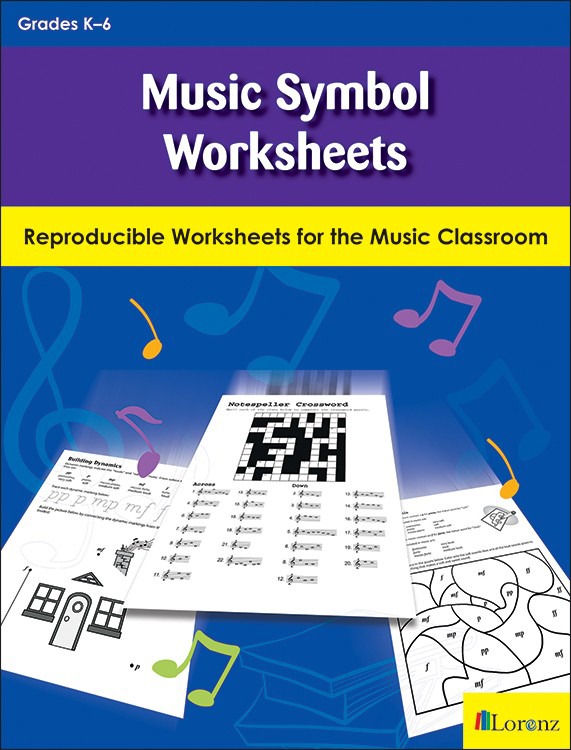
A published set of reproducible worksheets teaching elementary music theory concepts: note values, rests, dynamics, and other musical symbols.

Cute and fun skip counting by 3's worksheets . Includes: Counting by 3 posters in color Counting by 3 B&W poster Skip counting by 3 practice (3 to 21) Skip counting by 3 practice (3 to 30) Skip counting by 3 practice (3 to 45) Skip counting by 3 practice (48 to 87) Skip counting by 3 practice (75 to 102) Answer key…
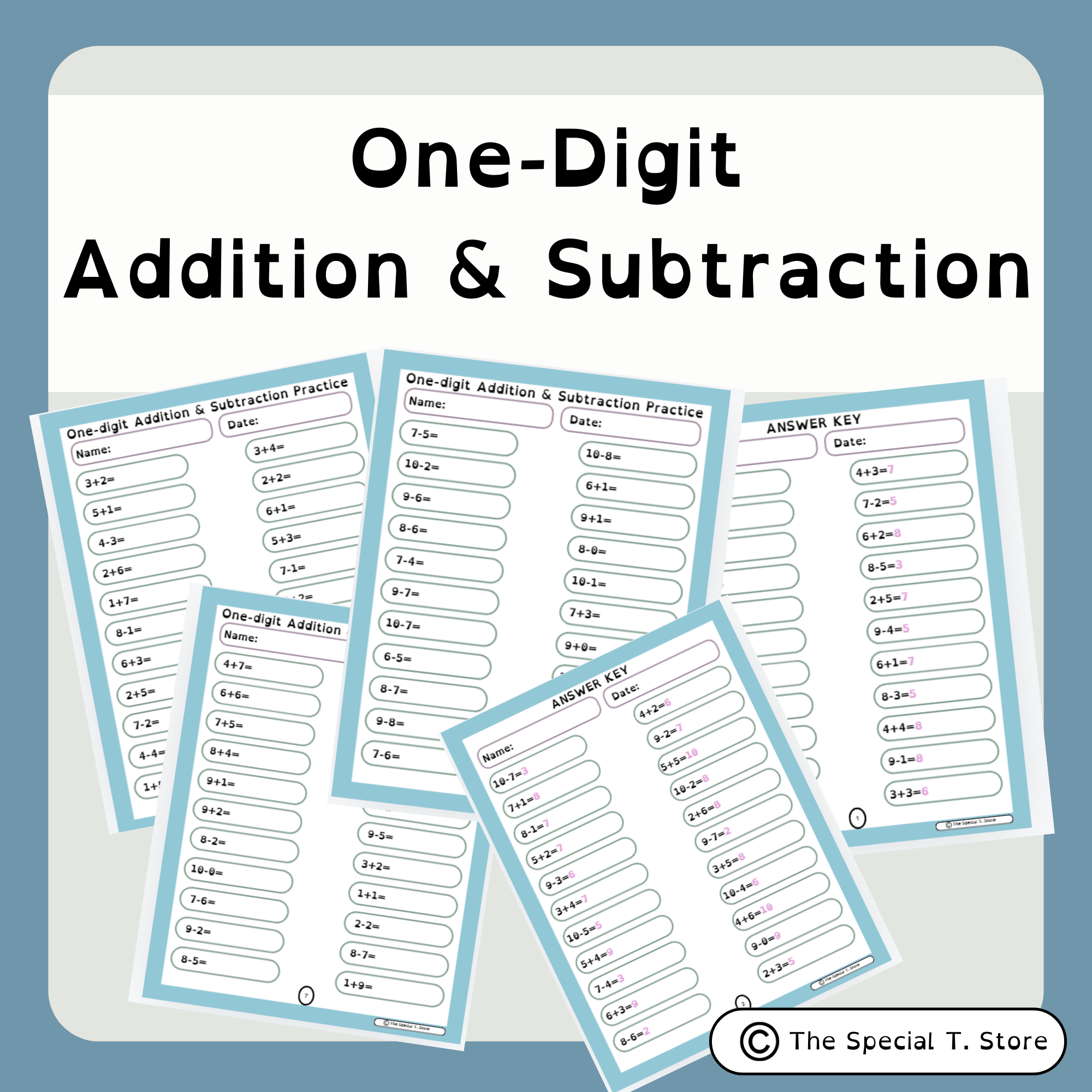
A set of practice worksheets for one-digit addition and subtraction facts, formatted in the OpenDyslexic typeface to support students with dyslexia and building basic math fact fluency.
 Free download
Thank you very much for being part of this community of educational resources. A. The name of this educational resource is "12 worksheets with division exercises from 1 to 12, with blank spaces to complete the missing number" B. This document contains this number of pages This document contains 12 fabulous pages with division exercises…

Review multiplication by nine through timed calculations, cut-and-paste matches, and answer-based coloring. A multiplication chart and test sit alongside the practice activities in the packet, with answer keys for checking. Select activities to match the amount and kind of repetition your students need.

a set of four back-to-school icebreaker worksheets combining an 'all about me' fill-in page, a favourites/preferences page, and two classmate-interview yes/no question sheets

Twenty vertical subtraction problems use multiples of ten without regrouping. After calculating, students follow directions to color by odd or even differences. Because the given calculations use whole tens, discuss why their differences are even rather than expecting both color groups to appear.
 Free download
Gives students practice with addition facts from 0 to 10 by finding a missing number in each equation.
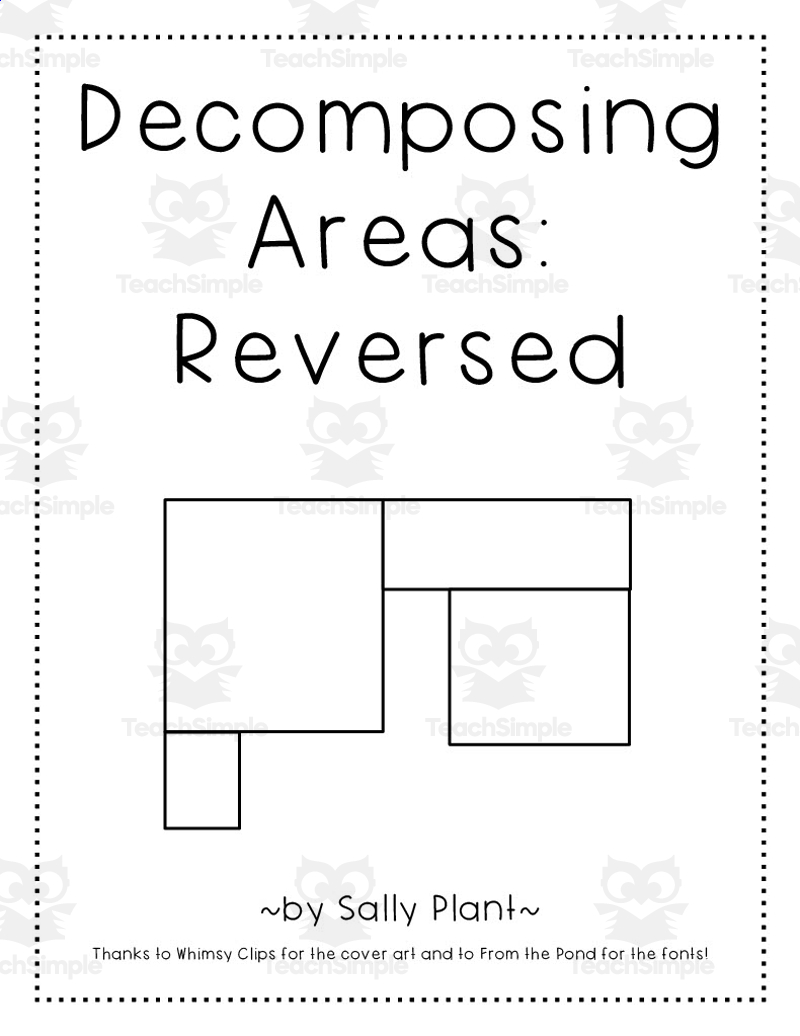
Practice finding and combining rectilinear-shape areas, including reversed area-composition problems.
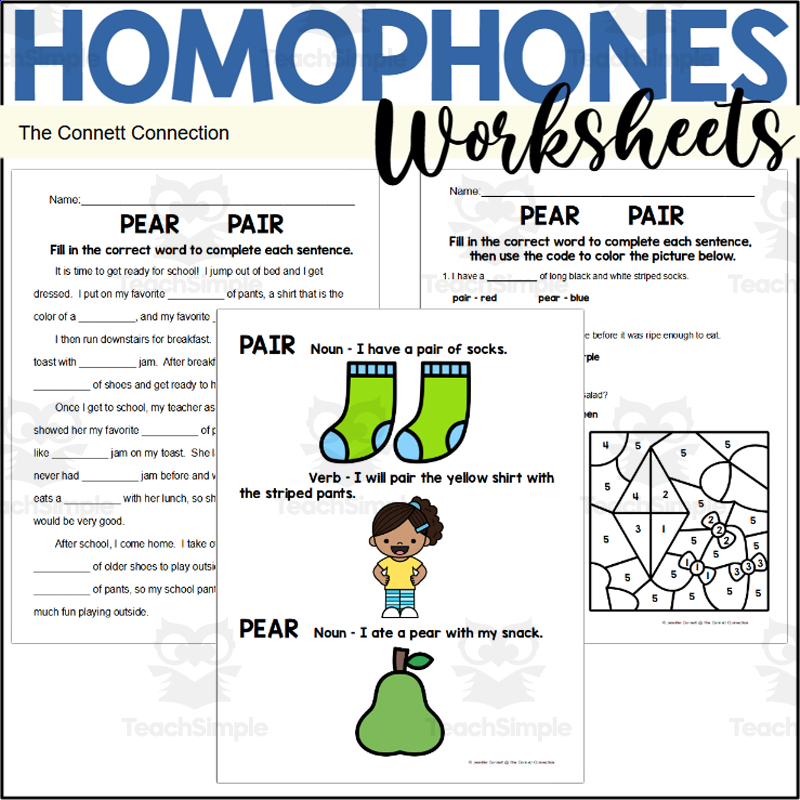
Students can practice using the correct spelling of homophone words with this worksheet packet. This packet focuses on the homophones: pear pair. What are homophones? Homophones are a pair of words that sound the same but are spelled differently. Words that are homophones can often be tricky for students to spell correctly since the…
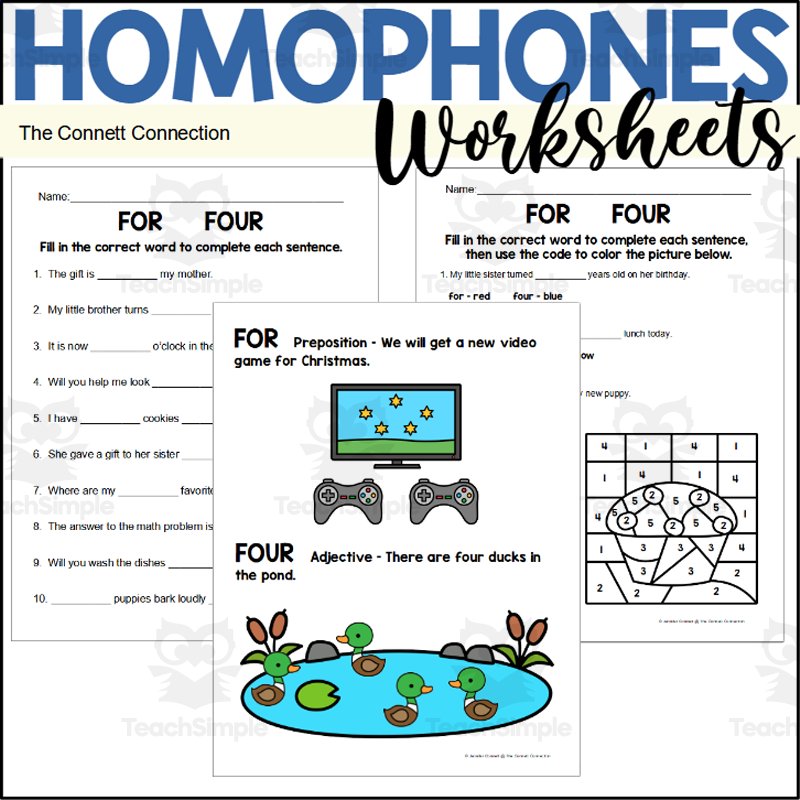
Students can practice using the correct spelling of homophone words with this worksheet packet. This packet focuses on the homophones: for and four. What are homophones? Homophones are a pair of words that sound the same but are spelled differently. Words that are homophones can often be tricky for students to spell correctly since the…

Students can practice using the correct spelling of homophone words with this worksheet packet. This packet focuses on the homophones: hear and here. What are homophones? Homophones are a pair of words that sound the same but are spelled differently. Words that are homophones can often be tricky for students to spell correctly since the…
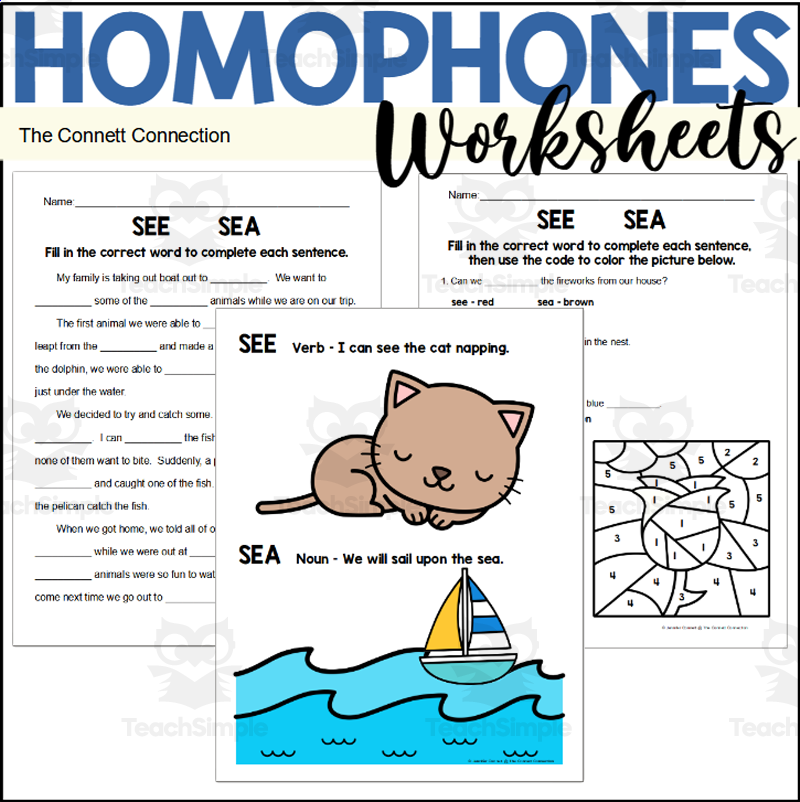
Begin with the meanings of sea and see on the reference poster, then ask students to complete sentences and a story using the appropriate word. A color-by-code page adds another set of choices, with keys for the three worksheets. During review, ask students to explain the meaning they needed before discussing the spelling.
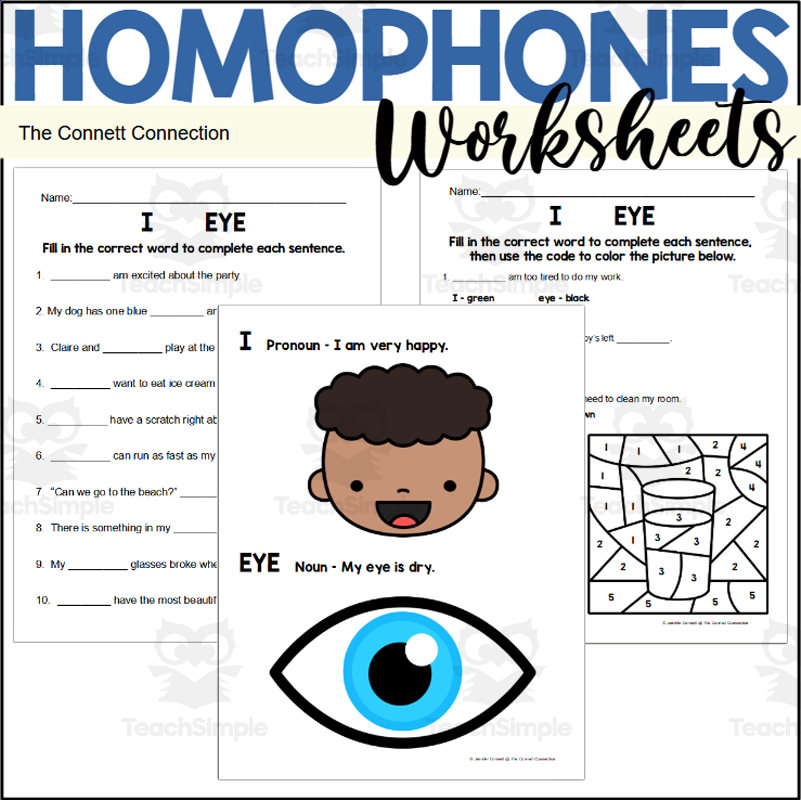
A definition poster contrasts I as a pronoun with eye as a noun. Three activities apply the distinction through sentence blanks, an eye-doctor story, and color-by-code work. Ask students to explain the meaning needed in a blank before choosing the spelling. Keys accompany all three worksheets.

Students can practice using the correct spelling of homophone words with this worksheet packet. This packet focuses on the homophones: tail and tale. What are homophones? Homophones are a pair of words that sound the same but are spelled differently. Words that are homophones can often be tricky for students to spell correctly since the…

The homophone pair know and no is introduced on a reference page that labels know as a verb and no as an adjective, each shown in a sample sentence, before three practice worksheets put the distinction to work. The first worksheet is ten standalone fill-in-the-blank sentences; the second embeds the same choice inside a short narrative about a child asking a stranger for directions home; the third pairs each blank with a color-by-code grid so a correct word choice also produces a colored picture. A completed answer-key copy of all three worksheets follows the practice pages, letting a teacher check work at a glance rather than re-solving each blank. Every task isolates the same two words, so the set works as focused, repeated practice on one confusable pair rather than a broader homophone survey.

Introduce knows and nose with the picture-supported reference pages, which distinguish the verb from the body-part noun. Students then complete sentences, a short story and a color-by-code task using the correct word. Encourage them to explain the meaning of a sentence before choosing the spelling.

SEL worksheet helping students identify and reflect on how their body reacts to different emotions and how they want to respond.

A reference page contrasts 'one' as an adjective ('I have one crayon') with 'won' as a verb ('We won the game'), giving students a model to check against before practice begins. A ten-sentence worksheet has students choose the correct spelling in stand-alone sentences such as 'The red car ___ the big race,' while a second worksheet asks for the same choice across nine blanks inside a connected short story about a family member's race. A third worksheet pairs five fill-in sentences with a color-by-code picture, so students use their word choices to follow the colour code. Answer keys for all three worksheets are included, with the correct word underlined in each sentence.

Use the mail and male reference page to discuss how the same sound can have different meanings and spellings. Students apply the distinction in individual sentences, connected text, and a color-by-code task. Ask students to explain which meaning fits each blank before choosing a spelling, then compare their responses with the supplied answer material.

Students can practice using the correct spelling of homophone words with this worksheet packet. This packet focuses on the homophones: blue and blew. What are homophones? Homophones are a pair of words that sound the same but are spelled differently. Words that are homophones can often be tricky for students to spell correctly since the…
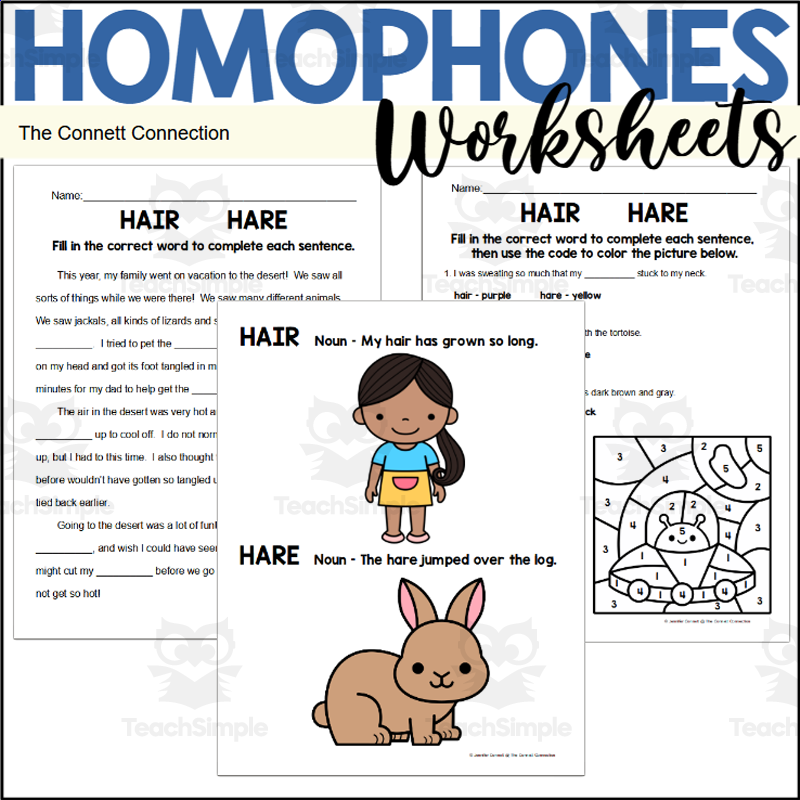
Introduce hair and hare with the illustrated word-reference pages, then have students choose the correct spelling in sentences and a short story. A color-by-code task provides another way to practice the same distinction. Ask students to explain the meaning they need before writing the word so the work goes beyond remembering two spellings.

Students can practice using the correct spelling of homophone words with this worksheet packet. This packet focuses on the homophones: whole and hole What are homophones? Homophones are a pair of words that sound the same but are spelled differently. Words that are homophones can often be tricky for students to spell correctly since the…