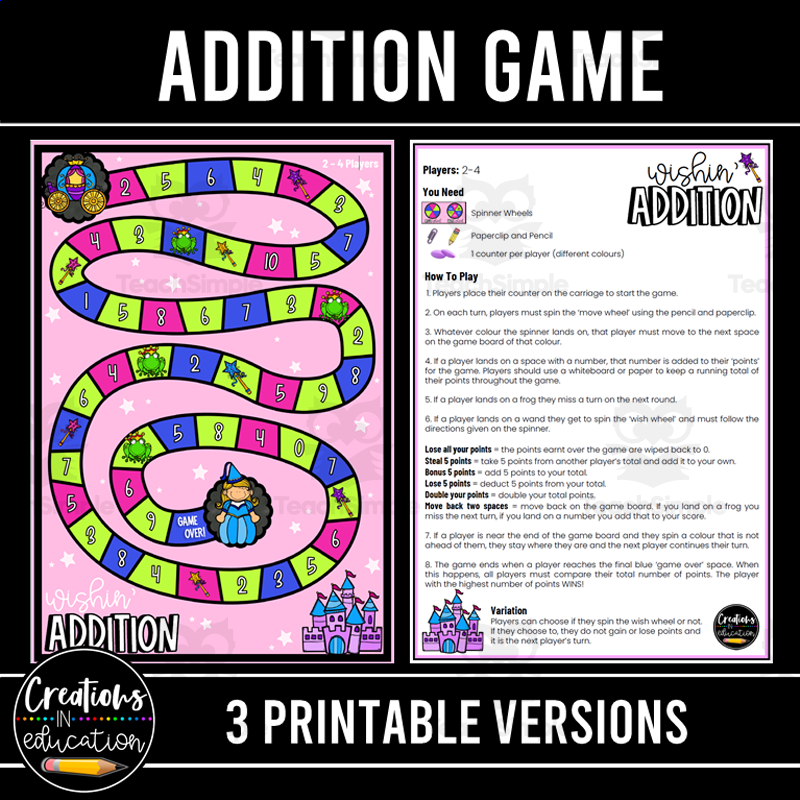
Maths Addition Game
A print-and-play board game ('Wishin'') for 2-4 players that gives students addition practice by having them accumulate a running point total as they move around a game board, provided in multiple color/ink versions.
2,133 resources
Explore sub-categories
33 sub-categories · 2,133 resources
A print-and-play board game ('Wishin'') for 2-4 players that gives students addition practice by having them accumulate a running point total as they move around a game board, provided in multiple color/ink versions.
Flip a two-color counter or coin to determine whether to place a zero or roll a 10-sided die for a digit, place each generated digit into a place-value column on a graphic organizer to try to build the biggest or smallest number, then as a class order the resulting numbers, round them, read them aloud, and/or convert…
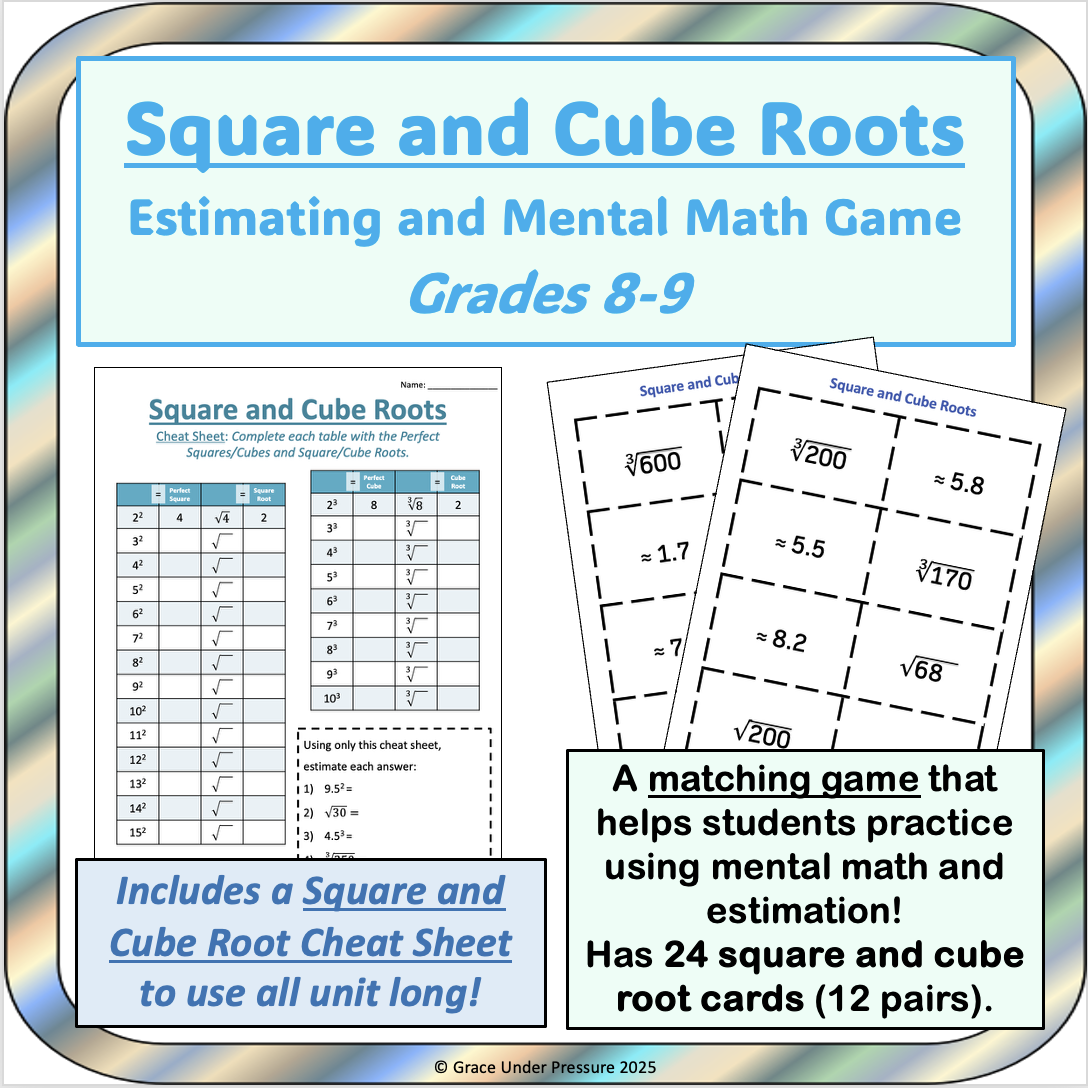
Complete a 'cheat sheet' table of perfect squares/cubes and their roots (2-15), use it to estimate 5 practice square/cube root problems, then play a matching card game (memory-match, Go Fish style, or face-up matching) with 24 cards estimating roots.
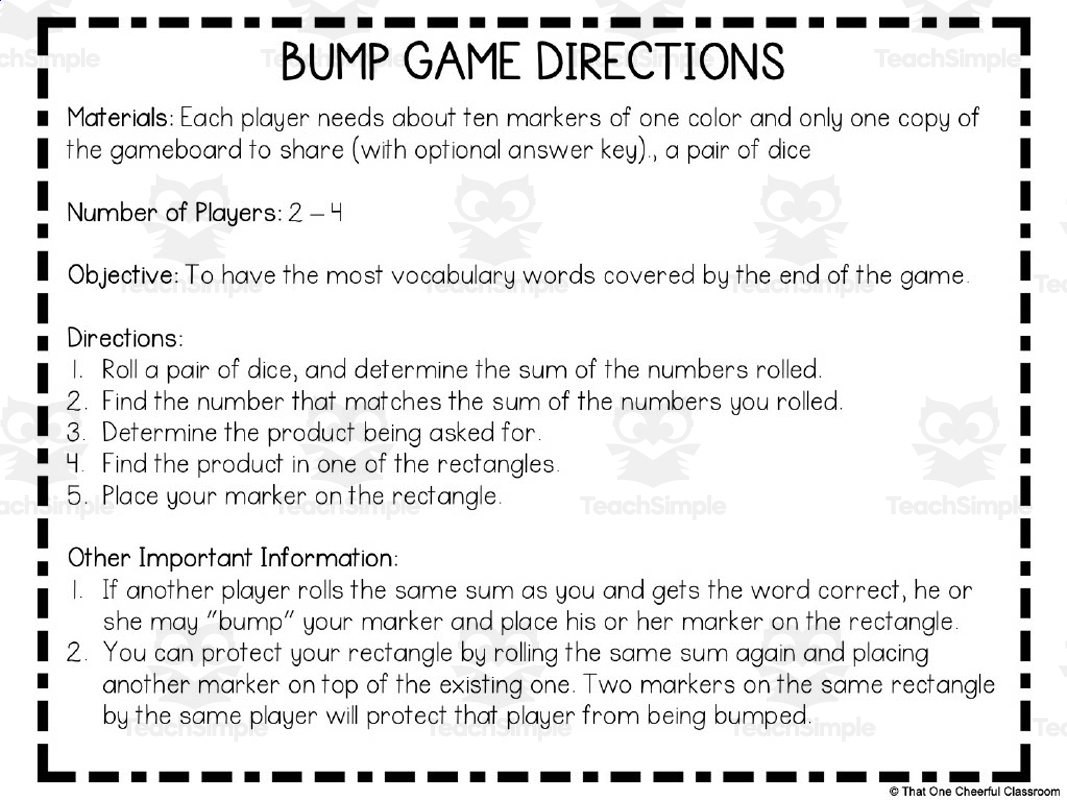
This is a Multiplication Facts Bump Game. This will cover 3's - 12's while also exploring vocabulary related to multiplication. Your math students are sure to enjoy this game. Directions and answer keys are included.
Students play bingo by finding called numbers or shapes on their board and marking/covering them until getting 5-in-a-row or a full board.
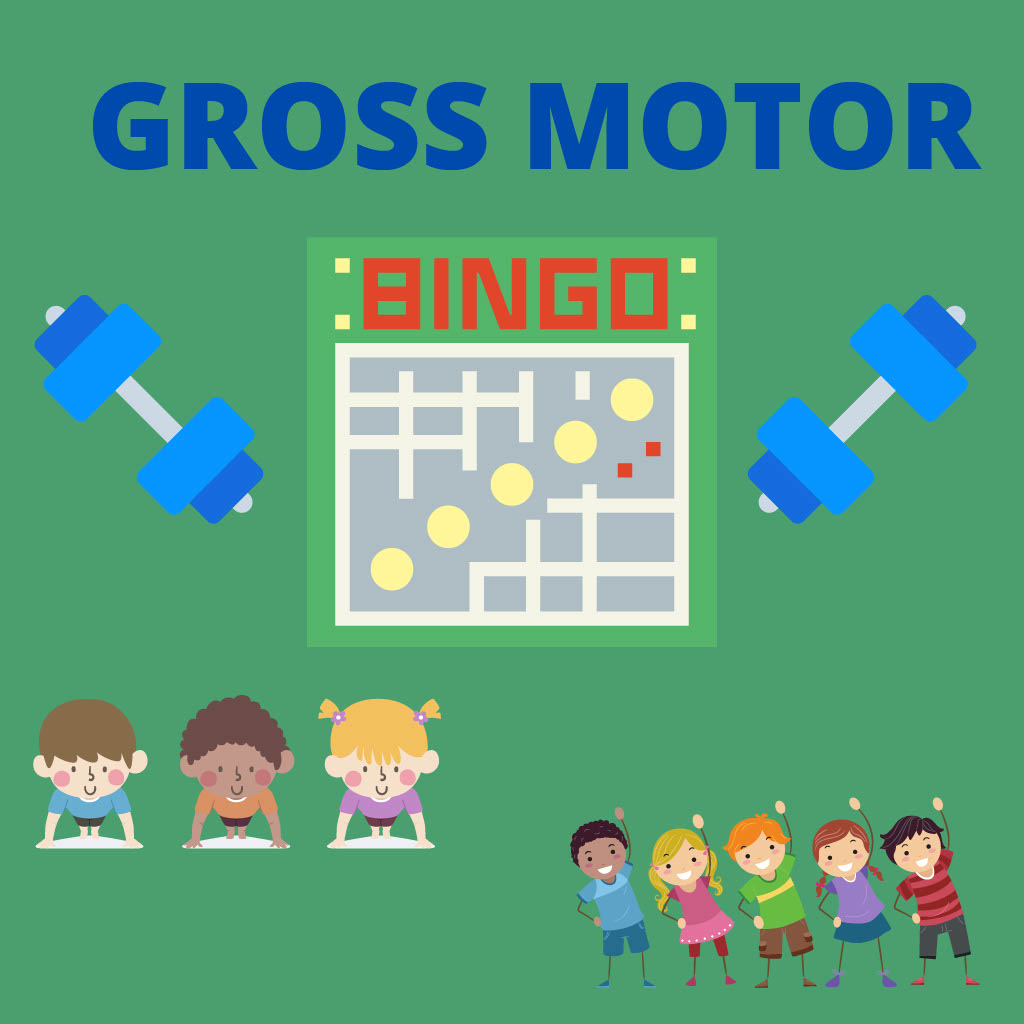
A gross-motor bingo game pairing physical exercises with a bingo board format for group play.
Use matching cards and 'What Am I' clue cards (which describe a word by its sounds, e.g. '/k/ /w/ /i/ /l/') to identify target words, then cover matches on bingo boards.
Play bingo by recognizing Dolch sight words called out by the teacher and marking them on individual bingo cards; separately, track/check off mastered sight words on a progress sheet.
Practice and introduce Pre-Primer level (and full 220-word) Dolch high-frequency sight words through a BINGO game, flashcards, and word lists.
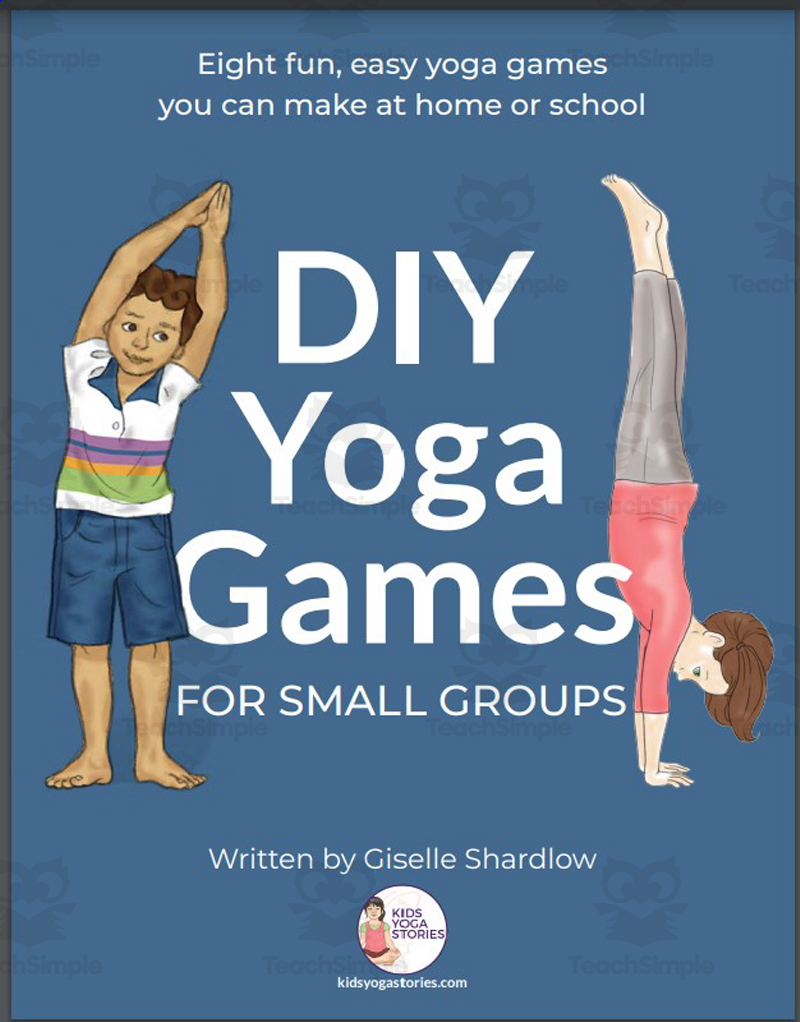
Provides instructions for eight do-it-yourself yoga-themed games (adaptations of familiar games such as Yahtzee and Monopoly) that combine common games with yoga poses for small groups.
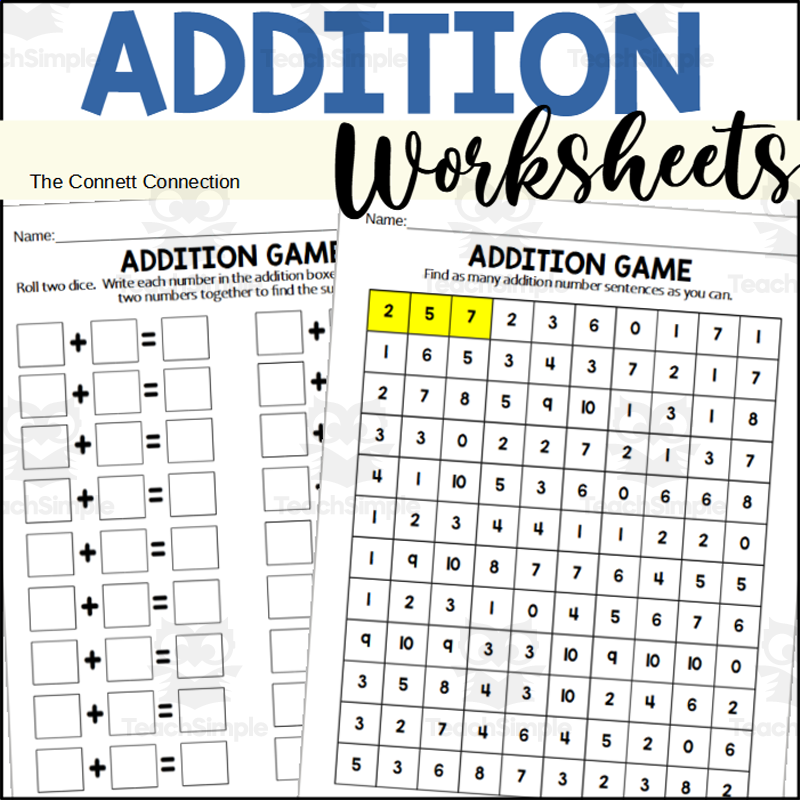
Roll two dice, write the numbers in addition boxes and find the sum; and/or search a grid of numbers to find and record as many addition number sentences (two addends and their sum) as possible.
Roll dice/spinner five times and use a grid game sheet to determine what shape/element to add to a drawing; color the finished piece with markers/crayons/paint; complete Warhol-related writing activities, an extended art-making activity, a compare-and-contrast activity, and reflection sheets.
In groups, students rotate through numbered task cards posted around the room, answer questions from each set of five on a separate answer sheet, and assemble word-clue answers in sequence to decode a hidden quote; alternatively cards can be used for individual/group/whole-class review or projected for class-wide review.
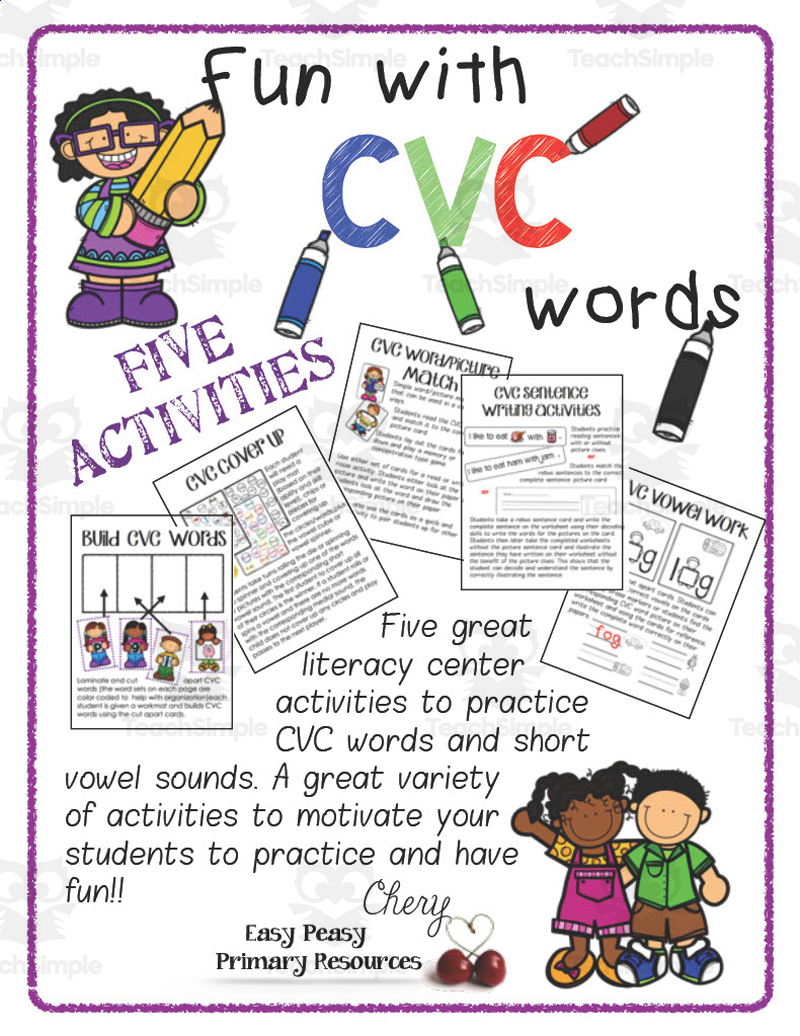
Match CVC word cards to pictures; play memory/concentration with the cards; read or write CVC words in a 'read/write the room' format; read rebus sentences and write or illustrate the complete sentence; build CVC words by assembling letter cards; identify correct medial vowel sounds on cards; play a cover-up…
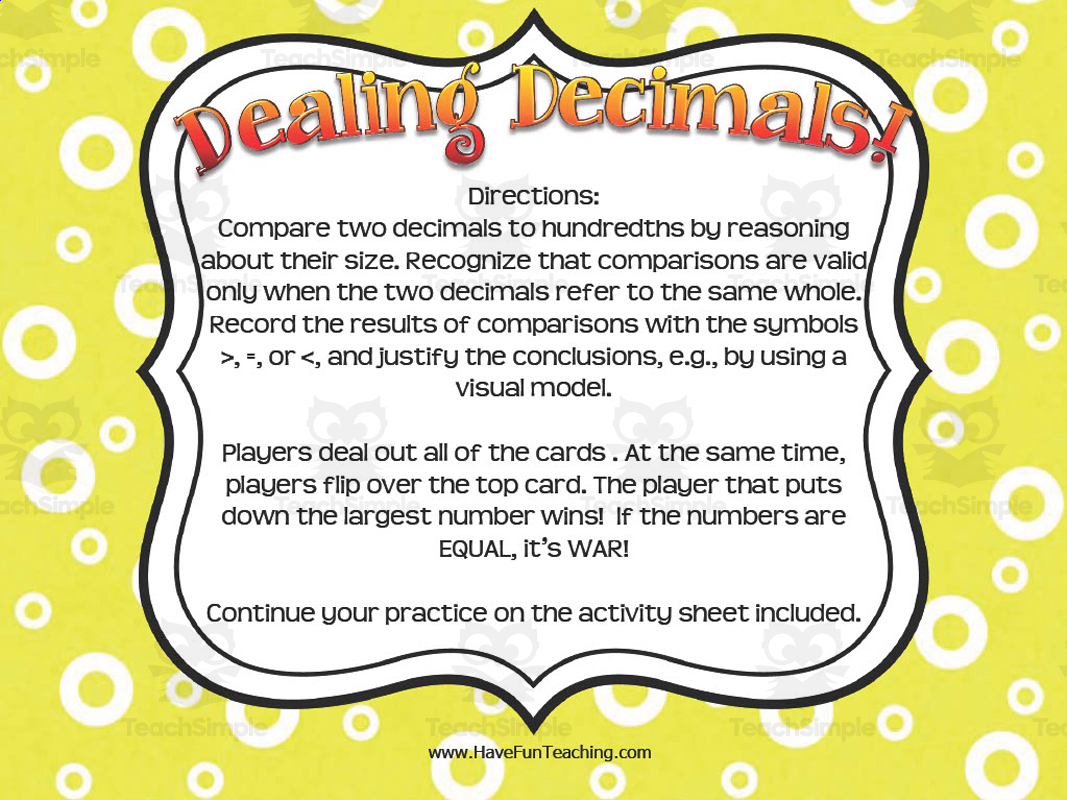
A hands-on card-game activity for upper-elementary students to practice comparing decimals to the hundredths place, paired with a printable practice sheet.
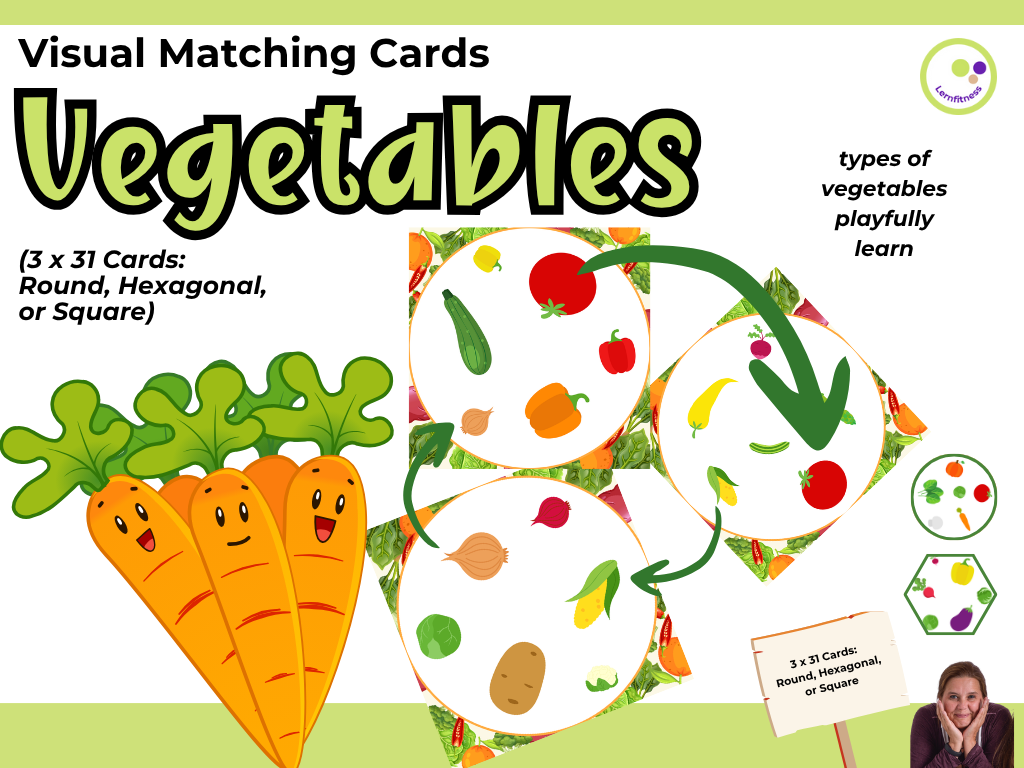
Print, optionally laminate, and cut out the matching cards (round or square). Deal one card per player; flip the top card from the deck and compare it to your own card - if you find a shared matching image, keep the card. Player with the most cards at the end wins.
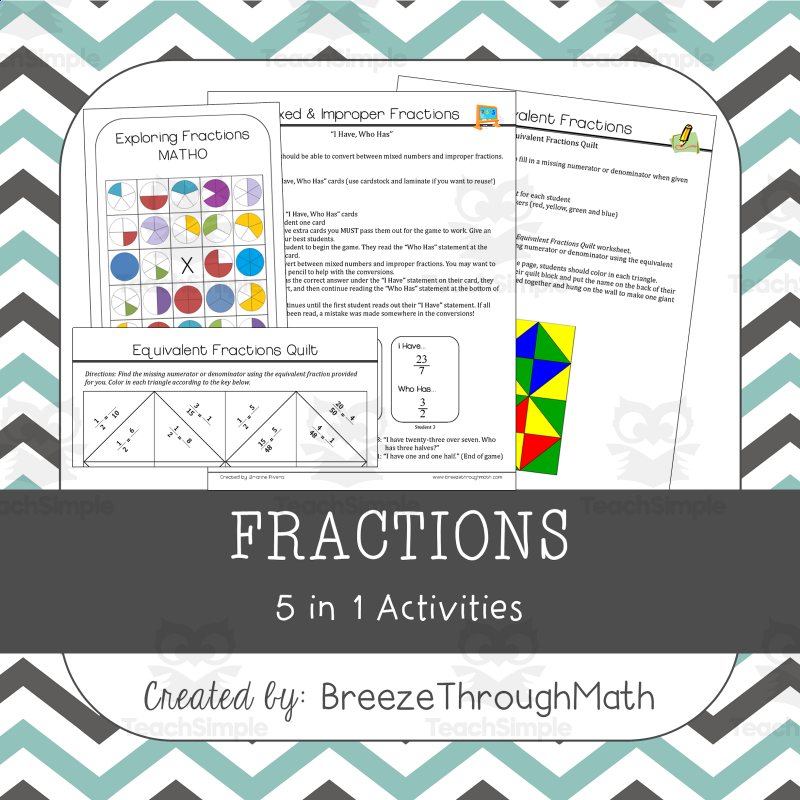
a set of hands-on activities that build fraction understanding, including matching fractions to models and working with equivalent fractions
Complete tasks on an assigned bingo card following one of several bingo win patterns (Lines, T's, U's, or Squares, requiring 5/9/13/16 completed answers respectively), then record answers on a provided answer worksheet.
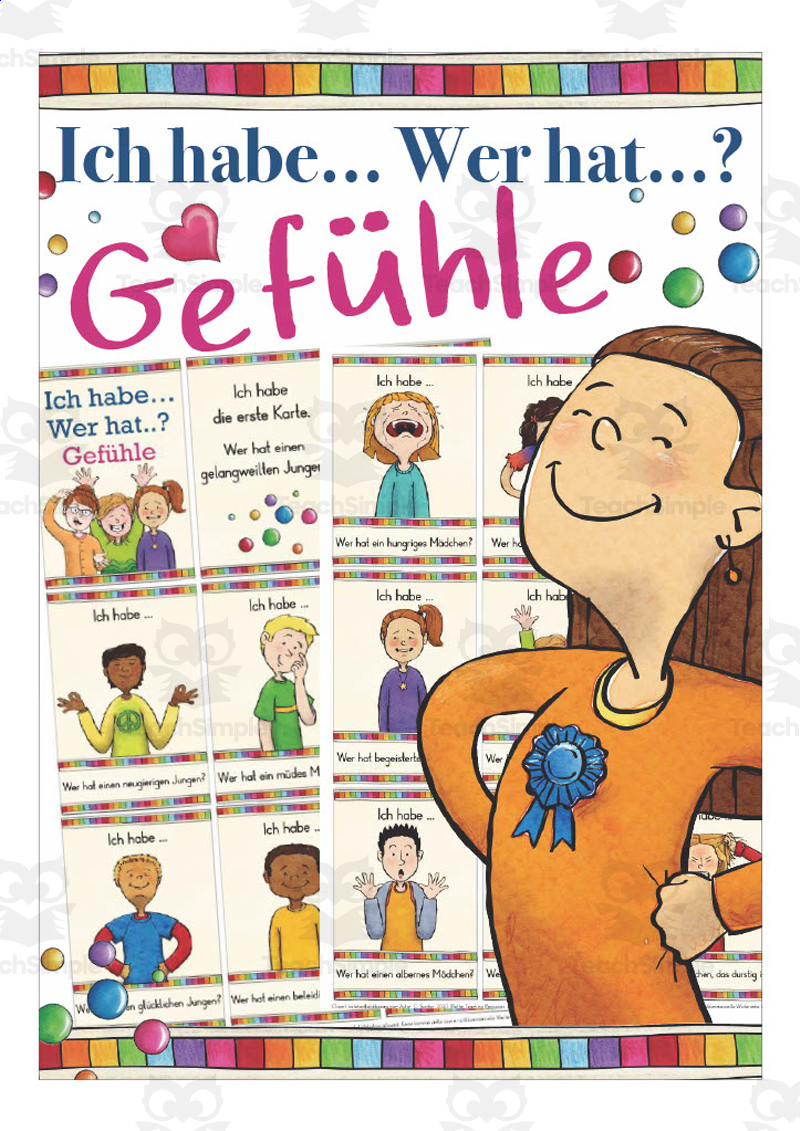
Shuffle and deal the German-vocabulary cards to students. One student asks "Wer hat [term]?" (Who has...?); the student holding the matching card answers "Ich habe [term]" (I have...) and asks the next question. Play continues around the group until the chain loops back to the first card.
Working in groups of 4 or fewer, rotate through 5 stations: (1) assemble a jigsaw puzzle revealing a partial code, (2) fill in blanks and use a cryptogram key to decode a code, (3) read a passage on the ratification/amendment process and answer prompts, decoding a code from answers, (4) match scenarios to sections of…
Students discuss what consent is and its main elements with a partner, play a 'Make a Pizza' game where they request and respond to topping choices using only nonverbal cues, reflect on the experience, act out role-play scenarios responding to requests both nonverbally and verbally, and participate in a wrap-up…
Country groups make alliance requests and respond to other groups under the game’s rules. The confrontation sequence reveals how commitments, rejection and changing loyalties can widen a conflict. Use the teacher guide to run the simulation, then map the alliances and discuss what the simplified model shows about escalation.
A printable board game teaching internet/online safety skills for elementary students, covering safe password/username choices, what personal information not to share online, and recognizing unsafe or scam content (phishing emails, fake virus warnings, popups).
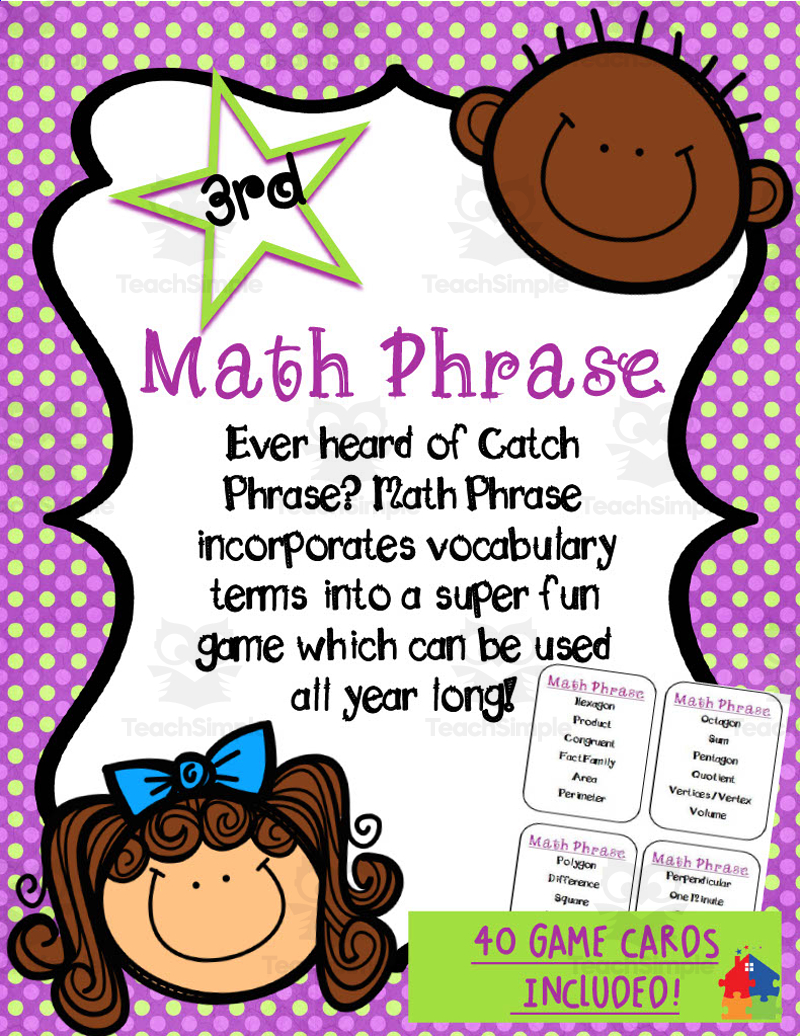
Students split into at least 2 teams; one player draws a card and describes math vocabulary words without saying the word itself, while teammates guess within a one-minute time limit; scores are tallied by team.