



3,926 products added recently
Page 2 - ELA Lesson Plans
Elevate your ELA instruction with lesson plans that cover reading, writing, speaking, and listening skills. These resources provide diverse texts and engaging activities to improve literacy. Integrate these plans to enrich your language arts curriculum and support student achievement.

 Show filters


Mixed Conditionals Advanced ESL Lesson Plan
ELA, Language Development, ESL, Grammar, Not Grade Specific, Adult Education, Middle School, Teacher Tools, Lesson Plans, Worksheets & Printables
Mixed Conditionals | Advanced Lesson Plan This educational resource helps students master mixed conditionals, an advanced English grammar topic. The informative lesson plan defines mixed conditionals and when to use them. Learners then apply their knowledge by completing targeted exercises assessing comprehension and grammar skills. Educators can implement this versatile resource in various settings like whole group instruction, small group practice, or as a homework assignment. An answer key is included for teacher reference. This practical lesson supports English language learners by developing strong grammar skills needed for clear communication. Presented in an accessible PDF, it also works with Google Apps for flexible digital instruction. The ESL ELL ELA and TEFL lesson plan includes flashcards, a warmer, grammar rules, exercises, role-play, conversation, writing drill, activity, answers and an extra study that would be good to set as homework. There are 32+ pages and there are teachers notes to guide the teacher.
Author TEAM TEFL
Tags Conditionals, Tenses, Verbs, ESL, Grammar, Conditionals Esl

Guided Reading Lesson Plan & Activities Grades KG-12 (13-Book Bundle)
Reading, ELA, Reading Comprehension, Kindergarten, Lesson Plans, Teacher Tools, Worksheets, Worksheets & Printables
Guided Reading is a research-based instruction process whereby the teacher works with small grouping of students being equal in a particular reading achievement level. The teacher provides for each reader's development of effective reading competencies. However different than in the earlier days of reading groups, small and temporary groups are flexible and dynamic. The observance and evaluation of the progress of readers are done by teachers on a systematic basis. Thus, grouping and regrouping students is based on the strengths of students and the intense changing needs throughout their reading development. In the 1960s in New Zealand, Guided Reading was developed. It was enhanced over the years after it arrived in the United States thanks to educators like Gay Su Pinnell and Lesley Fountas. In 1996, Fountas & Pinnell published their enormously influential book, Guided Reading: Good First Teaching for All Children (Heinemann). This book changed how reading was taught, and it is still taught today to over a million teachers worldwide. The aim of Guided Reading lessons is to develop effective readers. A set of 13 books is bundled together with all 13 worksheets of the Guided Reading series for grades KG-12. There are lesson plans and different activities for every grade, with the answers in the end section of the worksheet.
Author Bright Classroom Ideas Marketplace
Tags Guide, Reading, Grades, Literacy, Bundle
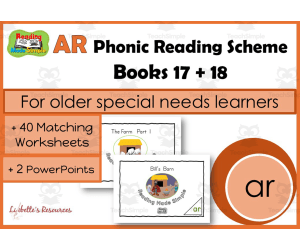
Phonic Reading Scheme for Older Students: AR Words Books 17 and 18
Special Resources, ELA, Special Education Needs (SEN), Language Development, Phonics, Reading, Kindergarten, Preschool, Grade 1, Literacy Readers, Teacher Tools, Worksheets & Printables, Lesson Plans
A pack of 2 AR Phonic reading books with matching PowerPoints and workbooks to support learning. These books are part of an incremental phonics reading scheme with a difference. Introducing just 10 words in each phonics family, the words are repeated from book to book, giving even those with very poor word recall the chance to learn to read fluently without having to decode every word. Ideal for dyslexics, or those suspected of being dyslexic and all children with a special need. You can view the first CK pack with a set of 30+ supporting activities and games FREE here. The books cover these sounds and must be taught in this order: CK; OO; SH; CH; ND/NT; NK; TH; NG; AR; Rationale: It has long been proven that teaching children to decode is a powerful tool for teaching reading, as opposed to the Look and Say method. However, this has led to a proliferation of reading books that throw as many words with a shared phonics sound into a book as possible, not realising that some children with very poor word recall find it hard to recognise words when they see them again without much repetition. To combat this problem, while we recognise that, technically, once a child has been taught a new sound s/he can sound out many words with that new sound, when it comes to reading fluently a child needs a core set of words in each family that they can recognise, which can act as a launch pad as they gain confidence. These books have been designed accordingly. For each sound family, just 10 words are studied with the help of the workbooks and are then repeated throughout the books, each book building on the vocabulary that has already been learned, repeating it and including it in new phrases as new sounds are learned. As the programme progresses, new sounds from the learned families are incorporated to widen vocabulary, while taking care to maintain fluency. The books are designed to limit guessing (though most children will try and guess, which must be avoided at all costs). Pluses of this phonics reading programme Easy to print Cheap to buy compared with expensive reading schemes They are just as effective as the best reading programmes out there, and more importantly, they have been tried and tested on real children with severe difficulties and proven to work if the child is taught as outlined. Aligned with the aims and objectives of LETRS and the Science of Reading. They work! My pupils tell me if they don't work, so I re-edit them and try them before I put them out for the general public. Introduces most high-frequency words in the phonics family to which they belong, and gradually introduces genuine, non-decodable sight words into the text without causing overload or throwing the child off course. What is included? Each book is 12 pages long Each book comes with a matching PowerPoint, making it suitable for online teaching, for private tutors, parents, classroom assistants, etc... The AR books come with 40 matching worksheets
Author Lilibette's Resources
Rating
Tags Decodable Reading Books, Phonic Reading Scheme, Download And Print Decodable Readers, Reading Fluency, Guided Reading, Special Needs, Phonics Intervention, NG Words

Adjectives Supplementary Materials - Grade 3-4 Grammar (PDF)
ELA, Language Development, ESL, Grammar, Common Core, Resources for Teachers, Grade 3, 4, Worksheets & Printables, Worksheets, Quizzes and Tests, Teacher Tools, Tests, Assessments, Activities, Lesson Plans
Adjectives Supplementary Materials Note: This download DOES NOT include the tests themselves. You can still make use of these materials without them but they are recommended. Download in a format of your choice in the "Links" section below. Outline Ice Breaker (5-10 minutes) Engaging, interactive activity to introduce the lesson’s theme. Examples: Matching games, sentence races, charades, or storytelling challenges. Guided Practice (10-15 minutes) Teacher-led exercises to reinforce the concept. Examples: Sorting sentences by tense, sentence transformations, or fill-in-the-gap exercises. Group or Partner Task (15 minutes) Collaborative activity to practice the lesson’s focus in a fun and engaging way. Examples: Role-play, storytelling, sentence-building games, or small-group discussions. Independent Worksheet (15 minutes) Individual written activity to solidify understanding. Examples: Sentence corrections, verb conjugation drills, or tense identification exercises. Exit Task (5 minutes) Quick reflective activity to assess understanding before students leave. Examples: Writing a sentence using the target concept, identifying a tense, or explaining a rule. Links: Includes: Identifying Adjectives Gap Filling Comparatives Superlatives Additional Practice Google Docs Google Forms Google Slides PDF PPT Word FULL CATALOG OF DOWNLOAD LINKS HERE Grade 3/4 Links: Adjectives Google Docs Google Forms Google Slides PDF PPT Word Free Supplementary Materials Pack Adverbs Google Docs Google Forms Google Slides PDF PPT Word Free Supplementary Materials Pack Conjunctions Google Docs Google Forms Google Slides PDF PPT Word Free Supplementary Materials Pack Nouns Google Docs Google Forms Google Slides PDF PPT Word Free Supplementary Materials Pack Pronouns Google Docs Google Forms Google Slides PDF PPT Word Free Supplementary Materials Pack Verbs Google Docs Google Forms Google Slides PDF PPT Word Free Supplementary Materials Pack Sentence Structure Google Docs Google Forms Google Slides PDF PPT Word Free Supplementary Materials Pack Present Tense Google Docs Google Forms Google Slides PDF PPT Word Free Supplementary Materials Pack Past Tense Google Docs Google Forms Google Slides PDF PPT Word Free Supplementary Materials Pack Future Tense Google Docs Google Forms Google Slides PDF PPT Word Free Supplementary Materials Pack Context Clues Google Docs Google Forms Google Slides PDF PPT Word Free Supplementary Materials Pack Defining Words Google Docs Google Forms Google Slides PDF PPT Word Free Supplementary Materials Pack Fill the Blanks Google Docs Google Forms Google Slides PDF PPT Word Free Supplementary Materials Pack Homophones Google Docs Google Forms Google Slides PDF PPT Word Free Supplementary Materials Pack Synonyms Google Docs Google Forms Google Slides PDF PPT Word Free Supplementary Materials Pack ELA Review Questions Overview Questions have three answer choices. There are a handful of pictures on each test for aesthetic purposes, as well as a review sheet covering most of the topics covered in the product. Introduction or Example Sheet Each topic will include an introduction or example sheet to go through first with your students. Full Answer Keys Full answer keys and sample responses are provided so no matter how busy you are, you know you're covered! In the Supplementary Pack Interactive Ice Breakers: Fun, hands-on activities that get students thinking about adjectives right from the start. Guided Practice: Teacher-led exercises that reinforce the day’s lesson, ensuring students can confidently identify and use adjectives. Group and Partner Tasks: Collaborative activities that allow students to work together to solve problems, categorize adjectives, and create descriptive sentences. Independent Worksheets: Structured worksheets that provide individual practice and help solidify understanding of key concepts. Exit Tasks: Quick, reflective activities at the end of each lesson that assess understanding and encourage students to apply what they’ve learned. For similar downloads and other frees, do check out Cored Group on TeachSimple.
Author Cored Education
Tags Elementary, Answers, Ccss, Common Core, Grammar, Tests, Test Prep, Grade 3, Grade 4, Lesson Plan

Capitalization and Punctuation Supplementary Materials Grades 1-2(PDF)
ELA, Language Development, ESL, Grammar, Common Core, Resources for Teachers, Grade 1, 2, Teacher Tools, Lesson Plans, Worksheets & Printables, Outlines, Assessments, Quizzes and Tests, Quizzes, Tests
Capitalization and Punctuation Supplementary Materials Note: This download DOES NOT include the tests themselves. You can still make use of these materials without them but they are recommended. Download in a format of your choice in the "Links" section below. In the Supplementary Pack Interactive Ice Breakers: Fun, hands-on activities that get students thinking about adjectives right from the start. Guided Practice: Teacher-led exercises that reinforce the day’s lesson, ensuring students can confidently identify and use adjectives. Group and Partner Tasks: Collaborative activities that allow students to work together to solve problems, categorize adjectives, and create descriptive sentences. Independent Worksheets: Structured worksheets that provide individual practice and help solidify understanding of key concepts. Exit Tasks: Quick, reflective activities at the end of each lesson that assess understanding and encourage students to apply what they’ve learned. Links: Proper Nouns Opening/Closing Letters Uppercase/Lowercase Dates Punctuation Practice Google Docs Google Forms Google Slides PDF PPT Word Free Supplementary Materials Pack FULL CATALOG OF DOWNLOAD LINKS HERE Grade 1/2 Links: Capitalization and Punctuation Google Docs Google Forms Google Slides PDF PPT Word Free Supplementary Materials Pack Adjectives Google Docs Google Forms Google Slides PDF PPT Word Free Supplementary Materials Pack Nouns Google Docs Google Forms Google Slides PDF PPT Word Free Supplementary Materials Pack Pronouns Google Docs Google Forms Google Slides PDF PPT Word Free Supplementary Materials Pack Verbs Google Docs Google Forms Google Slides PDF PPT Word Free Supplementary Materials Pack Prefixes & Suffixes Google Docs Google Forms Google Slides PDF PPT Word Free Supplementary Materials Pack Sentence Structure Google Docs Google Forms Google Slides PDF PPT Word Free Supplementary Materials Pack Subject-Verb Agreement Google Docs Google Forms Google Slides PDF PPT Word Free Supplementary Materials Pack ELA Review Questions Overview Questions have three answer choices. There are a handful of pictures on each test for aesthetic purposes, as well as a review sheet covering most of the topics covered in the product. Introduction or Example Sheet Each topic will include an introduction or example sheet to go through first with your students. Full Answer Keys Full answer keys and sample responses are provided so no matter how busy you are, you know you're covered! For More Like This For similar downloads and other frees, do check out Cored Group on TeachSimple.
Author Cored Education
Tags Elementary, Answers, Ccss, Common Core, Test, Mcq, Test Prep, Language Arts, Ela, Grammar
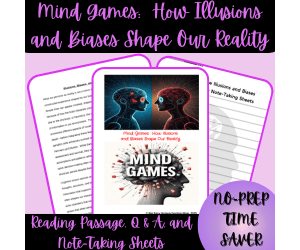
Mind Games: How Illusions and Biases Shape Our Reality Reading Passage
ELA, Reading, Writing, Research, Resources for Teachers, Science, STEM, Life Skills, Special Resources, High School, Homeschool Resources, Teacher Tools, Assessments, Lesson Plans, Quizzes and Tests, Worksheets & Printables, Writing Prompts
As a homeschool mom who is passionate about bringing real science into our learning, I created this resource after watching my own kids become fascinated by optical illusions and questioning "how do we really know what we see?" This comprehensive package takes that natural curiosity and channels it into serious academic exploration of how our minds work. I have spent countless hours researching current neuroscience studies to ensure this material meets the rigor your advanced students deserve while remaining engaging and accessible. Whether you are preparing high schoolers/homeschoolers for college psychology courses or diving deep into critical thinking with curious learners, this resource delivers the kind of substantial content that sparks meaningful discussions around your kitchen table or classroom. INCLUDED IN THIS RESOURCE: Comprehensive reading passage that makes complex neuroscience understandable 20 carefully crafted questions that really make students think (not just recall facts) Complete answer key with detailed explanations Five note-taking sheets TOPICS COVERED: How optical illusions reveal the shortcuts our brains take every day Why we believe what we want to believe (confirmation bias explained) The sneaky ways first impressions influence all our decisions How growing up in different cultures literally changes what we see This resource bridges the gap between high school and college-level work beautifully. I designed it specifically for families and educators who want to offer their students/homeschoolers the kind of rigorous, research-based content they will encounter in university psychology and neuroscience courses. The depth and sophistication of the material challenges advanced learners while the clear organization and teaching supports make it manageable for dedicated students/homeschoolers. Whether you are homeschooling through high school or teaching AP-level courses, this resource provides the academic foundation and critical thinking development that sets students/homeschoolers up for success in higher education and beyond. If you and your students/homeschoolers enjoyed this resource, please leave a review. Thank you for your support! Tina - Big Easy Homeschooling Mom
Author Homeschool with Big Easy Homeschooling Mom
Rating
Tags How Optical Illusions Work Educational Resource, Cognitive Biases Lesson Plan High School, Cognitive Psychology, Neuroscience, Visual Perception, Psychology Curriculum, Homeschool Psychology Resources, Perception And Reality Educational Content, Psychology Reading Comprehension Activities, , Neuroscience Curriculum Homeschool
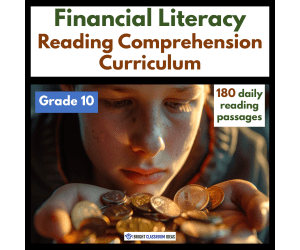
Grade 10 Financial Literacy Reading Comprehension | 180 Daily Passages
ELA, Finance, Life Studies, Grade 10, Lesson Plans, Teacher Tools, Worksheets & Printables
Grade 10 Financial Literacy Reading Comprehension Curriculum | 180 Daily Personal Finance Activities Help students move beyond basic money skills with this comprehensive Grade 10 Financial Literacy Reading Comprehension Curriculum . This rigorous year-long resource combines advanced nonfiction reading passages with deeper economic reasoning, helping students strengthen reading comprehension, analytical writing, critical thinking, and real-world financial decision-making. Students explore complex financial concepts while building the literacy skills needed for academic success and life beyond the classroom. What's Included ✔ 180 daily financial literacy reading passages ✔ 12 comprehensive instructional units ✔ Daily academic vocabulary practice ✔ Text-dependent comprehension questions ✔ Critical-thinking writing prompts ✔ Charts, graphs, and financial data interpretation ✔ Student Workbook ✔ Teacher's Guide with pacing, instructional strategies, and differentiation ✔ Complete Answer Key with model responses ✔ Diagnostic pre-assessment ✔ 12 unit quizzes ✔ Cumulative final exam ✔ Writing rubric and assessment tools ✔ Print-and-go or digital learning options How It Works in the Classroom Designed for approximately one 20–30 minute lesson per day, this curriculum is perfect for: • Financial Literacy classes • Personal Finance • Economics • Career Readiness • Bell ringers • Daily reading comprehension • Advisory • Independent work • Homework • Sub plans • Intervention Each lesson begins with an engaging nonfiction passage that introduces sophisticated financial and economic concepts. Students then complete vocabulary development, evidence-based comprehension questions, and analytical writing tasks that encourage deeper reasoning and application. Many passages incorporate authentic charts, graphs, and financial data to strengthen quantitative literacy alongside reading comprehension. Standards & Learning Goals Students build advanced financial literacy through topics including: Money, Markets & The Modern Economy • Money as a social technology • Market functions and price signals • Opportunity cost and scarcity • Central banking and monetary policy • Inflation, deflation, and purchasing power • Business cycles • Globalization and comparative advantage • Digital payments and cryptocurrency • GDP • Fiscal vs. monetary policy • Externalities and market failure • Economic systems Earning Income & Career Planning • Active vs. passive income • Human capital • Labor markets • Wage determination • Changing workforce trends • Total compensation • Pay stubs and deductions • Education as an investment • Networking and professional development Budgeting & Financial Planning • Cash flow vs. net worth • Behavioral finance • Value-based spending • Sustainable budgeting Banking, Credit & Borrowing • Banking systems • Credit creation • APY and interest • Fraud prevention • Credit scores • APR • Debt-to-income ratio • Amortization Investing & Wealth Building • Time value of money • Asset allocation • Diversification • Dollar-cost averaging • Index funds • Investment fees Taxes, Consumer Skills & Entrepreneurship • Progressive taxation • Tax deductions vs. credits • Consumer decision-making • Insurance and risk management • Entrepreneurship • Marginal analysis • Economic thinking Why Teachers Love It ⭐ Complete 180-day Grade 10 financial literacy curriculum ⭐ Integrates advanced reading comprehension with authentic financial literacy ⭐ Encourages higher-order thinking and analytical writing ⭐ Strengthens economics, finance, and literacy simultaneously ⭐ Minimal teacher preparation required ⭐ Includes daily vocabulary instruction ⭐ Built-in assessments throughout the school year ⭐ Complete answer key with model responses for efficient grading ⭐ Flexible for classroom instruction, homework, intervention, or independent learning ⭐ Prepares students for college, careers, and lifelong financial decision-making Perfect For ✔ Grade 10 Financial Literacy ✔ High School Personal Finance ✔ Economics Courses ✔ Career Readiness ✔ Reading Comprehension Practice ✔ Financial Literacy Electives ✔ Bell Ringers ✔ Homeschool Curriculum ✔ Year-Long Financial Literacy Curriculum If you're looking for Grade 10 financial literacy worksheets , high school personal finance activities , economics reading comprehension passages , financial literacy curriculum , financial literacy bell ringers , or a complete year-long personal finance program , this resource delivers engaging, standards-aligned instruction that builds both financial confidence and advanced literacy skills. Download today to give students meaningful, real-world financial literacy lessons that prepare them to think critically, make informed financial decisions, and confidently navigate today's complex economy.
Author Bright Classroom Ideas Marketplace
Rating
Tags Reading, Comprehension, Writing, Ela, Financial, Literacy, Curriculum, Yearlong, Full Year, Lesson

A Visit to the Dentist | English Conversations Video Lesson
ELA, Language Development, ESL, Not Grade Specific, Lesson Plans, Teacher Tools
This animated video lesson is all about English conversations. Students will love this engaging and interactive video as they learn more about a visit to the dentist. This video serves as a great introduction or review video for your learners. This is a 6-minute video lesson.
Author Educational Voice
Tags English, Conversations, Video Lesson, English Video, Dentist

High School Cybercrime: The New Frontier of Justice Reading Passage
STEM, Social Studies, Science, Computer Science, Technology, Research, Life Studies, ELA, Reading, Writing, High School, Homeschool Resources, Middle School, Adult Education, Teacher Tools, Assessments, Lesson Plans, Literacy Readers, Quizzes and Tests, Worksheets & Printables, Writing Prompts
As a homeschool mom, I understand how challenging it can be to find engaging, real-world content that captures our teenagers' attention while teaching them essential life skills. Cybercrime: The New Frontier of Justice Reading Passage, Q & A, and Note-Taking Sheets resource addresses one of the most pressing issues our kids face today—staying safe and informed in our digital world. This resource takes your students/homeschoolers beyond basic internet safety into the fascinating and complex realm of cybercrime, law enforcement, and the ongoing battle between online criminals and those working to stop them. I have designed this educational package to make sophisticated concepts understandable and relevant, giving your teens the knowledge they need to navigate today's technology-driven society with confidence and awareness. INCLUDED IN THIS RESOURCE: Comprehensive reading passage covering all major aspects of cybercrime 20 thought-provoking passage questions with detailed answer key Complete MLA-formatted bibliography with credible source references 25 professionally designed note-taking sheets for organized learning TOPICS COVERED: Online fraud, phishing attacks, and social engineering techniques Hacking, data breaches, and cybersecurity vulnerabilities Ransomware attacks and digital extortion methods Digital espionage and state-sponsored cyber operations When I created this cybercrime resource, I was thinking about preparing our children for the world they are actually going to live and work in—not just helping them pass a test. Our students/homeschoolers are growing up in a time when cybersecurity knowledge isn't just helpful, it is absolutely essential for their future success and safety. This Cybercrime: The New Frontier of Justice Reading Passage, Q & A, and Note-Taking Sheets resource goes beyond memorizing facts; it teaches our students/homeschoolers how to think critically about real problems they will encounter as adults, whether they are protecting their own families or pursuing careers in technology, law enforcement, or business. I am confident that the skills and awareness your students/homeschoolers gain from this study will serve them well throughout their lives, giving them the foundation they need to be informed, responsible digital citizens in an increasingly connected world. If you and your students/homeschoolers enjoyed this resource, please leave a review. Thank you for your support! Tina - Big Easy Homeschooling Mom Please subscribe: www.tidewindacademyhomeschool.com
Author Homeschool with Big Easy Homeschooling Mom
Rating
Tags Cybercrime Lesson Plans, Cybercrime Educational Materials For High School Students, Cybersecurity Education, Cybercrime Study Guides, Criminal Justice Curriculum, Digital Crime And Justice Teaching Resources, Computer Crime Resources, Internet Security Teaching Resources, Cyber Law Education, Cybersecurity Awareness Curriculum For Teens
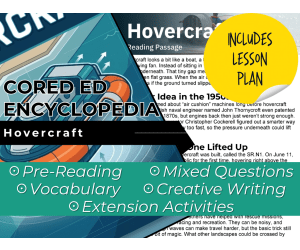
Hovercraft Reading Comprehension Passage - Cored Ed Encyclopedia
ELA, Reading Comprehension, Reading, Pre-Reading, Language Development, History, Social Studies, Science, Physics, Technology, Grade 2, 3, 4, 5, Worksheets & Printables, Worksheets, Teacher Tools, Centers, Activities, Writing Prompts, Assessments, Quizzes and Tests, Quizzes, Lesson Plans
This hovercraft reading comprehension with lesson plan includes: Visualization (on the front cover) Start your lesson by taking a minute to think and share something about the topic. Read the script aloud (slowly), perhaps prepare some music or sound effects. Student close their eyes and let their imaginations wander. Students open their eyes, read the question aloud and give them a few minutes to complete. Ask a few students to share or keep answers until the end to compare with what they learn in the passage. Quick pause—thousands of Cored Education products are included with your TeachSimple membership. Download links and encyclopedia index available here. Pre-Reading Trivia Students will write down one thing they already know about the subject and then read five more facts and discuss. These facts are fun, and the students will enjoy learning about the subject before reading more. Give 1 minute for students to write what they already know (no pressure—best guess is fine). Read the five facts together. After each fact, do ask a student for their opinion, was it surprising? Set a purpose by asking students to highlight/underline one fact they want to learn more about during the reading. Reading Passage The text is a high-interest reading passage with set paragraphs, roughly three to four paragraphs long. It contains a variety of themes about the topic, anywhere from history to technology. The passage is between 250 and 350 words in length. First, ask students to look at the headings and see what they’ll learn about today. What do they know about the topic/heading? First read options: Teacher read-aloud (best for support). Partner reading (paragraph by paragraph). While reading, students underline important details, and vocabulary words they think may come up in the questions section. Mixed Questions The first question page contains four multiple-choice questions, each with a choice of four answers, and three written response questions that require a sentence or two from the student. Students complete the mcqs first independently, then review quickly as a class. For the 3 written responses, try to get students giving the answer with some form of evidence: “I think ___ because the text says ___.” If students get stuck, send them back to check the passage. Vocabulary Questions Practice seven key words from the text in this section across two activities. First section is scrambled words where students will unscramble three words given a clue for each. The second section is a word to meaning matching activity. Before starting, have some students read out words they underlined in the passage. Ask students to say the word and read aloud the sentence(s) around each word. Ask students to do scrambled words and the matching exercise in pairs then go through answers as a class. For the scrambled spelling task, get four pairs to come up to the board and write the words for extra practice with the other student reading out the clue. For the matching task, prompt students to give full sentences: “I matched ___ with ___ because ___.” Creative Writing In this question, the student will be required to write a five to eight sentence paragraph on a question related to the topic. Before starting, ask students write down 3 key ideas they are going to include in their piece. Ask students for ideas to share around the class to help those struggling. Pro writing expectations: 5–8 sentences At least 2 facts or details from the passage At least 2 vocabulary words from the previous page Students read their paragraphs while classmates listen for facts and vocabulary words. Extension Activities This page is optional for fast finishers or to take home. There are several activities, each one requiring a different skill. Do some, do none, do all, completely optional - but you will feel reassured knowing every possibility is planned for. Includes summary writting question and additional facts. Answer Key There are answers for the multiple-choice questions, written response questions have sample answers, vocabulary answers and if there is a summary question then a sample summary will be provided as well. Lesson Plan Included Customized lesson plan for this lesson is included. Lesson Snapshot Title: Hovercraft Genre: Nonfiction (informational text) Subject: Science / Engineering (transportation) Primary Topic: How hovercraft ride on air and where they’re used Estimated Guided Reading Level (A–Z): Q What This Lesson Teaches Best Explains how a hovercraft rides on a “cushion of air trapped underneath,” instead of sitting in water. Describes why the air cushion reduces rubbing so the craft can slide over water, sand, or flat grass. Gives a brief invention history (an 1870s patented idea, then a smarter 1950s improvement to stop air leaking). Shows how design changes improved performance, including the flexible “skirt” for obstacles and choppy water. Connects hovercraft to real-world uses today (ferries, rescue missions, military landings, racing/recreation) and notes challenges like wind and waves. Learning Goals Students will describe how a hovercraft is like a boat, a small airplane, and a moving fan. Students will explain how an air cushion helps a hovercraft slide with very little rubbing. Students will describe how Christopher Cockerell improved hovercraft by reducing air leaking in the 1950s. Students will identify the SR.N1 and tell what happened when it was shown to the public on June 11, 1959. Students will explain how the flexible “skirt” helped hovercraft handle obstacles and choppy water. Students will list at least two places or jobs hovercraft can do today, using text evidence. Key Vocabulary From the Text patented — legally protected an invention idea. pressure — pushing force of trapped air underneath. flexible — able to bend without breaking. obstacles — things in the way that block movement. ferries — boats that carry people across a route. FULL CATALOG OF DOWNLOAD LINKS AND ENCYCLOPEDIA INDEX HERE
Author Cored Education
Rating
Tags Vocabulary, Reading Comprehension, Reading Passages, Lesson Plans, Ela Lesson Plans, Reading Comprehension Lesson Plans, Pre-reading, Science Lesson Plans, Physics, Technology
'Wonder' Lesson Plan, Worksheets & PowerPoint | Grades 5 - 6
ELA, Social Emotional Learning (SEL), Special Resources, Special Education Needs (SEN), Grade 5, 6, Lesson Plans, Teacher Tools, Worksheets & Printables
'Wonder' Lesson Plan, Worksheets & PowerPoint | Grades 5 - 6 Inspire meaningful conversations about kindness, empathy, and acceptance with this engaging, no-prep lesson inspired by Wonder (2017)! Students explore multiple perspectives, learn the difference between being an upstander and a bystander, analyze real-world data, and reflect on how their actions impact others. Perfect for social-emotional learning, character education, literature studies, anti-bullying lessons, substitute plans, and classroom community building, this ready-to-use resource helps students develop empathy while strengthening ELA and math skills. ⭐ What's Included: ✔ Detailed Teacher Lesson Plan & Guide ✔ Student Worksheet Packet ✔ Complete Answer Key ✔ Empathy & Perspective-Taking Activities ✔ Upstander vs. Bystander Scenarios ✔ Character Analysis Exercises ✔ Bar Graph & Pie Chart Data Interpretation Activities ✔ Kindness Reflection Questions ✔ Personal Precept Writing Activity 📚 Skills Covered: • Empathy and compassion • Perspective-taking and point of view • Character analysis and reflection • Anti-bullying and inclusion concepts • Upstander vs. bystander decision-making • Reading and interpreting graphs and charts • Social-emotional learning (SEL) • Critical thinking and communication skills 🎯 Learning Objectives: Students will: • Define empathy, perspective, compassion, and inclusion. • Explain the difference between an upstander and a bystander. • Analyze how different points of view shape understanding. • Interpret information presented in bar graphs and pie charts. • Reflect on acts of kindness and inclusion. • Write a personal precept—a guiding principle for daily life. 🏫 Perfect For: • Grades 5–6 • Social-Emotional Learning (SEL) • Character Education • Anti-Bullying Units • Literature Connections • ELA Point of View Lessons • Classroom Community Building • Substitute Teacher Plans • Homeschool Learning ✨ Why Teachers Love It: • No-prep and ready to teach • Combines SEL, ELA, and math in one meaningful lesson • Encourages empathy, inclusion, and positive classroom culture • Promotes thoughtful discussion and self-reflection • Includes answer keys for easy grading • Works whether students have seen the movie or read the novel • Supports CASEL competencies and character education goals Students will discover the power of kindness through engaging activities that encourage them to see the world through someone else's eyes. By exploring empathy, perspective, and inclusion, they will develop skills that extend far beyond the classroom and help create a more compassionate school community.
Author Bright Classroom Ideas Marketplace
Rating
Tags Wonder, Film, Movie, Lesson, Plan, Ela, Sel, Worksheet, End Of Year
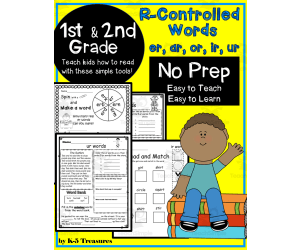
Phonics: R-Controlled Words for 1st and 2nd Grade and Early Readers
ELA, Reading, Reading Comprehension, Grammar, Language Development, Phonics, Strategies, Pre-Reading, Grade 1, 2, Literacy Readers, Teacher Tools, Lesson Plans, Worksheets, Worksheets & Printables
This Phonics: R-Controlled Words for 1st and 2nd Grade and Early Readers is so HELPFUL! Help your student's phonics skills grow to a new level with this Phonics: R-Controlled Words for 1st and 2nd Grade and Early Readers. These engaging worksheets require very little prep work, making it a breeze for your student to conquer the ER, IR, UR, AR, and OR R-Controlled words. These easy and engaging activities can be used in a whole group setting, for individual work, used in centers, and will help your students master these difficult sounds as they effortlessly match, read, write, and identify the r-controlled sounds in words. In this unit, students will read easy passages that require comprehension as they will answer several questions about what they read and highlight or color the r-controlled words in the passage. They will identify at least 5 words that have these sounds from the passage. Furthermore, they will expand their knowledge even more by filling in the blank of words from a word bank in sentences that are missing the r-controlled word sounds. On another worksheet, students will spin a paperclip and fill in the missing words. They will also complete a word search of r-controlled words, and lastly, students will cut, sort, and paste pictures of r-controlled words to the correct written word. There are also worksheets that are differentiated to help all young learners with these sounds. What a great way to help young readers conquer their reading skills with these fun and engaging activities! Get your copy of this Phonics: R-Controlled Words: 1st & 2nd Grade Phonics Worksheets for Early Readers and get ready to be amazed with the skills as they master these words that are so difficult to master! For a list of other phonics and grammar activities, click on the following links:
Author K-5 Treasures
Rating
Tags Phonics, Reading, R-controlled Words, Er Words, Or Words, Ar Words, Early Reading Worksheets, R-controlled Worksheets, Phonics Practice, Phonics Worksheets
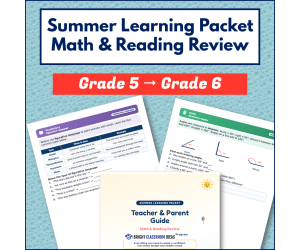
Summer Learning Packet Grade 5 to Grade 6 | Math & Reading Review
ELA, Math, Grade 5, Lesson Plans, Teacher Tools, Worksheets & Printables
Summer Learning Packet Grade 5 to Grade 6 | Math & Reading Review Help students prevent the summer slide and build confidence for middle school with this comprehensive Summer Learning Packet for 5th Grade to 6th Grade ! Designed as a complete summer bridge workbook , this resource reviews essential fifth-grade reading and math skills while introducing important sixth-grade concepts. With 100 pages of engaging practice, critical thinking activities, STEM challenges, and middle school readiness skills, students can stay academically sharp all summer long. What's Included ✔ 100-Page Summer Learning Workbook ✔ Reading Comprehension Activities Fiction and nonfiction passages Paired texts Theme and character analysis Main idea and supporting details Point of view Author's purpose Text structure Compare and contrast Cause and effect Inferences and text evidence Summarizing and drawing conclusions ✔ Vocabulary Development Context clues Greek and Latin roots Prefixes and suffixes Figurative language Academic vocabulary skills ✔ Grammar & Language Practice Parts of speech Pronouns Verb tenses Subject-verb agreement Capitalization Punctuation Sentence structure Editing and revising ✔ Writing Activities Narrative writing Creative writing Opinion writing Informational writing Research-based writing Multi-paragraph essays Text-based responses using the R.A.C.E. strategy ✔ Math Review Place value and number sense Comparing and rounding numbers Multi-digit multiplication Long division Fractions and mixed numbers Decimal operations Ratios and proportional thinking Geometry and coordinate planes Area, perimeter, and volume Measurement and conversions Data analysis and graphing Multi-step word problems ✔ Critical Thinking & Middle School Readiness Section Logic puzzles Problem-solving challenges STEM design activities Goal setting Organization skills Time management strategies Growth mindset activities ✔ Summer Bonus Activities ✔ Skills Checklist ✔ Progress Tracker ✔ Certificate of Completion ✔ Complete Answer Key Included ✔ Teacher & Parent Guide Included How It Works in the Classroom This 5th Grade Summer Review Packet is designed for flexible use in multiple learning environments: Summer take-home packets Summer school programs Homeschool instruction Tutoring sessions Intervention support Independent practice End-of-year review Back-to-school refreshers Students complete approximately 2–3 pages per day in about 25 minutes, making it easy to maintain academic growth while still enjoying summer break. The included six-week pacing guide helps families and teachers stay organized and on track throughout the program. Standards & Learning Goals Students will strengthen important fifth-grade skills while building readiness for sixth grade and middle school. Reading & Language Arts Reading comprehension Theme and character development Point of view and conflict Main idea and supporting details Text evidence and inference skills Vocabulary development Grammar and conventions Narrative, opinion, and informational writing Research and text-based responses Math Place value and number sense Multi-digit operations Fractions and mixed numbers Decimal computation Ratios and proportional reasoning Geometry concepts Coordinate graphing Area, perimeter, and volume Measurement conversions Data analysis and statistics Multi-step problem solving Middle School Readiness Critical thinking Problem-solving strategies Organization skills Time management Independent learning habits STEM design thinking Designed to review common end-of-fifth-grade standards while introducing foundational sixth-grade concepts such as ratios, proportional thinking, and increased academic independence. Why Teachers Love It ⭐ No-prep summer learning solution ⭐ Comprehensive review of reading, writing, and math ⭐ Includes a unique Middle School Readiness section ⭐ Builds independence and study habits ⭐ Perfect bridge from elementary school to middle school ⭐ Engaging STEM and critical thinking activities ⭐ Complete answer key included ⭐ Parent-friendly and easy to implement ⭐ Flexible six-week pacing guide included ⭐ Supports summer school, tutoring, intervention, and homeschool learning ⭐ Helps students enter sixth grade feeling prepared and confident If you're searching for a complete Summer Learning Packet for 5th Grade to 6th Grade , this resource provides the perfect combination of academic review, critical thinking, and middle school preparation. Give students the opportunity to strengthen essential skills, develop independence, and start sixth grade with confidence. Download today and make summer learning meaningful, engaging, and stress-free while preparing learners for a successful transition to middle school!
Author Bright Classroom Ideas Marketplace
Rating
Tags Summer, Reading, Ela, Math, Review, Worksheet

Author Study: Dav Pilkey
ELA, Research, Literature, Children’s Literature, Reading, Homeschool Curriculum, Grade 2, 3, 4, 5, 6, Activities, Lesson Plans, Teacher Tools
Description: During this lesson, children will learn about Dav Pilkey, his inspiration, books, and techniques that he uses as an author and illustrator as they watch videos, explore books, and conduct online research. They will try their hand at drawing one of Dav Pilkey's most poplar characters as well! Have fun spending several days learning about and creating like Dav Pilkey or select a few activities from this lesson for a short and sweet learning experience. Learning Objectives: I can… Describe different things Dav Pilkey does as an author and illustrator Research, recall and discuss facts about Dav Pilkey's life Outline Build Interest : Discuss several books based on the covers Read : Read and discuss a picture book Watch & Discuss : Watch and discuss numerous short interview clips with Dav Pilkey Draw : Follow along with a guided drawing of Captain Underpants Explore More Book s: Read more books by this author Research : Work together to conduct online research about Dav Pilkey Let's Recap : Discuss what your child has learned about Dav Pilkey and his works Additional Supplies Needed: Books by Dav Pilkey (or online read alouds....some links within lesson) Subjects English Language Arts Grade Levels 2nd - 4th (with ability to adjust above and below these grade levels) Estimated time 2 hours- Multiple Days
Author Sprout & Inspire
Rating
Tags Dav Pikley, Dogman, Captain Underpants, Author Study, Reluctant Reader, Graphic Novel
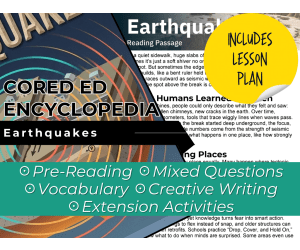
Earthquakes Reading Comprehension Passage - Cored Ed Encyclopedia
ELA, Reading Comprehension, Reading, Science, Technology, Social Studies, Earth and Environmental Sciences, Geography, Pre-Reading, Language Development, Grade 2, 3, 4, 5, Worksheets & Printables, Worksheets, Teacher Tools, Centers, Activities, Writing Prompts, Assessments, Quizzes and Tests, Quizzes, Lesson Plans
This earthquakes reading comprehension with lesson plan includes: Visualization (on the front cover) Start your lesson by taking a minute to think and share something about the topic. Read the script aloud (slowly), perhaps prepare some music or sound effects. Student close their eyes and let their imaginations wander. Students open their eyes, read the question aloud and give them a few minutes to complete. Ask a few students to share or keep answers until the end to compare with what they learn in the passage. Quick pause—thousands of Cored Education products are included with your TeachSimple membership. Download links and encyclopedia index available here. Pre-Reading Trivia Students will write down one thing they already know about the subject and then read five more facts and discuss. These facts are fun, and the students will enjoy learning about the subject before reading more. Give 1 minute for students to write what they already know (no pressure—best guess is fine). Read the five facts together. After each fact, do ask a student for their opinion, was it surprising? Set a purpose by asking students to highlight/underline one fact they want to learn more about during the reading. Reading Passage The text is a high-interest reading passage with set paragraphs, roughly three to four paragraphs long. It contains a variety of themes about the topic, anywhere from history to technology. The passage is between 250 and 350 words in length. First, ask students to look at the headings and see what they’ll learn about today. What do they know about the topic/heading? First read options: Teacher read-aloud (best for support). Partner reading (paragraph by paragraph). While reading, students underline important details, and vocabulary words they think may come up in the questions section. Mixed Questions The first question page contains four multiple-choice questions, each with a choice of four answers, and three written response questions that require a sentence or two from the student. Students complete the mcqs first independently, then review quickly as a class. For the 3 written responses, try to get students giving the answer with some form of evidence: “I think ___ because the text says ___.” If students get stuck, send them back to check the passage. Vocabulary Questions Practice seven key words from the text in this section across two activities. First section is scrambled words where students will unscramble three words given a clue for each. The second section is a word to meaning matching activity. Before starting, have some students read out words they underlined in the passage. Ask students to say the word and read aloud the sentence(s) around each word. Ask students to do scrambled words and the matching exercise in pairs then go through answers as a class. For the scrambled spelling task, get four pairs to come up to the board and write the words for extra practice with the other student reading out the clue. For the matching task, prompt students to give full sentences: “I matched ___ with ___ because ___.” Creative Writing In this question, the student will be required to write a five to eight sentence paragraph on a question related to the topic. Before starting, ask students write down 3 key ideas they are going to include in their piece. Ask students for ideas to share around the class to help those struggling. Pro writing expectations: 5–8 sentences At least 2 facts or details from the passage At least 2 vocabulary words from the previous page Students read their paragraphs while classmates listen for facts and vocabulary words. Extension Activities This page is optional for fast finishers or to take home. There are several activities, each one requiring a different skill. Do some, do none, do all, completely optional - but you will feel reassured knowing every possibility is planned for. Includes summary writting question and additional facts. Answer Key There are answers for the multiple-choice questions, written response questions have sample answers, vocabulary answers and if there is a summary question then a sample summary will be provided as well. Lesson Plan Included Customized lesson plan for this lesson is included. Lesson Snapshot Title: Earthquakes Genre: Nonfiction (Informational Text) Subject: Science (Earth Science) / Reading (Informational Text) Primary Topic: How earthquakes happen and how people prepare Estimated Guided Reading Level (A–Z): N What This Lesson Teaches Best Explains what causes earthquakes : rocks can get stuck along a fault , pressure builds, and rocks suddenly slip. Builds understanding of earthquake vocabulary and concepts (fault, seismic waves, epicenter, focus, magnitude, intensity). Shows how scientists measure and describe earthquakes using seismometers and “magnitude” vs. “intensity.” Describes where quakes happen more often (where tectonic plates meet , including the Pacific Ocean’s Ring of Fire ) and what can follow ( aftershocks , possible tsunami ). Connects science to safety and preparedness , including “ Drop, Cover, and Hold On ,” retrofits, and warning systems. Learning Goals Students will be able to describe how pressure can build along a fault and lead to an earthquake. Students will be able to identify and explain the meanings of key earthquake terms used in the text. Students will be able to explain how seismic waves relate to ground shaking and the epicenter . Students will be able to compare “magnitude” and “intensity” as described in the passage. Students will be able to describe why some places experience more earthquakes than others (plate boundaries, Ring of Fire). Students will be able to list actions people and communities take to be ready for earthquakes. Key Vocabulary From the Text fault — a crack where rocks can slip. seismic — related to shaking waves moving through Earth. epicenter — the spot above where the break happened. seismometers — tools that trace wiggly lines when waves pass. aftershocks — smaller earthquakes that can follow a big quake. FULL CATALOG OF DOWNLOAD LINKS AND ENCYCLOPEDIA INDEX HERE
Author Cored Education
Rating
Tags Vocabulary, Reading Comprehension, Reading Passages, Lesson Plans, Ela Lesson Plans, Reading Comprehension Lesson Plans, Pre-reading, Science Lesson Plans, Geography, Earth Science
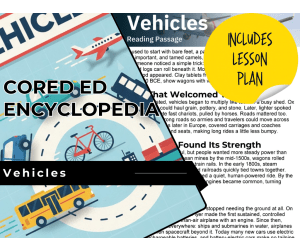
Vehicles Reading Comprehension Passage - Cored Ed Encyclopedia
ELA, Language Development, Reading Comprehension, Reading, Pre-Reading, Science, Technology, Engineering, History, Social Studies, Grade 2, 3, 4, 5, Worksheets & Printables, Worksheets, Teacher Tools, Centers, Activities, Writing Prompts, Assessments, Quizzes and Tests, Quizzes, Lesson Plans
This vehicles reading comprehension with lesson plan includes: Visualization (on the front cover) Start your lesson by taking a minute to think and share something about the topic. Read the script aloud (slowly), perhaps prepare some music or sound effects. Student close their eyes and let their imaginations wander. Students open their eyes, read the question aloud and give them a few minutes to complete. Ask a few students to share or keep answers until the end to compare with what they learn in the passage. Quick pause—thousands of Cored Education products are included with your TeachSimple membership. Download links and encyclopedia index available here. Pre-Reading Trivia Students will write down one thing they already know about the subject and then read five more facts and discuss. These facts are fun, and the students will enjoy learning about the subject before reading more. Give 1 minute for students to write what they already know (no pressure—best guess is fine). Read the five facts together. After each fact, do ask a student for their opinion, was it surprising? Set a purpose by asking students to highlight/underline one fact they want to learn more about during the reading. Reading Passage The text is a high-interest reading passage with set paragraphs, roughly three to four paragraphs long. It contains a variety of themes about the topic, anywhere from history to technology. The passage is between 250 and 350 words in length. First, ask students to look at the headings and see what they’ll learn about today. What do they know about the topic/heading? First read options: Teacher read-aloud (best for support). Partner reading (paragraph by paragraph). While reading, students underline important details, and vocabulary words they think may come up in the questions section. Mixed Questions The first question page contains four multiple-choice questions, each with a choice of four answers, and three written response questions that require a sentence or two from the student. Students complete the mcqs first independently, then review quickly as a class. For the 3 written responses, try to get students giving the answer with some form of evidence: “I think ___ because the text says ___.” If students get stuck, send them back to check the passage. Vocabulary Questions Practice seven key words from the text in this section across two activities. First section is scrambled words where students will unscramble three words given a clue for each. The second section is a word to meaning matching activity. Before starting, have some students read out words they underlined in the passage. Ask students to say the word and read aloud the sentence(s) around each word. Ask students to do scrambled words and the matching exercise in pairs then go through answers as a class. For the scrambled spelling task, get four pairs to come up to the board and write the words for extra practice with the other student reading out the clue. For the matching task, prompt students to give full sentences: “I matched ___ with ___ because ___.” Creative Writing In this question, the student will be required to write a five to eight sentence paragraph on a question related to the topic. Before starting, ask students write down 3 key ideas they are going to include in their piece. Ask students for ideas to share around the class to help those struggling. Pro writing expectations: 5–8 sentences At least 2 facts or details from the passage At least 2 vocabulary words from the previous page Students read their paragraphs while classmates listen for facts and vocabulary words. Extension Activities This page is optional for fast finishers or to take home. There are several activities, each one requiring a different skill. Do some, do none, do all, completely optional - but you will feel reassured knowing every possibility is planned for. Includes summary writting question. Answer Key There are answers for the multiple-choice questions, written response questions have sample answers, vocabulary answers and if there is a summary question then a sample summary will be provided as well. Lesson Plan Included Customized lesson plan for this lesson is included. Lesson Snapshot Title: Vehicles Genre: Nonfiction (Informational text) Subject: Social Studies / Science & Technology Primary Topic: How transportation changed from wheels to flight Estimated Guided Reading Level (A–Z): P Support pages: Pre-reading trivia, mixed questions, vocabulary practice, creative writing, extension activities, and an answer key. Support-page QA check: Some vocab items don’t match the exact word forms in the passage (e.g., chariot vs chariots , battery vs batteries , submarine vs submarines , locomotive vs locomotives ). What This Lesson Teaches Best Sequence of transportation changes over time: Moves from walking/animals, to logs/sledges, to wooden wheels and wagons, to roads and coaches, to steam locomotives, motor vehicles, and airplanes. How inventions improved travel and hauling: Explains how wheels, roads, tracks/railroads, and engines made travel smoother, faster, and able to carry heavier loads. Using headings to organize information: Section headings (“Roads…,” “When Steam…,” “A Lift Into the Air”) help readers track time periods and big shifts. Key historical details in an informational text: Includes dates and examples such as Uruk clay tablets (3700–3500 BCE) and the Wright Flyer flight (December 17, 1903). Modern tech and environmental impact: Notes electric motors, rechargeable batteries, and “no tailpipe exhaust,” ending with a question about helping the planet. Learning Goals Students will describe how people traveled and carried loads before wheels, using details from the passage. Students will identify how wheels changed what vehicles could do (hauling goods and moving more easily). Students will explain how roads and railroads affected travel and connected places, based on the text. Students will summarize the “biggest leap” in travel described in the passage and name the example given. Students will use headings and key details to retell the passage’s main changes in transportation in order. Key Vocabulary From the Text sledge — a sled that helps heavy things slide. Mesopotamia — an ancient region where Uruk was located. spoked — having thin supports connecting wheel center to rim. locomotives — train engines that pull cars on tracks. rechargeable — can be filled with power again. FULL CATALOG OF DOWNLOAD LINKS AND ENCYCLOPEDIA INDEX HERE
Author Cored Education
Rating
Tags Vocabulary, Reading Comprehension, Reading Passages, Lesson Plans, Ela Lesson Plans, Reading Comprehension Lesson Plans, Pre-reading, Science Lesson Plans, Technology, History Lesson Plans

Adjectives | Upper Intermediate Lesson Plan
ELA, Grammar, ESL, Language Development, Grade 6, 7, 8, Teacher Tools, Lesson Plans, Worksheets & Printables
The Adjectives Upper Intermediate Lesson Plan helps students in grades 6-8 strengthen their grammar skills. Students first learn about the role adjectives play in sentences, including concepts like types of adjectives, adjective order, and using comparative and superlative forms. After the informative lesson, students put their knowledge into practice through comprehension checks and written exercises assessing their grammar abilities. Educators can implement this adaptable resource in various settings like whole group instruction, small group remediation, independent practice, or homework. Answer keys are provided to check student work. This practical lesson plan formatted for digital access equips students to properly utilize adjective vocabulary when writing and speaking. The ESL ELL ELA and TEFL lesson plan includes flashcards, a warmer, grammar rules, exercises, role-play, conversation, writing drill, activity, answers and an extra study that would be good to set as homework. There are 33+ pages and there are teachers notes to guide the teacher.
Author TEAM TEFL
Tags Language Arts, Grammar, Adjectives, Nouns, Pronouns

Phonics / Digraphs for 1st and 2nd Grade: Beginning Sounds: SH, TH, WH and PH
ELA, Reading, Reading Comprehension, Grammar, Language Development, Phonics, Strategies, Pre-Reading, Grade 1, 2, Worksheets & Printables, Worksheets, Teacher Tools, Lesson Plans
This unit focuses only on the Beginning Digraph sounds. Learning how to read can be the most challenging activity for many students and for a teacher. A digraph in the English language are two letters put together that represents a single sound or phoneme. Understanding that the combination of letters can make one sound can be difficult to master and requires repetitive practice of reading and writing these words with these sounds. There are other phonics units that I sell that focuses on the Ending digraph sounds, and one that focuses on all three digraph sounds in the Beginning, Middle and End. Reading can be made easier with these phonic helps that repeatedly encourage students to practice these Beginning Digraph sounds. Activities include reading comprehension and identifying the digraphs in their reading, writing their answers to questions regarding the paragraph, identifying additional beginning digraph words in sentences using a word bank, matching words with pictures, spinning a paperclip activity where students will write the word with the digraph sound, and lastly a fun wordsearch with the beginning digraph words. These activities are for each digraph so there is plenty of opportunities for students to practice their comprehension reading skills and phonic sounds. Students will practice the following Beginning Digraph sounds: sh, th, wh, and ph. Teachers can use this resource in whole group, individually with students, students can practice with each other in centers, or they can be assigned as homework. Worksheets are also differentiated for each Beginning Digraph sound for all young learners which makes it perfect for all 1st - 2nd graders. A total of 26 pages full of reading and phonic activities. Along with reading and writing, there are matching, cutting, and pasting activities. Word searches and spin and make a word activity are also a part of this packet which make learning to read these phonic sounds entertaining for young learners. For a list of other phonics and grammar activities, click on the following links: CVC Word Families for Beginning Readers: Stamp it, Make it, Trace it, and Write it CVC Words | Short Vowel Phonics | Word Families for K- 2nd Grade Phonics for 1st and 2nd Grade: Help Students Learn Long A Words: AY, AI, A_E, EIGH, EY, and EA Phonics for 1st and 2nd Grade: Help Students Learn Long E Words: EE, EA, E_E, and Y Phonics for 1st and 2nd Grade: Help Students Learn Long I Words: I_E, IE, IGH, and Y Phonics for 1st and 2nd Grade: Help Students Learn Long O Words: O_E, OA, OW, OE, and OUGH Phonics for 1st and 2nd Grade: Help Students Learn Long U Words: U_E, EW, OO, UE, UI and OU Phonics / Digraphs for 1st and 2nd Grade: Beginning, Middle, and Ending Sounds Phonics / Digraphs for 1st -2nd: Ending Sounds: CK, NG, SH, TH, and NK Phonics / Digraphs for 1st and 2nd Grade: Beginning Sounds: SH, TH, WH and PH Phonics: R-Controlled Words for 1st and 2nd Grade and Early Readers
Author K-5 Treasures
Tags Beginning Sounds, Phonics , Sh Words, Th Words, Wh Words, Ph Words, Reading , Digraph Words, Th Digraphs, First Grade Digraphs

Lifestyles ESL Advanced Lesson Plan
ELA, Language Development, ESL, Not Grade Specific, Adult Education, High School, Middle School, Teacher Tools, Lesson Plans, Worksheets & Printables
Lifestyles ESL Advanced Lesson Plan is an educational resource that helps students improve their English comprehension and grammar skills. Students first learn new vocabulary and information related to lifestyles through informative readings and audio exercises. Educators can then use the included assessments and worksheets to check students' understanding and have them put their new knowledge into practice. This versatile resource works well for whole-class instruction, small group work, or even independent assignments. With multiple files available, including a Google Apps version and answer keys, teachers have flexibility to use this lesson plan across various learning formats and settings - from public school classrooms to homeschools. The ESL lesson plan includes flashcards, a warmer, grammar rules, exercises, role-play, conversation, writing drill, activity, answers and an extra study that would be good to set as homework. There are 32+ pages and there are teachers notes to guide the teacher. 3 PDFs with 10 ready to print pages and one digital access file 1 MP3 file
Author TEAM TEFL
Tags Lifestyle, Language Arts, ESL, Debates, Socialism Vs Capitalism

Phrasal Verbs Advanced ESL Lesson Plan
ELA, Language Development, ESL, Grammar, Not Grade Specific, Adult Education, High School, Teacher Tools, Lesson Plans, Worksheets & Printables
Phrasal Verbs Advanced Lesson Plan teaches high-level English language learners and native speakers essential phrasal verbs. Students explore the nuances between literal and figurative meanings to build vocabulary. Then they apply this knowledge by completing focused exercises assessing comprehension, spelling, and grammar skills. This resource suits small group direct instruction or independent practice. Answer keys support self-assessment. Implementation ideas include pretesting to identify knowledge gaps, whole class introduction with shared examples, small group peer discussion, and reflections synthesizing personal meanings. This engaging 7-page PDF lesson plan on phrasal verbs strengthens language mastery for both ESL students and native speakers ready for advanced concepts. Answer keys support diverse learning needs when used for individual, small group, or whole class instruction. The ESL lesson plan includes flashcards, a warmer, grammar rules, exercises, role-play, conversation, writing drill, activity, answers and an extra study that would be good to set as homework. There are 32+ pages and there are teachers notes to guide the teacher.
Author TEAM TEFL
Tags Phrasal, Verbs, ESL Lesson, Prepositions, Language Arts
Powered Phonics Rule Detectives Gamified Micro-Quests for K-2
Reading, ELA, Literature, Children’s Literature, Mental Health, P.E. & Health, Mindfulness, Health, Research, STEM, Homeschool Curriculum, Grade 1, 2, 3, 4, 5, Activities, Games, Projects, Experiments, Assessments, Teacher Tools, Lesson Plans, Literacy Readers, Presentations, Rubrics
Unleash the Potential of Literacy with this Full, AI-Supported Phonics Learning Program for Grade K-2 Students! "AIPowered Phonics Rule Detectives: Gamified Micro-Quests for K-2 Word Building - Phonics Rules Buildable Grade K-2nd Edition" features 45 pages of interactive digital lesson material that can turn conventional phonics lesson delivery into an incredibly fun and fascinating detective hunt mystery series for kids. A full range of interactive elements, digital AI advisory tools for adaptive content delivery, worksheets for kids, teacher support material, images, and solution keys have been included in this resource tools package for teachers and home schooling parents for effective decoding, reading, and spelling skill development for kids in Grade K-2. Based on a strong systematic and explicit phonics and synthetic background, the "buildable" sequence in the curriculum includes the following skills for each grade level: Kindergarten—basic CVC words and letter sounds, Grade 1—digraphs, blends, CVCE (or "magic e"), and long vowels, Grade 2—vowel teams, r-controlled vowels, diphthongs, syllables, soft C/G, and silent letters. Use the power of Artificial Intelligence to generate unlimited differentiated scenarios, sentences, and activities for remediation, on-grade, or enrichment purposes, and add gamification components such as role-playing, stories, points, badges, and feedback. Why Parents/Schools Love It: Engage Gamification Increases Motivation: Converts phonics lessons into enjoyable 'detective missions' involving stories, badges, & micro-quests, keeping children eager & preventing burnout, underpinning theories such as Self-Determination Theory & Behaviorism. AI-Enabled Personalization: Saves Time “Teachers use prompt cards to create endless differentiated learning material instantly, serving all children, from struggling to advanced learners, without consuming teaching hours.” Established Effectiveness with Data-Driven Insights: Comes with personalized student data indicating an 60-85% proficiency rate for essential rules, as well as assessment and tracking for literacy gains. Complete Ready-to-Use Resources: The all-inclusive resources are available as a single PDF that includes theory lessons, activity sheets, and answer keys and ethics guidelines related to AI that are suitable according to literacy best practices. It Helps Develop Lifelong Reading Confidence: This scaffolding approach leads children to gain a strong conceptual foundation regarding phonics rules, which results in their fluent reading skills, ability to master spelling concepts, as well as developing their lifelong love Target Classes/Students : On the basis of a comprehensive analysis of the PDF document, which includes the flow of the document, developmental phases, categories of rules, worksheets, as well as examples, the following groups of students can be targeted by it: Kindergarten (Emergent Readers): Emphasis on basic components including letter/sound association, vowel concepts, CVC words, and initial/final sounds. This is to promote cognitive balance in the content. Grade 1: Focuses on mastery of CVC words, introduction to digraphs (sh, ch, th, wh), blends (bl, fr, st), CVCE, magic 'e', Long Vowel teams - ai, ee, oa. Grade 2 (Developing Readers) Focuses on complex long vowel combinations, complex pairs of vowels in a word or syllable (ou, oy, ie), r-controlled combinations of letters and vowels (ar, er, ir, or, ur), diphthongs, inflectional suffixes, syllables, and silent letters Its K-2 continuum is "buildable," in that the rules ramp up cumulatively, and it is therefore ideal for mixed-age, intervention, or enrichment settings in the early grades of schooling. Copyright/Terms of Use : «This Book was copyrighted by Syed Hammad Rizvi.» You cannot modify it or give it or any part of it away or resell it. That means you cannot put it on the Internet where it might be downloaded by anyone who wants it. However, if you need to share this resource with colleagues, just purchase more licenses from Teachsimple. Thanks for following the terms of use! This product has been very proudly presented to you by Syed Hammad Rizvi
Author Creative Book Store
Rating
Tags AIPoweredPhonics, PhonicsRuleDetectives, GamifiedMicroQuests, K2WordBuilding, PhonicsRulesK2, BuildablePhonicsCurriculum, KindergartenPhonics, Grade1Phonics, Grade2Phonics, EarlyLiteracyDevelopment

Claude Monet | Artist Biography + Activities | Elementary Art Lesson
ESL, Language Development, ELA, Biographies, Social Studies, Social Emotional Learning (SEL), Special Resources, Art, Creative Arts, Art History, Elementary, Lesson Plans, Teacher Tools, Presentations, Coloring Pages, Worksheets, Worksheets & Printables
This resource offers your students the opportunity to independently explore and summarize the life of the famous French Impressionist artist Claude Monet, thanks to this engaging discovery and learning tool. This resource is designed to guide students through the artist's biography: from his early childhood passions to his first experiments, from his encounters with other Impressionist artists (Pissarro, Renoire, Degas) to his artistic maturity. Teaching with this resource is simple! Start by showing the biography slides: through illustrations created in Monet's unmistakable style and the first-person narrative, students will approach him empathetically, seeing him first as a friend and playmate. Once the story is complete, you will find the proposed activities. "Monet's Artist" section: - Color recognition activity based on the series of paintings "The Rouen Cathedral"; - Coloring: Theory of color and color contrasts; - Redrawing and coloring a still life by Monet "The Artist's Qualities" section. In this section, students will describe the "human" qualities that made Monet famous: passion, love of nature, perseverance, and determination. "Chat with the Artist" section. In this final phase, students will have the opportunity to chat with Monet through a specially designed AI experience to stimulate interest and engagement. The resource is structured to answer questions and provide new conversation starters. The resource is available in four languages: English, French, German, and Italian.
Author TeachFizz
Rating
Tags Claude Monet, Impressionism, Artist Biography, Art History Lesson, Famous Artist, No-prep Art Lesson, Elementary Art, Artist Study, Homeschool Art
Back to School ELA Review for 1st Grade | 20 Daily Lessons
ELA, Grade 1, Assessments, Teacher Tools, Worksheets & Printables, Lesson Plans
Make the first month of school easier with this 1st grade back to school ELA review designed to revisit essential kindergarten reading, grammar, phonics, vocabulary, and writing skills. With 20 structured daily lessons plus 16 print-and-play literacy games, this resource helps students rebuild confidence, strengthen routines, and prepare for first grade learning. Each daily lesson follows a predictable four-part rhythm— Read & Think, Language & Grammar, Word Work, and Write About It —so students know what to expect while skills gradually spiral and build. What’s Included This first grade ELA review includes a complete back-to-school literacy system: ✅ 20 daily ELA review lessons ✅ Short fiction, nonfiction, and poetry passages ✅ Reading comprehension questions ✅ Grammar and language review ✅ Phonics and word work practice ✅ Vocabulary activities ✅ Daily writing prompts ✅ Primary-ruled writing lines with dashed midlines ✅ 16 print-and-play literacy games and activities ✅ Partner and small-group games ✅ Literacy center activities ✅ Complete answer key for all 20 days ✅ Teacher guide ✅ 20-day pacing overview ✅ Four-week planning guide ✅ Differentiation ideas ✅ Game preparation directions ✅ Game-to-skill quick-reference map ✅ Class progress record sheet ✅ Family letter for home-school connection ✅ Reading Star Award and student reflection The student workbook contains 20 daily lessons plus 16 print-and-play games , with daily practice in reading, grammar, word work, and writing. The complete answer key organizes responses by day and section for fast checking, while allowing reasonable student wording for open-ended writing and reflection tasks. How It Works in the Classroom Use this 1st grade back to school ELA review as a gentle first-month routine, literacy warm-up, morning work option, whole-group review, intervention support, or independent practice. Each day follows the same student-friendly structure: 📖 Read & Think — Read a short passage and answer three comprehension questions ✏️ Language & Grammar — Review one focused kindergarten language skill 🔤 Word Work — Practice phonics, sight words, vocabulary, or word patterns 📝 Write About It — Complete a short writing task connected to the day’s learning A full lesson is designed to take about 15–25 minutes , with earlier lessons providing lighter review and later lessons combining skills. Use the resource for: ⭐ Back-to-school ELA review ⭐ First grade morning work ⭐ Literacy warm-ups ⭐ Kindergarten skills review ⭐ First month of school activities ⭐ Reading comprehension practice ⭐ Grammar review ⭐ Phonics and word work ⭐ Literacy centers ⭐ Partner practice ⭐ Small groups ⭐ Early finishers ⭐ Intervention and reteaching ⭐ Homework or home practice The included 20-Day Pacing at a Glance chart on page 6 of the Teacher Guide shows how reading, language, and word-work skills spiral from beginning sounds and letter recognition into comprehension, editing, vocabulary, and final review. For a four-week routine, teachers can assign workbook lessons Monday through Thursday and use Friday for games, literacy centers, catch-up, or review. Standards & Learning Goals This first grade literacy review revisits five major strands of kindergarten learning: 📚 Reading Comprehension — main idea, details, characters, setting, sequence, retell, prediction, compare and contrast, cause and effect, story lesson, nonfiction facts, and nonfiction labels ✏️ Grammar & Language — uppercase and lowercase letters, capital letters, periods, question marks, exclamation marks, complete sentences, nouns, verbs, plural nouns, word order, capitalizing names and the word I , and editing 🔤 Phonics & Word Work — beginning sounds, ending sounds, short vowels, CVC words, rhyming, word families, sight words, and syllables 💬 Vocabulary — naming words, synonyms, antonyms, describing words, categories, multiple-meaning words, sequence words, and word building 📝 Writing — labeling, sentence writing, short responses, personal writing, retelling, connected writing, and reflection Across the 20 days, students move from foundational skills such as beginning sounds, ending sounds, uppercase and lowercase letters, rhyming, and CVC words into comprehension skills such as main idea, characters, setting, sequence, retell, prediction, comparing, story lessons, nonfiction facts, cause and effect, and making connections. Later lessons also strengthen sentence construction, editing, plural nouns, adjectives, word order, multiple-meaning words, synonyms, antonyms, and mixed ELA review. Why Teachers Love It ✨ One predictable routine every day. Students repeatedly use the same four-part lesson structure, helping build independence and reduce transition time. ✨ Review multiple ELA skills without overwhelming students. Reading, grammar, word work, and writing are combined in manageable daily lessons. ✨ Get 20 days of ready-to-use practice. The pacing is already organized for a full month of back-to-school ELA review. ✨ Use both fiction and nonfiction. Students read short fiction passages, nonfiction selections, and poetry while practicing varied comprehension skills. ✨ Differentiate for a wide range of readers. The Teacher Guide includes specific suggestions for below-level students, on-level learners, above-level students, and multilingual learners. ✨ Add hands-on practice with 16 literacy games. Activities include: Noun & Verb Sort Capital & Lowercase Match Rhyme Match Roll-a-Word Family Sight Word BINGO Sight Word Roll & Read Beginning Sounds Sort Same & Opposite Match Reading Road Race Main Idea Baskets End Mark Sort Sentence Building Tiles Fix-It Cards Sequence Cards Sight Word Four-in-a-Row Syllable Sort The Game → Skill Quick Map on page 9 of the Teacher Guide makes it easy to match each activity to a targeted literacy skill, from phonemic awareness and CVC word families to punctuation, editing, sentence structure, main idea, and sight-word fluency. ✨ Prep once and reuse the games. Print game pages on cardstock, laminate boards and cards, and store each activity in a labeled bag for repeated center use. ✨ Monitor progress without adding another assessment. Daily pages can double as quick formative checks, and the Class Record Sheet on page 10 of the Teacher Guide provides space to track four weeks of progress and note skills to revisit. ✨ Save time checking work. The included answer key provides organized answers for all 20 lessons. ✨ Support home-school connection. A ready-to-send family letter explains the daily review and offers simple ways caregivers can support reading and language skills at home. Give your students a confident, structured start to first grade with this 1st grade back to school ELA review . Download it to review kindergarten skills, establish a predictable literacy routine, strengthen reading and writing confidence, and keep students engaged with 20 daily lessons plus 16 print-and-play games. Perfect for teachers searching for first grade morning work , kindergarten skills review, beginning of year ELA activities, 1st grade literacy centers, reading comprehension practice, grammar review, phonics activities, sight word games, first month of school activities, or a complete back-to-school literacy review.
Author Bright Classroom Ideas Marketplace
Rating
Tags Back To School, Assessment, Ela, Reading, Writing, Grammar

3rd Grade Grammar Curriculum | Third Grade Year-Long Grammar Curriculu
ELA, Grammar, Grade 3, Lesson Plans, Teacher Tools
This ready-to-use, printable grammar curriculum covers all the essential concepts for third graders. Aligned with Common Core standards, it’s designed to provide a structured, year-long approach to grammar instruction. Each week introduces a new concept with a variety of engaging activities. The teacher packet provides all necessary teaching materials, while students receive a packet with five practice worksheets and an end-of-week quiz. The mix of activities ensures learning stays fresh and fun! At the end of the year, students will complete a cumulative assessment covering everything they’ve learned. What's Included: Teacher Packet: (Cover sheet, concept map, examples, and answer keys) Student Packet: (5 practice worksheets and a weekly quiz) End-of-year comprehensive test Weekly Grammar Concepts: Week 1: Capitalizing titles Week 2: Commas in addresses Week 3: Punctuation in dialogue Week 4: Nouns, pronouns, and verbs in sentences Week 5: Review Week 6: Regular plural nouns Week 7: Irregular plural nouns Week 8: Abstract nouns Week 9: Regular past tense verbs Week 10: Review Week 11: Irregular past tense verbs Week 12: Simple verb tenses Week 13: Subject-verb agreement Week 14: Subject-verb agreement Week 15: Review Week 16: Comparative adjectives Week 17: Superlative adjectives Week 19: Pronoun-antecedent agreement Week 20: Review Week 21: Simple sentences Week 22: Coordinating conjunctions Week 23: Creating compound sentences Week 24: Rearranging compound sentences Week 25: Review Week 26: Subordinating conjunctions Week 27: Identifying complex sentences Week 28: Forming complex sentences Week 29: Expanding complex sentences Week 30: Review
Author Simply Schoolgirl
Tags Grammar, Grammar Curriculum, Third Grade Grammar, 3rd Grade Grammar, Grammar For Third Graders