Deserts: Hot or Cold?: A Cross-Curricular Unit
A cross-curricular unit teaching that deserts can be hot or cold, covering reading comprehension, vocabulary, math, and geography around desert biomes.
Answers included


858 resources
Explore sub-categories
10 sub-categories · 858 resources
A cross-curricular unit teaching that deserts can be hot or cold, covering reading comprehension, vocabulary, math, and geography around desert biomes.
A cross-curricular (reading/history/math/vocabulary) unit teaching Grade 3-4 students about the Wright brothers and the invention of the airplane through a nonfiction narrative and follow-up activities.

The Dino Park Mini Unit: An Integrated Grade 2 and 3 Teaching Resource This multifaceted teaching resource, suitable for Grade 2 and Grade 3 students, blends language arts, math, and science within a three day unit.
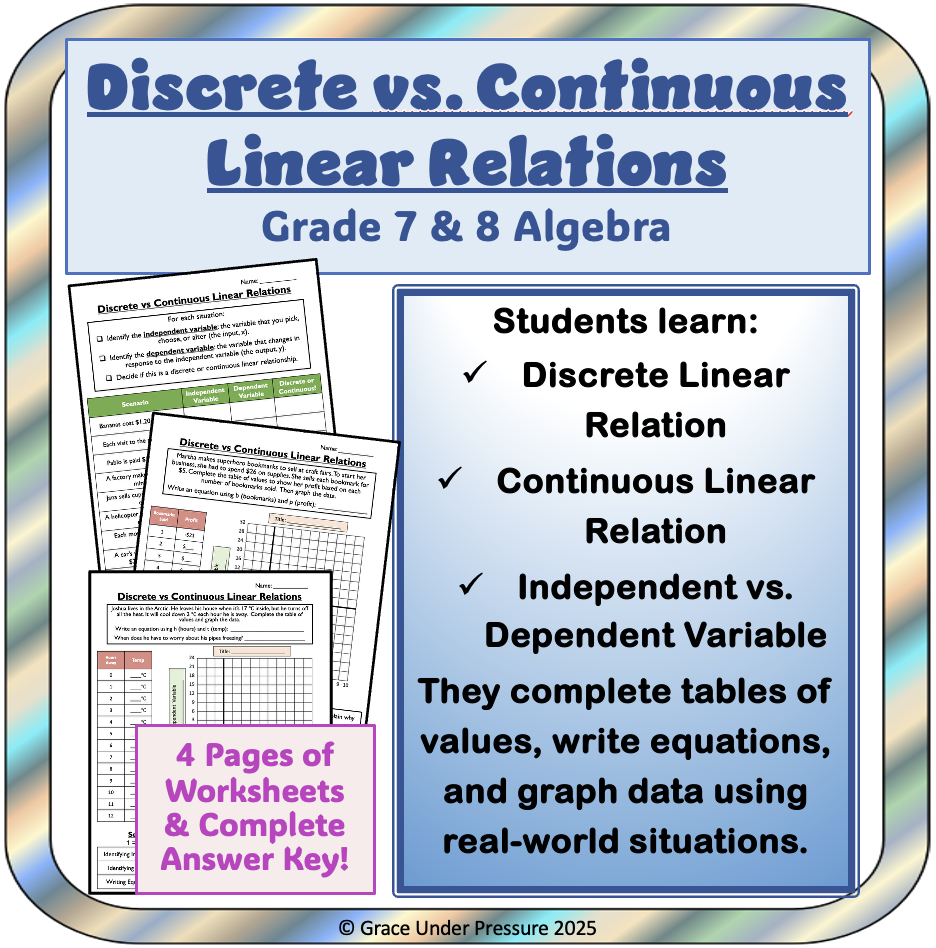
A lesson/worksheet set teaching students to distinguish discrete versus continuous linear relationships, identify independent and dependent variables, and model real-world scenarios with tables, equations, and graphs.

Distributive Property with Rational Numbers NOTES & PRACTICE A comprehensive teaching resource designed to assist in the effective teaching of the 7th Grade Number Systems Standards, chiefly focusing on multiplication and how it extends…
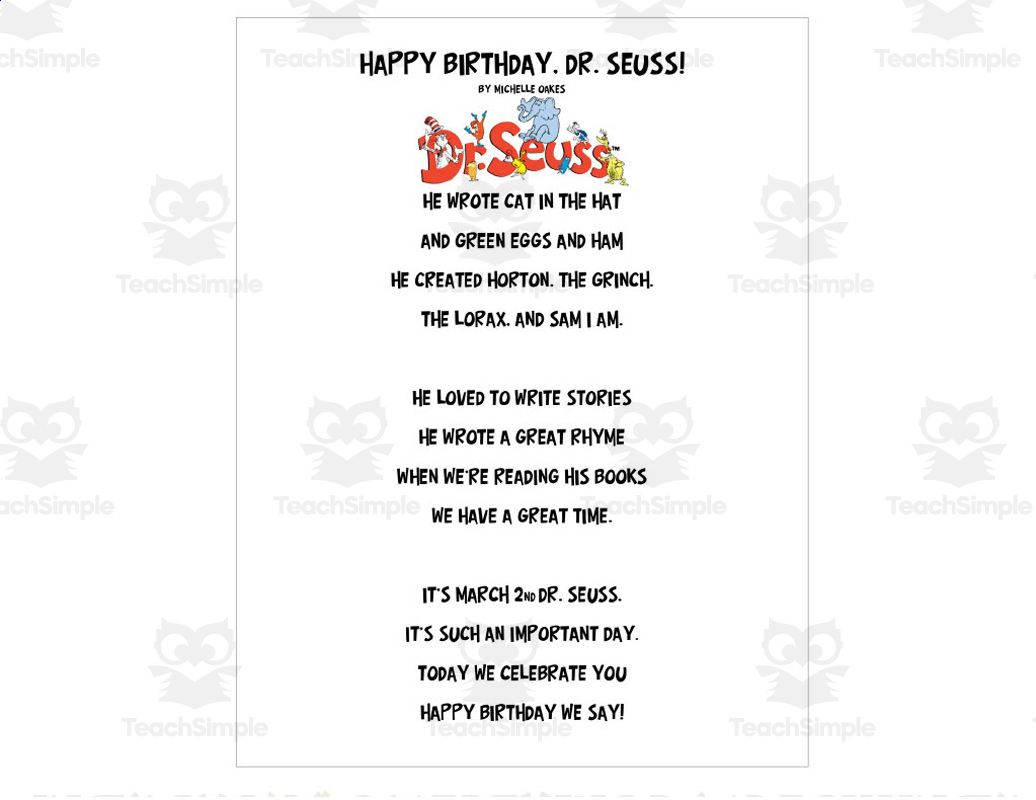
Preschool curriculum pack of week-long Dr. Seuss-themed activities across circle time, movement, art, science, language/literacy, math, construction, and dramatic play, tied to Dr. Seuss's birthday.
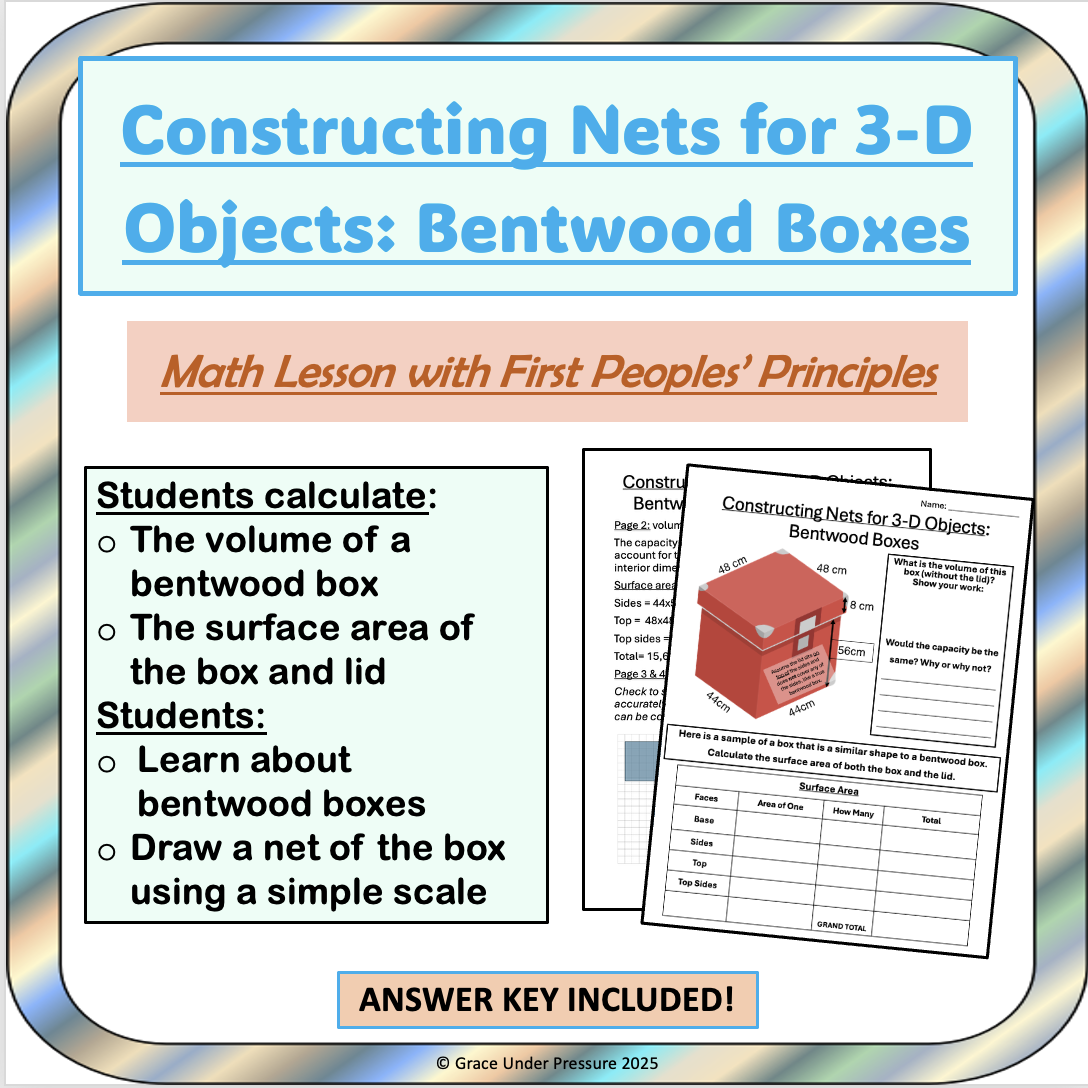
Grade 8 math lesson connecting Indigenous (First Peoples) cultural content to surface area, volume, and constructing nets of 3-D objects, using traditional Northwest Coast bentwood boxes as the real-world context.
An educator's guide providing theory, methodology, and classroom strategies for teaching fractions to students with dyscalculia, math learning disabilities, or math anxiety, using a specialized visual/spatial (non-pie-chart) approach to the Concrete-Pictorial-Abstract framework.
Make Earth Day impactful with this cross-curricular unit focusing on the Great Pacific Garbage Patch. Through reading, writing, math, and science, upper elementary students explore this major but little-known environmental issue.

A personal finance activity that has students examine their money-management habits through a physical 'bill' simulation, then create their own personal budget.

This is an Economy and Entrepreneurship Unit designed with your upper grade students in mind. It is an extensive unit full of resources and activities that will teach them more about concepts such as supply and demand, earning profits…
A Lorenz Educational Press collection of eight cross-curricular nonfiction reading passages with reproducible follow-up activities for grades 1-2, designed for emergency/substitute teaching situations or supplemental cross-curricular study, and correlated to National Education Standards.
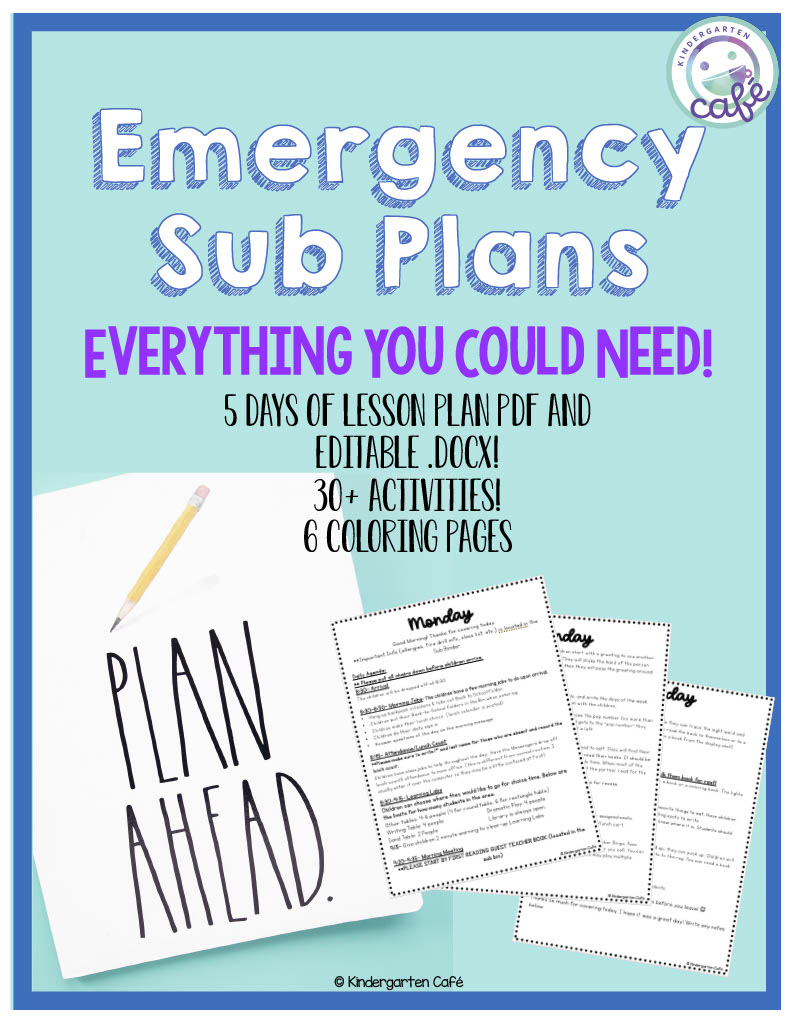
A multi-day (intro states 5 days) set of sample and editable substitute/emergency lesson plans for an early-elementary/kindergarten classroom, covering a full daily schedule (morning meeting, reading, math, science, writing, etc.), plus guidance on organizing a substitute binder/tub.
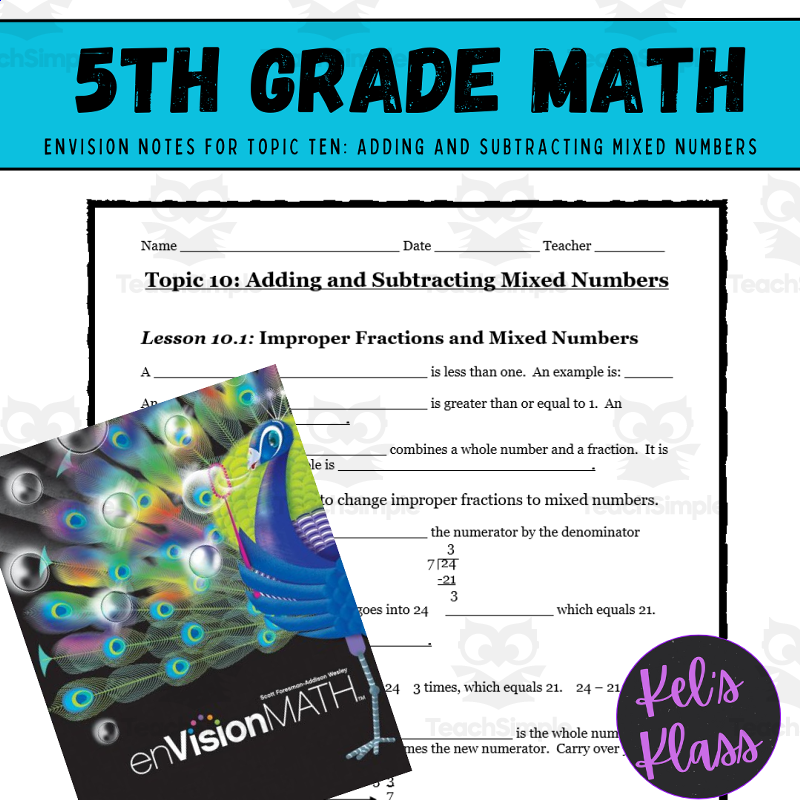
Envision Math Grade 5 – Topic 10: Adding and Subtracting Mixed Numbers provides everything you need to teach this tricky skill with clarity and confidence.
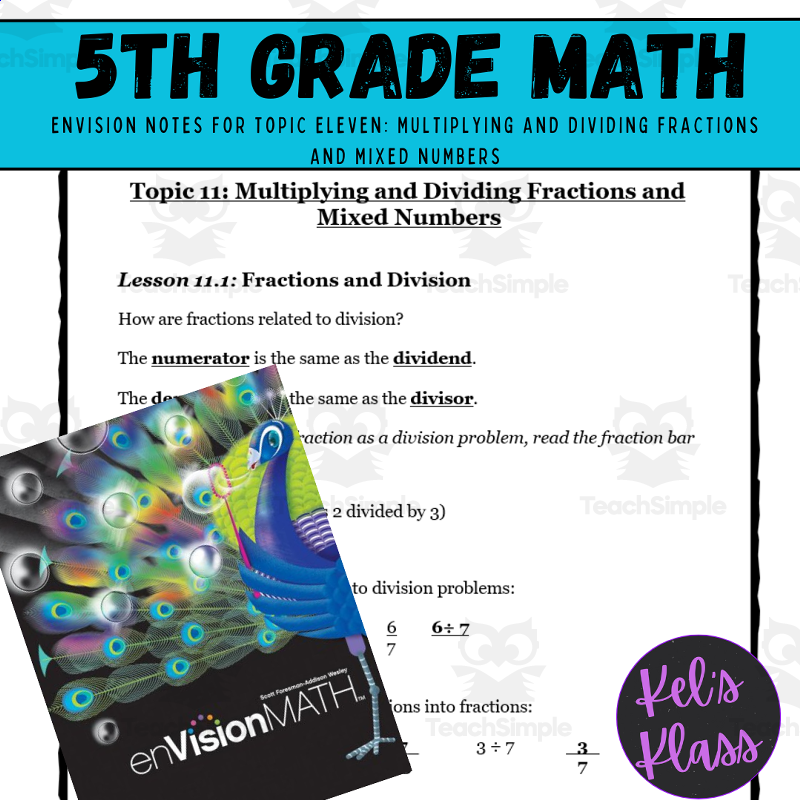
Teach and provide guided practice for multiplying and dividing fractions and mixed numbers, aligned to (but not excerpted from) the Envision Math Grade 5 Topic 11 curriculum sequence.
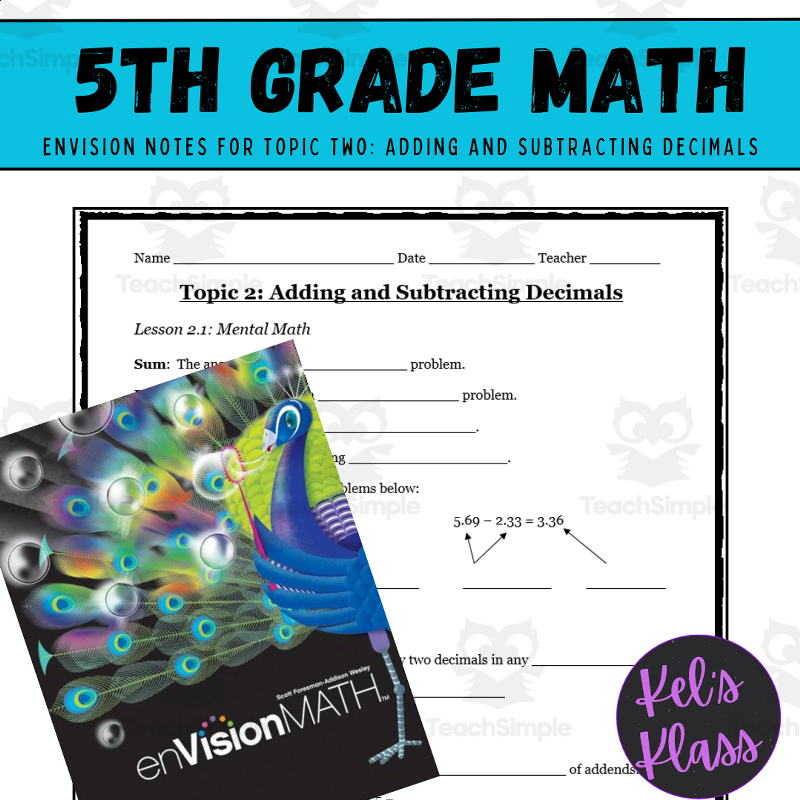
Teach and provide guided practice for adding and subtracting decimals, including mental math strategies, rounding, estimation, and standard algorithms, aligned to (but not excerpted from) the Envision Math Grade 5 Topic 2 curriculum sequence.
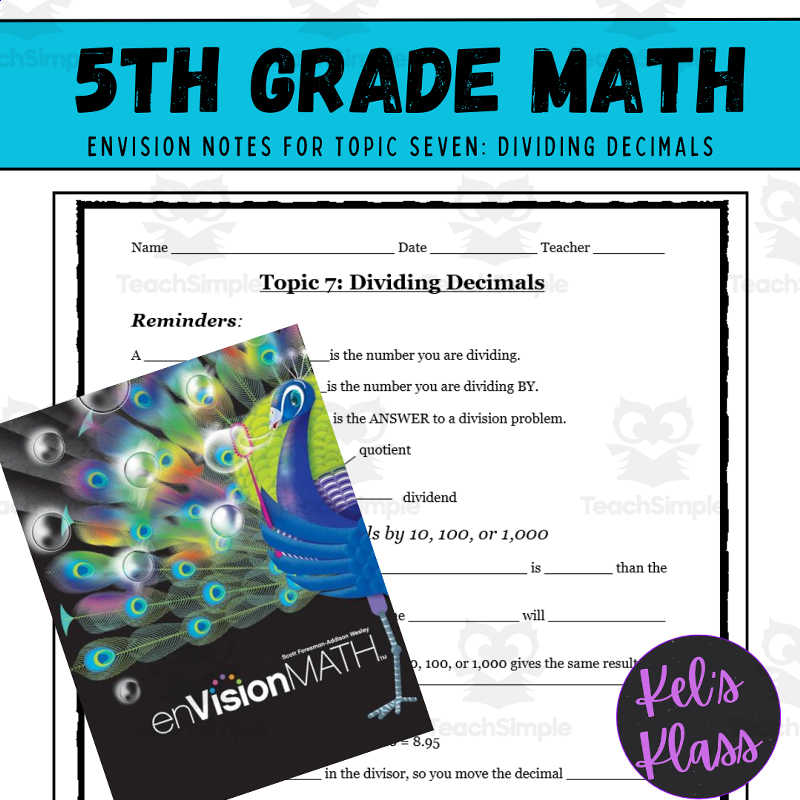
Teach and provide guided practice for dividing decimals, including dividing by powers of 10, estimating quotients, and standard algorithms for dividing by whole numbers and decimals, aligned to (but not excerpted from) the Envision Math Grade 5 Topic 7 curriculum sequence.
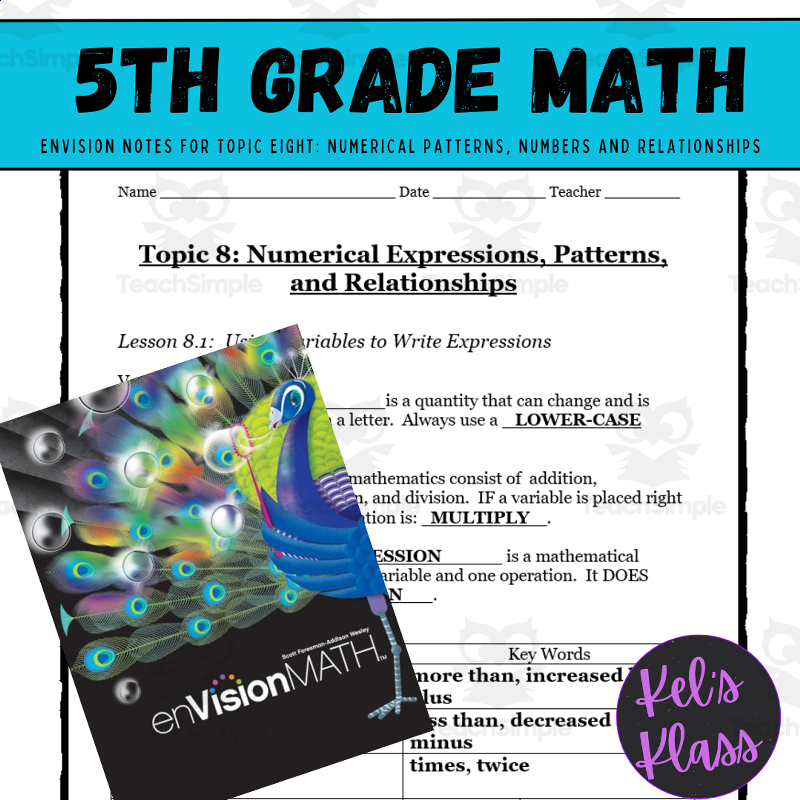
The eight-lesson packet connects expression vocabulary with calculation and pattern work. Students translate phrases into expressions, evaluate using the order of operations, and work with rules for numerical patterns. Teacher examples support the notes, while the cumulative quiz and its answer key provide a separate check after the lesson sequence.
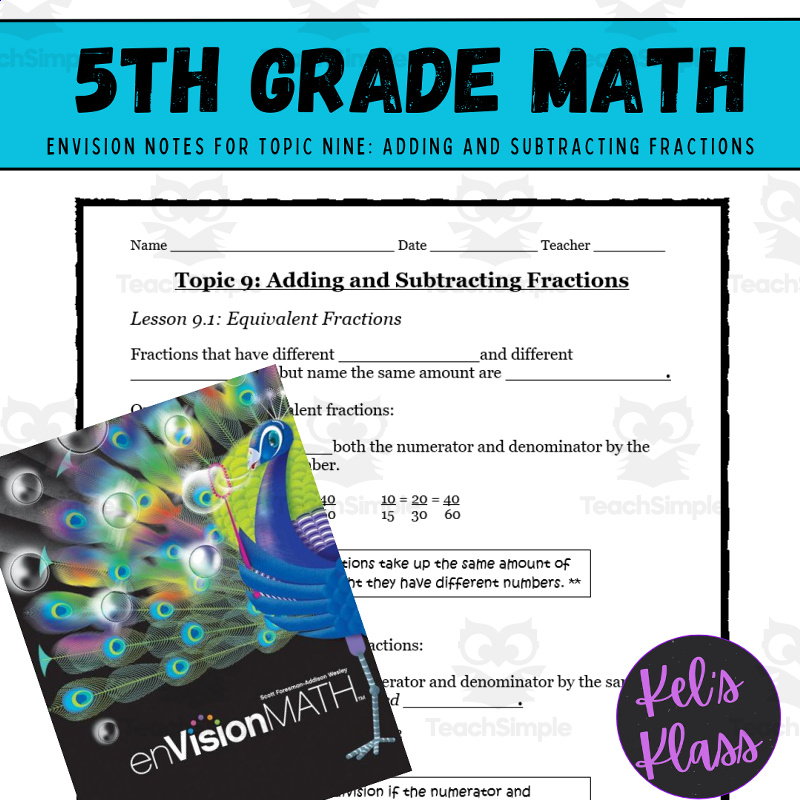
Guided (fill-in-the-blank) student notes for Grade 5 Envision Math Topic 9, teaching equivalent fractions, simplest form, common multiples/LCM, common denominators, and adding/subtracting fractions with unlike denominators.
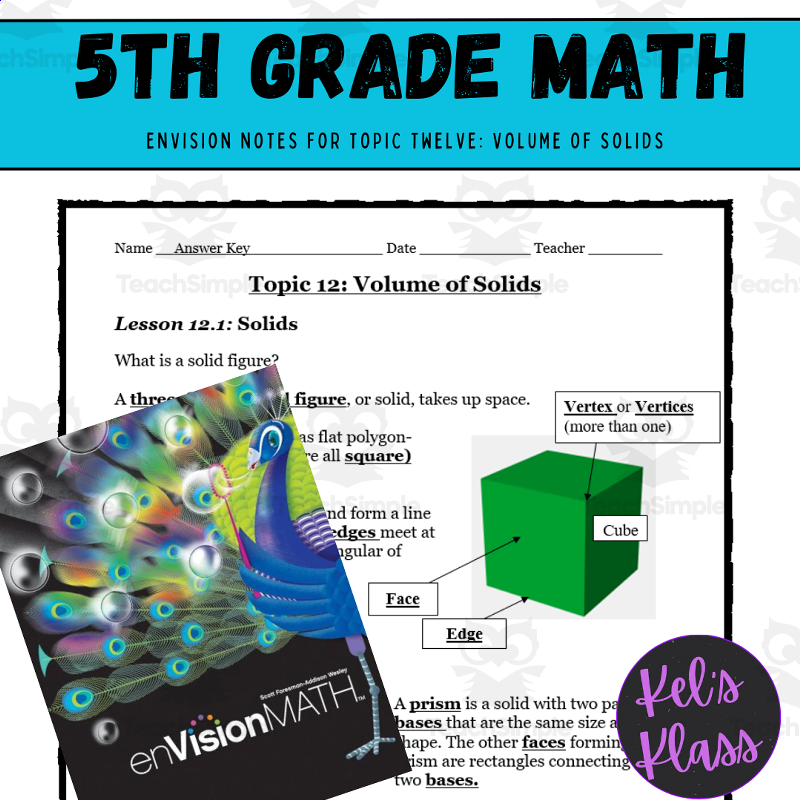
Envision Math Grade 5 – Topic 12: Volume of Solids gives students hands-on practice with 3D shapes, spatial reasoning, and measuring volume.
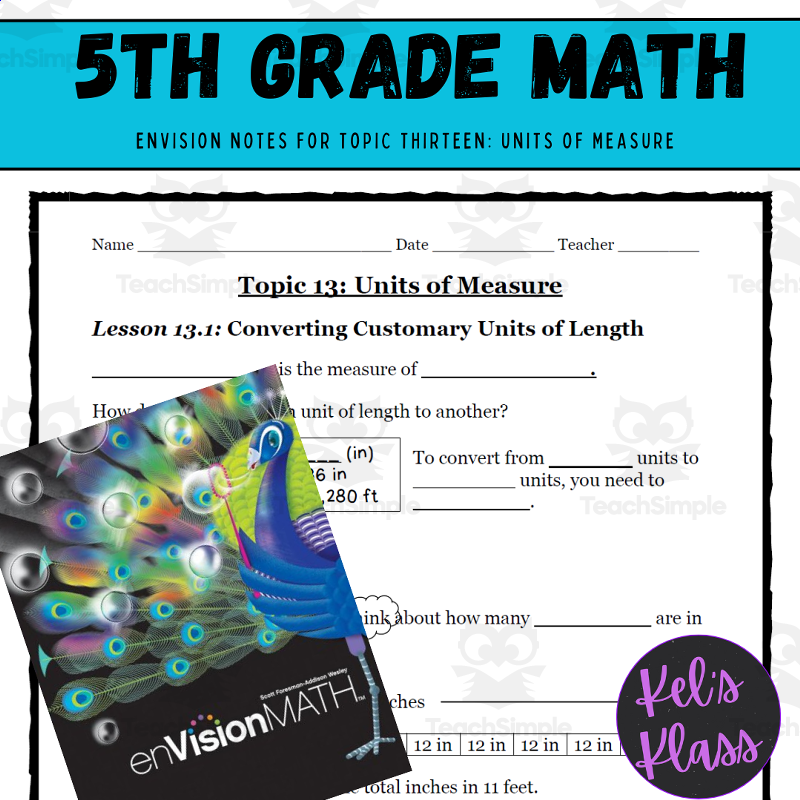
Envision Math Grade 5 – Topic 13: Units of Measure helps students master both customary and metric systems through guided lessons and practice.
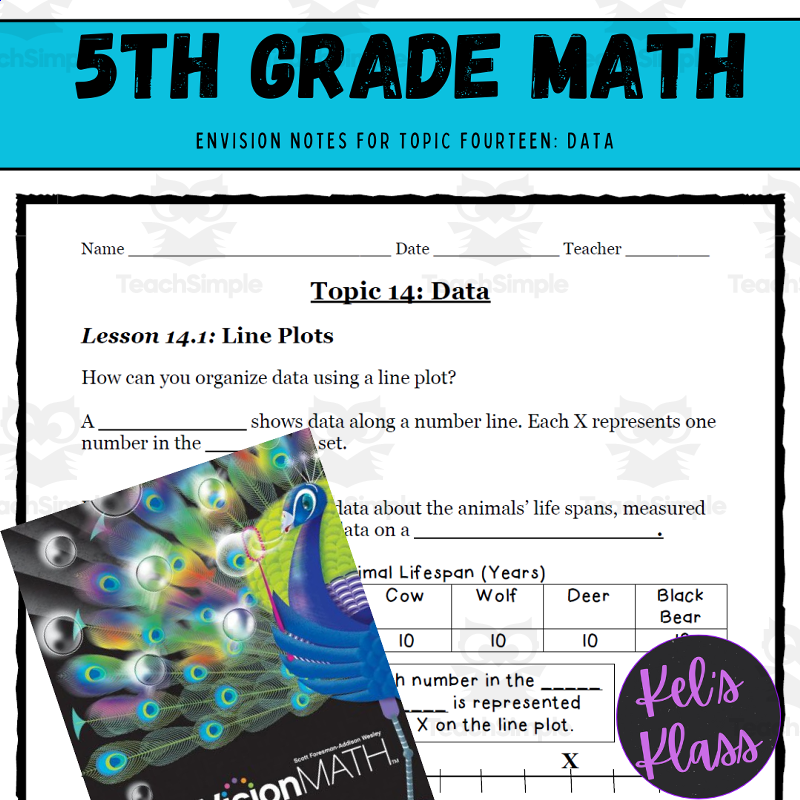
Teach and provide guided practice for organizing and interpreting data using line plots and frequency tables, including survey data and fractional measurement data, aligned to (but not excerpted from) the Envision Math Grade 5 Topic 14 curriculum sequence.
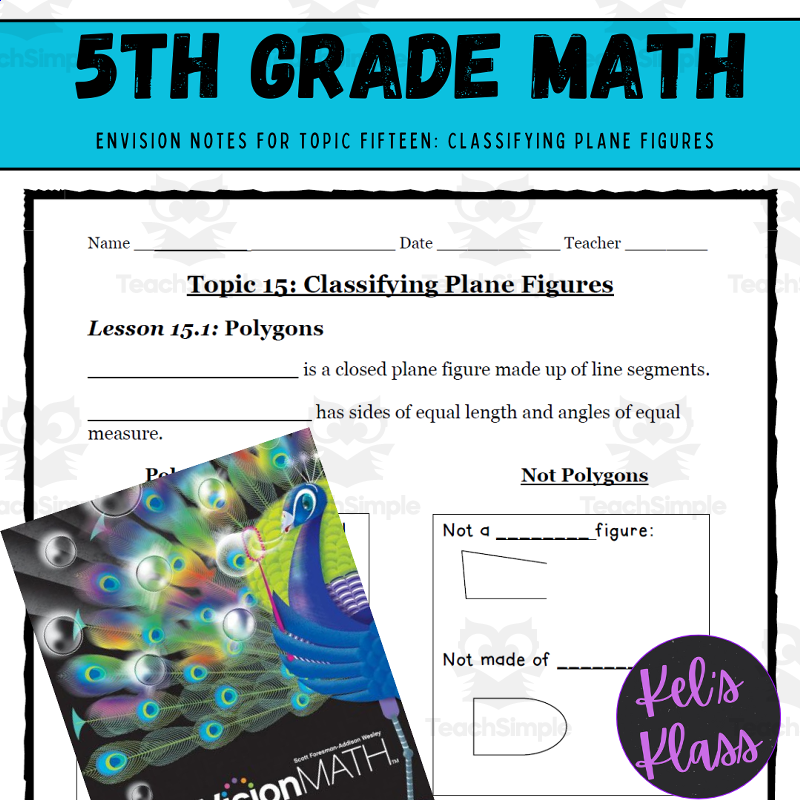
Complete guided-notes and quiz packet for Grade 5 Envision Math Topic 15, teaching classification of polygons, triangles, and quadrilaterals.
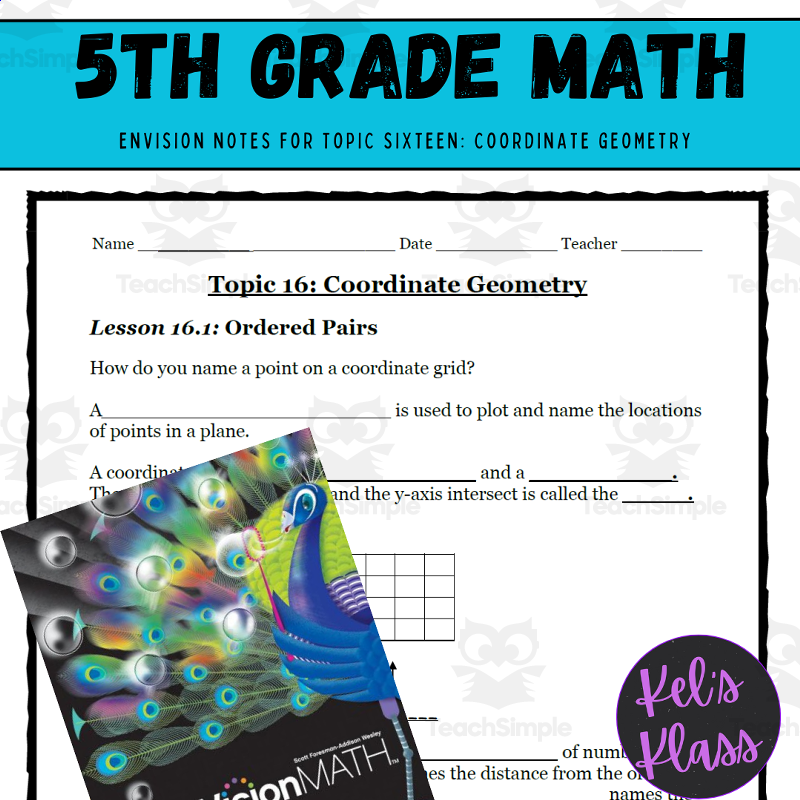
Complete guided-notes and quiz packet for Grade 5 Envision Math Topic 16, teaching coordinate-plane basics: plotting ordered pairs, finding distances between points, and using coordinate graphs to find and extend patterns.