
Crash Course Psychology Episode Worksheet | 8 - Consciousness
Crash Course Psychology Episode 8 - Consciousness Worksheet Help high school students understand real-world psychology with this engaging 2-page episode worksheet.




Classroom resources
Browse by lesson focus
Choose the topic or kind of practice you need.
Showing 1825–1848 of 2681 resources

 Show filters
 Crash Course Psychology Episode 8 - Consciousness Worksheet Help high school students understand real-world psychology with this engaging 2-page episode worksheet.

Fifteen questions guide students through the first episode of the Crash Course Psychology video series, linked at the top of the worksheet. Questions cover the episode’s content, with some reordering: what psychology studies, the Greek origin of the word, early psychological exams under Chinese rulers, the Persian doctor Rhazes, the founding of Wilhelm Wundt's 1879 laboratory, structuralism and why it failed as a school of thought, William James's alternative questions, and Freud's influence and controversy, closing with why psychologists cannot directly observe a patient's inner thoughts and feelings. A separate teacher answer key provides a complete model answer for all fifteen questions, written as full sentences rather than single words or phrases. The worksheet and its key are delivered as two separate, editable Word documents.

Crash Course Psychology: Remembering and Forgetting Worksheet This 2-page worksheet accompanies the Crash Course Psychology video on remembering and forgetting.

The Power of Motivation Crash Course Psychology Worksheet This 2-page digital worksheet accompanies the Crash Course Psychology video on motivation.

Fifteen short-answer questions guide students through Crash Course Psychology Episode 18, The Growth of Knowledge, covering Piaget's theory of cognitive development from definition to critique. Questions move through the core vocabulary — schemas, assimilation and accommodation, cognitive equilibrium, object permanence, egocentrism, animism, centration, conservation and reversibility, theory of mind — and the sensorimotor, preoperational, and concrete operational stages, closing with criticisms of Piaget's model and Vygotsky's social-development alternative. The pack contains two editable Word documents: the student worksheet with an embedded link to the episode and lettered answer blanks, and a teacher key with every response written out in full sentences.

Accompanies the Crash Course Psychology video on the Rorschach test and Freudian personality theory; guides students through psychoanalytic concepts.

Accompanies the Crash Course Psychology video on measuring personality; guides students through historical and modern personality-assessment approaches.

Guide students through different ways psychologists have defined and measured intelligence using fifteen questions for Crash Course Psychology Episode 23. The set includes comparisons among theories as well as questions about creativity, emotional intelligence and early intelligence testing. A separate teacher key supplies extended responses, and both documents include the episode link for viewing and revisiting the discussion.

Understanding Psychology Crash Course Worksheet for High School Students Help high school students better understand psychology concepts like sensation and perception with this engaging worksheet.

Understanding the Human Mind: Perceiving is Believing Crash Course Psychology Worksheet Tap into your high school students' interest in real-world concepts like psychology.

The Crash Course Sociology #10: Symbols, Values & Norms Student Worksheet explores the tenth video in the acclaimed Crash Course sociology series.
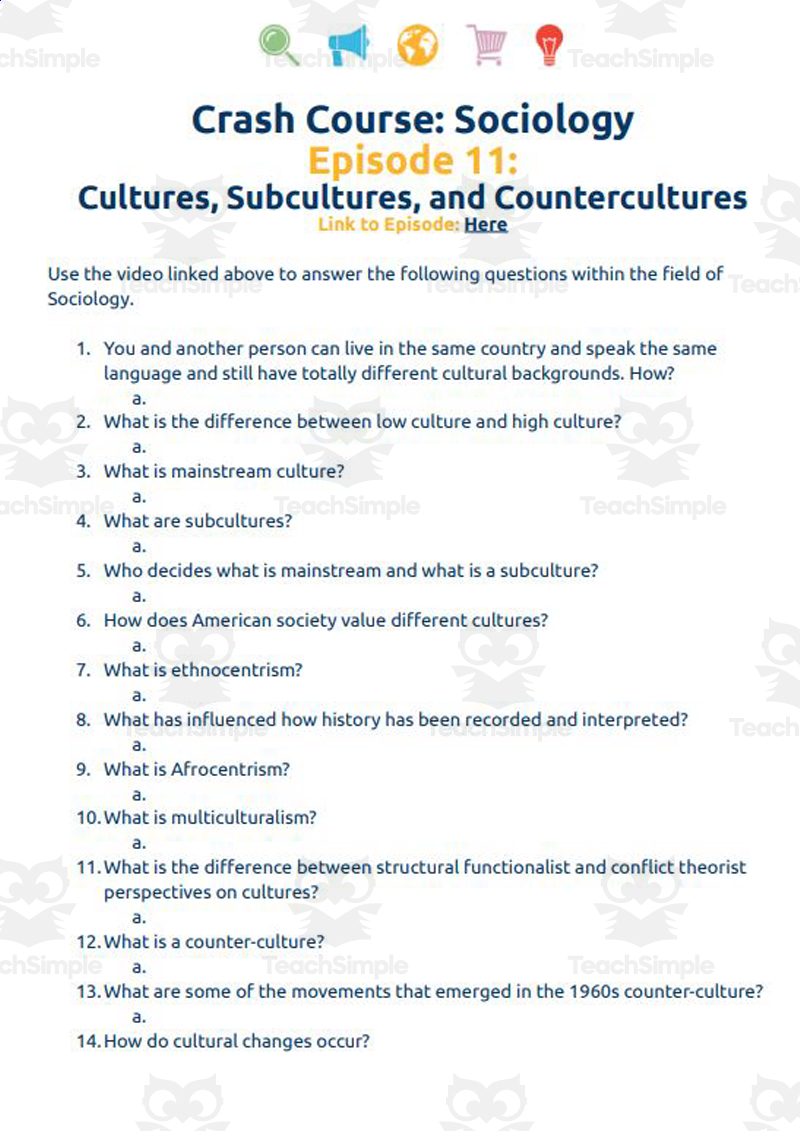
Crash Course Sociology #11: Cultures, Subcultures, and Countercultures Worksheet provides educators with a 2-page digital worksheet and answer key to supplement the eleventh video in the acclaimed Crash Course Sociology series.
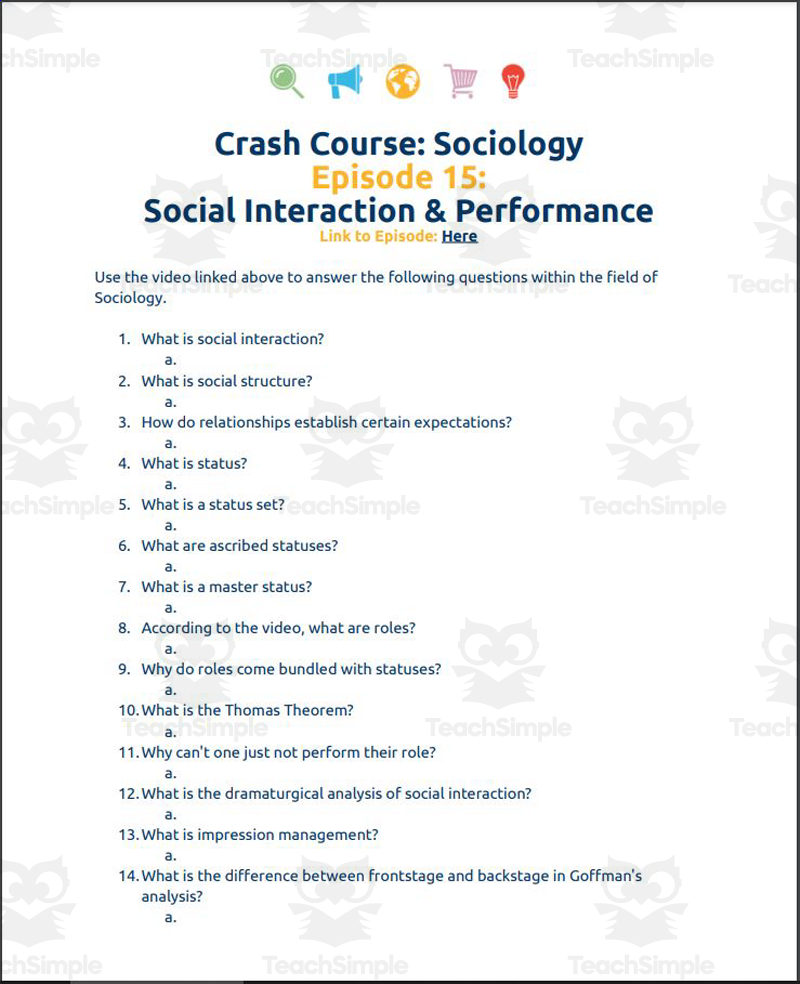
Crash Course Sociology Episode #15 Student Worksheet provides an engaging 15-question worksheet to supplement the Social Interaction and Performance video.
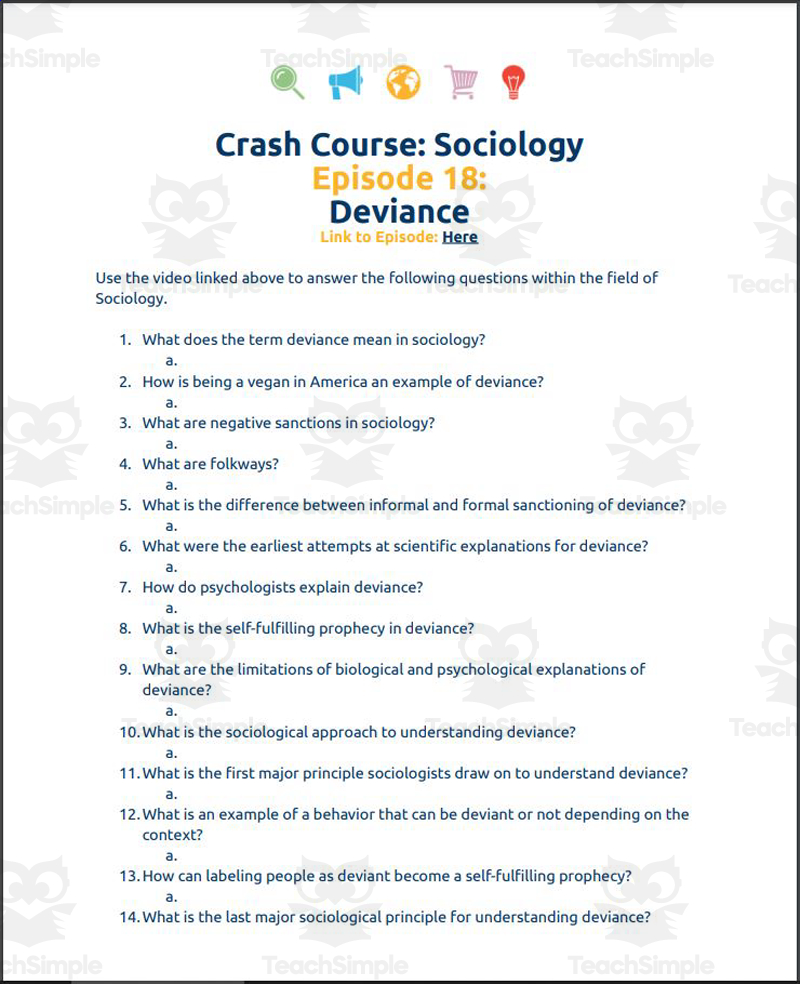
The Crash Course Sociology #18: Deviance Student Worksheet guides students through the concepts covered in Crash Course's popular sociology video on deviance.
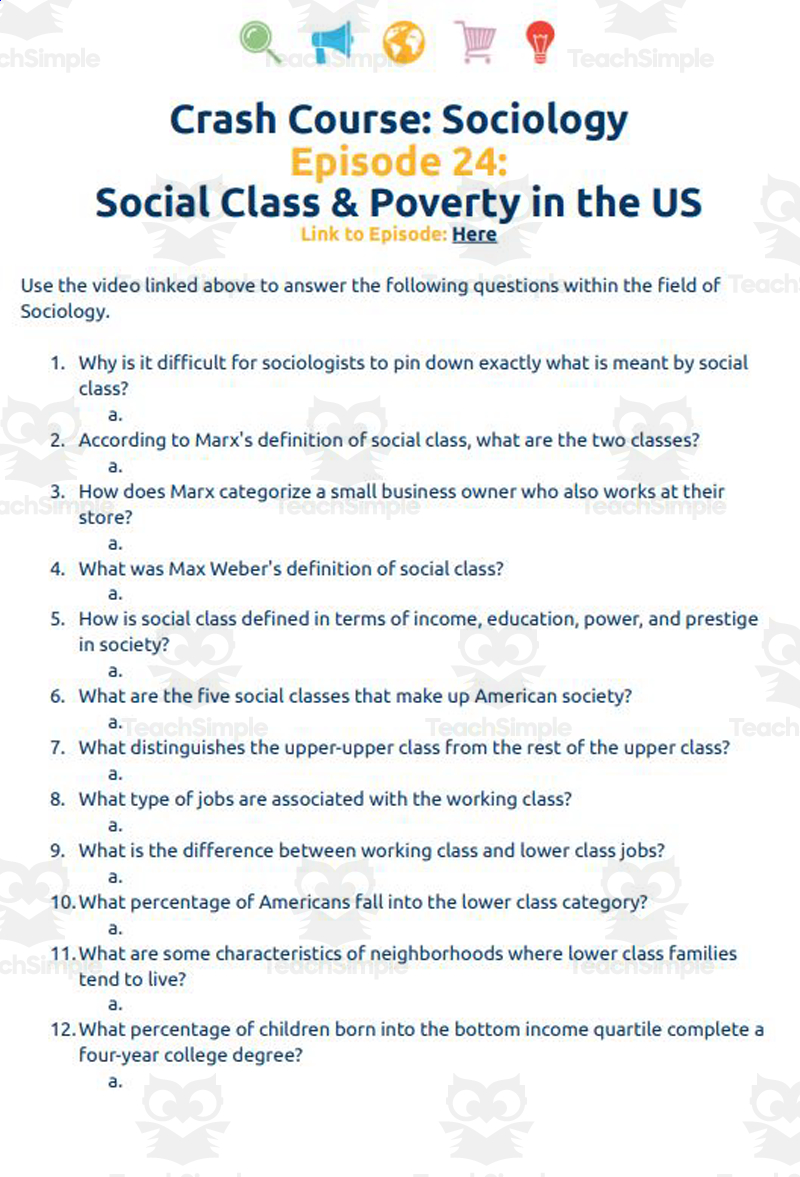
Crash Course Sociology #24 Worksheet dives into the twenty-fourth video in the acclaimed Crash Course series covering concepts of social class and poverty in the United States .

Crash Course Sociology: The Impacts of Social Class Worksheets \nThis 2-page digital worksheet accompanies the Crash Course Sociology video on the impacts of social class.

Walk students through key sociology concepts related to sex and sexuality. This 2-page digital worksheet accompanies Crash Course Sociology's video lesson on sex and sexuality.

The Crash Course Sociology #33: Theories of Gender Worksheet analyzes concepts from the popular Crash Course video series. Students complete a 2-page digital worksheet with 15 critical thinking questions about gender theory.
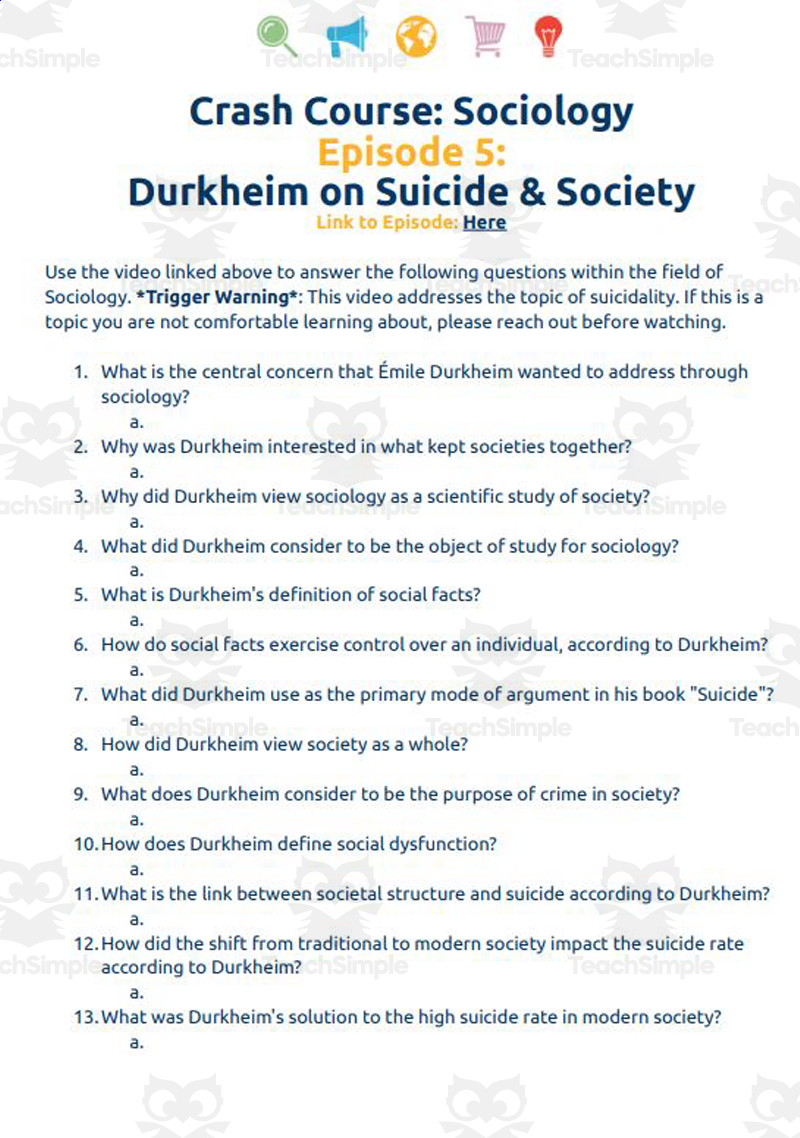
Crash Course Sociology Lesson on Suicide and Society Student Worksheet covers Émile Durkheim's influential sociological study on the causes of suicide.

Crash Course Sociology Student Worksheet: Harriet Martineau & Gender Conflict Theory provides educators with a ready-to-use 15-question worksheet to accompany Crash Course's video on sociologist Harriet Martineau's pioneering gender…

Sociology Connects Students to the Real World This 2-page worksheet accompanies the Crash Course Sociology video "What is Sociology?" It includes 15 questions for students to answer while and after viewing the 9-minute video.

Crash Course Sociology Episodes Worksheet: Symbols, Values & Norms This 9-minute Crash Course Sociology video and accompanying 2-page worksheet helps high school students explore key sociology concepts related to symbols, values, and norms…

The worksheet follows the linked episode with short-answer questions on cultural patterns and change. Students record responses, then use discussion to compare perspectives and clarify terms. A separate answer key supports review.
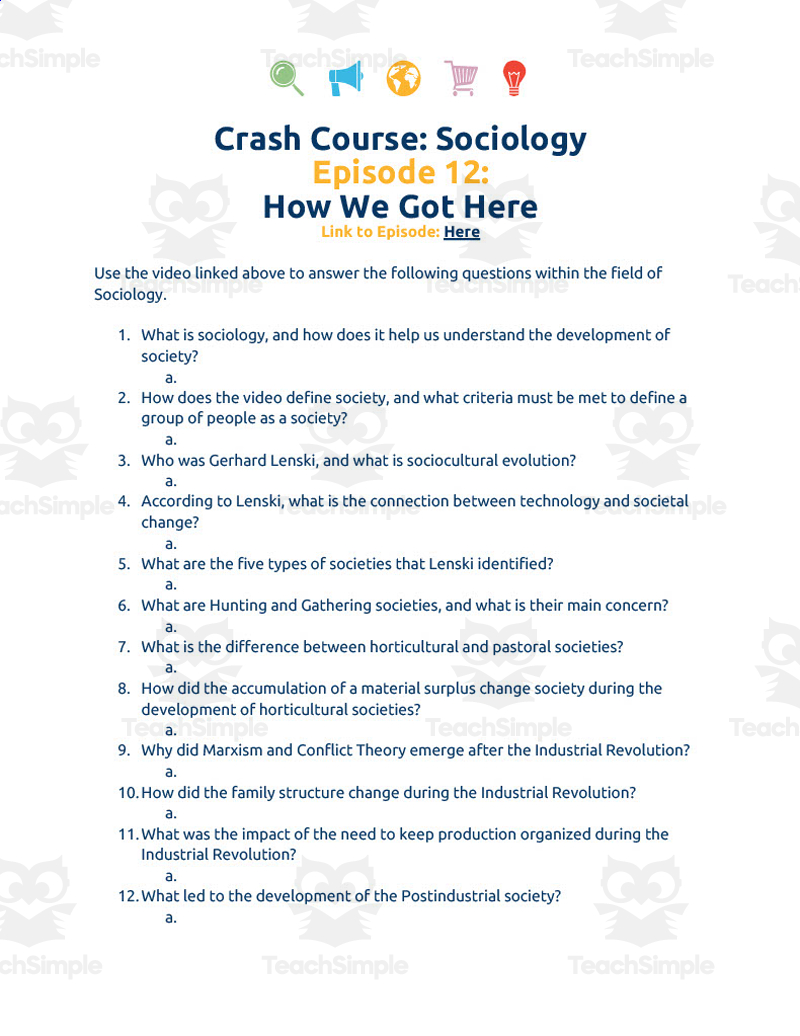
Crash Course Sociology Episode 12 Worksheet: How We Got Here This 2-page worksheet accompanies the Crash Course Sociology video "How We Got Here" and has 15 questions for students to answer while watching the 11-minute video.