Final Exam Review: Algebra 1
A review packet covering Algebra 1 topics (distributive property, exponential growth/decay, exponents, probability, systems of equations/word problems, right triangles) to prepare students for a final exam.
5,599 resources
Explore sub-categories
27 sub-categories · 5,599 resources
A review packet covering Algebra 1 topics (distributive property, exponential growth/decay, exponents, probability, systems of equations/word problems, right triangles) to prepare students for a final exam.
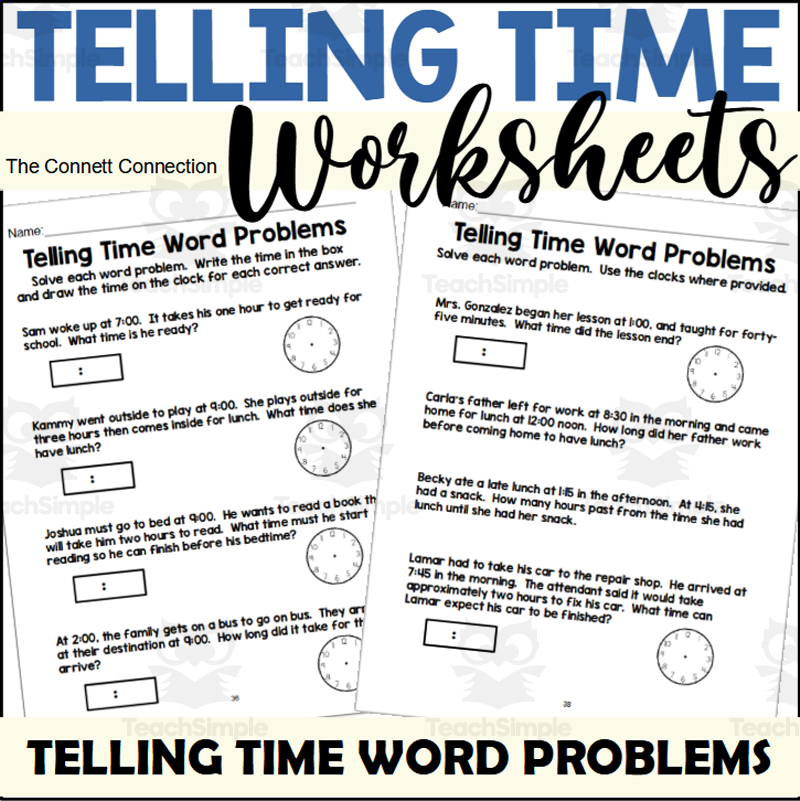
Analog time vocabulary opens the packet, defining o'clock, half past, quarter past, and quarter to with worked examples before moving into matching pages where students draw lines connecting spoken time phrases to analog clock faces and digital times. A dedicated page has students label seven daily activities, such as sunrise and lunchtime, with AM or PM based on the given time. The bulk of the resource is sixteen elapsed-time word problems spread across several pages, asking students to find a start time, end time, or duration from everyday scenarios like getting ready for school, running errands, and doctor's appointments, with a blank box provided to write each answer. Later problems increase in difficulty, moving from round numbers like nine o'clock plus three hours to less even calculations such as 8:28 versus a 9:00 arrival time or a 48-minute GPS estimate against a 10:15 appointment.
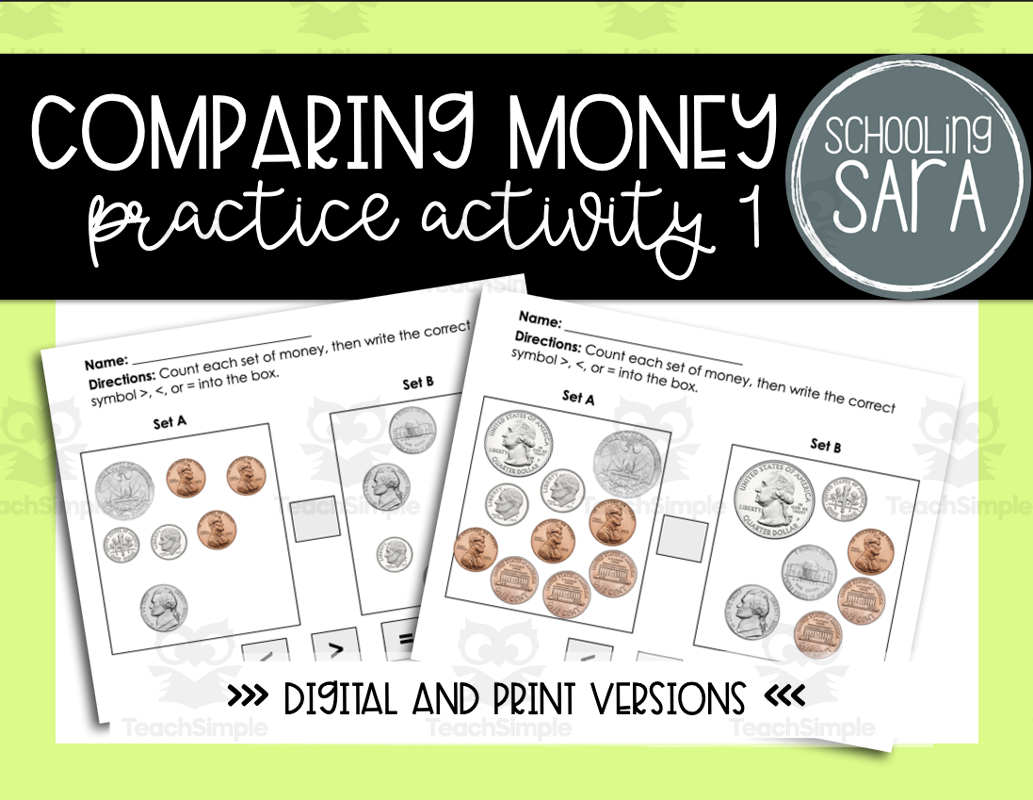
Money-math practice for comparing mixed denominations of coins and bills for students in grades 2-4.
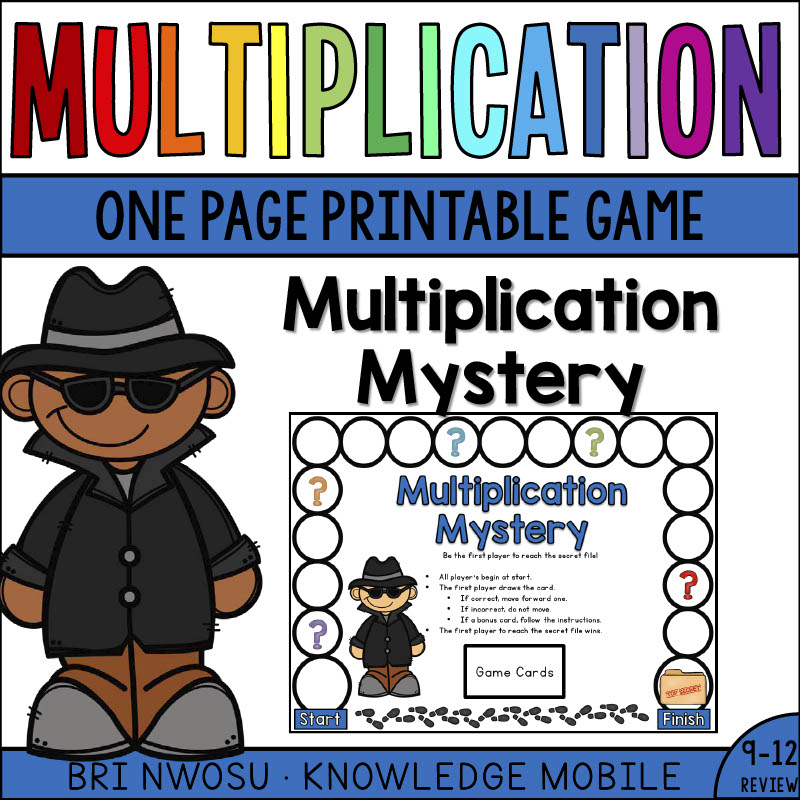
A one-page, self-checking printable board game ("Multiplication Mystery") giving students repeated, mixed practice with multiplication facts for the 9, 10, 11, and 12 times tables, to build recall fluency.
A set of no-prep printable worksheets for practicing adding and subtracting fractions with unlike denominators using the least common denominator method.
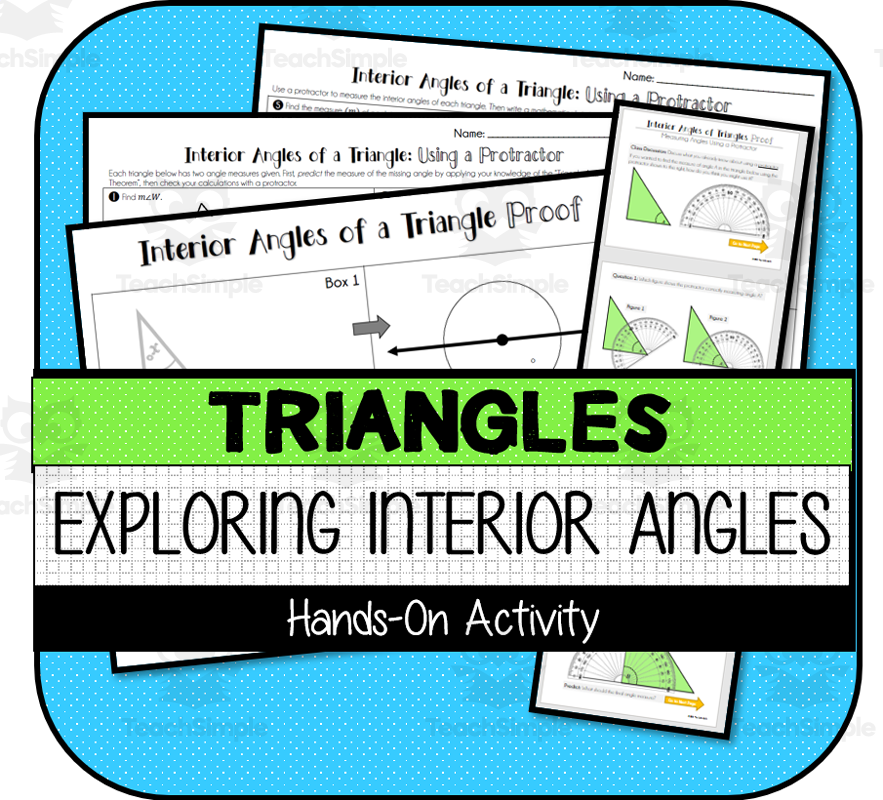
Provide a hands-on, cut-and-paste discovery activity proving the Triangle Angle Sum Theorem (that a triangle's interior angles sum to 180 degrees), partially addressing CCSS.MATH.CONTENT.7.G.A.2, followed by protractor-based angle measurement practice.
Use a triangle’s base and height to calculate its area. A formula reference accompanies four labeled diagrams, with blank area-response lines. Before calculating, ask students to identify the measurements they need and name the unit that belongs with the final area.
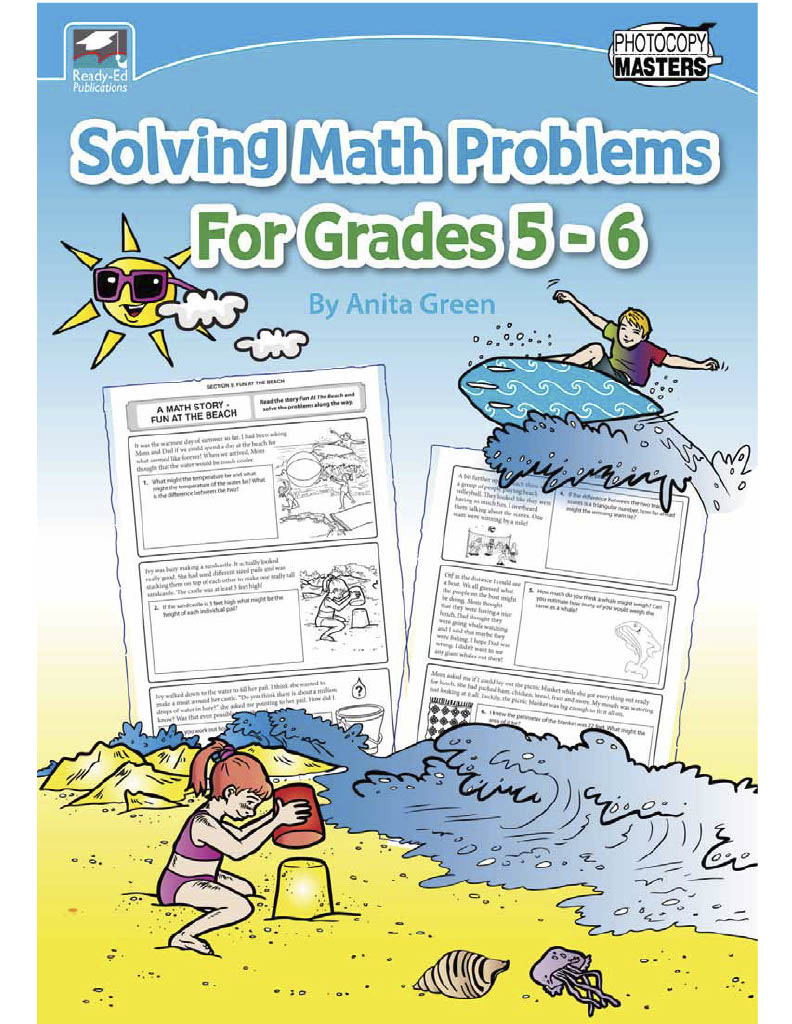
A collection of open-ended, story-based math word problems set in everyday contexts (summer camp, field day, moving day, football, beach, a mystery) for students to solve using their own strategies.
Owl themed clock labels (o'clock, quarter past, half past, quarter to, 5-minute increment labels) plus black-and-white worksheets for classroom time-telling decor and practice.
Students connect multiplication and division by writing four related facts from each number triple. A modeled family introduces the given-number tasks before an open page asks learners to select their own three related numbers. Use the student-created families for partner checking, asking students to explain how multiplication verifies the corresponding division facts.
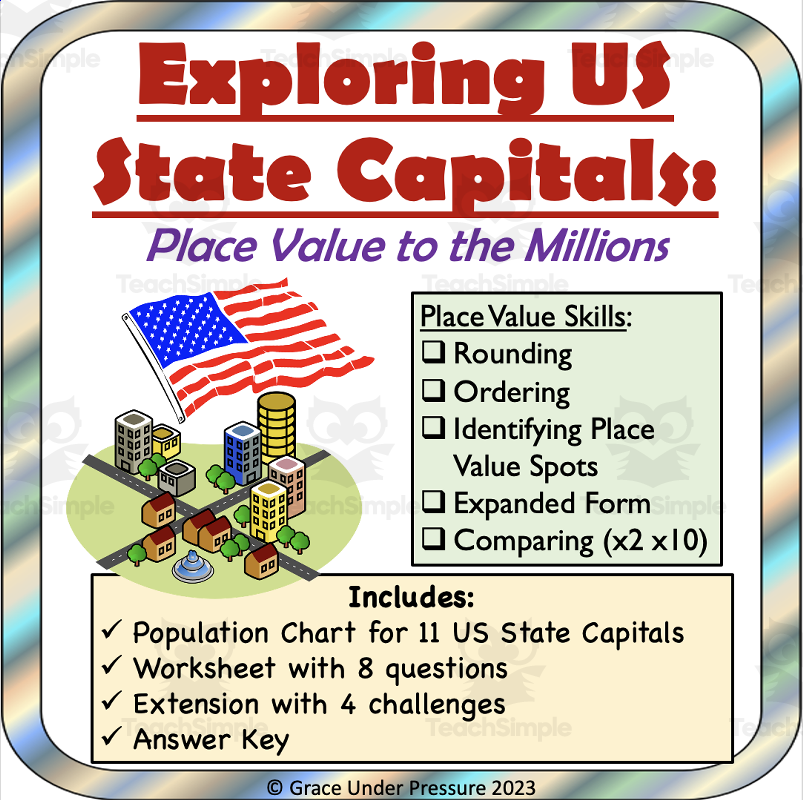
Give upper-elementary/intermediate students practice applying place value skills (to the millions) using the real populations of 11 U.S. state capitals.
Students factor single-variable expressions first, then work with expressions involving two variables. Each page supplies a bank of polynomial factors to match, so students must connect their algebraic working with a letter choice. The PDF includes worked answers and access to the Google Slides version, giving you options for print or digital practice.
Practice identifying key features of quadratic functions (domain, range, intercepts, vertex, increasing/decreasing intervals, end behavior) when given as a graph or as an equation in standard, vertex, or intercept (factored) form.
Give students repeated practice recalling multiplication facts for the 4 times table.
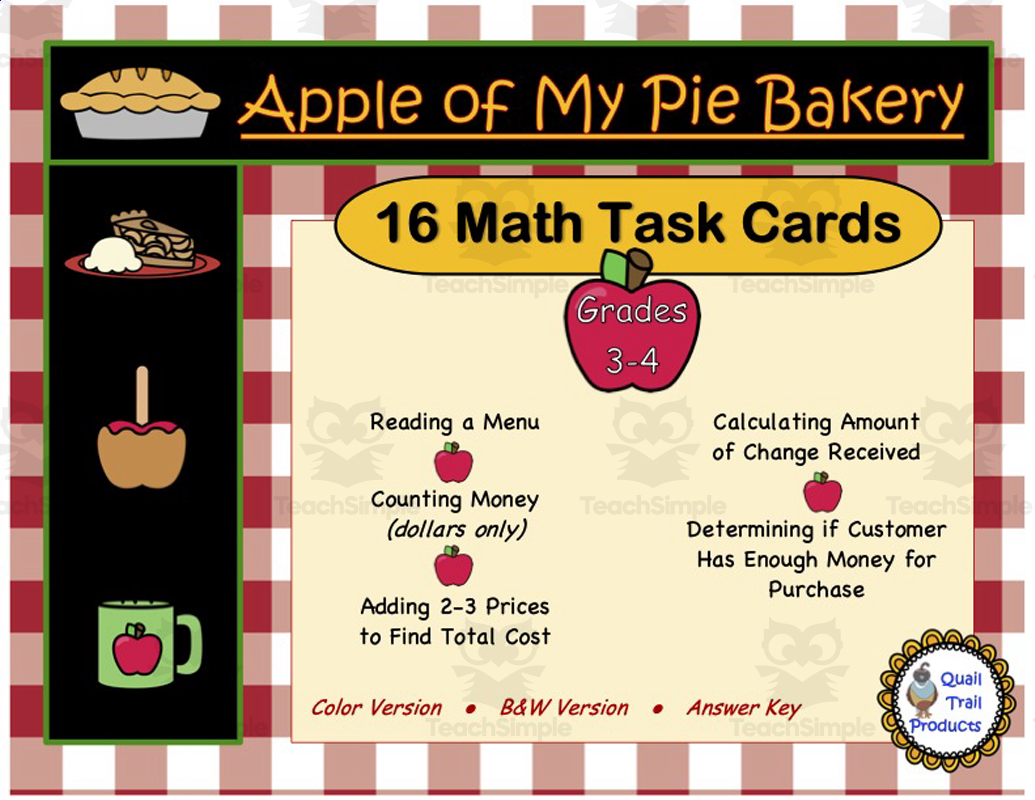
Provide apple-bakery themed math task cards for Grade 3-4 practice with money math and basic arithmetic.
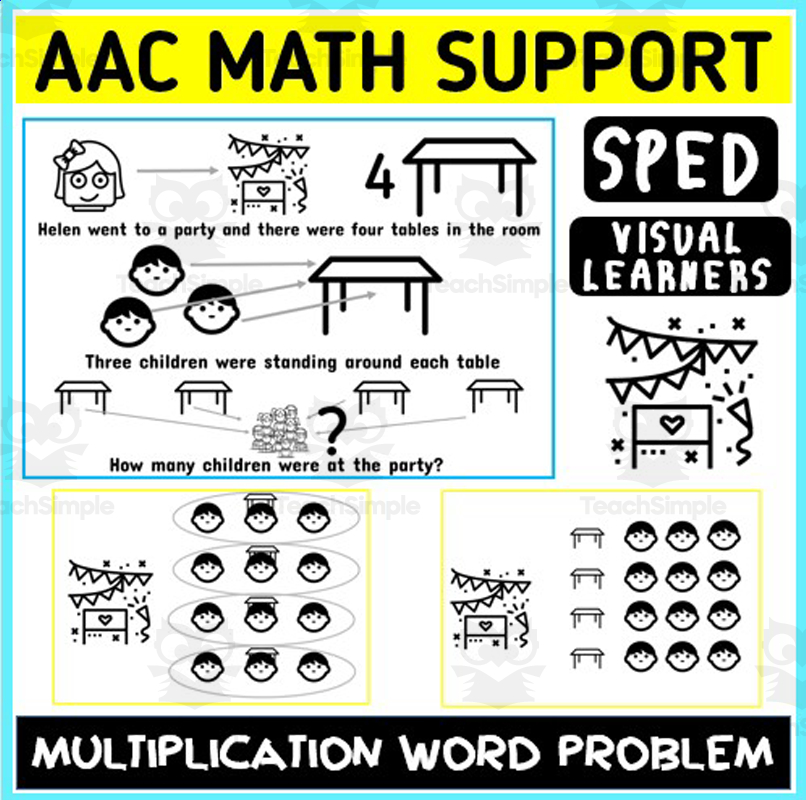
A visual/AAC (augmentative and alternative communication) math support resource that pairs a simple word problem with picture/number-line style visual counting supports, for students with special education needs or visual learners.
Practice evaluating variable expressions (including exponents, order of operations, and division) and reveal a color-by-number emoji picture from the answers.
It's a great way to help them practice and learn more about this concept.
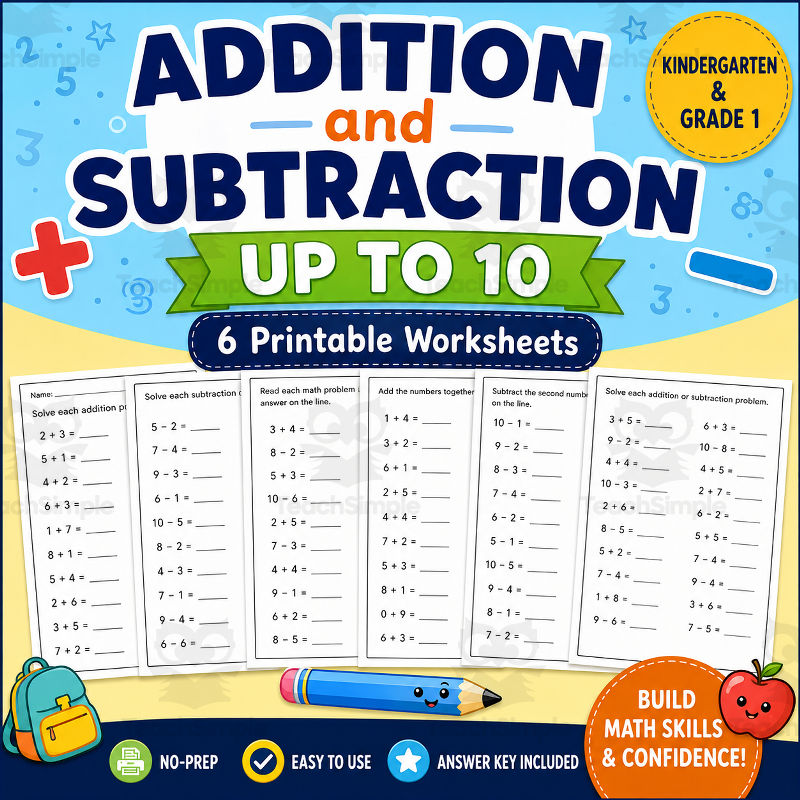
No-prep worksheets for practicing basic addition and subtraction facts within 10.
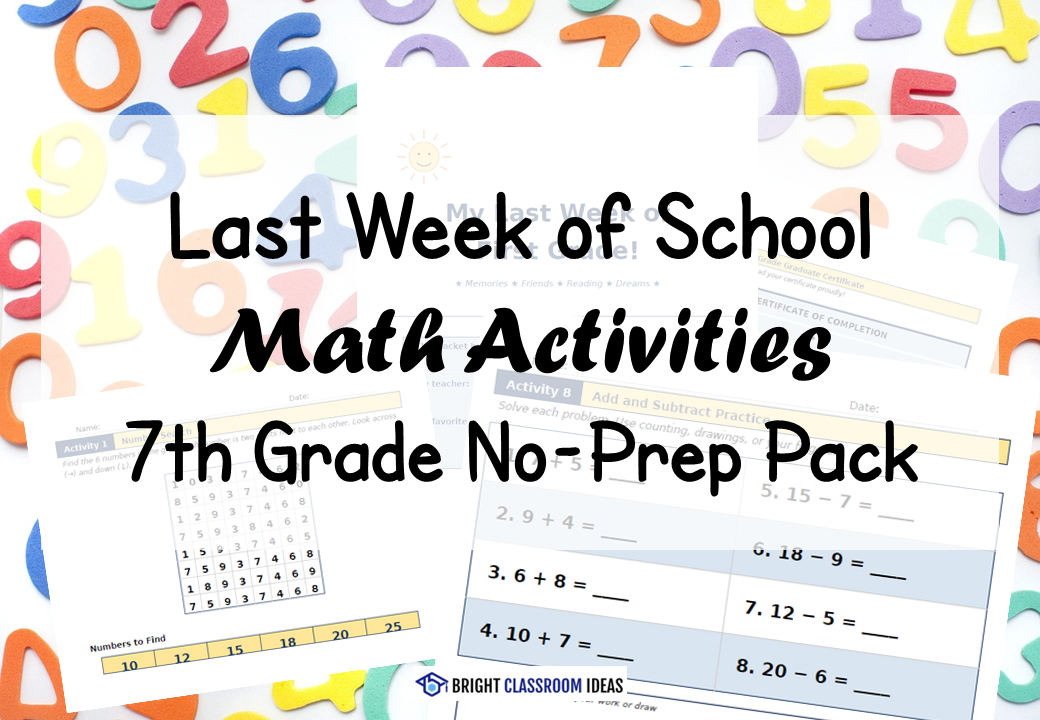
A no-prep, 5-day Grade 7 end-of-school-year math packet (teacher guide, student worksheets, and answer key as separate files) combining math skill review with reflective/celebratory last-week-of-school activities.
Lesson 1 of a Laws of Exponents series: a video-supported guided-notes lesson teaching the zero-exponent rule and the negative-exponent rule (moving powers across a fraction bar) and how to simplify expressions using both.
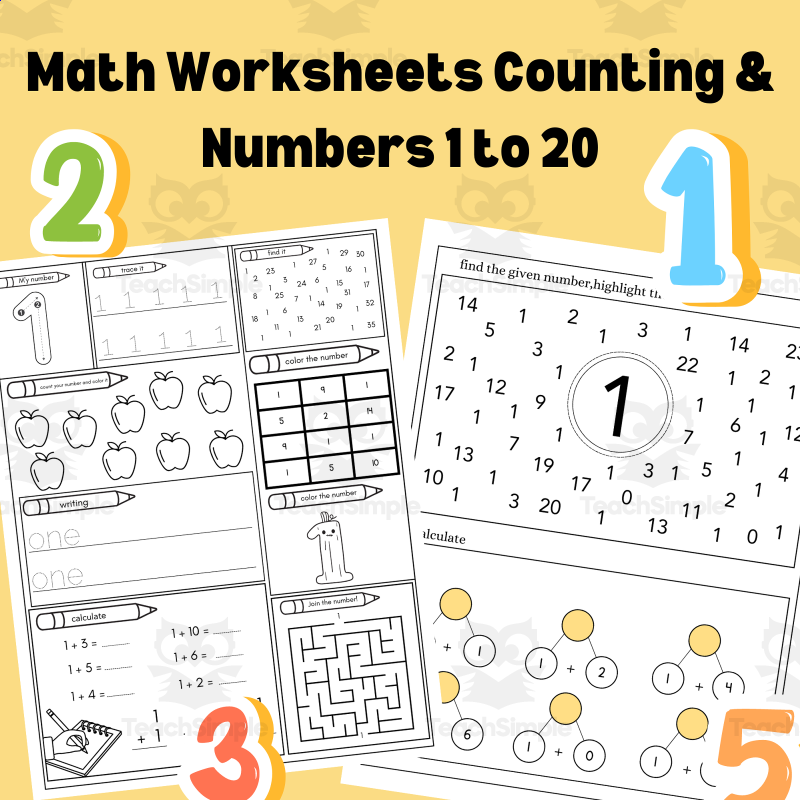
Provide daily/independent math practice worksheets themed around a specific number, combining tracing, counting, coloring, simple addition, and number-identification tasks.
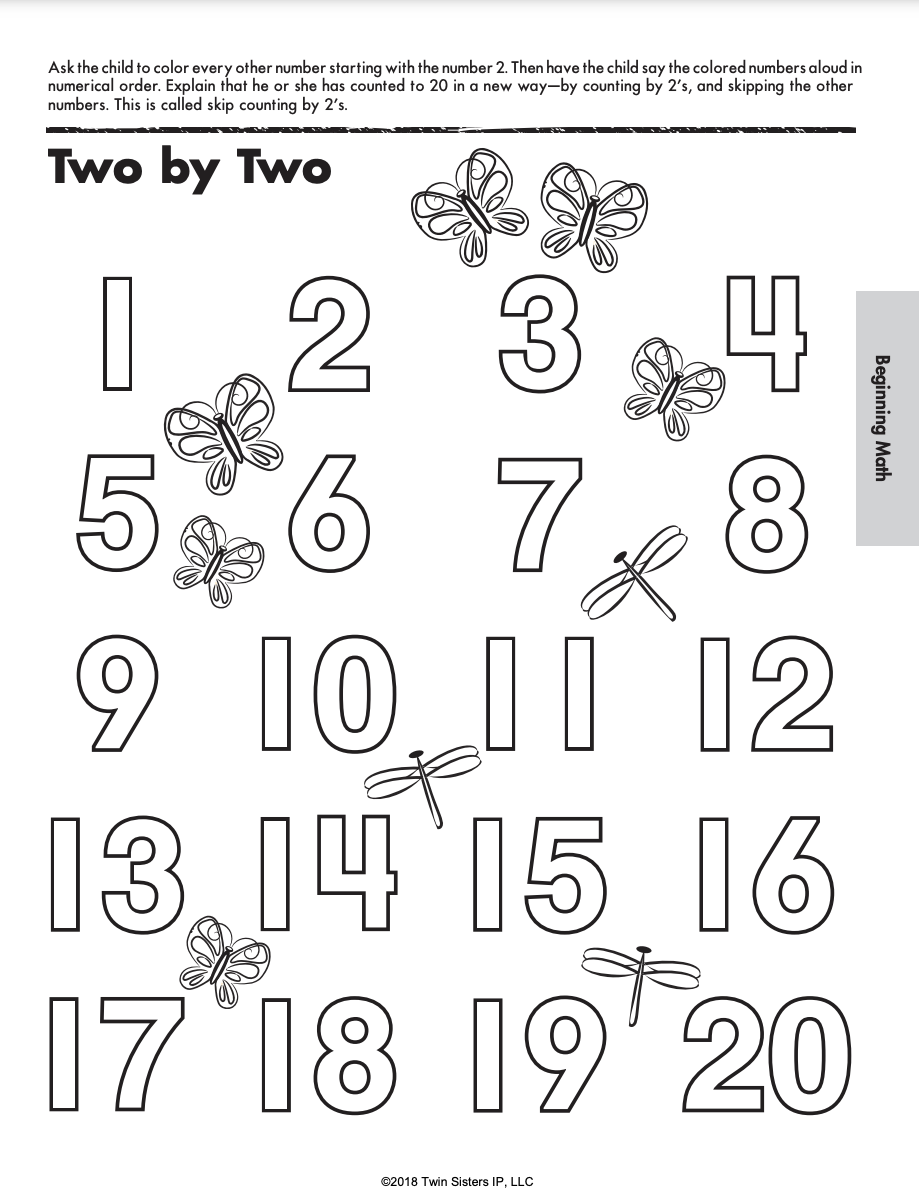
A kindergarten math workbook of parent/teacher-guided practice pages teaching skip counting by 2s and the concept of pairs.
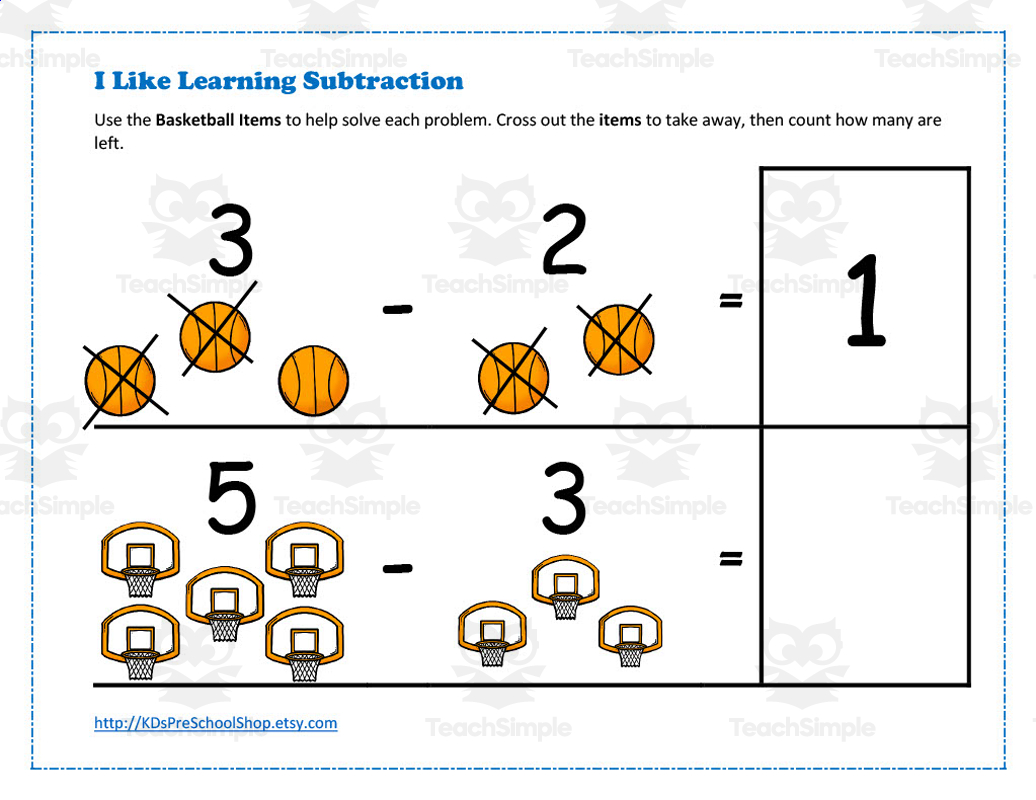
A basketball-themed subtraction practice worksheet using picture-based subtraction (cross out items and count what's left) for early subtraction skills.